• KGS/USD = 0.01144 0%
  • KZT/USD = 0.00196 -0%
  • TJS/USD = 0.10899 -0%
  • UZS/USD = 0.00008 -0%
  • TMT/USD = 0.28490 0%
  • KGS/USD = 0.01144 0%
  • KZT/USD = 0.00196 -0%
  • TJS/USD = 0.10899 -0%
  • UZS/USD = 0.00008 -0%
  • TMT/USD = 0.28490 0%
  • KGS/USD = 0.01144 0%
  • KZT/USD = 0.00196 -0%
  • TJS/USD = 0.10899 -0%
  • UZS/USD = 0.00008 -0%
  • TMT/USD = 0.28490 0%
  • KGS/USD = 0.01144 0%
  • KZT/USD = 0.00196 -0%
  • TJS/USD = 0.10899 -0%
  • UZS/USD = 0.00008 -0%
  • TMT/USD = 0.28490 0%
  • KGS/USD = 0.01144 0%
  • KZT/USD = 0.00196 -0%
  • TJS/USD = 0.10899 -0%
  • UZS/USD = 0.00008 -0%
  • TMT/USD = 0.28490 0%
  • KGS/USD = 0.01144 0%
  • KZT/USD = 0.00196 -0%
  • TJS/USD = 0.10899 -0%
  • UZS/USD = 0.00008 -0%
  • TMT/USD = 0.28490 0%
  • KGS/USD = 0.01144 0%
  • KZT/USD = 0.00196 -0%
  • TJS/USD = 0.10899 -0%
  • UZS/USD = 0.00008 -0%
  • TMT/USD = 0.28490 0%
  • KGS/USD = 0.01144 0%
  • KZT/USD = 0.00196 -0%
  • TJS/USD = 0.10899 -0%
  • UZS/USD = 0.00008 -0%
  • TMT/USD = 0.28490 0%
08 December 2025

Jackson-Vanik: One Step Away from Repeal

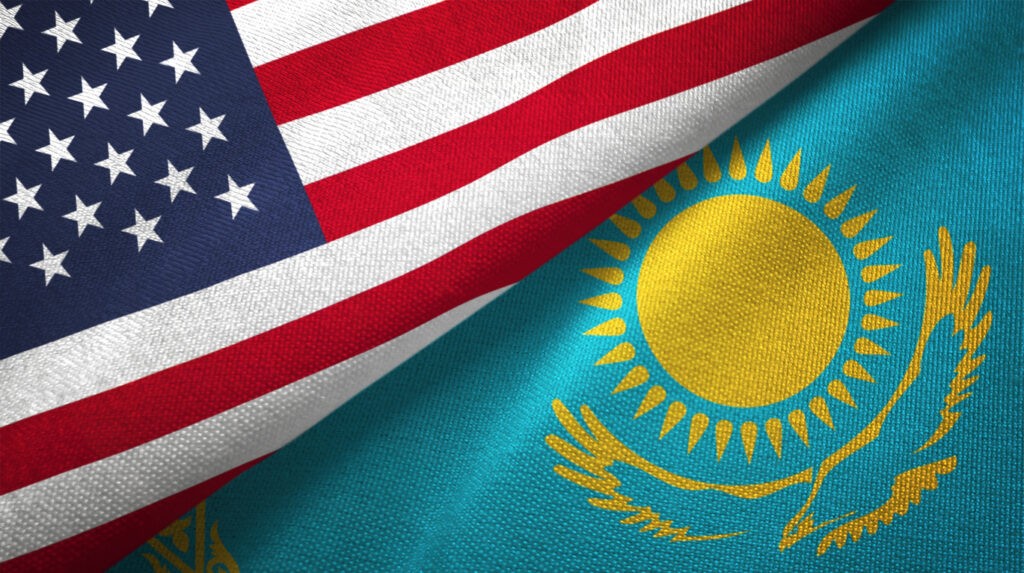
The U.S. Senate has confirmed Marco Rubio as Secretary of State, raising hopes among Central Asian leaders – particularly in Kazakhstan – that his recent comments regarding the Jackson-Vanik amendment may soon translate into concrete action to repeal this outdated policy, which continues to hinder mutual trade.

Passed in 1974 as part of the Trade Act under President Gerald Ford, the Jackson-Vanik amendment was designed to penalize countries with non-market economies that restricted emigration, particularly targeting the Soviet Union. The amendment specifically sought to pressure the USSR to allow its Jewish population to emigrate freely, while also protesting the suppression of Judaism and other religious practices.

The amendment achieved a measure of success by 1989, when the Iron Curtain fell and Soviet Jews were permitted to emigrate in large numbers, primarily to Israel and the United States. However, the policy remained in place, even after the dissolution of the USSR, applying to the newly independent Central Asian republics despite their vastly different political and economic landscapes.

On January 15, Rubio delivered a nearly five-hour confirmation speech during a Senate hearing for his nomination as Secretary of State under the Donald Trump administration. Among the topics discussed was the Jackson-Vanik amendment. Senator Steve Daines specifically asked Rubio for his position on the amendment, emphasizing that its repeal could normalize U.S. trade relations with Kazakhstan and Uzbekistan.

Rubio described the amendment as “an absurd relic of the past,” asserting that it no longer serves any meaningful purpose in pressuring Central Asian countries on human rights. He warned that continued use of such measures could push nations like Kazakhstan and Uzbekistan closer to Russia’s sphere of influence.

Rubio singled out Kazakhstan, noting that the country had “successfully met the conditions” to transition to a market economy, as evidenced by its accession to the World Trade Organization several years ago. He pledged to work with lawmakers to repeal the Jackson-Vanik amendment, signaling a shift in U.S. policy toward fostering deeper economic ties with the region.

Why Central Asia Was Left Behind

The continued application of the Jackson-Vanik amendment to Central Asia can be partially explained by the differing domestic policies of its key players – Kazakhstan and Uzbekistan.

Under Nursultan Nazarbayev, Kazakhstan quickly abandoned Soviet-era restrictions on emigration and took steps to promote religious tolerance and interfaith harmony. By contrast, Uzbekistan under Islam Karimov maintained many of the Soviet Union’s repressive practices, including restrictions on religious minorities. This disparity in policies contributed to Washington’s perception of the region as monolithic and resistant to reform, discouraging efforts to lift the amendment.

Recent Developments and Challenges

In recent years, there have been efforts to lower trade barriers between the U.S. and Central Asia, particularly through initiatives like the B5+1 dialogue, which aims to attract greater Western investment to the region. However, the Jackson-Vanik amendment complicates these efforts, as countries must secure an annual waiver from the U.S. President to maintain normal trade relations.

Kazakhstan has emerged as the frontrunner in advocating for the amendment’s repeal. An August report by the Congressional Research Service highlighted Kazakhstan’s progress and underscored the Biden administration’s support for repeal as a way to strengthen U.S.-Kazakhstan economic ties. The report framed repeal as a step toward helping Kazakhstan diversify its economy, which remains heavily reliant on Russia and China.

Despite this progress, a repeal bill never made it to Congress. With the Trump administration now in office, the responsibility for resolving the issue has shifted. Rubio’s recent remarks offer renewed hope that the amendment’s application to Kazakhstan will finally be repealed, marking a significant milestone in U.S.-Kazakhstan relations.

The repeal of the Jackson-Vanik amendment for Kazakhstan would be a symbolic and practical step toward deepening U.S. engagement with Central Asia. As Kazakhstan continues its economic reforms and seeks to expand ties with Western partners, Rubio’s commitment to addressing this “absurd relic” of the past could pave the way for more robust trade relations and a stronger regional partnership.


eBay Officially Registers for Tax Purposes in Uzbekistan

The American e-commerce giant eBay has officially registered for tax purposes in Uzbekistan, according to UzDaily. As a result, eBay will now pay value-added tax (VAT) on its services in the country.

Other global companies, including Netflix, Amazon, Google, Apple, and Zoom, are also registered with Uzbekistan’s special tax office for foreign digital companies. In total, 64 foreign companies are currently complying with the country’s VAT requirements.

The Tax Committee of Uzbekistan reported that 61 foreign companies providing electronic services contributed 101.9 billion UZS (approximately $7.89 million USD) in taxes to the national budget between January and September 2024. This represents a 2.1-fold increase compared to the same period in 2023, highlighting the growing importance of foreign digital service providers in Uzbekistan’s economy.

In December 2024, Uzbekistan introduced new regulations requiring all companies providing e-commerce services to register as legal entities in the country. Despite their tax registrations, major platforms like eBay and Amazon have not yet established physical offices in Uzbekistan, raising questions about their long-term plans for expanding operations in the local market.

In related news, The Times of Central Asia previously reported that Binance, one of the world’s largest cryptocurrency exchanges, will officially begin offering services to users in Uzbekistan. This move underscores the country’s growing focus on integrating global digital platforms into its economy.

eBay’s registration for VAT in Uzbekistan marks another step in the country’s efforts to regulate and tax the growing digital economy. As more global companies comply with Uzbekistan’s tax requirements, questions remain about whether these platforms will deepen their presence in the country by establishing local offices.

Uzbekistan Receives $14.8 Billion in Remittances in 2024

The total volume of remittances sent to Uzbekistan in 2024 reached a record $14.8 billion, marking a 30% increase – equivalent to $3.4 billion – compared to the previous year. This data comes from the Central Bank’s Brief Review on Currency Transactions of Individuals.

Key Sources of Remittances

Russia remains the dominant source of remittances for Uzbekistan, accounting for 77% of the total, or $11.5 billion – a 29% increase from 2023. Other key contributors include:

  • Kazakhstan: $795 million
  • United States: $577 million
  • South Korea: $534 million
  • Turkey: $405 million
  • United Kingdom: $135 million

July saw the highest inflow of remittances, with $1.785 billion received, while February recorded the lowest amount, at $738 million.

Remittance growth varied significantly by country / region:

  • United Kingdom: Up 83%
  • South Korea: Up 56%
  • United States: Up 35%
  • European Union: Up 32%

While inflows surged, the volume of remittances sent abroad from Uzbekistan also grew, increasing by 19% in 2024 to reach $2.8 billion.

Russia remains the largest source of remittances to Uzbekistan, thanks to the significant number of Uzbek migrants working there. However, new restrictions introduced in 47 Russian regions, including the occupied territories of Crimea, Sevastopol, and Zaporozhye, could negatively impact Central Asian migrant workers.

According to the Russian Ministry of Internal Affairs, there were more than 6.1 million foreigners in Russia in 2024, the majority from Central Asia and other CIS countries. Among them, over 1.88 million Uzbek citizens visited Russia during the first eight months of the year, underscoring the strong ties between Uzbek migrant labor and Russia’s economy.

The substantial increase in remittances highlights the critical role of labor migration in Uzbekistan’s economy. However, the evolving regulatory environment in key source countries like Russia could pose challenges for Central Asian migrants and, by extension, Uzbekistan’s remittance-dependent economy.

Kyrgyzstan’s Capital Grapples with Smog: Minister Outlines Pollution Sources and Plans for Cleaner Air

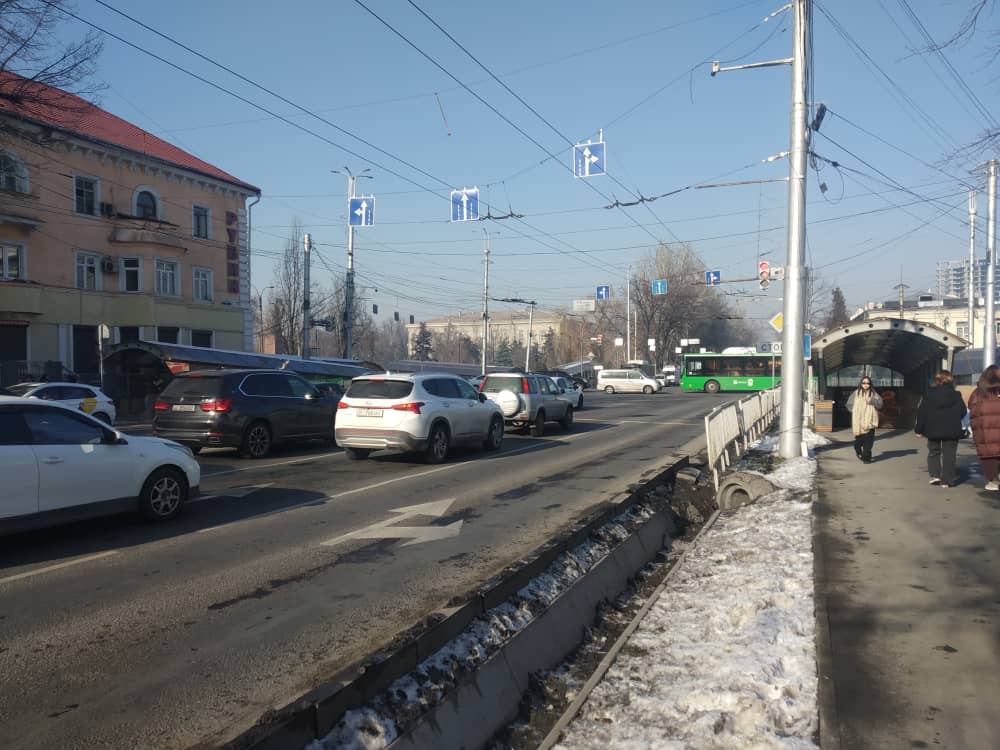
On January 20, Kyrgyzstan’s Minister of Natural Resources, Ecology, and Technical Supervision, Meder Mashiev, addressed parliament to discuss the sources of air pollution in Bishkek, the capital of Kyrgyzstan. Citing studies conducted by international organizations, Mashiev broke down the contributors to Bishkek’s smog, as reported by 24.kg.

According to the minister, the primary sources of air pollution in Bishkek are:

  • Burning of coal: 40%
  • Exhaust gases from motor vehicles: 30%
  • Smoke from the Bishkek Thermal Electric Power Plant: 15%
  • Windborne dust: 13.5%

Mashiev highlighted that efforts by the government in 2024 have led to improvements in air quality, based on data from the Hydrometeorological Service. However, he noted that Bishkek experienced its worst smog levels during 2021-2022.

One of the key issues contributing to air pollution is the absence of catalytic converters in 85% of vehicles operating in Kyrgyzstan. Catalytic converters are critical for reducing the toxicity of vehicle emissions by converting harmful compounds into less hazardous ones.

With over 600,000 registered vehicles in Bishkek — nearly double the city’s road capacity of 350,000 — the Ministry estimates that motor transport accounts for 27% of the city’s total air pollution.

During the parliamentary session, parliamentary deputy Balbak Tulobayev proposed several measures to address the smog problem:

  • Replace domestic coal: Prohibit the use of low-calorie, high-ash Kara-Keche coal in Bishkek and switch to high-calorie Kazakh coal, potentially reducing smog by 30-40%.
  • Accelerate gasification: Attract additional companies, such as those from Azerbaijan or Iran, to expand gasification in Bishkek. Currently, Russia’s Gazprom is the only provider of natural gas in the city. The MP estimates this could reduce smog by another 30%.
  • Improve public transportation: Construct a subway or monorail system in Bishkek to reduce reliance on private vehicles.
  • Ban polluting vehicles: Restrict vehicles without catalytic converters from entering the city.

Air pollution remains a persistent issue in Bishkek, a city with over one million residents. The problem worsens in the winter, as household coal burning for heating intensifies. Bishkek frequently ranks among the world’s top 10 most polluted cities on IQAir’s global air quality index.

To improve air quality, the government has outlined a comprehensive plan for 2024-2025, which includes the following measures:

  1. Transition to cleaner coal: Provide households with high-calorie coal that emits fewer pollutants.
  2. Modernize the thermal power plant: Replace outdated filters at the Bishkek coal-fired power plant and work toward converting it to natural gas.
  3. City planning for air circulation: Develop an architectural plan to enhance air movement in Bishkek.
  4. Expand gasification: Continue gasification of residential neighborhoods to reduce reliance on coal.
  5. Improve urban infrastructure: Construct transport interchanges and multi-level parking lots to ease traffic congestion.
  6. Promote public transport: Increase the attractiveness of public transportation and develop infrastructure for electric vehicles, including charging stations.
  7. Green belt initiative: Create a green belt in and around Bishkek to improve air quality and provide natural barriers to pollution.

Air pollution in Bishkek is a complex and longstanding issue driven by coal burning, vehicle emissions, and outdated infrastructure. While the government has made some progress in improving air quality, significant challenges remain. The proposed solutions, including expanding gasification, modernizing infrastructure, and introducing cleaner fuel options, could provide a pathway toward a cleaner and healthier future for the capital.

American Musicians Celebrate the Dutar During Tour of Turkmenistan

The Turkmen dutar, a two-stringed lute, and symbol of the nation’s musical heritage, left a lasting impression on American artists visiting Turkmenistan on a recent tour. Musicians Keith Bass, Aaron Young, and Richard Steighner praised the uniqueness of Turkmenistan’s traditional music during their performances as part of the “Broadway and Beyond” concert series.

The tour began with its first concert on January 16 at the Mukam Palace in Ashgabat. The American performers shared the stage with the State Symphony Orchestra of Turkmenistan, led by conductor Rasul Klychev, and soloists from the State Choir.

The concert program featured a mix of popular Broadway melodies and innovative interpretations of the works of Makhtumkuli Fraghi, the national Turkmen poet. A standout moment of the evening was the performance of “I Want to Feel the Wind,” a song based on Makhtumkuli’s poetry and composed especially for the tour.

Beatboxer Richard Steighner highlighted the creative synthesis of styles that emerged during the collaboration.

“Blending my beatboxing with the soft yet rich sound of the dutar was an unforgettable experience,” Steighner said. “The beauty of Turkmen music is astounding, and the dutar was a true revelation for us. We even incorporated it into an original piece, creating a unique fusion of traditional melodies and modern trends.”

Keith Bass, another member of the ensemble, emphasized the value of cultural exchange.

“Working with Makhtumkuli’s works gave us an opportunity to view music through a new lens. Every concert here has become a platform for creative experimentation,” Bass said.

U.S. Ambassador to Turkmenistan Elizabeth Rood, who attended the Ashgabat performance, highlighted the role of cultural events in fostering international understanding.

“Music and culture are bridges that unite people. We will continue to support projects that preserve cultural heritage and serve as symbols of friendship and trust,” Rood said.

Following the debut in Ashgabat, the “Broadway and Beyond” series will continue with performances in Turkmenbashi, Balkanabad, and Dashoguz.

CPJ Report Highlights Deteriorating Situation for Journalists in Tajikistan

The Committee to Protect Journalists (CPJ) has released its 2024 annual report, identifying the countries with the highest number of journalists imprisoned in the previous year. According to the report, China (50 journalists), Israel (43), and Myanmar (35) topped the list. Globally, a total of 361 journalists were imprisoned in 2023 — the second-highest figure since records began in 1992, surpassed only by 2022’s total of 370.

The report also highlights Tajikistan’s worsening environment for press freedom, with specific mention of the country’s persecution of journalists, including cases linked to ethnic discrimination.

The CPJ report notes that two of the eight imprisoned journalists in Tajikistan belong to the Pamiri ethnic minority, a group historically subjected to systemic discrimination. These journalists hail from the Gorno-Badakhshan Autonomous Oblast (GBAO), a region that has experienced significant unrest in recent years.

Among them is Ulfatkhonim Mamadshoeva, a prominent journalist who is currently serving a 20-year prison sentence. Authorities accused Mamadshoeva and her former husband, General Kholbash Kholbashov of the GKNB Border Troops, of orchestrating mass riots in GBAO in May 2022. These protests, which were met with a violent government crackdown, resulted in numerous deaths. Before her arrest, Mamadshoeva publicly denied any involvement in illegal activities.

The CPJ’s findings reflect the broader challenges faced by journalists in Tajikistan, where independent reporting is increasingly equated with criminal activity.

The CPJ report underscores the global misuse of vague anti-state laws to silence independent media. More than 60% of journalists imprisoned worldwide were charged under broadly defined laws, often targeting dissenting voices under accusations of terrorism, extremism, or other anti-state activities. Tajikistan is listed alongside countries like Russia, Belarus, Myanmar, and Turkey as frequent users of such repressive measures.

“A significant proportion of these cases involve terrorism or ‘extremism’ charges, which are often very vaguely worded,” the report states, noting that such laws give governments broad discretion to suppress media freedoms.

In Tajikistan, the eight journalists are currently serving prison sentences ranging from seven to 20 years. These long sentences illustrate the risks faced by media workers in a country where freedom of the press continues to erode.

The CPJ report highlights a troubling global trend, with over 100 new journalists imprisoned in the past year. While the focus of the report is on numerical leaders like China, Israel, and Myanmar, countries like Tajikistan, where media suppression is equally severe but less publicized, remain of grave concern.