• KGS/USD = 0.01144 0%
  • KZT/USD = 0.00212 0%
  • TJS/USD = 0.10456 0.19%
  • UZS/USD = 0.00008 0%
  • TMT/USD = 0.28490 0%
  • KGS/USD = 0.01144 0%
  • KZT/USD = 0.00212 0%
  • TJS/USD = 0.10456 0.19%
  • UZS/USD = 0.00008 0%
  • TMT/USD = 0.28490 0%
  • KGS/USD = 0.01144 0%
  • KZT/USD = 0.00212 0%
  • TJS/USD = 0.10456 0.19%
  • UZS/USD = 0.00008 0%
  • TMT/USD = 0.28490 0%
  • KGS/USD = 0.01144 0%
  • KZT/USD = 0.00212 0%
  • TJS/USD = 0.10456 0.19%
  • UZS/USD = 0.00008 0%
  • TMT/USD = 0.28490 0%
  • KGS/USD = 0.01144 0%
  • KZT/USD = 0.00212 0%
  • TJS/USD = 0.10456 0.19%
  • UZS/USD = 0.00008 0%
  • TMT/USD = 0.28490 0%
  • KGS/USD = 0.01144 0%
  • KZT/USD = 0.00212 0%
  • TJS/USD = 0.10456 0.19%
  • UZS/USD = 0.00008 0%
  • TMT/USD = 0.28490 0%
  • KGS/USD = 0.01144 0%
  • KZT/USD = 0.00212 0%
  • TJS/USD = 0.10456 0.19%
  • UZS/USD = 0.00008 0%
  • TMT/USD = 0.28490 0%
  • KGS/USD = 0.01144 0%
  • KZT/USD = 0.00212 0%
  • TJS/USD = 0.10456 0.19%
  • UZS/USD = 0.00008 0%
  • TMT/USD = 0.28490 0%

Uzbekistan and Kyrgyzstan Reach Deal to Share Chashma Water Spring

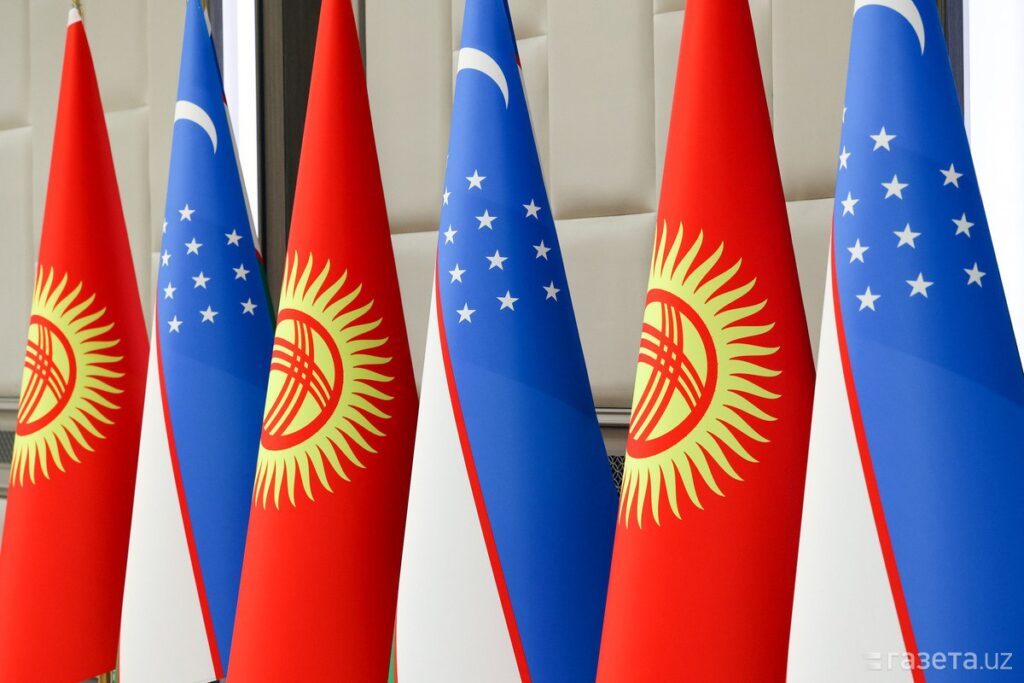
Uzbekistan and Kyrgyzstan have reached an agreement to jointly use the Chashma water spring, located along their shared border. According to Uzbekistan’s government portal, both countries have confirmed the main terms of the agreement, ensuring that Uzbek citizens can access the spring freely. They also agreed not to undertake any actions that would hinder full use of the spring by citizens of either side.

The agreement was reached during a meeting held in Tashkent on April 24, led by Uzbek Prime Minister Abdulla Aripov and Kyrgyz Deputy Prime Minister Kamchybek Tashiev. During the meeting, the delegations also approved a protocol concerning the final unsettled section of the border.

Both sides emphasized that the Chashma spring is a shared treasure of the Uzbek and Kyrgyz peoples. Under the agreement, Uzbekistan will have access to two-thirds of the spring’s water. Any activities that could impact the quantity or quality of the water must be coordinated with the Uzbek side.

The two countries also agreed to finalize and sign a comprehensive agreement on the joint use of the Chashma spring and the final demarcation of the state border as soon as possible. The talks were praised for helping to ease border crossings for citizens and goods. Both sides stressed the need to promptly update and sign a protocol to amend the 2004 agreement on border checkpoints to make cross-border travel more convenient for citizens.

The delegations agreed to convene another meeting of the working groups soon. At the conclusion of the talks, a protocol summarizing the agreements was signed.

The Chashma spring has been a sensitive issue in the past. In May 2020, a conflict erupted during a joint irrigation canal cleaning operation at the spring, resulting in injuries. According to Uzbekistan’s Foreign Ministry, 187 Uzbeks were injured, while Kyrgyzstan’s Health Ministry reported that 25 individuals were hospitalized.

China and Central Asia Deepen Ties at Almaty Foreign Ministers’ Meeting

The sixth meeting of foreign ministers in the “Central Asia-China” format was held in Almaty, attended by the foreign ministers of Kazakhstan (Murat Nurtleu), China (Wang Yi), Kyrgyzstan (Jeenbek Kulubaev), Tajikistan (Sirojiddin Muhriddin), Uzbekistan (Bakhtiyor Saidov), and a representative of Turkmenistan. 

The main topics of discussion included strengthening political dialogue, expanding trade and economic ties, enhancing transport interconnectivity, and jointly countering global challenges. The ministers also addressed sustainable development and environmental security, outlining steps to improve the architecture of multilateral cooperation based on the principles of equality and mutual respect.

A key item on the agenda was preparation for the second China-Central Asia Summit scheduled for this year. The foreign ministers engaged in in-depth political coordination and exchanged views on expanding cooperation across various fields.

Challenges of Globalization and China’s Position

Chinese Foreign Minister Wang Yi expressed concern over growing trends of anti-globalization and protectionism. He criticized the United States for launching a “tariff war” against more than 180 countries, stating that it had undermined international trade rules and the stability of the world economy. 

“China will consistently promote a high degree of openness, share opportunities with the world, and take responsibility for upholding international norms,” Wang Yi emphasized.

China proposed five areas for deepening cooperation with Central Asia: building political trust, promoting trade and investment, improving cooperation mechanisms, jointly celebrating historical anniversaries, and developing humanitarian ties.

Positions of the Central Asian Countries

The Central Asian foreign ministers highly supported China’s proposal to build a “community of common destiny” and expressed intentions to intensify joint efforts under the Belt and Road Initiative.

Particular attention was paid to facilitating trade, enhancing transportation connectivity, boosting industrial investment, and promoting agricultural development. The ministers reaffirmed their commitment to combating the “three forces of evil”, terrorism, extremism, and separatism and to strengthening cooperation within the United Nations framework.

A joint communiqué was adopted following the meeting, reaffirming the parties’ commitment to good-neighborliness, sustainable development, and deepening partnership. 

Kazakhstan at the Center of Integration Processes

Kazakhstan’s Foreign Minister Murat Nurtleu highlighted that the leaders of Central Asian countries had set clear guidelines for cooperation in trade, energy, transport logistics, education, and science. 

“In 2024, trade turnover between Central Asia and China reached a record $95 billion, with Kazakhstan accounting for 46% of that total,” Nurtleu said.

He noted that combining the region’s potential with China’s economic opportunities paves the way for a new architecture of strategic partnership. Plans to launch tourist railway routes between China and Central Asian countries were also discussed, and 2025 was declared the Year of Tourism of Uzbekistan in China.

Bilateral Meetings on the Margins of the Event

On the sidelines of the forum, Wang Yi held separate meetings with his counterparts from Kyrgyzstan, Tajikistan, and Uzbekistan. 

With Kyrgyz Foreign Minister Jeenbek Kulubaev, Wang discussed expanding practical cooperation and accelerating the China-Kyrgyzstan-Uzbekistan railway project. Talks with Tajik Foreign Minister Sirojiddin Muhriddin focused on strengthening strategic partnership and promoting initiatives within the Belt and Road framework. With Uzbek Foreign Minister Bakhtiyor Saidov, discussions centered on intensifying cooperation in key areas and maintaining close coordination in international affairs.

According to the meeting participants, China continues to play a stabilizing role amid global instability, and the Central Asia-China format has proven effective in promoting regional development and security. Participants emphasized their commitment to regular meetings and to further developing the format to address global challenges.

Water Level in Lake Balkhash Steadily Rising

Over the past year, the water level in Lake Balkhash has risen by 0.12 meters, and the volume of water has increased by 2 billion cubic meters, according to Kazakhstan’s Ministry of Water Resources and Irrigation. 

Located 175 miles northwest of Almaty, Kazakhstan’s largest city, Lake Balkhash is the world’s fifteenth-largest lake.

In May 2024, reports indicated that Balkhash’s water level had risen by 0.23 meters since the start of the year, largely due to increased rainfall and snowmelt floods during spring. Since the beginning of 2025, 3.8 billion cubic meters of water have been released from the Kapchagay reservoir in Almaty region into Lake Balkhash.

The lake’s water volume largely depends on the transboundary Ili River, which originates in China and supplies about 70% of Balkhash’s inflow. The river’s flow is regulated by the Kapchagay reservoir. This year, Lake Balkhash is expected to receive a total of 12 billion cubic meters of water from the reservoir.

According to Minister of Water Resources and Irrigation Nurzhan Nurzhigitov, the ministry will meet with French experts next week to begin preparations for a master plan to conserve Lake Balkhash through 2040.

The Times of Central Asia previously reported that in December 2024, Kazakhstan’s Ministry of Water Resources and Irrigation signed a cooperation agreement with the French Development Agency (AFD) and the French Geological Survey (BRGM, Bureau de Recherches Géologiques et Minières) to preserve Lake Balkhash. 

Under the agreement, the French side will allocate a grant of 1.35 million euros to Kazakhstan’s Ministry of Water Resources and Irrigation to support the development of sustainable water management practices for the lake. The project includes a comprehensive study of the Lake Balkhash basin and the creation of a long-term preservation plan extending through 2040.

Visa-Free Deal Under Review After Arrests of Uzbek Citizens in Dubai

The visa-free arrangement between Uzbekistan and the United Arab Emirates could be in jeopardy because of the increase in alleged violations by Uzbek citizens in the emirates, according to Uzbekistan’s Ministry of Foreign Affairs.

The leadership of the Dubai Criminal Investigation Department told Uzbek diplomats in a meeting that 15 Uzbek nationals had been detained in an incident and an investigation was underway, Akhror Burkhanov, spokesman for the Uzbek ministry, said on Telegram.

Several Uzbek media outlets have reported that two groups of Uzbeks clashed in a street brawl this month and that some of them were stabbed. Some reports said one person was killed.

In the meeting between Uzbek and UAE officials, it was noted “that the recent increase in violations committed by Uzbek citizens could affect the visa-free regime between the two countries,” Burkhanov said in the post on Friday.

He said the foreign ministry is working with law enforcement agencies on the matter and urged Uzbek citizens “to refrain from actions that tarnish the honor of our compatriots abroad.”

In March, a court in Abu Dhabi sentenced three Uzbek citizens to death after they were convicted of abducting and murdering Zvi Kogan, an Israeli-Moldovan rabbi whose body was discovered in the Emirati city of Al Ain in November 2024. A fourth person convicted in the killing was sentenced to life in prison.

An emissary for the ultra-Orthodox Chabad Hasidic movement in the UAE, Kogan also served as an aide to his brother-in-law, Levi Duchman, the Chief Rabbi of the UAE, who normalized ties with Israel in late 2020, a move met with skepticism in the UAE and across the wider Muslim world. Israel said the killing of Kogan was an act of terror.

Some Uzbek citizens, meanwhile, have encountered problems trying to enter the United Arab Emirates.

The visa-free regime between Uzbekistan and the United Arab Emirates started early last year. Citizens can travel to each other´s countries without a visa if they don’t stay any longer than 30 days.

“This measure is considered an important step towards enhancing joint cooperation in the fields of politics, economics, culture, education and other areas of common interest,” the UAE’s Ministry of Foreign Affairs said.

Unlocking Potential: Education Reform Necessary for Central Asia’s Economic Rise

Central Asian countries have made remarkable progress in providing universal access to education, showcasing their commitment to developing their human capital. According to recent data, the region boasts impressive enrolment rates, with students averaging 12.6 years of primary and secondary education — nearing the maximum limit of 14 years. Even more striking is that approximately 40% of young adults successfully graduate from universities, exceeding the global average of 31%, and private education in the region is also growing competitively, with the number of higher education institutions in particular doubling in the last two to five years, reflecting the region’s commitment to higher education.

Despite the significant strides made in access to education and levels of academic achievement, a disconcerting trend is emerging: students’ academic performance is declining. This troubling shift becomes apparent through the diminishing scores recorded on standardized assessments, most notably the Program for International Student Assessment (PISA), which gauges the competencies of 15-year-olds globally. Over the last decade, the decline in math scores among Central Asian students has been particularly alarming, reflecting a staggering regression equivalent to the loss of an entire year of formal schooling. This deterioration in academic performance raises critical concerns, as it jeopardizes not only the prospects of these students but the whole region’s broader economic potential and workforce capabilities. The implications of such a decline are profound, threatening to undermine the foundation of growth and innovation that education is meant to support.

Mental arithmetic is traditionally defined as the ability to perform precise calculations without any reliance on external tools such as paper, pencils, mechanical calculators, or computers. This skill, widely known is crucial in a child’s mathematical education and development. In Central Asia, mental arithmetic has gained immense popularity as an educational approach, particularly targeting children between the ages of 4 and 16. This method emphasizes the cultivation of mental calculation skills through various engaging tools, with the abacus being one of the most prominent. Instead of depending solely on written calculations or electronic devices, this approach aims to enhance a child’s cognitive abilities, fostering essential skills such as mental retention, focus, and practical problem-solving strategies. Moreover, it instills confidence in their mathematical capabilities while nurturing a genuine appreciation for the subject.

By mastering mental arithmetic, students improve their mathematical prowess and gain significant advantages — especially for those aspiring to enter fields such as policymaking that rely heavily on Information technology, science, statistics, and economics. While modern technology has introduced tools like calculators and sophisticated spreadsheets to handle complex computations, the benefits of proficient mental math skills are undeniable. Such skills can significantly enhance a policymaker’s efficiency, accuracy, and decision-making capabilities in various real-world scenarios. Here are some reasons why these skills are crucial:

  • Faster Data Analysis and Estimations

Economists often deal with large datasets, percentages, and financial projections. Mental arithmetic helps them quickly estimate trends, identify errors, and make fast decisions without always relying on tools.

  • Improved Problem-Solving and Logical Thinking

Mental math strengthens the brain’s cognitive flexibility, helping economists think critically about numbers, interpret financial models, and assess economic indicators more confidently.

  • Better Decision-Making in Business and Finance

Economists in finance, banking, or business strategy frequently need to evaluate investment returns, interest rates, inflation trends, or cost-benefit analyses. Quick mental calculations enable better on-the-spot judgments.

  • Enhanced Numerical Memory and Accuracy

Economists who work with statistics, econometrics, or policymaking often need to recall figures, ratios, and historical data. Mastering mental arithmetic improves numerical recall and minimizes calculation errors in critical work.

  • Increased Confidence in Negotiations and Presentations

During discussions with policymakers, investors, or stakeholders, having strong mental math skills allows economists to confidently discuss figures without delays and respond to numerical questions with precision.

  • Competitive Edge in the Job Market

Many employers value candidates with strong quantitative skills. Mental arithmetic demonstrates an ability to handle numbers efficiently, which is particularly useful in roles involving financial modeling, economic forecasting, and market analysis.

While specific data regarding Central Asian students and their mental arithmetic skills is limited, existing research identifies various factors that can impede mathematical performance. Incomplete mastery of fundamental number facts, computational difficulties, and challenges with abstract reasoning are often cited as obstacles. Moreover, a lack of understanding of the language of mathematics, combined with problems in visual-spatial reasoning, can hinder a student’s ability to execute mental calculations. Psychological barriers, such as math anxiety and negative attitudes toward the subject, can impede performance. Although some studies suggest a link between language skills and mathematical abilities — particularly in East Asian contexts — no definitive data currently connects these factors to Central Asian students and their engagement with mental arithmetic.

The Education Dilemma: Navigating the Challenges of Learning

The decline in the quality of education in Central Asia can be attributed to several interrelated factors that create a challenging environment for both students and educators. One significant issue is the diminishing social pressure to invest more funds into education and ensure that these investments are of high quality. Many regional schools are burdened by insufficient infrastructure, which hampers the learning experience. Classrooms often lack essential resources, such as well-equipped laboratories and access to digital learning technologies, which are crucial for modern education. Additionally, teacher training remains inadequate, with many educators not receiving the professional development necessary to adapt to contemporary teaching methods. This shortfall perpetuates outdated, lecture-based instructional practices that struggle to engage students effectively. As a result, critical thinking and problem-solving skills — essential competencies in today’s world — are not being fostered sufficiently within the classroom.

The region’s vocational Education and Training (VET) presents another pressing concern. Alarmingly, nearly 45% of upper-secondary students are redirected into VET programs early on, with percentages reaching as high as 80% in certain countries. While these programs are often promoted as a beneficial route to improve employability, particularly for students from lower socioeconomic backgrounds, the reality falls short of expectations. Numerous studies indicate that these VET programs frequently do not provide students with the skills necessary to navigate the rapidly changing job market, leading to doubts about their effectiveness in promoting upward social mobility and mitigating inequality. Moreover, the quality of higher education in Central Asia is particularly troubling. For countries in the region to achieve high-income status, they must transition from merely adopting existing technologies to creating an innovation-driven economic growth model. This shift hinges on the presence of world-class higher education institutions capable of nurturing creative thinkers and innovators. Unfortunately, the pervasive poor quality of university education poses a significant threat to the long-term growth prospects of these nations, jeopardizing their future development and competitiveness on the global stage.

What Steps Can Be Taken?

To effectively reverse the troubling decline in the quality of basic education, we must implement various cost-effective interventions. One key strategy is to enhance communication by providing comprehensive information about the educational system to all stakeholders, including parents, school principals, teachers, and students. This ensures that everyone is informed and engaged in the educational process. Another crucial step involves bolstering teacher support through strengthened training programs and structured pedagogy, which can equip educators with the necessary skills and methods to engage their students more effectively. Additionally, adopting a “teaching at the right level” approach — where instruction is tailored to the individual learning capabilities of students rather than strictly adhering to grade levels — can significantly improve educational outcomes. Moreover, elevating the prestige of the teaching profession is vital; this can be achieved by attracting a new generation of younger and more passionate teachers who are eager to inspire and make a difference.

However, fundamental reforms may also be required, particularly in vocational education and training (VET) systems. This could involve raising the selection age for VET programs and fostering closer collaboration between educational institutions and the industry, ensuring that students acquire the practical skills that align with the demands of a dynamic labor market. If the VET systems fail to prepare students adequately, it may be necessary to reassess their size and structure entirely. Enhancing management practices, focusing on merit, and instituting greater accountability measures are essential to elevate quality in higher education. This can be facilitated through increased reliance on competitive grants, fostering healthy competition for student enrolment and faculty positions, and conducting regular performance assessments.

Universities tend to be more productive when granted more autonomy, facing competition that drives innovation. Additionally, merging research institutes with universities — especially in regions where they operate separately — can bridge the gap between research and teaching, thus improving overall quality. A robust education system catalyzes innovation and economic growth, particularly at the tertiary level. There is no denying that the optimal time to address these critical reforms across Central Asia was a decade or two ago; however, the next best opportunity to act is right now. If this downward trend in educational quality is not tackled urgently, the consequences could be dire. The prospect of attaining high-income status within the next generation, or even two, may be severely compromised. Without prompt and decisive intervention — especially in higher education — Central Asia risks jeopardizing the future socioeconomic development and opportunities available to its citizens. Developing the ability to brainstorm when children are in school is essential to prevent this from happening. To do this, teaching mental arithmetic is one of the best tools to develop rapid calculation and sound decision-making.

Kazakhstan Targets Anonymous Telegram Channels Over Disinformation Concerns

Kazakhstan’s Ministry of Culture and Information has launched a vocal campaign against anonymous Telegram channels, accusing them of fueling misinformation and destabilizing public discourse. Minister Aida Balayeva has called for stricter controls and accountability from both platform administrators and users.

Breeding Grounds for Misinformation

Minister Aida Balayeva described anonymous Telegram channels as “breeding grounds for lies,” arguing that their content undermines public stability and trust. Balayeva accused their operators of systematically disseminating fake news and orchestrating provocations designed to manipulate public opinion. The ministry, she said, is pursuing legal mechanisms to identify and block such platforms.

“Our clear position is the issue of strengthening responsibility for the deliberate spread of fakes. I believe that anonymity should not be a shield for provocateurs,” Balayeva stated, emphasizing that rules should apply equally online and offline.

Balayeva cited the recent case of the Telegram channel Qirsabyn, whose administrators were detained in Astana and Karaganda. According to Kazakhstan’s Prosecutor General’s Office, the individuals allegedly extorted money by threatening to publish false and compromising information.

“I think it is time to sit down at the negotiating table with the Telegram administration,” Balayeva added.

Battling War Propaganda

Balayeva also addressed efforts by her ministry to counter war-related propaganda, particularly content originating from Russian platforms.

According to her, some social networks promote mercenary enlistment for the war in Ukraine, targeting citizens across the Commonwealth of Independent States, including Kazakhstan. The ministry reportedly monitors these platforms and alerts site administrators when illegal or harmful content is identified.

“The volume of throw-ins and unlawful materials is huge. In any case, it affects the mood of society, and causes resonances,” Balayeva noted.

No Blanket Ban on Platforms

While advocating for accountability, Balayeva clarified that Kazakhstan does not aim to impose a blanket ban on social networks. She emphasized that maintaining information integrity is a shared responsibility between government bodies, platform operators, and users.

“They often talk about blocking different social networks. I want to say: all this depends not only on the administrators of social networks and the actions of government agencies. First of all, it concerns the users of social networks, who must understand their responsibility in that they are directly responsible for stability in society and for the non-proliferation of false information.”

Social Media Restrictions for Minors

The conversation on regulating online content has also reached Kazakhstan’s Parliament, where Mazhilis deputy, Zharkynbek Amantayuly recently submitted a request to the Prime Minister proposing restrictions on social media use by minors. Amantayuly referenced models in countries such as China, South Korea, France, the United States, and Australia, where age-based limitations are legally enforced, arguing that Kazakhstan should adopt similar laws to regulate minors’ access to social networks and online games.

Telegram Under Global Scrutiny

Telegram has come under fire in several countries over its resistance to content moderation.

In August 2024, the platform’s founder Pavel Durov was briefly detained at Paris-Le Bourget Airport on suspicions ranging from terrorism to drug trafficking and child exploitation. Durov was released, but French authorities maintained their concerns about his non-cooperation with regulatory demands. Durov has now returned to Dubai, but French authorities continue to investigate criminal activity on the messaging app.

Russia has consistently demanded full access to user data and greater moderation, while the United States intelligence community has increased its scrutiny of the app.

Telegram is blocked outright in China. Other countries, including Belarus, Azerbaijan, India, Brazil, Iran, Spain, Hong Kong, and Germany, have also called for the removal of certain Telegram channels or sought broader platform restrictions.

In recent years, Kazakhstan has frequently been the target of disinformation campaigns, both at home and abroad.