• KGS/USD = 0.01143 -0%
  • KZT/USD = 0.00192 -0%
  • TJS/USD = 0.10820 0.19%
  • UZS/USD = 0.00008 0%
  • TMT/USD = 0.28575 0%
  • KGS/USD = 0.01143 -0%
  • KZT/USD = 0.00192 -0%
  • TJS/USD = 0.10820 0.19%
  • UZS/USD = 0.00008 0%
  • TMT/USD = 0.28575 0%
  • KGS/USD = 0.01143 -0%
  • KZT/USD = 0.00192 -0%
  • TJS/USD = 0.10820 0.19%
  • UZS/USD = 0.00008 0%
  • TMT/USD = 0.28575 0%
  • KGS/USD = 0.01143 -0%
  • KZT/USD = 0.00192 -0%
  • TJS/USD = 0.10820 0.19%
  • UZS/USD = 0.00008 0%
  • TMT/USD = 0.28575 0%
  • KGS/USD = 0.01143 -0%
  • KZT/USD = 0.00192 -0%
  • TJS/USD = 0.10820 0.19%
  • UZS/USD = 0.00008 0%
  • TMT/USD = 0.28575 0%
  • KGS/USD = 0.01143 -0%
  • KZT/USD = 0.00192 -0%
  • TJS/USD = 0.10820 0.19%
  • UZS/USD = 0.00008 0%
  • TMT/USD = 0.28575 0%
  • KGS/USD = 0.01143 -0%
  • KZT/USD = 0.00192 -0%
  • TJS/USD = 0.10820 0.19%
  • UZS/USD = 0.00008 0%
  • TMT/USD = 0.28575 0%
  • KGS/USD = 0.01143 -0%
  • KZT/USD = 0.00192 -0%
  • TJS/USD = 0.10820 0.19%
  • UZS/USD = 0.00008 0%
  • TMT/USD = 0.28575 0%
14 December 2025

Tajikistan Captures Four Suspected of Konibodom Night Murders

Tajikistan’s Prosecutor General’s Office has announced that it has detained four men in connection with a series of murders that have terrified the town of Konibodom, in the country’s northern Sughd region.

The office’s statement says that operational and investigative measures led to the arrest of four Tajik citizens. The detainees are:

  • Solehjon Khudojberdiev, born in 1998, a resident of Firuzoba Jamoat, Gulbog village;
  • Akhajon Tukhtaev, born in 1997, also from Firuzoba Jamoat, Gulbog village;
  • Bakhtiyor Ravshanov, born in 1988, a resident of Lohuti Jamoat, Sanchidzor village;
  • Manuchehr Odilov, born in 1996, in M. Abdulloyev street, Khamroboyev Jamoat.

All four are residents of Konibodom.

The Prosecutor General’s Office said that the investigation is being conducted under the direct supervision of the country’s top leadership.

Earlier this year, The Times of Central Asia reported that Konibodom residents had endured a wave of night murders in the spring. Between late March and late May, 13 people — ethnic Tajiks, and Kyrgyz from the region near the Kyrgyz border — were killed. The victims, ranging from children to the elderly, were murdered in different parts of the town.

While authorities initially claimed the suspects had been caught and the killings had stopped, violence returned in December. On December 9, six more people were murdered, followed by four more found dead in their homes on December 16.

Astana’s Long-Awaited LRT Project Set to Launch Next Year

Zhenis Kassymbek, the Akim (governor) of Kazakhstan’s capital Astana, has announced that the city’s first light rail transit (LRT) line will launch by the end of next year, marking a significant milestone in a 13-year-long construction project fraught with delays and controversies.

The LRT project, envisioned as a high-speed transport system running on elevated tracks to bypass traffic, began construction in 2011. Initially, the line was slated for completion by 2017 to coincide with the EXPO international exhibition. It was intended to connect the Astana-Nurly Zhol railway station with the capital’s airport.

While the railway station opened on time, the LRT project was halted in 2013 due to high costs and concerns over its financial viability. The project was revived in 2015 when Astana’s Akimat signed a construction deal with a consortium of Chinese companies, China Railway International Group Limited and Beijing State-Owned Assets Management Co., Ltd. However, further delays occurred when funds — amounting to over 80 billion tenge ($200 million at the time) — were frozen in the accounts of the now-defunct Bank of Astana. Construction began with the installation of support pillars, but the Chinese contractors abandoned the project due to funding issues.

In 2019, Kazakhstan’s investigative authorities intervened. Talgat Ardan, the former head of Astana LRT, and Kanat Sultanbekov, an ex-deputy mayor of Astana, were accused of embezzling nearly 30 billion tenge. This included inflating project costs and awarding overpriced contracts. Both were sentenced in absentia to seven years in prison in May 2023.

Despite initial skepticism from President Kassym-Jomart Tokayev, who questioned the project’s ridership potential given its 22-kilometer length and route, the decision was made to proceed. Former Akim Altay Kulginov argued that dismantling the incomplete infrastructure would cost more than completing it.

Under Kassymbek, construction has progressed. “The first LRT trains will arrive in August or September next year. We expect to have 15 trains operational by fall, with technical testing by the end of 2024 and full service in early 2026,” Kassymbek stated during a briefing.

The elevated tracks are nearing completion, with rail-laying in progress. Signal installation is set to begin in spring. The Akimat anticipates the line will serve approximately 20,000 passengers daily.

The fare for LRT rides has yet to be finalized. Kassymbek announced that the pricing would remain affordable. However, he stopped short of providing specifics.

In 2017, the proposed fare was 300 tenge per ride, three times the cost of a bus ticket at that time. Current bus fares in Astana range from 110 tenge for regular routes to 250 tenge for express routes. Given the LRT’s total project cost of $1.88 billion, fares significantly higher than bus rates may be needed to achieve profitability.

Despite this, the LRT could address pressing issues, such as Astana’s daily traffic jams. Currently, buses are the only public transport option in the city. “We aim to expand roads, increase bridges, and enhance public transport to encourage residents to switch from private vehicles,” Kassymbek said. He also suggested that Turkestan and Akmeshit Streets, which flank the Baiterek monument and lead to the EXPO center, may become one-way routes to further ease congestion.

Kazakh President Picks New Economy Minister Amid Reforms, Uncertainty

Kazakh President Kassym-Jomart Tokayev replaced the economy minister on Saturday, a move that came as Kazakhstan struggles with a depreciating currency even though it earned international praise for economic prudence in recent months. The Cabinet change also comes ahead of the January inauguration of U.S. President-elect Donald Trump, who has warned of more tariffs in his second term.

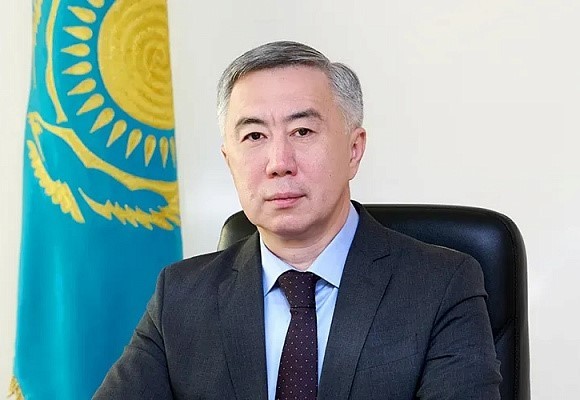
Nurlan Baibazarov, who was appointed as deputy prime minister and national economy minister in February, was replaced by Serik Zhumangarin, an experienced hand whose previous posts included deputy economy minister, trade minister and head of Kazakhstan’s Agency for Protection and Development of Competition. He was also among the several deputy prime ministers in the Cabinet and retains that title as well.

Zhumangarin was tasked in his new job with ensuring Kazakhstan’s economic growth, implementing structural changes and improving budget and tax policies, according to the prime minister’s office.

“In addition, the Ministry of National Economy needs to pursue a balanced policy of business support and a balanced policy of tariff regulation in order to ensure economic growth in priority sectors,” the office said.

While global economic policy-makers are preparing for uncertainty over planned tariffs and other measures when Trump takes office, the president-elect and Tokayev agreed in a telephone conversation this month to collaborate on trade, investment and other areas.

In September, the Moody’s Ratings agency upgraded Kazakhstan’s long-term local and foreign currency issuer ratings to Baa1 from Baa2 and changed the outlook to stable from positive. Moody’s applauded institutional and economic reforms in Kazakhstan, as well as efforts to diversify and move away from hydrocarbons, but warned of the risk of geopolitical tensions and “secondary” sanctions related to Western economic pressure on Russia because of the war in Ukraine.

In October, the International Monetary Fund predicted GDP growth in Kazakhstan of 3.9% for 2024, with growth expected to increase in 2025 despite uncertainty. It applauded what it called Kazakhstan’s tight monetary policy and commitment to exchange rate flexibility.

Even so, Kazakhstan’s currency later came under increased pressure. The central bank said early this month that it had spent more than $1 billion in foreign exchange interventions since mid-November in an effort to stabilize the declining currency, which passed the threshold of 500 tenge to the U.S. dollar and hit record lows. Kazakh officials attributed the drop to the global appreciation of the dollar, a decrease in oil prices, the falling Russian ruble and other factors.

Born in 1969 in Aktobe, Kazakhstan, Zhumangarin, the new economy minister, has also worked on competition and antitrust regulation for the Eurasian Economic Commission, a regulatory body that oversees the Eurasian Economic Union. The group aims at integrating the economies of the former Soviet states of Kazakhstan, Kyrgyzstan, Russia, Armenia and Belarus.

Uzbekistan Targets $43 Billion in Investments to Accelerate Growth

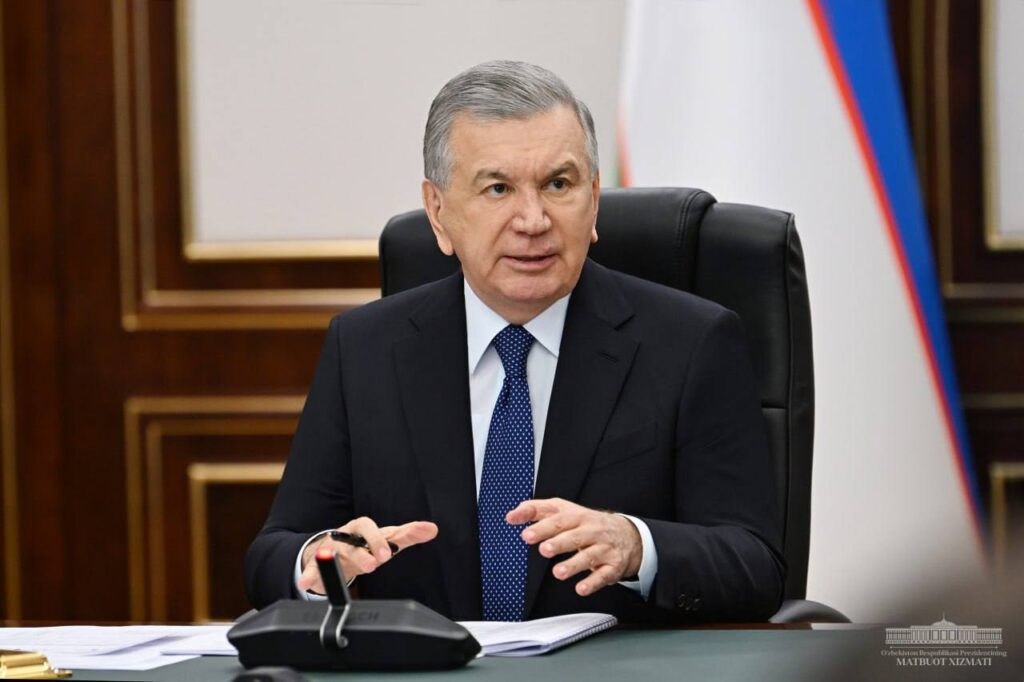
On December 19, Uzbek President Shavkat Mirziyoyev chaired a government meeting to review foreign investment progress in 2024 and outline goals for 2025​.

Since 2017, Uzbekistan has attracted a total of $188 billion in investments, including $87 billion in foreign investments. This has increased the share of investments in the country’s GDP to over 30%, providing a solid foundation for sustainable economic growth.

In 2024, the volume of investments grew by 1.3 times, surpassing $36 billion. These funds financed 560 large and medium-sized projects, many of which have already been put into operation this year. These projects are expected to boost Uzbekistan’s exports by $1 billion in 2025.

For 2025, Uzbekistan aims to utilize $43 billion in investments, funding over 300 large projects. These initiatives will support the production of 662 types of import-substituting goods, further strengthening the country’s industrial base.

Mirziyoyev underscored the importance of targeted engagement with foreign investors and improving conditions to attract more investment.

The meeting also set an ambitious goal to double Uzbekistan’s annual export volume by 2030, reaching $45 billion. Achieving this target will require launching new investment projects, increasing the production of high-added-value goods, and expanding access to international markets.

Central Asia Leads in Repatriating Citizens from Syrian Camps

Central Asian governments are at the forefront of efforts to repatriate their citizens from camps in northeastern Syria, according to Khalid Koser, head of the Global Community Engagement and Resilience Fund (GCERF). In an interview with RIA Novosti, Koser highlighted that, unlike European nations, Central Asian states have taken responsibility for their nationals.

GCERF is an international organization supporting local initiatives to prevent extremism and violence by fostering partnerships between governments, civil society, and the private sector. Koser noted that approximately 2,200 Central Asian citizens have been repatriated from these camps. Kazakhstan has brought back 754 individuals, Kyrgyzstan 533, Tajikistan 381, and Uzbekistan 531.

By contrast, Koser criticized European nations for neglecting their citizens in the camps. “Tajikistan says, ‘These are our citizens, and we are responsible for them,’” Koser stated. “Meanwhile, Western Europe hopes the problem will disappear, leaving people to die in camps.”

The head of GCERF also pointed out the challenges of repatriating men, many of whom were combatants. “The question now is how to handle those who fought, were involved in terrorism, and face difficulties reintegrating. Most will end up in prison, which could lead to further radicalization within the prison system,” Koser warned.

The camps in northeastern Syria, managed by the Syrian Democratic Forces (SDF) and the United States, house 65,000 to 70,000 people. Most of the residents are women and children from families of ISIS militants. While the camps are not officially prisons, movement is restricted, and Kurdish forces prevent residents from leaving.

The Times of Central Asia has previously reviewed the repatriation operations undertaken by Central Asian countries, which continue to set a global example in addressing this humanitarian and security challenge.

Anti-Migrant Sentiments Continue to Rise in Russia Following General’s Murder

Anti-migrant sentiment is intensifying in Russia following the murder of a high-ranking general, with calls from populist media outlets and bloggers urging the Kremlin to tighten its migration policies. Experts warn that this tension is likely to escalate. They argue that the Russian authorities are redirecting public frustration toward Central Asians as a means of improving domestic social stability. Anti-migrant rhetoric coming out of Russia is increasingly being wielded as a tool to exert leverage on Central Asian nations.


General Kirillov Murder: Uzbeks Question Russian Narrative of Kurbonov’s Arrest

The recent arrest of an Uzbek citizen accused of committing a terrorist act – allegedly recruited by Ukrainian security services – has added fuel to the fire. This incident follows a long-standing pattern of discrimination against Central Asian labor migrants in Russia.

In Uzbekistan, people are questioning the arrest in Moscow this week of 29-year-old courier Akhmadjon Kurbonov, who stands accused of murdering Russian general Igor Kirillov. The head of Russia’s radiation, chemical, and biological defense forces, Kirillov was heavily involved in Russia’s war with Ukraine.

The media in Russia has claimed that Kurbonov carried out the assassination – and that of Kirillov’s assistant Ilya Polikarpov – on behalf of the Ukrainian government in exchange for financial reward and residency in Europe.

This version of events has sparked widespread debate in Uzbekistan. On social media, people have raised questions about the credibility of the allegations. Analyst Shuxrat Rasul described the accusation as “hard to believe.” On Facebook, Uzbek citizens such as Anvar Sagdullayev have questioned the narrative, commenting, “How can a man accused of murder appear so calm, as if reciting a prepared script? Perhaps this was orchestrated by interests closer to home.”

Another Facebook user, Raimbergan Kuchkarov, speculated that internal conflicts are being stoked by using migrants as scapegoats. “The Russians themselves likely don’t know where their generals live. Why would a high-ranking officer be targeted by someone from Uzbekistan? This seems like a provocation,” Kuchkarov wrote.

The case has also raised concerns among Uzbek immigrants in Russia, who fear that collective blame for the alleged actions of one individual may exacerbate prejudice and discrimination against their community.

The Embassy of Uzbekistan in Russia has responded by stating that it is in contact with Russian law enforcement agencies and is working to verify details regarding the detained Uzbek citizen.

On December 19, Uzbek President Shavkat Mirziyoyev held a phone conversation with Vladimir Putin to discuss bilateral and regional cooperation. The leaders highlighted the importance of close collaboration between their countries’ special services to combat security threats. The Kremlin noted that the discussion was initiated by the Uzbek side. During the call, Mirziyoyev expressed condolences for the deaths of General Kirillov and Polikarpov, condemning the attack as a “heinous act of terrorism.”


Increasing Pressure

The situation for migrants in Russia has worsened significantly since the 2022 invasion of Ukraine. Migrants have faced frequent raids, detentions, and the threat of deportation. Legislative changes have further tightened entry and residency rules. The Times of Central Asia has previously reported on incidents such as a video which purportedly shows a Tajik schoolgirl being beaten in a classroom by Russian boys as their teacher looks on and does nothing, and a Kyrgyz woman in Moscow being kicked and hit in the face by a man shouting, “You’re all terrorists. You should not be in Russia. Get out of here!”

The climate of hostility has even extended to Russian citizens, with social media flooded with videos of individuals being harassed over their ethnicity or religious attire. In another video, a group of young Russian males in the Moscow metro scream at a girl from Yakutia, an area of northeastern Siberia that has been part of Russia since the 17th Century, that Russia is for Russians.

In October 2023, Chairman of the Investigative Committee of Russia, Alexander Bastrykin opined that migrants who have obtained Russian citizenship should be stripped of it if they refuse to fight in Ukraine, claiming that “people are saying: ‘While Russians are at the front, migrants are attacking our rear.’” Meanwhile, in mid-2024, Alexander Bortnikov, director of the Federal Security Service (FSS), made allegations about a potential terrorist threat linked to migrant workers, accusing the Ukrainian, British, and American intelligence services of exploiting this demographic. Currently, Russian media often portray Central Asians as uneducated radicals who take jobs from locals and resist cultural integration.

On December 19, 2024, RFE/RL quoted an Uzbek woman living in Moscow as saying, “There are police vans everywhere. Today, I was walking near a market and saw several police vans there, too. They detained everyone – Uzbeks, Kyrgyz, and Tajiks.”


Central Asia Receives Alarming Signals

Kazakhstani political analyst Zamir Karazhanov believes that stricter migration laws in Russia could prompt Central Asian governments to reassess their relationship. “Policy tightening is becoming a standard practice for the Russian authorities,” Karazhanov explained to The Times of Central Asia. “These measures often extend beyond labor migrants. For instance, after a terrorist attack involving a plane from Turkey, relations between Russia and Turkey soured, accompanied by harassment of Turkish businesses.”

Karazhanov predicts that recent incidents, such as the Crocus City Hall attack and the murder of General Kirillov, will lead to broader crackdowns. “This response is unlikely to target individual offenders, but rather the groups they represent. Uzbek citizens are likely to face increased scrutiny, as Tajik citizens did following the Crocus attack,” he stated.

The political analyst noted that while relations between Russia and Tajikistan remain stable despite such measures, the broader implications for Central Asian countries are concerning.

“Anti-migrant sentiment will eventually impact economic ties. Migrants face deportation, heightened inspections, and loss of labor opportunities. These developments discourage potential migrants, who are already earning less in Russia than before,” Karazhanov said.

He suggested that this trend could pressure Central Asian governments to focus on domestic job creation, which may have a silver lining.

“Decades of large-scale labor migration to Russia reflect an unhealthy economic dynamic. A reduction in migration might encourage local governments to attract investors and improve the business environment. For example, Uzbekistan is already working to create favorable conditions for foreign investors. Tajikistan and Kyrgyzstan may follow suit, fostering job creation and reducing dependency on labor migration,” Karazhanov concluded.


The Shift to a Political Issue

Igor Shestakov, a member of Kyrgyzstan’s Migration Council under the Jogorku Kenesh (parliament), noted that labor migration to Russia is increasingly being framed as a political issue.

“This shift began with the Crocus City Hall terrorist attack and has been reinforced by fears raised in the Russian State Duma,” Shestakov told Times of Central Asia. “Central Asian nationals are also linked to the Syrian conflict by some ‘experts’ in Russia, further fueling restrictive legislative measures. These restrictions will likely affect employment rules, even as Russia faces a labor shortage.”

Shestakov emphasized that Kyrgyzstan’s membership in the Eurasian Economic Union (EAEU) should, in theory, shield Kyrgyz migrants from such restrictions.

“The EAEU guarantees the free movement of labor, eliminating the need for exams, and visas for Kyrgyz citizens. However, the hardline rhetoric around migration and terrorism means our citizens must carefully adhere to legislative requirements,” Shestakov stressed.


Story by Sadokat Jalolova, Anton Chipegin, Vagit Ismailov, Jonathan Campion, and Stephen M. Bland