• KGS/USD = 0.01144 0%
  • KZT/USD = 0.00196 -0%
  • TJS/USD = 0.10904 0%
  • UZS/USD = 0.00008 0%
  • TMT/USD = 0.28490 0%
  • KGS/USD = 0.01144 0%
  • KZT/USD = 0.00196 -0%
  • TJS/USD = 0.10904 0%
  • UZS/USD = 0.00008 0%
  • TMT/USD = 0.28490 0%
  • KGS/USD = 0.01144 0%
  • KZT/USD = 0.00196 -0%
  • TJS/USD = 0.10904 0%
  • UZS/USD = 0.00008 0%
  • TMT/USD = 0.28490 0%
  • KGS/USD = 0.01144 0%
  • KZT/USD = 0.00196 -0%
  • TJS/USD = 0.10904 0%
  • UZS/USD = 0.00008 0%
  • TMT/USD = 0.28490 0%
  • KGS/USD = 0.01144 0%
  • KZT/USD = 0.00196 -0%
  • TJS/USD = 0.10904 0%
  • UZS/USD = 0.00008 0%
  • TMT/USD = 0.28490 0%
  • KGS/USD = 0.01144 0%
  • KZT/USD = 0.00196 -0%
  • TJS/USD = 0.10904 0%
  • UZS/USD = 0.00008 0%
  • TMT/USD = 0.28490 0%
  • KGS/USD = 0.01144 0%
  • KZT/USD = 0.00196 -0%
  • TJS/USD = 0.10904 0%
  • UZS/USD = 0.00008 0%
  • TMT/USD = 0.28490 0%
  • KGS/USD = 0.01144 0%
  • KZT/USD = 0.00196 -0%
  • TJS/USD = 0.10904 0%
  • UZS/USD = 0.00008 0%
  • TMT/USD = 0.28490 0%
08 December 2025

EDB Conference in Almaty to Focus on Sustainable Development in Central Asia

The Eurasian Development Bank (EDB) will host its annual conference, titled “Promoting Sustainable Development in Central Asia,” on December 6 in Almaty, Kazakhstan.

The EDB, an international financial institution focused on fostering economic cooperation and development across Eurasia, counts Armenia, Belarus, Kazakhstan, Kyrgyzstan, Russia, and Tajikistan among its member countries. Kazakhstan alone accounts for nearly 60% of the Bank’s investment portfolio, reflecting its pivotal role in regional development efforts.

The conference will focus on the EDB’s most pressing priorities for 2024, including the urgent need for sustainable and rapid economic growth to alleviate poverty in Central Asia. Discussions will address the persistent challenges of transport connectivity, which are particularly acute for the landlocked countries of the region.

Additionally, the event will explore the integrated development of the water, energy, and food nexus, which the EDB views as essential for ensuring the region’s security, peace, and sustainable development.

Participants will also examine trade facilitation, investment strategies, and innovative solutions for infrastructure development. These topics are considered crucial for advancing the region’s economic prospects and improving the quality of life for its citizens.

The conference will host representatives from leading international organizations, including the World Bank, the Islamic Development Bank (IsDB) and its Institute, the World Food Programme, and the UN Development Programme. Other participants include the Development Bank of Kazakhstan, the UN Economic and Social Commission for Asia and the Pacific (ESCAP), and the UN Climate Technology Centre & Network (CTCN), alongside government officials and regional stakeholders.

This annual event is expected to provide a platform for actionable discussions, fostering collaboration among key players and paving the way for sustainable economic development in Central Asia.


Gold Reserves in Kyrgyzstan May Reach Up to 4,000 Tons

Kyrgyzstan holds over 5,000 deposits of various minerals, including valuable resources such as gold, rare earth elements, uranium, and thorium. This was announced by Deputy Minister of Natural Resources Narynbek Satybaldiev during a briefing.

According to official state data, Kyrgyzstan has just over 1,000 tons of confirmed gold reserves. However, geologists estimate that the country’s total potential exceeds 4,000 tons. Many deposits are complex, containing other metals such as antimony, copper, and zinc alongside gold.

Satybaldiev highlighted that the recent lifting of a moratorium on deposit development presents new opportunities for mining gold and other strategically important metals essential for the global economy.

The Kyrgyz government is developing a comprehensive strategy to fully utilize its mineral resources. The plan includes exploration, mining, and processing initiatives, with a particular focus on rare earth metals. These resources are critical for producing high-tech products and advancing green energy technologies.

The implementation of this strategy is expected to boost mining revenues, strengthen Kyrgyzstan’s economic independence, and attract foreign investment.

In June 2024, Kyrgyzstan lifted a ban on developing uranium and thorium deposits, a restriction that had been in place since 2019. The decision reflects the government’s aim to balance environmental safety with the need to harness strategically important resources for economic growth.

The policy change is expected to attract investment, create jobs, and increase revenues from mineral exports.

Tajik MMA Fighter Chorshanbiev, Imprisoned For Criticizing Authorities, Faces New Charges

In Tajikistan, the well known MMA fighter and prominent blogger Chorshanbe Chorshanbiev, already serving an 8.5-year prison sentence, has been handed an additional four years on new charges. Journalist Anora Sarkorova reported the development on November 18, which was later confirmed by sources at Radio Ozodi.

Chorshanbiev, known for criticizing Tajik authorities in the Gorno-Badakhshan Autonomous Region while residing in Russia, was deported to Tajikistan in December 2021. By May 2022, he was convicted of “public calls for violent change of the constitutional order” and sentenced to 8.5 years in prison. Details of the additional sentence remain unclear, but it is speculated to be related to either violations of prison regulations or involvement in a fight. Recently, Chorshanbiev was transferred from a penal colony in Khujand to a pre-trial detention center in Dushanbe.

Chorshanbiev’s legal troubles began in December 2021 when he was deported from Russia for traffic violations. Upon his arrival in Dushanbe, he was arrested, and the Tajik prosecutor’s office initiated charges against him, alleging incitement of social and national discord and calls to overthrow the state system. However, during the investigation, the first charge was dropped.

His trial garnered significant public attention. Prominent athletes in Russia voiced their support for him, and his defense team argued that the case rested on a single piece of evidence: a video recorded in November 2021. In the video, Chorshanbiev commented on violent clashes in Khorog, during which three people were killed and dozens injured. The prosecution claimed his statements amounted to incitement of protests against the government.

A political scientist’s analysis, presented during the trial, characterized Chorshanbiev’s remarks as a call for rebellion. However, his lawyers contested this interpretation and requested a re-evaluation of the video. In court, Chorshanbiev maintained that he had no intention of destabilizing the country.

Despite the divided expert opinion, Chorshanbiev was convicted, and his case continues to provoke debate.

Uzbekistan Enacts Law on “Undesirable” Foreigners

On November 15 a new law regulating foreign citizens deemed “undesirable” came into effect in Uzbekistan. The government claims that the strict measures, previously reported on by The Times of Central Asia in June, are aimed at safeguarding the country’s “sovereignty, security, and unity”.

The legislative process began on June 25 when Uzbekistan’s Legislative Chamber of the Oliy Majlis (parliament) approved amendments to the law on the legal status of foreign citizens and stateless persons. These amendments introduced the concept of “undesirable elements” among foreign nationals. The Senate subsequently approved the legislation on September 21, paving the way for its implementation.

Under the new law, foreign citizens and stateless persons can be classified as undesirable if they can be said to:
• Threaten Uzbekistan’s sovereignty, security, or unity;
• Incite enmity or hostility; or
• Disrespect the honor, dignity, or history of the Uzbek people.

Those designated as undesirable face a five-year ban on entering Uzbekistan, opening bank accounts, purchasing property, participating in privatizations, or engaging in financial and contractual transactions. They are, however, permitted to sell or transfer any property they own within the country.

If the grounds for being deemed undesirable are not addressed during the five-year ban, the restriction is automatically extended for another five years. Conversely, individuals may apply for early removal from the list if they resolve the identified issues or if the government recommends their delisting.

Individuals deemed undesirable must leave Uzbekistan voluntarily within 10 days of receiving notification. Failure to comply will result in forcible deportation.

Kazakhstan to Plant Forests to Reduce Carbon Dioxide Emissions

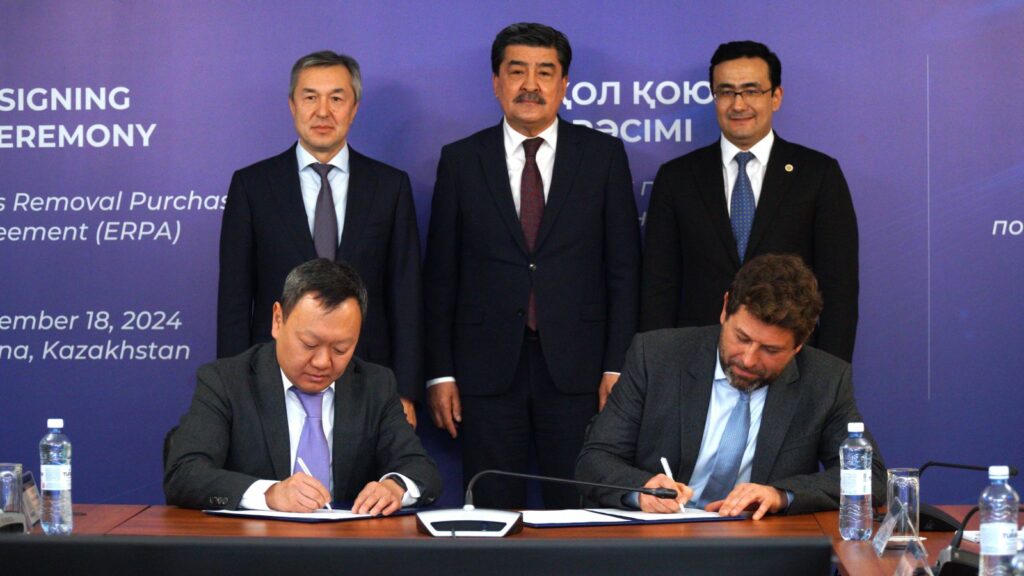
On November 18, the British company SEFE Marketing & Trading Ltd. and Kazakhstan’s SAFC LLP signed an emission removal purchase agreement, marking the launch of the country’s first forest climate project.

The project aims to plant 3.3 million trees across 1,500 hectares in the Almaty region. According to forecasts, the initiative will achieve an average annual reduction of 26 tons of CO₂ per hectare. Over the 30-year project period, this is expected to remove 1.2 million tons of carbon dioxide from the atmosphere. Additionally, the project is designed to promote agroforestry, ecotourism, and job creation in the region.

During a meeting with one of SEFE’s Vice-Presidents, Alexander Demidov, and SAFC’s CEO Yuri Kim, Kazakhstan’s Prime Minister Olzhas Bektenov emphasized the government’s commitment to supporting environmental initiatives. “We strive to create favorable conditions for attracting foreign investment in environmental projects. The government supports projects aimed at restoring ecosystems, reducing carbon footprint, and developing a green economy,” he stated.

Kim added: “This project was supported by the President of Kazakhstan and the Atameken National Chamber of Entrepreneurs, and now we are starting its practical implementation. By combining the competencies of SEFE and SAFC, we will demonstrate Kazakhstan’s broad capabilities for attracting foreign investment.”

According to Atameken, the project not only lays the groundwork for others to follow suit but also leads the way for new investment opportunities in carbon farming. This approach marks a new stage in diversifying Kazakhstan’s economy, creating potential revenue streams from agricultural production and greenhouse gas emission trading.

Kazakhstan’s forest climate initiative demonstrates the country’s commitment to sustainability while attracting foreign investment to bolster its green economy.

Uzbekistan’s Public Debt Projected to Reach $45.1 Billion by 2025

According to the “Budget for Citizens” publication issued by Uzbekistan’s Ministry of Economy and Finance, Uzbekistan’s public debt is projected to reach $45.1 billion by the end of 2025. Updated estimates indicate that state debt will amount to $39.7 billion by the end of this year, rising to $45.1 billion, equivalent to 36.7% of GDP, in 2025.

The publication’s primary focus is forecasting revenues, expenditure, and deficits in the state budget for 2025. State budget revenues are projected at 308,547 billion UZS ($24.19 billion), with the economy expected to grow by 6% in 2025, increasing to 6.1% in 2026 and 6.3% in 2027.

State budget expenditure for 2025 is planned at 344,576 billion UZS ($27.02 billion), with 52% being allocated to social spending.

The report provides detailed information on budget allocations by ministries and departments, their alignment with national sustainable development goals, and their impact on climate change. It also outlines how funds will be classified under development programs, ensuring transparency and adherence to Uzbekistan’s broader policy objectives.