• KGS/USD = 0.01144 0%
  • KZT/USD = 0.00193 -0%
  • TJS/USD = 0.10811 -0.28%
  • UZS/USD = 0.00008 0%
  • TMT/USD = 0.28490 0%
  • KGS/USD = 0.01144 0%
  • KZT/USD = 0.00193 -0%
  • TJS/USD = 0.10811 -0.28%
  • UZS/USD = 0.00008 0%
  • TMT/USD = 0.28490 0%
  • KGS/USD = 0.01144 0%
  • KZT/USD = 0.00193 -0%
  • TJS/USD = 0.10811 -0.28%
  • UZS/USD = 0.00008 0%
  • TMT/USD = 0.28490 0%
  • KGS/USD = 0.01144 0%
  • KZT/USD = 0.00193 -0%
  • TJS/USD = 0.10811 -0.28%
  • UZS/USD = 0.00008 0%
  • TMT/USD = 0.28490 0%
  • KGS/USD = 0.01144 0%
  • KZT/USD = 0.00193 -0%
  • TJS/USD = 0.10811 -0.28%
  • UZS/USD = 0.00008 0%
  • TMT/USD = 0.28490 0%
  • KGS/USD = 0.01144 0%
  • KZT/USD = 0.00193 -0%
  • TJS/USD = 0.10811 -0.28%
  • UZS/USD = 0.00008 0%
  • TMT/USD = 0.28490 0%
  • KGS/USD = 0.01144 0%
  • KZT/USD = 0.00193 -0%
  • TJS/USD = 0.10811 -0.28%
  • UZS/USD = 0.00008 0%
  • TMT/USD = 0.28490 0%
  • KGS/USD = 0.01144 0%
  • KZT/USD = 0.00193 -0%
  • TJS/USD = 0.10811 -0.28%
  • UZS/USD = 0.00008 0%
  • TMT/USD = 0.28490 0%
10 December 2025

Turkmen-Iranian Tourism Festival Held in Ashgabat

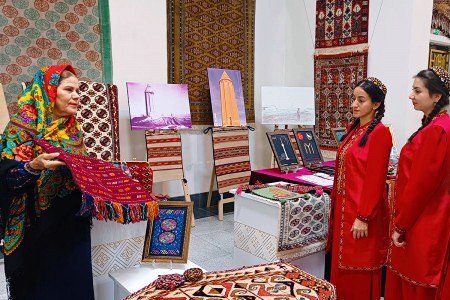
The Second Turkmen-Iranian Tourism Festival united representatives from the two states’ tourism industry, cultural figures, and craftsmen.

The opening ceremony was held in the Exhibition Hall of the Academy of Arts of Turkmenistan in Ashgabat. During the ceremony, visitors familiarized themselves with Iran’s rich tourism potential, saw the works of Iranian craftsmen, and evaluated the proposals of Turkmen tourist companies.

The festival’s business program included a professional conference. Experts discussed the prospects of bilateral cooperation and new opportunities for increasing tourist flow between the countries.

The organizers paid special attention to the cultural component of the event. The festival is designed to strengthen cultural ties between Turkmenistan and Iran and create a platform for the development of joint tourism projects.

Earlier, the Academy of Arts of Turkmenistan exhibition hall hosted the opening of the Turkmen-Iranian Specialized Exhibition of Fashion and Clothing.

The visitors could experience the latest achievements in Turkmenistan and Iran’s fashion and textile industries.

The first Turkmen-Iranian Tourism Festival was held in October last year. Visitors familiarized themselves with unique items of traditional folk crafts, handmade art products, national heritage, and modern trends of Turkmen and Iranian art masters.

Kazakhstan May Manufacture Turkish Bayraktar Drones

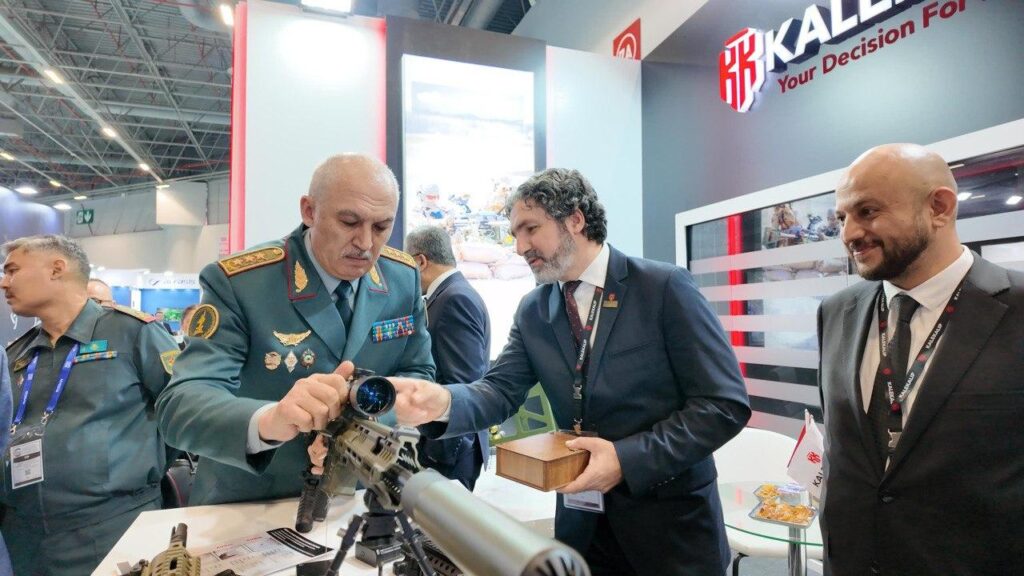
A delegation headed by Kazakhstan’s Minister of Defense , Colonel General Ruslan Zhaksylykov, attended the IV International Exhibition of Defense and Aerospace Equipment SAHA EXPO-2024 opening ceremony in Istanbul.

The event brought together leading representatives of the military-industrial complex of Europe, Asia, and the Middle East. It demonstrated the latest developments, including automatic troop and battle management systems, robotic systems, communications, air defense, radio reconnaissance, electronic warfare, radio countermeasures, unmanned aerial vehicles, and laser technologies.

During the exhibition, Zhaksylykov held talks with Turkish Minister of National Defense Yaşar Güler and Chairman of the Defense Industry Agency Haluk Görgün. He also met with Mohammed bin Mubarak Fadel Al Mazroui, UAE Minister of State for Defense Affairs.

Special attention was paid to the talks with Baykar Defense CEO Haluk Bayraktar. The parties agreed on developing a roadmap for the localization of the production of tactical unmanned aircraft systems and barrage munitions at the operational level in Kazakhstan.

Kazakhstan is actively developing the production of unmanned aerial vehicles (UAVs) with the involvement of foreign partners. One of the significant projects is the joint production of Anka drones with Turkey, which will start in 2024. The agreement between Turkish Aerospace Industries (TAI) and Kazakhstan Engineering provides for technology transfer and the creation of an assembly line, allowing Kazakhstan to produce drones independently in the future.

In addition to Turkey, Kazakhstan cooperates with South Korea and China on drones. In 2023, Petropavlovsk established local drone production using components from China. Such steps contribute to the development of Kazakhstan’s defense industry and reduce dependence on imports.

Woman in Kazakhstan Sentenced for Inciting Ethnic Hatred

In Almaty, a Kazakh woman, Maral Zhalelova, was sentenced to two years in prison for inciting ethnic hatred.

The court found that in her video messages in TikTok, she called on Russians to leave Kazakhstan and insulted the ancestors of Kazakh nationality who fought against Nazi Germany during the Second World War. In doing so, she used obscene language and expressed sympathy for Adolf Hitler.

Even though Zhalelova did not admit guilt, she apologized for her words. The prosecutor insisted on a five-year sentence, but the court took her apology into account and handed down the minimum sentence, considering that she deserved a “more humane punishment.” The sentence has not been enforced yet.

The case began in July 2024 after complaints about Zhalelova’s provocative online statements. The investigation recognized that her words offended the feelings and dignity of citizens with Russian nationality, and hurt the memory of ancestors who fought against fascism.

During the trial, Zhalelova explained that her reaction was triggered by the events following Russia’s invasion of Ukraine. According to her, she sought to support the Kazakh language, but during the broadcasts, insults were directed at her, and she reacted to provocation.

In April 2024, another resident of Almaty, Elina Liu, also received two years in prison for making disparaging remarks about the Kazakh people and language, which the court considered as incitement to discord.

Kyrgyzstan Bans Commissions on Online Transfers

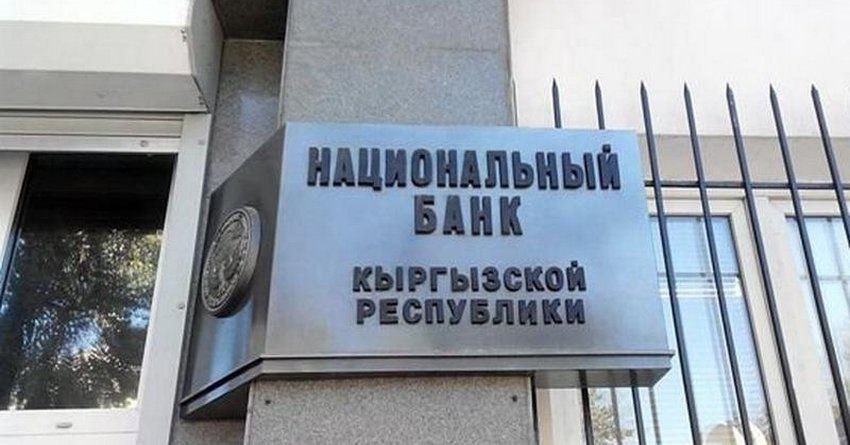
The National Bank of the Kyrgyz Republic (NBRK) has adopted a resolution requiring commercial banks to prohibit commissions on money transfers in the national currency, the som (KGS), within the country.

The NBKR said such measures are taken to popularize banking services for the population.

“The measure will contribute to ensuring accessibility of banking services for all segments of the population and accelerate the introduction of digital technologies in the banking sector,” the bank said.

The NBKR resolution will be in force until the end of 2025.

The country’s authorities have been popularizing non-cash payments for years. President Sadyr Japarov has stated that such payments would bring the economy out of the shadows.

“The development of cashless payments is a step towards modernizing our economy, strengthening financial security, and increasing financial inclusion. We must make the payment process so convenient and simple that even those who are used to cash could not resist the transition to new technologies,” said the head of the Cabinet, Akylbek Japarov, at a government meeting.

Shaping the Future of Science in Kazakhstan

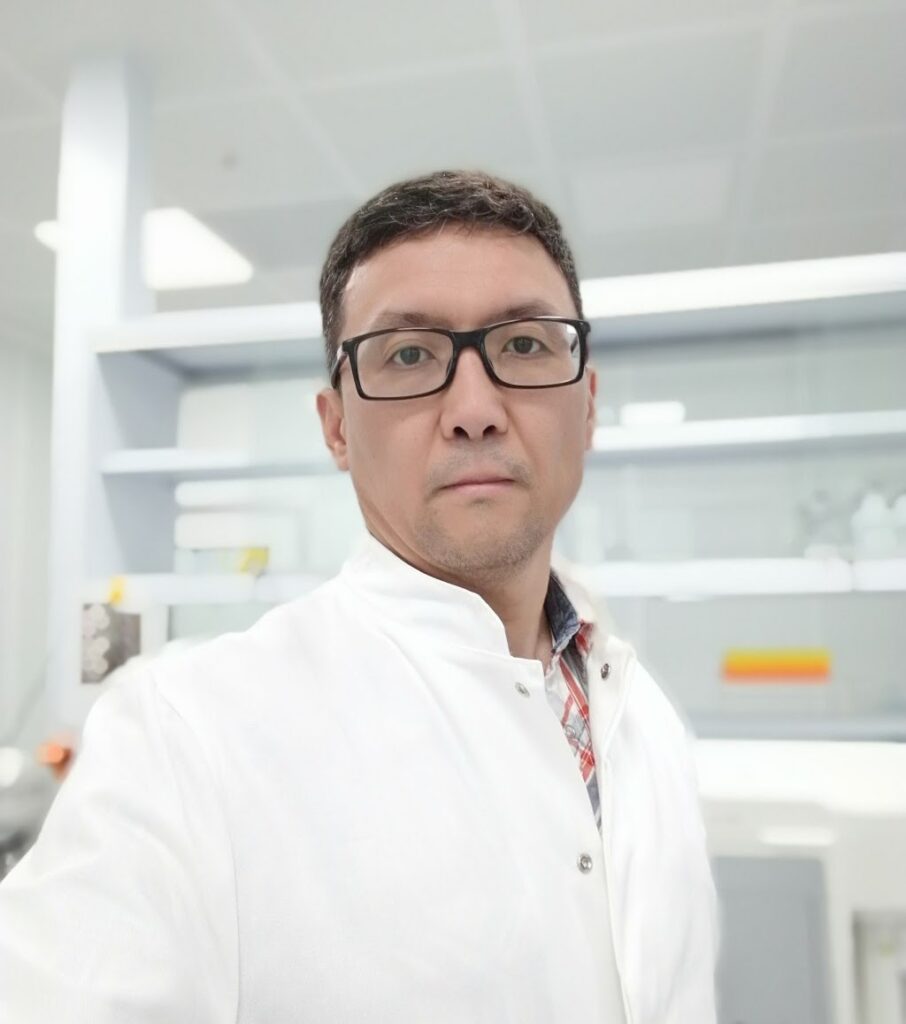
At Kazakhstan’s Nazarbayev University (NU), work is geared toward understanding the intricacies of modern science. TCA spoke to Dr. Aidos Baumuratov, the science director of the NU Collective Use Office, who discussed the importance of scientific collaboration, supported by world-class laboratories, and how Kazakhstan is aiming to nurture the next generation of scientists.

TCA: Can you tell me about the work that NU laboratories do?

Baumuratov: The laboratories have collected unique, expensive equipment from all over the university. The staff that interprets the results has been selected. In simple words, we help scientists to create science. Unfortunately, Kazakhstan cannot afford the purchase of expensive devices in large quantities, so the model is justified from an economic point of view. The model of a shared office is taken from American and European universities. Today, I manage 23 laboratories with 80 main items of equipment and about 400 additional ones. We are creating a world-class scientific infrastructure, and the laboratories are equipped accordingly.

NU scientists win grants, among other things, and consequently, they implement their developments in practice. They come to our laboratories for the missing equipment and perform most of their experiments here.

TCA: How much of NU’s research is focused on practical applications?

Baumuratov: Science is designed to solve global problems. It cannot be considered only from the point of view of immediate return. I can say that in the top global universities, where there are thousands of scientists, only a few startups occur after many years of research, which are eventually taken into development by industrial giants or IT corporations.

TCA: What should be done to make the young generation in Kazakhstan more eager to enter science?

Baumuratov: I can only express my personal opinion. Attitudes should be learned from childhood. Today, science is undeservedly in the shadows. After the collapse of the USSR, we went through difficult years; we had to fix the economy, and of course, this had an impact on who stayed. If I am not mistaken, 70-80% of scientists left after the collapse. Of those who remained, about the same number went into business, anywhere but science. It takes time to restore the potential, and it should start with schools.

When I began working at the university, I proposed an initiative to organize schoolchildren’s visits to our laboratories. The initiative was successfully implemented and is still in use today. Children from the 5th and 6th grades visit us; they see aesthetically pleasing, insanely complex equipment at the international level, the finest instruments, and they can talk to those who work here. This is very useful, as it clearly shows schoolchildren what path they can choose. They see and realize that science brings benefits to society and the country. Even the signature of a scientist under an article in a journal, where the university and Kazakhstan are mentioned, already works for the image of the country as a whole.

In addition, scientists’ general intelligence creates an appropriate environment around children. Ethical norms, the priority of education, and high standards of behavior are spreading. In other words, society is influenced in a multifactorial way.

It should be understood that science is based on academic freedom, expanding funding sources, and creating an environment where scientific ideas emerge. With an active exchange of opinions and ideas, breakthrough projects can happen. NU has such projects. Research in the post-Soviet space is making substantial developments.

TCA: What makes NU laboratories stand out?

Baumuratov: One example is that we have a laboratory of electron microscopy. It has five electron microscopes, whose main function is to capture the nanoworld. It can show what can’t be seen with a magnifying glass or even conventional microscopes. With the electron microscope, we can see up to atomic resolution. For instance, a physicist creates new materials for solar panels. Of course, they do a series of tests to validate the improvement, but publishing in highly-rated journals requires comparative images. The scientist brings us a sample, we take a picture and make a comparison. That’s how 70-90% of science works, by comparing existing prototypes with modified prototypes that the scientist is trying to implement.

This lab has the right level of staff behind the microscopes. At NU, microscopes are active; we help scientists from other universities understand the equipment. This format is unique for Kazakhstan and Central Asia, and on the scale of the CIS (Commonwealth of Independent States), there are three to five scientific centers. This is a story about only one laboratory, but we have many of them.

TCA: At the state level, there is an understanding of the importance of funding science. Unfortunately, there are not always funds in the budget. Now, there are ideas for introducing a new financing model through endowment funds, which are formed at the expense of donations. In your opinion, how realistic is introducing an additional system of financing science and universities?

Baumuratov: Endowment funds work very well in the global practice. In the U.S., this practice has proved itself perfectly. If a patron of the arts decides to donate, for instance, a million dollars to a higher education institution, an amount is deducted from their taxes, which, of course, has a favorable effect on business. Unfortunately, we do not have such mechanisms yet. Now, a private person cannot always allocate funds to an organization because, in some cases, it will be considered corruption.

However, such methods—creating boards of trustees and endowment funds—may become very effective soon. Science has no other choice in a difficult economic situation. I hope Kazakhstan will realize this potential, but we must remember that science does not always produce immediate applied results. On the contrary, years of significant investments are needed.

TCA: You have worked abroad for a long time in the USA and Europe. To what extent does the education system at NU differ from the standards in Kazakhstan?

Baumuratov: There is a tangible difference between NU and other universities in Kazakhstan. Our university interacts with professors who are directly involved in science. Accordingly, students don’t just get books but real experience of scientific activity, which is highly appreciated.

Furthermore, as I said, science is about funding, infrastructure, and academic freedom. Regarding infrastructure, at NU, one is immersed in the academic process, and later on, young people have the opportunity to engage directly in science under the guidance of their professor. In addition, the life and leisure of students are fully established: high-level living conditions, sports and cultural activities, and more than a hundred student clubs. Of course, we would like such conditions to become a common practice.

TCA: What do you think about the Ministry of Science and Higher Education’s initiative to divide universities into higher, secondary, and target leagues, and those different leagues affecting the amount of funding and the number of grants?

Baumuratov: The state should determine which specialists it needs, which spheres of education will be financed, and accordingly, which sectors of the economy will develop faster than others. This is agriculture – a vital sector of the economy on a global scale. This is medicine and biomedicine, biotechnology, and, of course, IT. Without the development of artificial intelligence, progress isn’t possible. Implementing AI means that all the areas I have mentioned will be strengthened many times over.

This division is not segregation but a redirection of the vector, as it seems to me. It would undoubtedly correspond to the world trends in the state as a whole. Today, it is necessary to consider the priorities of future generations in Kazakhstan regarding the development of science.

ADB Finances Road Reconstruction in Tajikistan

The Asian Development Bank (ADB) has approved a $86.67 million grant to help Tajikistan expand its degraded two-lane 49-km Dangara–Guliston highway to four lanes.

Commenting on the move, ADB Director General for Central and West Asia Yevgeniy Zhukov said: “ADB, in partnership with other organizations, promotes safe, accessible, and green transport infrastructure and services in our developing member countries. The Dangara–Guliston road, constructed in the 1930s and reconstructed in the 1970s, will become the first road in Tajikistan to incorporate climate adaptation and elements specific to women’s needs.”

The project will fund two pilot charging stations and develop investment frameworks to catalyze private sector investment in Tajikistan’s national charging infrastructure rollout. Safety is a high priority and to this end,  the newly reconstructed road will include dedicated cycleways, wide sidewalks for people with children and disabilities,  improved lighting and well-marked pedestrian crossings. Special toilets and changing facilities will be provided for mothers and babies, while public transport facilities will include preferential seating for people with disabilities.

In addition to the above, the fund will incorporate training programs for women living in and around the project area to open and run small businesses, and award entrepreneurship grants to selected participants.

The Tajikistan government has pledged $23 million towards the realization of the project whilst subject to its Board’s approval in early 2025, the European Bank for Reconstruction and Development (EBRD, will provide a $40 million co-financing loan.

Tajikistan’s Ministry of Transport plans to complete the project in 2030.