• KGS/USD = 0.01144 0%
  • KZT/USD = 0.00193 -0%
  • TJS/USD = 0.10876 0.55%
  • UZS/USD = 0.00008 0%
  • TMT/USD = 0.28490 0%
  • KGS/USD = 0.01144 0%
  • KZT/USD = 0.00193 -0%
  • TJS/USD = 0.10876 0.55%
  • UZS/USD = 0.00008 0%
  • TMT/USD = 0.28490 0%
  • KGS/USD = 0.01144 0%
  • KZT/USD = 0.00193 -0%
  • TJS/USD = 0.10876 0.55%
  • UZS/USD = 0.00008 0%
  • TMT/USD = 0.28490 0%
  • KGS/USD = 0.01144 0%
  • KZT/USD = 0.00193 -0%
  • TJS/USD = 0.10876 0.55%
  • UZS/USD = 0.00008 0%
  • TMT/USD = 0.28490 0%
  • KGS/USD = 0.01144 0%
  • KZT/USD = 0.00193 -0%
  • TJS/USD = 0.10876 0.55%
  • UZS/USD = 0.00008 0%
  • TMT/USD = 0.28490 0%
  • KGS/USD = 0.01144 0%
  • KZT/USD = 0.00193 -0%
  • TJS/USD = 0.10876 0.55%
  • UZS/USD = 0.00008 0%
  • TMT/USD = 0.28490 0%
  • KGS/USD = 0.01144 0%
  • KZT/USD = 0.00193 -0%
  • TJS/USD = 0.10876 0.55%
  • UZS/USD = 0.00008 0%
  • TMT/USD = 0.28490 0%
  • KGS/USD = 0.01144 0%
  • KZT/USD = 0.00193 -0%
  • TJS/USD = 0.10876 0.55%
  • UZS/USD = 0.00008 0%
  • TMT/USD = 0.28490 0%
11 December 2025

Pupil’s Hand Stabbed by Teacher in Uzbekistan

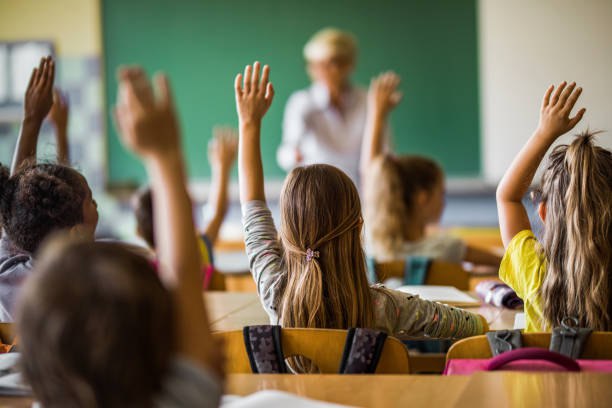
The publication “Bolalar dunyosi” (“Children’s world”) reports that in one of the schools in the Andijan region of Uzbekistan, a teacher punished a 1st grader by stabbing a needle in her hand and locked the classroom door to prevent the pupil from visiting the toilet.

In response, the girl’s father filed a complaint with the Internal Affairs Department, accusing the teacher of applying psychological pressure. He explained that his daughter had missed an additional lesson after class, which cost 50,000 UZS (approximately $3.90).

The Children’s Ombudsman of Uzbekistan, Surayyo Rahmonova, stated that following an examination of the girl’s injury, the issue had been resolved.

The case comes in the wake of  a previous report by The Times of Central Asia  concerning a Tashkent teacher who slapped a student for asking for the Russian language class to be taught in Russian; an event which caused broad public debate in Uzbekistan and a reaction from Russian politicians.

Soar in Lithuania’s Central Asian Migrant Population

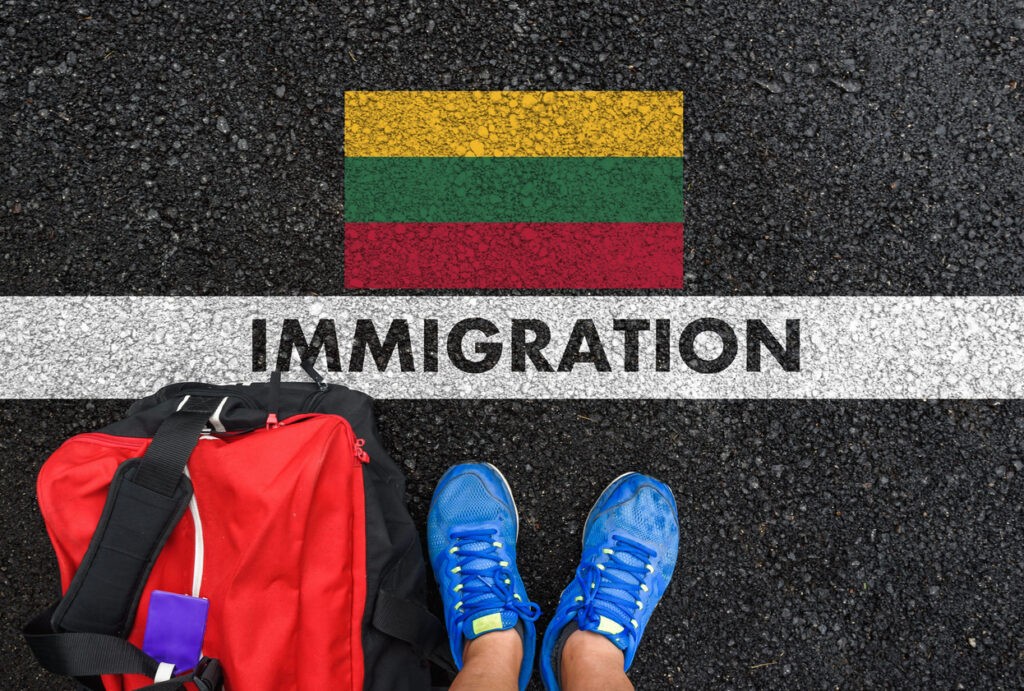
Lithuanian intelligence reports that the number of Central Asian migrants in the country has increased 14-fold since 2021.

According to Prime Minister Ingrida Šimonytė, the number overall is still relatively small and is not a cause for concern. She explained that the labor market, once filled by workers from Ukraine and Belarus, has shifted following the call for Ukrainian men to fight in the war. As a result, more Central Asian workers are being hired.

Darius Jauniškis, head of Lithuania’s State Security Department, told LNK News that his agency cannot screen all migrants, raising counter-intelligence and terrorism concerns, and because the government is working on next year’s budget, his remark is perceived as a request for more funding for the VSD (State Security Department).

In response, the Prime Minister said the growth in migrants, though large, isn’t particularly high. She stated that only a few hundred foreign nationals had been issued with temporary residence permits in Lithuania this year, but added: “There were indeed problems. These problems were already partially regulated by existing  laws- and – from 2025 onwards, when the quota [for workers from third countries] who can come to Lithuania will be in force, it will be possible to impose additional regulations on these issues.”

Data from the Migration Department shows that as of October 1, around 10,600 Uzbeks were living in Lithuania, compared to 8,200 at the start of the year, and the 998 recorded in early 2022. Thus, Uzbeks now make up the fourth-largest foreign community in Lithuania. The number of migrants from Tajikistan also increased from 5,700 to 7,200 in the first nine months of 2024.

Italian University to Send its Professors to Turkmenistan

The Turkmen State University and the University of Perugia for Foreigners have signed a Memorandum of Understanding.

The main areas of cooperation include introducing modern methods of teaching foreign languages and exchanging advanced pedagogical experience. Special attention will be paid to developing university relations, which involves exchanging curricula, programs, and methodological materials. Scientific publications and textbooks will also be exchanged, improving the quality of foreign language teaching in both educational institutions.

A notable aspect of the agreement is the deployment of Italian language instructors from the University of Perugia to Turkmen State University. This initiative provides students with a unique opportunity to learn Italian directly from native speakers.

The University of Perugia for Foreigners, founded in 1921, is one of Italy’s oldest and most prestigious universities. It is the only institution of higher education in the country that specializes in teaching the Italian language and culture to international students. Located in the picturesque city of Perugia, the university offers a wide range of programs, from language courses to full degree programs in Italian language and culture.

Central Asia Finesses Pressure over Russia, Sanctions

Kyrgyzstan says it will cooperate with regional heavyweight Russia despite appeals from some Western countries not to do so.

The comment by President Sadyr Japarov of Kyrgyzstan reflects a broader effort by Central Asian countries to balance longstanding economic and security ties with Moscow alongside relationships with Europe and the United States, which have imposed multiple sanctions packages on Russia since its full-scale invasion of Ukraine in February 2022.

“Certainly, there are Western countries that ask us not to cooperate with Russia,” Japarov said in an interview with the state-run Kabar news agency that was published on Wednesday.

“However, I always openly and sincerely respond to them: ´We cannot refuse to cooperate with Russia. Our trade turnover with Russia exceeds $4 billion. We buy oil, gas, wheat and other foodstuffs from Russia. Geographically, we are in a landlocked area. Our road and rail routes to the world pass through Russia. Russia hosts about a million of our migrants. How can we not cooperate with Russia?”´

Japarov noted that trade between some European Union countries and Russia runs into billions of dollars a year despite sanctions, saying: “When you need it, you cooperate with Russia, but we are not allowed to. This is an unfair demand.”

The EU says it has imposed “massive and unprecedented” sanctions on Russia, including travel bans on individuals, asset freezes on individuals and entities and economic measures that target Russia’s financial, trade, energy, transport, technology and defense areas.

However, exemptions and loopholes mean that some trade continues, for example allowing EU member states that are especially dependent on Russian crude oil to continue receiving it by pipeline. Czechia has spent more than 7 billion euros on Russian oil and gas, over five times what it has provided in aid to Ukraine, according to a report released this week by the Center for the Study of Democracy, a European public policy institute.

Additionally, many analysts have pointed to a surge in European exports to Central Asia and the Caucasus since 2022 as a probable indication that EU and British companies are using the regions as a conduit to send goods to Russia, including at least a portion that are subject to sanctions. The difficulty of tracking products made it hard to confirm any sanctions-dodging, though an analysis of trade data by the European Bank for Reconstruction and Development last year concluded that changes in regional trade patterns “may be used to circumvent economic sanctions but on a limited scale.”

At the same time, there have been more reports of banks in Central Asian countries refusing to accept cross-border payments from Russian companies as the United States moved to impose secondary sanctions for doing business with Russian entities. Banks in China, Türkiye and the United Arab Emirates, all big trade partners with Russia, have taken similar action.

Kyrgyzstan is not the only Central Asian country that has expressed frustration about Western sanctions. Last year, Kazakh President Kassym-Jomart Tokayev said his country would comply with sanctions against Russia while still cooperating with its neighbor. But Serik Zhumangarin, Kazakhstan’s deputy prime minister and trade minister, told the Bloomberg news agency in August that Kazakhstan won’t always “blindly follow the sanctions” and will look out for its own economic interests.

Some Western policy makers understand that Central Asian countries won’t walk away from Russia and China as tensions with the West rise. Analysts at the German Institute for International and Security Affairs, which advises the German government and parliament, said “German and European efforts to win the support of regional states for Western sanctions against Russia must be measured against the realities on the ground.”

U.S. Supports Restoration of Medieval Mausoleum in Karakalpakstan, Uzbekistan

The  12th Century Khalif Erejep Mausoleum, restored with a $80,000 grant from the U.S. Ambassadors Fund for Cultural Preservation (AFCP), has reopened in Khojayli in Uzbekistan’s northwestern Karakalpakstan region.

As reported by the U.S. Embassy in Uzbekistan, the condition of the site was first assessed using  advanced techniques such as geophysics, geodesy, archaeological investigations, structural monitoring, 3D scanning, photogrammetry, and radiocarbon dating. Information boards with interactive elements installed at the site, now offer visitors both detailed insights into the mausoleum’s history and the conservation techniques applied. In addition to the above, an audio guide provides informative commentary accessible via mobile devices, and a dedicated website, www.mizdakhkan.com, has been launched to broadcast the site’s historical background, updates on conservation efforts, and practical visitor information.

During his visit on October 15, U.S. Ambassador Jonathan Henick, announced:  “Karakalpakstan’s rich history and culture shine through this important monument. It reflects Karakalpakstan’s deep traditions and ancient soul. The preservation of the Khalif Erejep Mausoleum is a testament to the strong partnership between the United States and Uzbekistan. Through the Ambassadors Fund for Cultural Preservation, we are honored to support Uzbekistan’s efforts in preserving its rich history for future generations.”

Established by Congress in 2001 and administered by the U.S. Department of State, the Ambassador’s Fund for Cultural Preservation (AFCP) provides direct grant support for preserving cultural sites, cultural objects and collections, and forms of traditional cultural expression in developing countries worldwide. Since 2001, the Fund has supported 15 projects, with a total budget of $1,300,000 in Uzbekistan focused on the restoration of ancient and historic buildings, the assessment and conservation of rare manuscripts and museum collections, the preservation and protection of important archaeological sites, and the documentation of traditional craft techniques.

Kazakhstan Decides to Abstain from Applying for BRICS Membership

Kazakhstan’s presidential spokesman, Berik Uali, announced that Kazakhstan plans to refrain from applying for membership in the international association BRICS.

According to him, despite Kazakhstan’s proposals, the decision to join BRICS remains under consideration. Specialists are analyzing prospects with a focus on the country’s national interests.

Uali also noted that President Tokayev will participate as a guest in the BRICS Summit, scheduled to take place October 23-24 in Kazan. He will speak at the organization’s extended outreach meeting on October 24. At the same time, Kazakhstan will refrain from applying for BRICS membership. This is due to the multi-stage process of accepting new members and other aspects of the association’s development.

When asked about the priorities of Kazakhstan’s diplomacy, Berik Uali noted that Tokayev emphasized the importance of the UN as a universal and irreplaceable international institution. Despite its shortcomings, he emphasized that the UN remains the sole platform for addressing crucial global issues. Tokayev also expressed the view that the UN Security Council should be reformed to consider the interests of the middle powers and to hold broad consultations among the organization’s members.

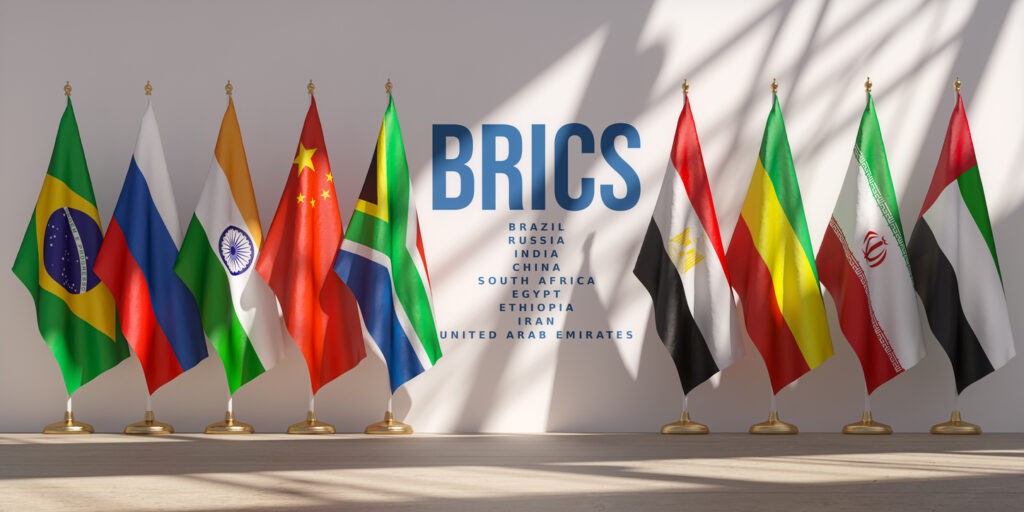
Established in June 2006, BRICS (Brazil, Russia, India, China, South Africa, UAE, Iran, Egypt, Ethiopia) aims to promote a multipolar world order. Azerbaijan and Belarus have already applied to join.