• KGS/USD = 0.01144 0%
  • KZT/USD = 0.00197 -0%
  • TJS/USD = 0.10904 0%
  • UZS/USD = 0.00008 0%
  • TMT/USD = 0.28490 0%
  • KGS/USD = 0.01144 0%
  • KZT/USD = 0.00197 -0%
  • TJS/USD = 0.10904 0%
  • UZS/USD = 0.00008 0%
  • TMT/USD = 0.28490 0%
  • KGS/USD = 0.01144 0%
  • KZT/USD = 0.00197 -0%
  • TJS/USD = 0.10904 0%
  • UZS/USD = 0.00008 0%
  • TMT/USD = 0.28490 0%
  • KGS/USD = 0.01144 0%
  • KZT/USD = 0.00197 -0%
  • TJS/USD = 0.10904 0%
  • UZS/USD = 0.00008 0%
  • TMT/USD = 0.28490 0%
  • KGS/USD = 0.01144 0%
  • KZT/USD = 0.00197 -0%
  • TJS/USD = 0.10904 0%
  • UZS/USD = 0.00008 0%
  • TMT/USD = 0.28490 0%
  • KGS/USD = 0.01144 0%
  • KZT/USD = 0.00197 -0%
  • TJS/USD = 0.10904 0%
  • UZS/USD = 0.00008 0%
  • TMT/USD = 0.28490 0%
  • KGS/USD = 0.01144 0%
  • KZT/USD = 0.00197 -0%
  • TJS/USD = 0.10904 0%
  • UZS/USD = 0.00008 0%
  • TMT/USD = 0.28490 0%
  • KGS/USD = 0.01144 0%
  • KZT/USD = 0.00197 -0%
  • TJS/USD = 0.10904 0%
  • UZS/USD = 0.00008 0%
  • TMT/USD = 0.28490 0%
08 December 2025

Kazakhstan Awaits Results of Nuclear Referendum; Exit Polls Indicate a “Yes” Vote

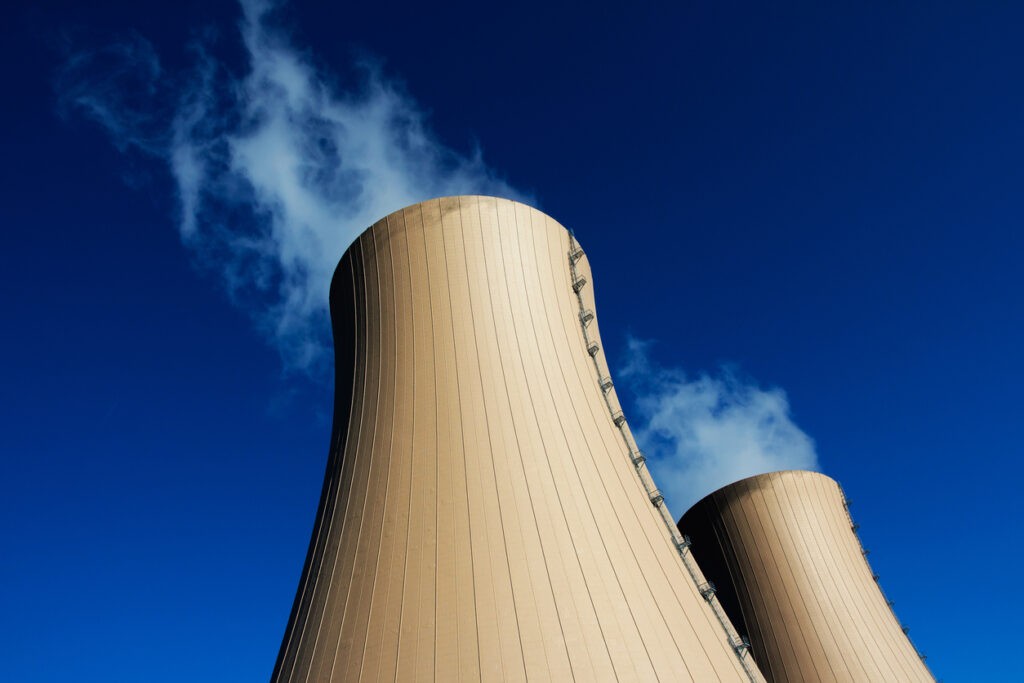
Kazakhstan is awaiting the official results of a referendum on whether to build its first nuclear power plant, though exit polls showed “yes” voters were in the majority, according to state-run media reports. The project could ease chronic energy shortages and reduce reliance on coal-fired facilities but is fraught with concerns about costs, transparency, and the legacy of the human and environmental cost of Soviet nuclear weapons testing decades ago.

Led by President Kassym-Jomart Tokayev, Kazakhstan’s political establishment has backed the idea of peaceful nuclear power as a way to move the country forward and the referendum appears aimed partly at giving people a sense of agency after the trauma of Soviet testing at Semipalatinsk. But some opponents allege that authorities restricted their efforts to organize a “no” campaign with detentions and other pressure designed to lock in an expected vote in favor.

Officials results had not been announced as of early Monday morning. Voting at polling stations in Kazakhstan ended at 8 p.m. on Sunday and turnout among eligible voters was 63.87%, according to the Central Election Commission. The highest turnout was in the Kyzylorda region (82.48%) and the lowest turnout was in the city of Almaty (25.39%). Turnout in Astana, Kazakhstan’s capital, was 50.81%.
“The precinct referendum commissions have begun counting the votes. The counting process at each polling station must not exceed twelve hours from the start of the count,” the commission said.

Additionally, more than 7,358 Kazakh citizens voted at polling stations abroad, including in Asia, South America, Europe, and the United States, according to Roman Vassilenko, Kazakhstan’s Deputy Minister of Foreign Affairs. He noted at a briefing on Sunday night that the referendum had been monitored by observers from regional organizations, including the Shanghai Cooperation Organization, the Organization of Turkic States, and the Astana-based Conference on Interaction and Confidence-Building Measures in Asia.
The heads of the observer missions said the referendum was “open, free, and legitimate, with no violations detected at any polling stations,” Vassilenko said.

Kazakhstan also invited observers from the Organization for Security and Cooperation in Europe, but the OSCE declined to send a delegation “due to heavy workload,” reported the state-run Kazinform news agency. The OSCE sent a mission to observe a 2022 referendum on constitutional changes in Kazakhstan and concluded that it took place “in an environment short of genuine political pluralism.”

One critic of the rules surrounding the nuclear referendum is Tamara Yeslyamova, editor-in-chief of the Uralskaya Nedelya, a newspaper that has sparred with the government over the years. A judge issued her with a fine for 110,760 tenge ($230) after she conducted video interviews about the referendum on nuclear power with half a dozen people on the street, the newspaper reported. It said the judge concluded that the interviews amounted to a public opinion survey; the law says such a poll can only be done by a state-sanctioned entity.

Kyrgyzstan Returns Four Resorts to Uzbekistan with Additional Conditions Imposed on Kazakhstan

Shavkat Mirziyoyev, President of the Republic of Uzbekistan, has approved an agreement between the governments of Uzbekistan and Kyrgyzstan, to regulate the ownership and continued operation of four spa and recreation centers in the Issyk-Kul region.

Kyrgyzstan’s transfer of ownership of the four resorts to Uzbekistan determines the authorization for implementing property rights but as cited by one Uzbek publication “The recreational facilities aren’t given, they are returned!” In April 2016, the “Golden Sands of Central Asia” (formerly “Bosteri”), “Rohat-NBU” (formerly “Rakhat”), “Dilorom” (formerly “Enesay”), and the unfinished construction of “Buston”, were transferred to the jurisdiction of Kyrgyzstan. Although located on the territory of Kyrgyzstan, the resorts previously belonged to JSC “Tashkent Mechanics Plant,” JSC “National Bank of Foreign Economic Activity,” JSC “Asakabank” and JSC “Uzsanoatkurilishbanki” of Uzbekistan.

Back in 2016, the government of the Kyrgyz Republic, under Prime Minister Temir Sariyev, decided to seize recreational facilities from the Republic of Uzbekistan. This led to litigation in international arbitration and the facilities were immediately renamed.

In September 2016, the Uzbek owners of resorts applied to the International Center for Settlement of Investment Disputes (ICSID). Uzbekistan considered that the 1992 agreement between the countries of the former Soviet Union, regulating the use of facilities left on the territory of other republics as a result of the collapse of the Union, was violated. According to this document, property belonging to one state but located on the territory of other CIS countries remains the property of its owners.

Thus began a long series of arbitration discussions and efforts to settle the matter amicably, leading to the announcement of an agreement between the Kyrgyz government and the Cabinet of Ministers of Uzbekistan in December 2017, whereby the land plots of the resorts would remain the property of Kyrgyzstan whilst other properties would be returned to the ownership of the Uzbek side. After formalizing  property rights,  Uzbekistan would undertake to upgrade boarding houses to a level of three or four stars and ensure their operation throughout the year. The agreement, however, was not signed, and discussions continued.

The dispute resolution review was completed in May 2023 in ICSID. Details of the deal remained confidential until Kyrgyzstan’s president Sadyr Japarov, announced that the international court had decided that Kyrgyzstan should pay Uzbekistan more than $40 million. Following negotiations, the parties agreed to lease the facilities for investors from Uzbekistan for 49 years.

The president then warned,” We cannot invest in their renovation in the next 15-20 years because we have many other critical issues. We cannot talk about recreational facilities until we solve them.”
Whilst Article 2 of the agreement clearly states that the Kyrgyz side transfers the ownership of buildings and structures to the Uzbek side, the  recent agreement does not provide a fixed period for the rental of the recreational facilities.

Kazakhstan and Kyrgyzstan have long-standing problems with boarding houses, including those in the former’s “University”, “Olympus”, “Samal” and “Kazakhstan”sports and health resorts, in Issyk-Kul.
At the end of the 1960s, the USSR declared Issyk-Kul an All-Union resort. However, because the Kyrgyz SSR could not fund the construction of the required volume of boarding houses, the USSR called on the trade unions of other republics to build in Issyk-Kul; an opportunity immediately seized by  neighboring Uzbekistan and Kazakhstan.

In 2006, Kyrgyzstan leased the aforementioned four recreational facilities to Kazakhstan for 49 years during which they should have been upgraded to 3-4 stars. Eighteen years later, nothing has changed, and  dissatisfied , parties in Bishkek demanded that the facilities be removed. However, the 2006 agreement did not include an article on the return of boarding houses if the condition wasn’t fulfilled.

In September this year, the Deputy Minister of Economy and Trade of Kyrgyzstan, Iskender Asykulov, stated, “Earlier, only this clause was specified in the contract; there were no demands or responsibility for their non-fulfilment. Now, five years is specified in the contract annex. If the boarding houses don’t become full-fledged hotels during this time, Kyrgyzstan can unilaterally cancel the contracts within 60 days without paying the funds deposited by Kazakhstan.”

The new contract also states that at least 90% of hotel employees must now be Kyrgyz citizens, as opposed to the previous figure of 80%.

Laughter Amidst Ruins: Rediscovering Tajikistan’s Resilience Through Comedy and Cultural Exchange

The UN General Assembly’s Human Rights Council recently condemned the government of Tajikistan for its failure to implement the recommendations of a 2019 study by UN representatives. The study focused on the unreconciled atrocities and societal wounds caused by the civil war that swept through the republic after the collapse of the Soviet Union. More than 60,000 people died in this war, and more than 250,000 fled the republic. Reading this news, I was reminded of and reflected on post-war Tajikistan, which I visited in the late summer of 2000. At that time, the country had been in a state of fragile peace for two years, and you could still feel the tension in the air.

Since my visit to the country in 2000, the Tajik Civil War has been reflected on by many people in the arts. In the same year that UN researchers were raking up the old tragedy, the film Kazbat was released in Kazakhstan. This movie is a military drama about the real deaths of 17 soldiers of the Internal Troops of the Ministry of Internal Affairs of the Republic of Kazakhstan (now the National Guard), who fell into an ambush in Tajikistan on April 7, 1995.

A little earlier, in 2017, Russian writer Vladimir Medvedev released the novel Zakhok, which talks about the horrors of that six-year war through the struggles of a single family, where the mother is Russian, and the children are half Tajik.

My visit to this war-torn country was for a reason most wouldn’t have expected – a comedy festival. The group that I traveled with consisted of my teammates, Almaty residents, as well as people from other Kazakh, Uzbek, and Kyrgyz cities. Despite coming from all over Central Asia, we ended up in Tajikistan for the first international СVN festival (СVN – Club of the Funny and Inventive) in Central Asia.
СVN is an improv and sketch comedy competition involving students that originated in Soviet times, the point of which is to satirize the surrounding reality through theatrical skits and question-based improv. Due to its satirical nature, СVN was banned for two decades during the Soviet-era. It was later revived during Perestroika, and, in the shortest possible time, became a phenomenon in all universities in Russia and across almost all of post-Soviet space.

In Kazakhstan, СVN was developed immediately after the collapse of the USSR. Alma-Ata, which was the capital city back then, organized its own league, which included teams from the leading national universities of that time – Kazakh State University, Narkhoz, Almaty Institute of Transport Engineers, and Almaty State Medical Institute.

I belong to the second generation of СVN players. Our task was to popularize this game throughout the republic and attract not only universities but also colleges and schools. Later, the new СVN league went beyond Kazakhstan, starting with friendly meetings with universities from Bishkek, Tashkent, and other Central Asian cities. Then, the International League of СVN, which was created and headed by Alexander Maslyakov, who passed away recently, came to Kazakhstan. The best teams in the country got their own СVN coaches who were famous in Russia. For example, the coach of one of them was Vladimir Zelensky himself and members of his team from “Kvartal-95”.

The Kazakh Super League received from Alexander Maslyakov a kind of carte blanche to attract Central Asian teams to the games of the International СVN League. To attract more teams, an international festival was organized. The idea of holding it in Tajikistan was connected with the task of showing that in this republic, the civil war had finally become a thing of the past.

The festival was not organized in Dushanbe, in the north of the country where it was still rumored to be turbulent, but in the south near the city of Khujand (formerly Leninabad). In Khujand itself, the closing gala concert was held, which ended with a friendly meeting between the teams from Kazakhstan and the other Central Asian republics. The two-day competition of СVN teams took place on the territory of the former pioneer camp near Khujand, on the bank of the man-made Kairakkum Reservoir.

Kazakhstani teams had traveled to Khujand by buses, for which they had to cross the territory of Uzbekistan. A local guide and a СVN player from Dushanbe Medical University got on our bus at the border with Tajikistan. He introduced himself by the name Abdullo, which he had been given when he converted to Islam. He did not give his “secular” name.

For Kazakhs, whose republic had made significant progress in creating a secular and even anticlerical state during the Soviet era, the Tajik fascination with the Muslim religion seemed unusual at the time. Abdullo quickly explained to the boys on the bus that they should change from shorts to pants. Some of us tried to protest – the heat outside the bus was approaching 40 degrees Celsius – but Abdullo pointed to a man in camouflage carrying an automatic rifle who was standing on the road just beyond the Tajik checkpoint. At first, we thought he was a border guard who had grown his bushy beard for some reason.

“He may shoot,” Abdullo warned us; ”he’s from Mastchoh, they are Islamic fanatics.”

After that, even the most stubborn quickly changed their clothes.

On the road to the Kairakkum Reservoir, we saw fields where cotton once grew, but now they bore nothing but stones and scorpions. Abdullo told us about the people from Mastchoh, who had suffered greatly during the Soviet period because of cotton. In 1956, the Soviet authorities organized their resettlement, during which many of them died.

In one of the settlements, we came across a traffic light. Each of its three “eyes” was covered with bars, and the traffic light was not working.

“The consequences of the war,” Abdullo explained to us.

However, when we finally reached the pioneer camp, we felt nothing of the sort. The neatly cleaned territory, the buildings with beds covered with snow-white linen, and an abundance of food — all this made us forget for a while that we had come to a war-torn republic. However, we were constantly reminded of this when talking to the locals, especially those in Dushanbe. It seemed that each of them carefully evaluated their words before answering any questions. Abdullo, with whom we became friends during the journey, explained that this was also a consequence of the war.

“We don’t want any more conflicts, especially because of carelessly spoken words,” he said, warning us not to talk to Dushanbeans in particular. “They suffered a lot during the war, and post-traumatic stress syndrome can manifest itself at any time. And you Kazakhs don’t watch your talking at all,” he said.

However, there were no conflicts during our time there, and during the festival the Tajiks seemed to thaw, laughing with pleasure at any, even the silliest jokes that came from the stage.

The gala concert in Khujand (а city founded over 2,500 years ago) caused a real sensation. It was held in a local theater with excellent acoustics and a perfectly equipped stage. Our team performed with a short program of 5-7 minutes, but because of the incessant applause, the time of the performance doubled. Everyone, from those sitting in the hall and those standing backstage, seemed to sing along to the final song.

After our performance, we went outside, escaping the heat and stuffiness of the auditorium. Sitting on the steps of the porch of the theater, we ate pomegranates that had just been picked and marveled at how fertile this land is and what people have changed it into.

Leaving the republic, we sincerely wished it happiness and prosperity. But this, alas, has not happened. But, perhaps it still has yet to come.

Uzbekistan Ends Forced Labor, But Cotton Industry Faces New Challenges

Global Voices reports that Uzbekistan has succeeded in phasing out forced labor in its cotton industry, but now faces new challenges.

The country has made progress in ending forced labor and modernizing its cotton sector, driven by economic and political reasons. Forced labor hurts businesses and the nation’s international image, which the government has aimed to improve since 2016. Cotton production accounts for 12% of GDP.

Since 2017, the government has introduced major reforms to modernize Uzbekistan’s cotton industry, led by President Shavkat Mirziyoyev after he took office in 2016. By 2018, labor control was strengthened, and the cotton cluster system, which controls the entire production process, began to take shape. Today, almost all cotton is grown through 142 clusters. Cotton quotas have been abolished by 2020, and the minimum wage will now be negotiated. The same year, the International Labor Organization reported that child labor was no longer a problem, and the international boycott was lifted in 2022.

Eradicating forced labor has been hailed as “one of the most significant victories anywhere in the world in the battle against forced labor in the twenty-first century,” said Bennett Freeman, co-founder of the Cotton Campaign in 2022. This achievement was possible thanks to the diligence of organizations such as human rights defenders of Uzbekistan and the Uzbekistan Forum for Human Rights, which monitored the cotton fields and recorded violations, as well as the government’s promptness in reviewing these reports.

Global Voices writes that despite the progress achieved in Uzbekistan’s cotton industry, there are still serious problems.

The report states, “Despite abandoning forced labor, the government still continues to exert strong control over cotton production and prevents farmers from fully operating on their own terms.”

Farmers receive resources and loans, but the system remains inefficient, with state-set cotton prices often differing from global rates.

The government and industry need to address these ongoing issues while pursuing international standards and export opportunities to build trust and transparency.

Freedom of Speech in Tajikistan Discussed at OSCE Conference

The deteriorating situation for journalists and freedom of speech in Tajikistan was discussed at the plenary session of the OSCE Human Dimension Conference in Warsaw on October 2.

Participants, including human rights defenders and civil society representatives, noted that arrests of journalists have become a common practice in the country. Some face harassment even outside Tajikistan.

Gulnoza Said, program coordinator for the Committee to Protect Journalists in Europe and Central Asia, said the situation with human rights and freedom of expression has reached a critical point. She said eight journalists, including Ulfatkhonim Mamadshoeva, Daler Imomali, and Khushruz Dzhumayev, are currently in Tajik prisons. Said also emphasized that the sentences handed down to the journalists are incredibly harsh, ranging from seven to 20 years in prison.

Muhammadjon Kabirov, editor-in-chief of Azda TV, broadcasting from Poland, noted that Tajikistan ranks 155th on the World Freedom of Expression Index, and its authorities have created a hostile environment for the media. Kabirov also recalled the transnational repression directed against journalists abroad. In his speech, he cited the conviction of journalists such as Hikmatullo Sayfullozoda and Abdukahor Davlat, who were sentenced to long prison terms in 2015.

A recent example of pressure on the independent press was the arrest of the editor-in-chief of Pike, Ahmadi Ibrohim, who has been charged with bribery and is awaiting trial.

The conference also raised the issue of Tajik authorities harassing journalists and their relatives to force them to stop their activities. Interestingly, although Tajikistan had previously taken an active part in such discussions, there were no representatives of Tajikistan at this year’s event.

International organizations have repeatedly criticized the situation with freedom of speech in Tajikistan. Organizations such as Amnesty International and Freedom House report the constant harassment of journalists, independent media, and activists. Opposition media outlets are banned in the country, and journalists face arrests and long prison terms on charges that human rights activists call trumped-up.

Kyrgyzstan Produces All Potatoes, Vegetables, Fruit, and Milk It Needs

According to government data, of the eight basic socially significant food products in Kyrgyzstan, domestic production meets the demand only for potatoes, vegetables, fruits, and milk. The demand for bread and bakery products, meat, sugar, eggs, and vegetable (cooking) oil is partly satisfied with imports.

This was announced at the Council on Food Security and Nutrition meeting on October 3.

From January to July 2024, the levels of self-sufficiency were 86.5% for bread and bakery products, 162.8% for potatoes, 159% for vegetables and fruits, 79.1% for meat, 116.3% for milk, 49.2% for sugar, 71.4% for eggs, and 48.5% for vegetable oil.

Kyrgyzstan imports food from Russia, Kazakhstan, Belarus, Uzbekistan, and China.

At the meeting, Deputy Chairman of the Cabinet of Ministers – Minister of Water Resources, Agriculture and Processing Industry Bakyt Torobaev ordered additional measures to support agricultural production and incentivize local producers.

Torobaev also announced the establishment of the Research Institute of Food Security and Nutrition, which will become a center of knowledge and innovation that will help improve the country’s food security.

The institute’s creation will allow scientific research in agronomy and veterinary science and the development of recommendations for improving agricultural product production and processing technologies. It will also cooperate with international organizations and scientific institutions to implement the best global practices in food security.