• KGS/USD = 0.01144 0%
  • KZT/USD = 0.00209 0%
  • TJS/USD = 0.10523 0%
  • UZS/USD = 0.00008 0%
  • TMT/USD = 0.28530 0%
  • KGS/USD = 0.01144 0%
  • KZT/USD = 0.00209 0%
  • TJS/USD = 0.10523 0%
  • UZS/USD = 0.00008 0%
  • TMT/USD = 0.28530 0%
  • KGS/USD = 0.01144 0%
  • KZT/USD = 0.00209 0%
  • TJS/USD = 0.10523 0%
  • UZS/USD = 0.00008 0%
  • TMT/USD = 0.28530 0%
  • KGS/USD = 0.01144 0%
  • KZT/USD = 0.00209 0%
  • TJS/USD = 0.10523 0%
  • UZS/USD = 0.00008 0%
  • TMT/USD = 0.28530 0%
  • KGS/USD = 0.01144 0%
  • KZT/USD = 0.00209 0%
  • TJS/USD = 0.10523 0%
  • UZS/USD = 0.00008 0%
  • TMT/USD = 0.28530 0%
  • KGS/USD = 0.01144 0%
  • KZT/USD = 0.00209 0%
  • TJS/USD = 0.10523 0%
  • UZS/USD = 0.00008 0%
  • TMT/USD = 0.28530 0%
  • KGS/USD = 0.01144 0%
  • KZT/USD = 0.00209 0%
  • TJS/USD = 0.10523 0%
  • UZS/USD = 0.00008 0%
  • TMT/USD = 0.28530 0%
  • KGS/USD = 0.01144 0%
  • KZT/USD = 0.00209 0%
  • TJS/USD = 0.10523 0%
  • UZS/USD = 0.00008 0%
  • TMT/USD = 0.28530 0%

Central Asia’s Population Could Reach 96 Million by 2040, Raising Infrastructure Pressures

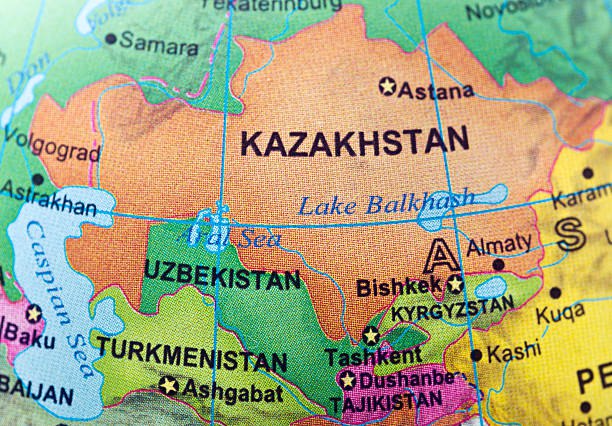
Central Asia’s population could grow to 96 million by 2040, a trend expected to stimulate economic expansion while placing significant strain on infrastructure, energy systems, and water resources across the region, according to Russia’s state news agency TASS.

In an interview with TASS, Nikolai Podguzov, Chairman of the Management Board of the Eurasian Development Bank (EDB), said demographic growth would be one of the defining factors shaping Central Asia’s long-term development.

“By 2040, according to our estimates, the population of Central Asia may reach 96 million. This should become a driver of economic growth, but at the same time such numbers will create enormous pressure on infrastructure,” he said.

As previously reported by The Times of Central Asia, Central Asia’s population exceeded 84 million in 2025, continuing a rapid upward trend after surpassing 80 million in 2024. Projections indicate that the population could exceed 100 million by 2050, underscoring the scale of demographic and economic transformation facing the region in the coming decades.

Podguzov added that the region would require significant progress in energy efficiency, modern transport systems, and water management to ensure sustainable development.

He described Central Asia as one of the regions of the world most vulnerable to climate change. According to EDB forecasts, water shortages are expected to intensify, with an annual deficit potentially reaching between 5 and 12 cubic kilometers by 2028. A substantial portion of water resources is already lost due to outdated irrigation and distribution systems.

Podguzov said the bank is financing projects to modernize irrigation networks, introduce water-saving technologies, and implement digital water accounting mechanisms across the region.

To address these challenges, the EDB has proposed a Eurasian Transport Framework, a network of transport corridors aimed at lowering logistics costs and accelerating trade flows. While existing routes predominantly run east to west, Podguzov emphasized the growing importance of north-south connections, including the potential Trans-Afghan corridor, which could provide access to markets in South Asia and the Persian Gulf.

The bank projects that the combined economies of Central Asia’s five countries will reach approximately $600 billion in 2026, positioning the region among the fastest-growing globally. However, Podguzov stressed that demographic expansion, transport development, and water security are closely interconnected challenges that require coordinated policy responses.

 

EU Targets Kyrgyz Financial Sector Over Russia Sanctions Evasion

At the beginning of the year, the news agenda surrounding Kyrgyzstan shifted dramatically. Several media outlets reported that the European Union is considering restrictive measures affecting Kyrgyzstan as part of its 20th sanctions package against Russia.

This does not imply direct sanctions against the state itself, but rather potential measures targeting banks, oil companies, and cryptocurrency services that, according to Brussels, may facilitate circumvention of the sanctions regime. For Kyrgyzstan’s economy, which is highly sensitive to cross-border capital flows, this represents a serious warning signal.

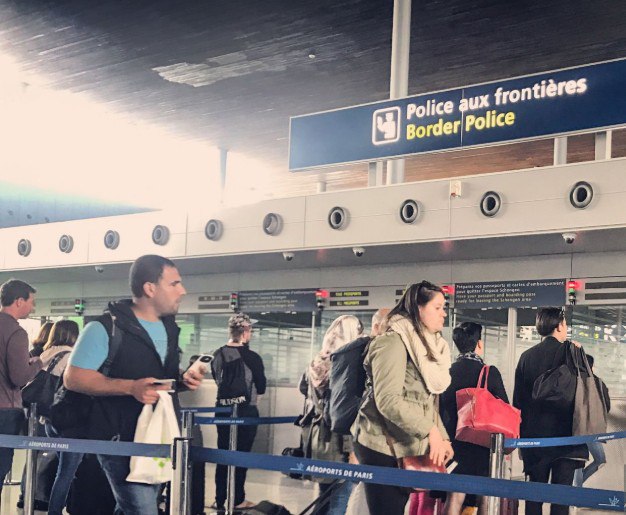
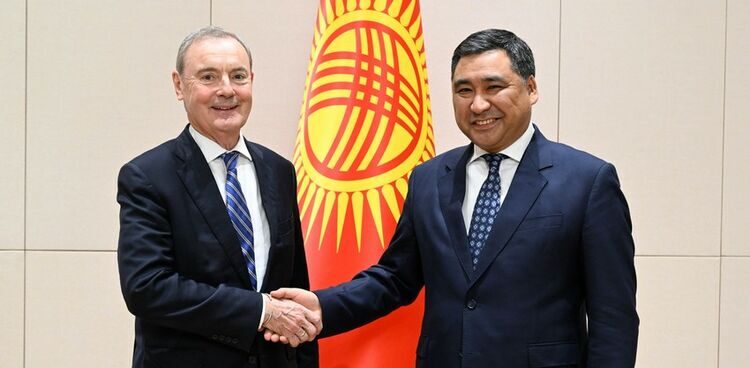
EU Special Envoy for Sanctions David O’Sullivan, who visited Bishkek, outlined Brussels’ principal concern: a sharp increase over the past year in imports of machine tools and radio equipment into Kyrgyzstan.

According to O’Sullivan, exports of certain categories of goods have risen by several hundred percent compared with the pre-war period. These goods fall into the category of dual-use products, and even relatively inexpensive components can be incorporated into drones or missile systems.

The EU’s core argument is that such goods are neither produced nor consumed in significant volumes within Kyrgyzstan but are imported from Europe for subsequent re-export to Russia. Brussels views this pattern as evidence of systematic transit.

The European Commission is also advocating restrictions on exports of certain machine tools and radio equipment to Kyrgyzstan. According to cited sources, exports of sanctioned technologies to Kyrgyzstan have increased eightfold since the start of the war in Ukraine, while shipments of equipment from Kyrgyzstan to Russia have risen by approximately 1,000%.

O’Sullivan stated that the EU “does not impose sanctions on countries,” but rather on specific companies and banks. In practical terms, however, the distinction can be largely formal for the national economy.

In October 2025, the EU added two Kyrgyz banks, Tolubay Bank and Eurasian Savings Bank, to its sanctions lists.

According to the special envoy, the measures do not prohibit domestic operations, but they do restrict transactions with European financial institutions. In practice, this means the loss of correspondent banking relationships and limited access to SWIFT.

Previously, Keremet Bank, Capital Bank, and the cryptocurrency platforms Grinex and Meer were sanctioned by the United Kingdom and the United States. In November 2025, Canada imposed sanctions on Capital Bank of Central Asia and the A7 platform.

Brussels has formally stated that it respects Kyrgyzstan’s sovereignty and its legitimate trade relations with Russia and does not seek to halt lawful trade or remittance flows from migrant workers.

According to O’Sullivan, preventing transit should not generate significant economic losses, as the goods in question represent only a “tiny fraction” of trade and do not create substantial added value within Kyrgyzstan.

A Delicate Balancing Act

The situation is further complicated by the lack of full consensus within the EU itself regarding the new sanctions package.

Kyrgyzstan finds itself at a difficult intersection of interests. On one side are longstanding economic ties with Russia; on the other, the growing importance of the EU as a source of investment, grants, and institutional support.

Following an extended meeting between First Deputy Prime Minister Daniyar Amangeldiev and EU representatives, the parties announced a phased plan aimed at addressing issues related to restrictions on certain Kyrgyz financial institutions.

The proposed format includes technical cooperation, expanded information exchange, and procedural coordination, measures viewed as essential for any potential removal of restrictions.

For Bishkek, the coming months will test its ability to navigate between compliance with Western sanctions regimes and the preservation of its economic model, which remains closely intertwined with Russia.

The Number of Migrants from Tajikistan to Russia Has Decreased Significantly

The number of citizens of Tajikistan applying to participate in Russia’s state “Program for the Voluntary Resettlement of Compatriots” has declined sharply, according to data from the Russian Ministry of Internal Affairs.

The issue drew public attention following remarks by the head of the Russian cultural organization Rossotrudnichestvo, Yevgeny Primakov. He stated that in the first three quarters of last year, 27,700 people received certificates to participate in the program, of whom 21,400 have already relocated to Russia.

Applicants originated from Kazakhstan, Uzbekistan, Kyrgyzstan, Turkmenistan, Tajikistan, and Armenia.

However, official statistics indicate that Tajikistan is no longer among the leading source countries. In the first quarter of 2023, Tajik citizens accounted for 37.2% of all applications submitted under the program. By the first quarter of 2025, their share had fallen to 4.1%, moving the country from first place to seventh.

In the third quarter of 2025, the share of applicants from Tajikistan dropped further to 2.4%, the lowest level recorded during the period under review.

Kazakhstan ranked first in terms of the number of applications submitted. In the second and third quarters of 2025, most applications came from Kazakhstan, Kyrgyzstan, and Uzbekistan.

As a result, Tajik citizens no longer play a leading role in the program, while the relative positions of other Central Asian countries have strengthened.

Experts attribute the decline primarily to changes in program requirements. Since January 1, 2024, applicants have been required to demonstrate proficiency in the Russian language. Following the introduction of this requirement, the number of applications from Tajik citizens decreased markedly.

Demographic factors may also have contributed. The average migrant family consists of approximately 2.3 people. This profile is more typical of Russian-speaking and non-indigenous populations in the region, which may have influenced the redistribution of applicants among participating countries.

Official reports from the Russian Ministry of Internal Affairs indicate a steady decline in the share of applicants from Tajikistan and challenge claims of mass migration of Tajik citizens to Russia under the program.

PPP Development in Kyrgyzstan Gains Strong Momentum

A new FII Institute’s Public-Private Partnerships: Financing The Future Impact Report 2026 reveals that emerging markets are driving the next wave of PPP growth. PPP spending across low-and middle-income countries reached $100.7 billion in 2024, up 16% on-year, with emerging markets now representing around 61% of global PPP activity by GDP share.

A key finding is that Kyrgyzstan ranks third in the report’s emerging-market PPP project pipeline, with 80 published or announced projects, behind only the Philippines (230 projects) and Saudi Arabia (98), and ahead of Bangladesh (71) and Peru (54).

For Kyrgyzstan, being ranked among the top PPP pipelines signals strong momentum in PPP development.

To coordinate and promote PPP projects and attract private investment and private-sector management experience, the government has established the Public-Private Partnership Center of the Kyrgyz Republic.

According to the National Investment Agency under the President of the Kyrgyz Republic, the PPP Center’s project portfolio now includes over 90 projects with a total private investment volume of 434 billion soms (over $4.9 billion). Currently, 65 PPP projects are in the active implementation phase, and 14 new PPP agreements were signed in 2025 in sectors such as transport, logistics, agriculture, ecology and waste management, tourism, education, and communications, attracting over $3.9 billion in private investment to the Kyrgyz economy.

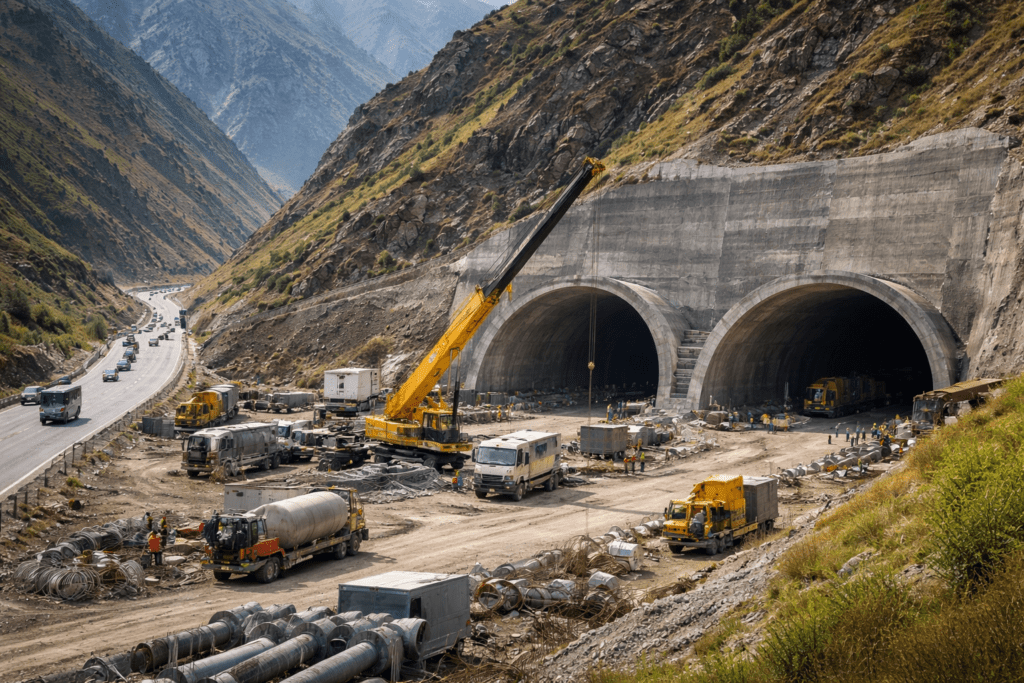
Key PPP agreements signed in 2025 include the construction and operation of the Kelechek alternative toll tunnel through the Too-Ashuu Pass on the Bishkek-Osh highway; the construction and operation of the eastern bypass road around Bishkek; the construction and management of a trade and logistics center in Kara-Suu; and projects to modernize regional healthcare infrastructure, including the Bulak sports and fitness complex in Osh, the U Nexus Hub innovation center at the International University of Kyrgyzstan, and a magnetic resonance imaging (MRI) center at the Osh Interregional Clinical Hospital.

An important PPP initiative is the Trans-Eurasian Route railway project. A public-private partnership agreement for the project was signed in Bishkek in February 2025, marking Kyrgyzstan’s first PPP initiative in the railway sector. The agreement was concluded between the National Investment Agency, Kyrgyzstan’s national railway company Kyrgyz Temir Jolu, and the U.S.-based consortium All American Rail Group Global Infrastructure Partner LLC.

The project involves the construction of a railway across central Kyrgyzstan, traversing mountainous terrain from east to west and connecting Karakol in the northeastern Issyk-Kul region with Makmal in the southwestern Jalal-Abad region. The railway is expected to play a key role in modernizing the country’s transport infrastructure and enhancing regional connectivity and economic development.

The growth in the number of PPP projects was supported by legislative reforms in 2025. Amendments to the PPP Law significantly simplified procedures for investors: a simplified mechanism for launching small projects was introduced, along with provisions allowing the allocation of municipal land and property without a tender at a preferential rental rate.

A milestone of 2025 was the establishment of the PPP Academy, a joint initiative of the PPP Center and the Eurasian Development Bank, aimed at training professionals for Kyrgyzstan’s PPP sector.

In October 2025, Bishkek hosted the IV International PPP Conference under the motto “Government and Business: Synergy for a Strong Partnership.” The conference discussed strategic areas for PPP development in Kyrgyzstan, noting that PPP is an effective tool for infrastructure modernization, innovation, and improving the quality of public services.

Speaking at the conference, Ravshanbek Sabirov, Director of the National Investment Agency, said, “Today, PPP in Kyrgyzstan is a practical tool that is already delivering tangible results. It is a key instrument for attracting investment and innovation for the sustainable development of the country’s economy. PPP projects are being implemented across a wide range of sectors, from infrastructure and energy to healthcare, education, and tourism.”

Delhi Police Arrest Man After Large Theft Targeting Uzbek Visitor

Police in New Delhi have arrested a man accused of using his two minor children to carry out thefts near the busy Jama Masjid market, following an investigation into the theft of over $6,500 from a citizen of Uzbekistan visiting India for his daughter’s medical treatment, The Times of India reported.

According to police, the case began after the Uzbek national filed a complaint at the Jama Masjid police station on January 15. The victim told authorities he had traveled to India for his youngest daughter’s cancer surgery in Gurgaon and was carrying foreign currency in a sling bag while sightseeing and shopping with his family in the historic market area. He later discovered that the cash and his debit card had been stolen.

Deputy Commissioner of Police (Central) Anant Mittal said investigators relied on technical surveillance, CCTV footage from cameras installed around the market, and field intelligence to identify two siblings, aged 15 and 13, from the town of New Seelampur as suspects.

“Through sustained technical surveillance and analysis of CCTV footage, the movements of the juveniles were tracked and verified, revealing their involvement,” Mittal said.

Police conducted raids in New Seelampur and detained the children along with their father. During questioning, the man allegedly admitted that he had previously used his children to commit thefts in order to avoid direct suspicion, later keeping the stolen items himself.

Authorities said the suspect had previously been linked to a robbery case registered at the Pandav Nagar police station. The minors were also reportedly connected to earlier incidents, including motor vehicle theft cases investigated by Jama Masjid police.

During the operation, officers recovered $6,500 in cash, the victim’s debit card, 4,700 Indian rupees (about $57), and a mobile phone worth 48,000 rupees (approximately $580), which police believe was purchased with stolen funds. The investigation is ongoing.

Founder of inDrive Sees Kindred Spirit in Olympic Champion’s Father

Years ago, Stanislav Shaidorov, a former figure skating champion of Kazakhstan, sold his car to help pay for his son Mikhail’s training on the ice. After Mikhail won Olympic gold this month, the older Shaidorov was presented with an Audi Q8 by a businessman who had done the same thing for a different cause.

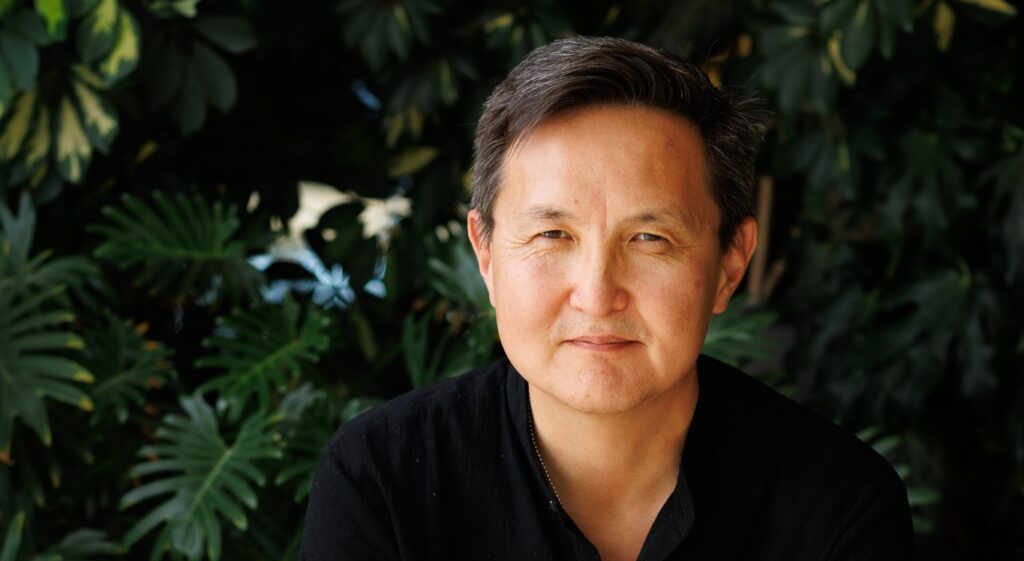
“This story is personal for me,” said Arsen Tomsky, founder and CEO of the ride-hailing app inDrive, which operates in dozens of countries.

“I did the same twice in my life — once to pay salaries when my first company had no money, and once to send the Yakutia esports team to a national championship when we couldn’t afford the tickets,” Tomsky said on Instagram.

Yakutia is in Russia. Tomsky was born in Russia, moved many employees to Kazakhstan after Russia’s full-scale invasion of Ukraine in 2022, and obtained Kazakhstani citizenship in 2023. Forbes Kazakhstan ranked Tomsky as the 11th richest business executive in the country in 2025.

Kazakhstan has been celebrating 21-year-old Mikhail Shaidorov’s achievement at the Winter Olympics in Milan – his country’s first gold medal in figure skating. His father is also getting recognition as a pillar of support earlier in his son’s career, when success was far from assured.

“As the father and first coach, he helped Mikhail take his first steps on the ice rink and was always by his son’s side during the most difficult moments of life,” President Kassym-Jomart Tokayev said at a ceremony in Astana for the gold medal winner and his key supporters.

“You went together through the winding path leading to the high peak,” Tokayev said to Stanislav Shaidorov on Wednesday. “Now you are seeing the fruits of your hard work and sweat, being honored and respected.”

Tomsky, the inDrive founder, said he could relate to Stanislav Shaidorov’s decision to give up his car for his son’s dream.

“In moments like that, you don’t think about the car,” the executive said. “You think about the future and the people you believe in.”