• KGS/USD = 0.01144 0%
  • KZT/USD = 0.00192 -0%
  • TJS/USD = 0.10849 0.37%
  • UZS/USD = 0.00008 0%
  • TMT/USD = 0.28571 0.28%
  • KGS/USD = 0.01144 0%
  • KZT/USD = 0.00192 -0%
  • TJS/USD = 0.10849 0.37%
  • UZS/USD = 0.00008 0%
  • TMT/USD = 0.28571 0.28%
  • KGS/USD = 0.01144 0%
  • KZT/USD = 0.00192 -0%
  • TJS/USD = 0.10849 0.37%
  • UZS/USD = 0.00008 0%
  • TMT/USD = 0.28571 0.28%
  • KGS/USD = 0.01144 0%
  • KZT/USD = 0.00192 -0%
  • TJS/USD = 0.10849 0.37%
  • UZS/USD = 0.00008 0%
  • TMT/USD = 0.28571 0.28%
  • KGS/USD = 0.01144 0%
  • KZT/USD = 0.00192 -0%
  • TJS/USD = 0.10849 0.37%
  • UZS/USD = 0.00008 0%
  • TMT/USD = 0.28571 0.28%
  • KGS/USD = 0.01144 0%
  • KZT/USD = 0.00192 -0%
  • TJS/USD = 0.10849 0.37%
  • UZS/USD = 0.00008 0%
  • TMT/USD = 0.28571 0.28%
  • KGS/USD = 0.01144 0%
  • KZT/USD = 0.00192 -0%
  • TJS/USD = 0.10849 0.37%
  • UZS/USD = 0.00008 0%
  • TMT/USD = 0.28571 0.28%
  • KGS/USD = 0.01144 0%
  • KZT/USD = 0.00192 -0%
  • TJS/USD = 0.10849 0.37%
  • UZS/USD = 0.00008 0%
  • TMT/USD = 0.28571 0.28%
11 December 2025

Kyrgyzstan Expands Banking Cooperation with China

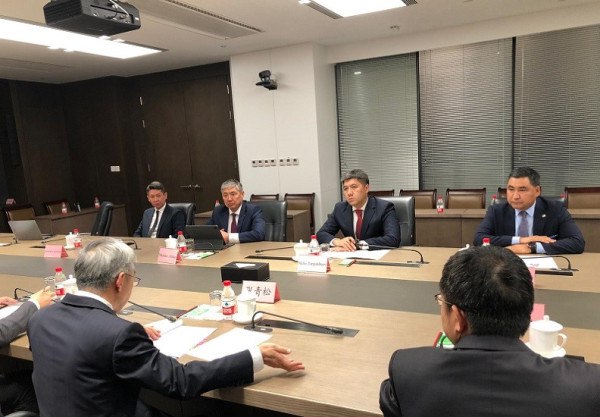
The Chairman of the People’s Bank of China, Zhang Qingsong, has met with the heads of key ministries in Kyrgyzstan. The parties discussed connecting the National Bank of the Kyrgyz Republic to the Chinese cross-border interbank payment system.

Kyrgyzstan’s Minister of Finance Almaz Baketaev emphasized the country’s interest in using the Chinese payment system and in cooperating with the Bank of China. Currently, only two Kyrgyz commercial banks have correspondent relations with the organization.

In addition, the Kyrgyz authorities offered Chinese colleagues the opportunity to invest in securities in Kyrgyzstan, which are placed on the local stock exchange. For this purpose, the country is ready to realize the issue of securities in yuan, but only with guarantees from China.

“The Kyrgyz side raised questions about providing guarantees from Chinese financial institutions for the successful placement of securities, as well as the conclusion of an agreement on mutual settlements between the National Bank of the Kyrgyz Republic and the People’s Bank of China,” the Ministry of Finance said.

According to the National Statistical Committee of Kyrgyzstan, trade turnover between the two countries amounted to about $11 billion for the first six months of 2024, increasing by 40% over last year. At the end of 2023, the figure reached $20 billion.

Kazakhstan and Uzbekistan Agree To Establish Stations for Syr Darya Water Measurement

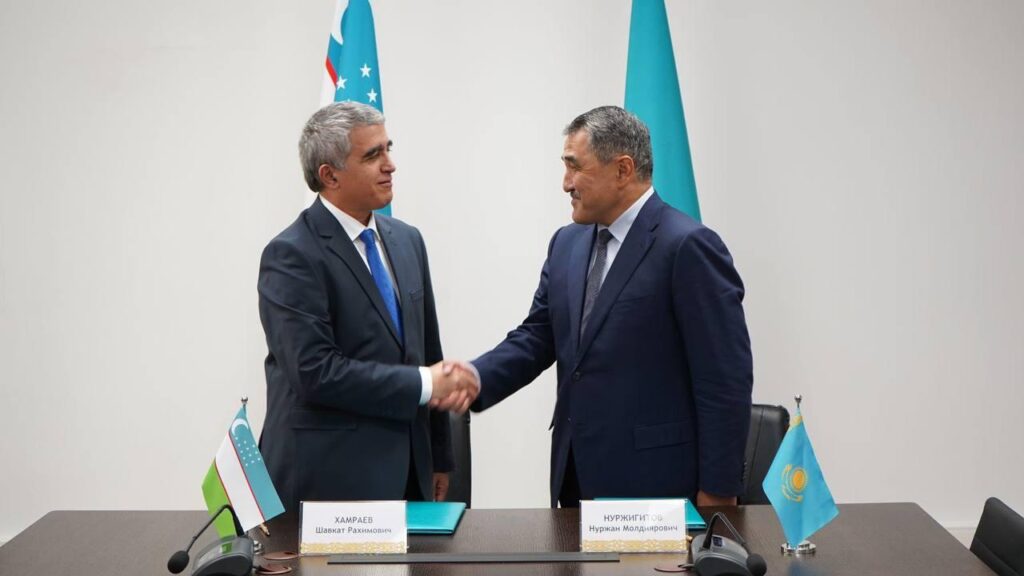
The press service of the Ministry of Water Management and Irrigation of Kazakhstan reports that Kazakhstan and Uzbekistan have agreed to install ten automated measuring stations in Syr Darya to accurately measure water resources. Shavkat Hamroyev, the Minister of Water Management of Uzbekistan, met with Nurzhan Nurzhigitov, his counterpart in Kazakhstan, with the two reportedly discussed automating measuring stations and digitizing water accounting in Syr Darya. Nurzhigitov emphasized that negotiations with international financial organizations and companies are in progress for the joint implementation of the project.

The ministers also discussed the modes of operation of the Norin-Syr Darya cascade reservoirs for next year’s pre-irrigation season.

“Many thanks to our colleagues from Uzbekistan for their active participation in the International Fund for Saving the Aral Sea (IFSA) meeting and the proposals voiced,” Nurzhigitov stated. “Over the year, we have become convinced that our joint work produces positive results, so we intend to continue close bilateral cooperation. We have common views on many issues. This allows us to resolve most of the existing issues on a mutually beneficial basis.”

In return, Hamroyev expressed Uzbekistan’s desire to strengthen cooperation within the IFSA. “Uzbekistan fully supports Kazakhstan’s chairmanship of the International Fund… We want to strengthen cooperation in this direction and work on joint projects. For example, preserving the ecosystems of the Syr Darya and Amu Darya basins, providing residents with quality drinking water, restoring small and local water bodies.”

In addition, the parties discussed developing a regional strategy for the use of water resources.

In May of this year, Hamroyev told a parliamentary hearing that watersheds from the Amu Darya and Syr Darya rivers are forecasted as being favorable this year.

China to Construct Solar Plant in Uzbekistan

The Chinese company China Datang is building a solar photovoltaic power plant in the Boka district of Tashkent region.

Construction began on September 21. The 263-megawatt project is expected to cost $150 million to complete, and use 621 hectares of land.

It was previously reported that China will invest 1 billion dollars in an enterprise processing the hides and organs of domestic animals in the Andijan region of Uzbekistan.

In June this year, the UN General Assembly unanimously adopted the resolution “International Day of Dialogue among Civilizations,” developed by the China and Uzbekistan. The resolution’s primary goal is to raise awareness about the value of civilizations’ diversity and to develop communication, mutual respect, and global solidarity.

Turkmenistan to take part in Turkic World Documentary Film Festival

Turkmenistan has been announced as a participant in the 9th Turkic World Documentary Film Festival, which will be held in Ankara in October this year. The festival received 300 applications from nine countries, including Turkmenistan, Kazakhstan, Kyrgyzstan, Azerbaijan, Uzbekistan, the Turkish Republic of Northern Cyprus, Hungary, and Northern Macedonia.

The festival is organized by the Federation of Journalists of the Turkic World with the support of the Ministry of Culture and Tourism of Turkey, the International Turkic Culture Organization (TURKSOY), and other partners. Out of 300 submitted works, 147 films passed preliminary consideration by the jury.

The festival’s grand opening is scheduled for October 11 at TURKSOY’s headquarters. The competition will include works in the “feature-length documentary,” “short documentary,” and “student documentary” categories.

A jury consisting of documentary filmmakers and scholars of the Turkic world will choose the winners. The festival will end on November 15 with a closing ceremony and announcement of the final results.

Uzbekistan Leads Central Asia in World Happiness Report

The World Population Review has announced this year’s list of the happiest countries in the world.

Since 2002 the World Happiness Report has used statistical analysis to determine the probable wellbeing of countries. To determine the happiest country in the world, researchers analyzed Gallup poll data collected from 143 countries over the past three years. The index looks at six categories: gross domestic product per capita, social support, life expectancy, freedom to make life choices, generosity of the general population, and perceptions of internal and external corruption levels.

The seven happiest countries in the world for 2024 are all in Europe, with six of them being in Northern Europe. Finland is in first place, followed by Denmark, Iceland, Sweden, Israel, the Netherlands, and Norway.

Afghanistan ranked as the least happy country in 2024, placing 143rd. This is due to factors like low life expectancy, low GDP per capita, and the impact of the Taliban takeover.

Uzbekistan takes 47th place in the ranking and is the happiest country in Central Asia. Kazakhstan is next, in 49th place overall, falling from 44th last year.

Kazakhstan’s relatively slow population growth will allow the country to continue makihttps://timesca.com/uzbekistan-leads-central-asia-in-world-happiness-report/ng economic progress and reduce poverty in the coming decades.

Tajikistan ranks 88th on the list. The World Happiness Report says: “Tajikistan’s population boom threatens its economy and resources. The government has implemented laws in the past to encourage contraception, and while this has helped bring down the birth rate, the country still has a long way to go.”

The report doesn’t provide information about Kyrgyzstan and Turkmenistan this year. According to the most recent data for them, Turkmenistan was 78th in 2022, and Kyrgyzstan was 62nd in 2023.

Restoring Roars: The Historic Return of Amur Tigers to Kazakhstan’s Wilderness

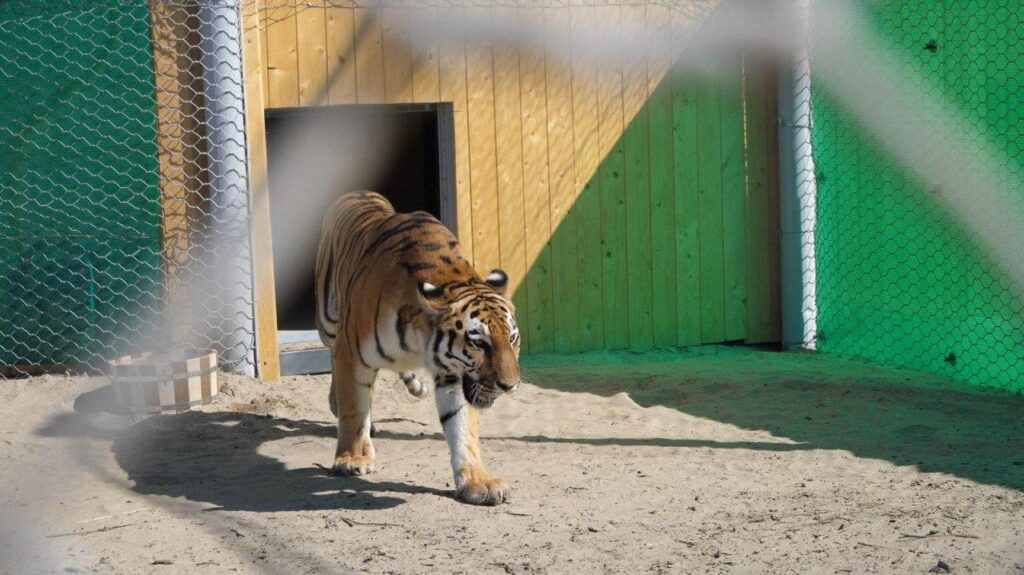
This past weekend, two Amur tigers were brought to the Ile-Balkhash State Nature Reserve in southern Kazakhstan from the Landgoed Hoenderdaell Zoo in the Netherlands.

The tigers, one male and one female, will live in a specially-built enclosure in the reserve for breeding and the release of their offspring into the wild. Their offspring are expected to become the first wild tigers to reappear on Kazakhstan’s territory in more than 70 years. In 2025, another three or four tigers are planned to arrive in Kazakhstan from Russia.

In 2010, Kazakhstan’s government announced plans to reintroduce Amur tigers to the country. Seven years later, a tiger reintroduction program was developed, and the southern shore of Lake Balkhash in the delta of the Ili River was chosen as the most suitable place to restore the population in Kazakhstan.

The program is being implemented by the Ministry of Ecology and Natural Resources in Kazakhstan, with the support of the World Wildlife Fund (WWF) and the United Nations Development Programme (UNDP).

According to the ministry, the Ile-Balkhash Reserve can accommodate a population of up to 100 tigers.

The tigers that were once indigenous to Kazakhstan were known as Turan tigers. The Turan tiger was an extinct population once found in Central Asia, the Caucasus, and northern Iran. Biologists suggest that Turan tigers and Amur tigers, native to Russia’s Far East, are not distinct subspecies but belong to the same group of big cats.

The Ile-Balkhash Reserve was created to restore the ecosystem of the southern Balkhash region, and work is underway to restore the tiger’s natural food base.

Ile-Balkhash is a critical natural area of the Ile River Delta with the adjacent shore of Lake Balkhash. It is the only preserved river delta in Central Asia, while the others (the deltas of the Syr Darya, Amu Darya, and Chu Rivers) have degraded due to desertification.

Improving the tiger’s natural food supply and the reserve’s remoteness will help avoid conflict between the tiger and humans in the area. Historically, the Turan tigers’ habitats in Kazakhstan were reed beds and floodplain forests along the banks of the Ili and Syr Darya rivers. Based on historical records of tiger hunts and the frequency of human encounters with them, the population density of the Turan tiger was considerably higher than that of the Amur tiger, and more comparable to the density of tigers in India.

In what is now Kazakhstan, the extermination of tigers, including through military shootings, began in 1891. The destruction of their habitat and primary food sources — such as Tugai red deer, goitered gazelles, saigas, kulans, roe deer, and wild boars — ultimately led to their extinction by 1948.

This is not the first project to reintroduce endangered species to Kazakhstan. In June 2024, eight Przewalski’s horses were reintroduced to the Altyn Dala Nature Reserve in the Kostanay region of Kazakhstan. The horses were transported from Prague Zoo. The Kazakh Ministry of Ecology and Natural Resources have said that 40 wild horses will be returned to Kazakhstan.