• KGS/USD = 0.01144 0%
  • KZT/USD = 0.00210 0%
  • TJS/USD = 0.10523 0%
  • UZS/USD = 0.00008 0%
  • TMT/USD = 0.28571 0%
  • KGS/USD = 0.01144 0%
  • KZT/USD = 0.00210 0%
  • TJS/USD = 0.10523 0%
  • UZS/USD = 0.00008 0%
  • TMT/USD = 0.28571 0%
  • KGS/USD = 0.01144 0%
  • KZT/USD = 0.00210 0%
  • TJS/USD = 0.10523 0%
  • UZS/USD = 0.00008 0%
  • TMT/USD = 0.28571 0%
  • KGS/USD = 0.01144 0%
  • KZT/USD = 0.00210 0%
  • TJS/USD = 0.10523 0%
  • UZS/USD = 0.00008 0%
  • TMT/USD = 0.28571 0%
  • KGS/USD = 0.01144 0%
  • KZT/USD = 0.00210 0%
  • TJS/USD = 0.10523 0%
  • UZS/USD = 0.00008 0%
  • TMT/USD = 0.28571 0%
  • KGS/USD = 0.01144 0%
  • KZT/USD = 0.00210 0%
  • TJS/USD = 0.10523 0%
  • UZS/USD = 0.00008 0%
  • TMT/USD = 0.28571 0%
  • KGS/USD = 0.01144 0%
  • KZT/USD = 0.00210 0%
  • TJS/USD = 0.10523 0%
  • UZS/USD = 0.00008 0%
  • TMT/USD = 0.28571 0%
  • KGS/USD = 0.01144 0%
  • KZT/USD = 0.00210 0%
  • TJS/USD = 0.10523 0%
  • UZS/USD = 0.00008 0%
  • TMT/USD = 0.28571 0%

Gender Pricing and Tax Policy in Kazakhstan: Does a “Pink Tax” Exist?

Women often pay more for everyday goods, from hygiene products to personal care services. In public discourse in Kazakhstan, this phenomenon is often referred to as the “pink tax.” But does such a tax exist, or are these differences the result of market pricing strategies?

Is a “Pink Tax” Recognized Under Kazakhstan’s Tax Code?

If understood literally as a separate levy established in the Tax Code, the so-called “pink tax” does not exist in Kazakhstan. The country’s tax system includes corporate and individual income taxes, value-added tax (VAT), excise duties, social tax, property taxes, and other mandatory payments. There is no gender-based category.

In Kazakhstan, the term is generally used to describe a potential “gender markup,” where products marketed to women are priced higher than comparable versions aimed at men, even when their features are largely the same.

These differences are most often observed in items such as razors, shower gels, and other personal care products, where variation may be limited to packaging or branding. However, Kazakhstan lacks large-scale, representative studies on the issue. Most claims are based on retail observations and isolated price comparisons rather than comprehensive market research.

How Tax Policy Affects Essential Hygiene Products: VAT and the “Tampon Tax”

Public debate increasingly uses the term “tampon tax” to describe situations where menstrual hygiene products are subject to the standard VAT rate rather than a reduced rate applied to essential goods.

Starting January 1, 2026, Kazakhstan’s base VAT rate increased to 16%. Reduced VAT rates of 5% (from 2026) and 10% (from 2027), apply only to goods and services, including specific medicines and medical devices that meet established criteria. These benefits do not apply broadly to all health-related goods, only to items included in officially approved lists.

If sanitary pads, tampons, and other menstrual hygiene products are not included in the approved lists, they are subject to the standard VAT rate, like most other consumer goods. The law does not treat “women’s” products as a separate taxable category. As a result, Kazakhstan does not levy a distinct “pink tax” but applies uniform VAT rules. The broader policy debate centers on whether menstrual products should be classified as essential goods for tax purposes.

The social dimension is significant. According to the World Bank and UNFPA, menstrual poverty refers to limited access to hygiene products and related services such as water, sanitation, healthcare, and education. A survey conducted in Kazakhstan by Umai Cup and SOAS (2,116 participants) found that 25% of respondents had no access to hygiene products during their first menstruation, 66% used improvised materials, and 10% missed school due to an inability to purchase sanitary pads.

When a recurring monthly product is taxed at the full VAT rate and rises in price along with inflation, the financial burden falls disproportionately on low-income women. For students, single mothers, and mothers of large families, this may translate into restricted access to basic hygiene.

Why the “Pink Tax” Has a Greater Impact at Lower Income Levels

Even without normative judgments, the economic sensitivity of gender-based price differences increases in the context of income inequality. The issue is not only whether a markup exists, but whose budget it affects.

According to the Bureau of National Statistics of Kazakhstan, the gender wage gap remains persistent. The gap stood at 25.0% in 2020, 21.7% in 2021, 25.2% in 2022, and 25.7% in 2023. Preliminary data for 2025 indicates that the gap remains significant. In the first quarter, the average salary for men was approximately 468,914 tenge ($934), while women earned an average of 344,496 tenge ($686), a difference of roughly 26.5% in favor of men.

These figures are central to understanding the economic implications of gender-based markups. Even small price differences may appear negligible in a single transaction. However, when income levels are systematically lower, recurring additional costs, whether for hygiene products, care goods, or services, represent a larger share of household budgets.

In this sense, the debate extends beyond pricing alone. If one demographic group consistently earns less, then identical tax rates and uniform VAT policies can still translate into unequal financial pressure.

Everyday Experience

The “pink tax” often manifests through product labeling, packaging, and pricing structures. Interviews with young women in Kazakhstan reflect recurring perceptions of gender-based pricing differences.

Samira Olzhakhanova, 18, a student from Almaty, says she has noticed price differences in basic goods: “Disposable razors, face creams, shower gels, if the packaging is pink or labeled ‘for women,’ the price is almost always higher. At first, the difference seems minor, 200-300 tenge, but when it repeats every month, it becomes noticeable.”

Alua Zhanetova, 26, an SMM manager from Taraz, observed similar patterns in children’s retail sections: “Items ‘for girls’ are often slightly more expensive, even though the fabric and quality are the same as in the ‘boys’ section. The difference is small but systematic.”

Valeria Kuznetsova, 22, a programmer from Astana, points to service pricing: “Even if I request only a trim without washing or styling, the price is still higher than for a man’s haircut, though the workload may be similar.”

These accounts illustrate perception rather than statistical confirmation. Without comprehensive market research, it is difficult to determine whether such cases represent systematic pricing strategies or isolated examples.

Taxation is formally gender-neutral, and VAT applies without distinction. However, given the persistence of the gender wage gap, even modest recurring price differences can carry disproportionate weight. In this sense, the “pink tax” debate in Kazakhstan is less about formal taxation policy and more about pricing practices and their economic impact.
Digital Inequality in Central Asia: Who Is Winning the AI Race in Finance?

AI in Central Asia’s financial sector is no longer a fashionable add-on. It has become a dividing line between leaders and laggards. A comprehensive report by the National Bank of Kazakhstan and the Fintech AI Center highlights a stark reality: while some institutions are building sovereign data centers, others are still attempting to automate basic document management processes.

Kazakhstan is setting the pace. In his introduction to the report, Timur Suleimenov, Governor of the National Bank of Kazakhstan, echoes President Tokayev’s digital modernization agenda, writing: “Artificial intelligence is rapidly becoming a new paradigm for the development of the national economy… Our country faces the task of not only avoiding being left on the periphery of the global technological trend, but also of using its potential to accelerate economic modernization.”

The regional AI race in finance is effectively underway, and the findings reveal deep digital inequality.

The Balance of Power: Leaders and Followers

A review of AI implementation across the region shows a pronounced technological divide. Kazakhstan remains the undisputed leader. Its banking sector has moved beyond experimental pilot projects. According to the report, AI is most actively deployed in the development of new products (14% of financial institutions) and marketing (13%), where neural networks enable hyper-personalized offerings. A further 10% of institutions use AI in operational activities and compliance.

Elsewhere in Central Asia, governments are developing ambitious strategies, but implementation in the financial sector remains limited.

Kyrgyzstan plans to launch a National AI Platform under its Digital Transformation Concept for 2024-2028. However, most of the country’s banks remain at the pilot or early implementation stage. Current AI applications focus primarily on decision-making optimization and advertising materials rather than complex financial operations.

Tajikistan has positioned itself prominently at the policy level. It adopted an AI Development Strategy through 2040, the region’s first long-term framework, and initiated a United Nations General Assembly resolution on AI for Central Asia in July 2025. Yet in practice, the country’s financial market is dominated by microfinance organizations (MFOs), which are cautious in adopting advanced technologies. Their AI use is largely confined to risk management and documentation, while automation, software development, and data processing lag behind. Only 7% of institutions apply AI in financial consulting and customer support.

Uzbekistan has taken a different route, prioritizing international and regional partnerships.

In October 2024, the government approved its AI Development Strategy through 2030. Rather than building infrastructure independently, Tashkent is partnering with global technology providers. The state is working with Huawei to develop physical AI infrastructure and deploy ready-made industry solutions.

At the same time, Uzbekistan is strengthening its academic capacity, including investments in high-performance computing for Inha University in Tashkent. Regional integration is also central to its strategy: IT Park Uzbekistan has signed a memorandum with Kazakhstan’s Astana Hub to integrate startup ecosystems. This combination, collaboration with global vendors, academic investment, and regional partnerships, is enabling Uzbekistan to narrow its technological gap more quickly.

People Instead of Servers

Digital inequality is most evident in spending priorities. Investment structures reveal the stage of development each market has reached.

Kazakhstan’s financial sector has largely moved beyond infrastructure acquisition. Its institutions are focusing on market expansion: 14% of AI-related investments target new product development, and 13% are directed toward algorithmic marketing. This spending pattern reflects a sector seeking competitive growth.

Uzbekistan, by contrast, is still building its technological foundation. Under its 2030 strategy and partnership model, investment flows are directed toward servers, data centers, and cloud infrastructure. The logic is straightforward: advanced algorithms require robust physical infrastructure.

In Kyrgyzstan and Tajikistan, where microfinance institutions play a dominant role, a structural challenge has emerged. Budgets indicate that funding is available for software but human capital is limited.

According to the report, 33% of companies in these markets prioritize staff training, while 19% allocate funds to retraining and specialist recruitment. In total, roughly half of AI-related investment is directed at addressing personnel shortages. Meanwhile, 30% of institutions report spending resources on identifying viable use cases. In practical terms, this reflects uncertainty about how to monetize AI investments, an indicator of strategic immaturity rather than technological ambition.

Sovereign Clouds Versus Global Vendors

Despite disparities in funding and capacity, all regional players share one concern: data security and control.

The report cites a position by the Bank for International Settlements stating that AI does not create fundamentally new risks but extends existing ones. Nevertheless, the scale of potential threats, including data breaches, cyberattacks, and algorithmic bias, is increasing.

Kazakhstan has opted for a costly but strategically autonomous model. The National Bank is pursuing sovereign infrastructure rather than relying on foreign cloud providers. Suleimenov states in the report:

“The National Bank has an important mission, to provide a modern, secure, and reliable infrastructure… To fulfill this mission, the National Bank is launching new data centers.”

This signals that the state intends to act as chief infrastructure architect, maintaining physical control over computing capacity and financial data. The approach is designed to mitigate geopolitical and service-disruption risks.

Other Central Asian countries, constrained by financial and technical resources, are relying on alternative strategies. Tajikistan is emphasizing legal frameworks, positioning its long-term strategy and international initiatives as safeguards. Kyrgyzstan and Uzbekistan are pursuing partnership-based models, contracting global technology providers, including Chinese firms, that offer integrated data-protection standards.

These divergent strategies are reshaping the regional financial technology landscape. While Kazakhstan is investing in sovereign infrastructure and regulatory control, its neighbors are integrating into global value chains through partnership models. Astana appears to be positioning itself not only as a fintech leader but as a potential regional infrastructure hub.

Kazakhstan to Enhance Middle Corridor Rail Connectivity with World Bank Support

The Board of Executive Directors of the World Bank has approved an $846 million guarantee from the International Bank for Reconstruction and Development (IBRD) to mobilize $1.41 billion in long-term private financing for a major railway project along Kazakhstan’s section of the Trans-Caspian International Transport Route (TITR), also known as the Middle Corridor.

The project is further backed by a $564 million co-guarantee from the Asian Infrastructure Investment Bank (AIIB).

The initiative is designed to improve the efficiency and resilience of Kazakhstan’s rail network while strengthening the financial sustainability and commercial viability of Kazakhstan Temir Zholy (KTZ), the national railway operator.

A central component of the project is the construction of a new 322.3-kilometer greenfield railway line between Mointy and Kyzylzhar. The link is expected to eliminate a significant detour, shorten the route by 149 kilometers, reduce congestion on heavily used sections, and enable double-stack container operations.

The new line will be equipped with modern signaling and telecommunications systems and designed to allow for future expansion and electrification.

According to project documentation, the upgrade is expected to contribute to tripling freight volumes and halving end-to-end transit times along the Middle Corridor by 2030. By shifting cargo from road to rail, it is also projected to reduce transport-related emissions, supporting Kazakhstan’s climate commitments and broader sustainable development objectives.

Official data indicate that freight volumes transported through Kazakhstan along the TITR increased by 36% in 2025.

In addition to infrastructure investment, the project includes technical assistance and institutional strengthening for KTZ. This includes support for tariff reform, exploration of alternative financing mechanisms, improvements in financial and environmental management, and preparation for a potential future initial public offering (IPO).

“Beyond enabling critical infrastructure investments, this project supports important reforms that will strengthen Kazakhstan Temir Zholy’s financial sustainability and long-term competitiveness,” said Andrei Mikhnev, World Bank Country Manager for Kazakhstan and Turkmenistan.

By combining phased infrastructure investments, institutional reforms, and private capital mobilization, the initiative aims to develop a modern rail system capable of delivering long-term economic and environmental benefits for Kazakhstan and the wider Eurasian region.

What Is Happening to Tajikistan’s Main Nature Reserve?

International experts have warned of a potential water crisis in the Tigrovaya Balka nature reserve, while Tajik authorities maintain that the situation remains stable and that systematic measures are underway to preserve the ecosystem.

At the center of the debate are the water regime of the Vakhsh River, the condition of the tugai forests, and growing anthropogenic pressure.

In November 2025, the International Union for Conservation of Nature (IUCN) published an assessment describing the state of the reserve, a UNESCO World Heritage Site, as “alarming.”

Experts link the primary risks to changes in the river’s hydrological regime. Regulation of the Vakhsh River through reservoirs and the redistribution of water for agricultural use have significantly reduced natural seasonal flooding, which historically sustained the tugai forests.

According to the IUCN, the ecosystem has become increasingly dependent on surface and drainage groundwater, volumes of which may be insufficient to maintain ecological balance.  The report also notes that approximately one-third of the Vakhsh River’s flow is diverted for irrigation, while part of the remaining water contains wastewater with elevated concentrations of chemical substances.

Authorities Assert the Situation Is Stable

Tajikistan’s Environmental Protection Committee disputes the severity of the assessment.

According to data from the country’s Hydrometeorological Agency, the average annual flow of the Vakhsh River in 2025 reached 468 cubic meters per second, equivalent to 89% of the long-term average. Officials state that such fluctuations fall within acceptable limits.

Water quality monitoring, conducted across 47 chemical indicators, reportedly showed only slight exceedances in sulphates and nitrites. Authorities report no recorded cases of water shortages, mass fish die-offs, or the complete drying of lakes within the reserve.

Committee representatives argue that the international evaluation relies heavily on data from 2017-2019 and does not sufficiently account for more recent developments.

Infrastructure and Anthropogenic Pressure

Scientists also point to historical infrastructure problems as a contributing factor.

Particular concern surrounds a 13-kilometer bypass canal along the northern border of the reserve, which was reportedly not cleaned for nearly three decades following the dissolution of the Soviet Union. As a result, silt accumulation led to rising water levels in certain lakes, flooding tugai forests and rendering parts of the territory unsuitable for species such as the Bukhara deer and pheasants. Some areas reportedly became marshy and overgrown with reeds.

Additional pressure stems from the expansion of settlements along the reserve’s northern boundary. Monitoring data indicate household waste contamination along 13.2 kilometers of shoreline.

Ecological Significance

The Tigrovaya Balka Reserve was established on November 4, 1938, becoming Tajikistan’s first state nature reserve. It covers 49,700 hectares, including 21,400 hectares of wetlands and more than 24,000 hectares of tugai forest.

The reserve is home to more than 30 rare animal species, including the Bukhara deer, gazelle, striped hyena, Central Asian monitor lizard, and Amu Darya shovelnose sturgeon. Over 50 bird species winter in the reserve annually.

In 2023, the site was inscribed on the UNESCO World Heritage List as part of the “Tugai Forests of Tigrovaya Balka” property.

Uzbekistan and Afghanistan Aim to Boost Trade to $5 Billion

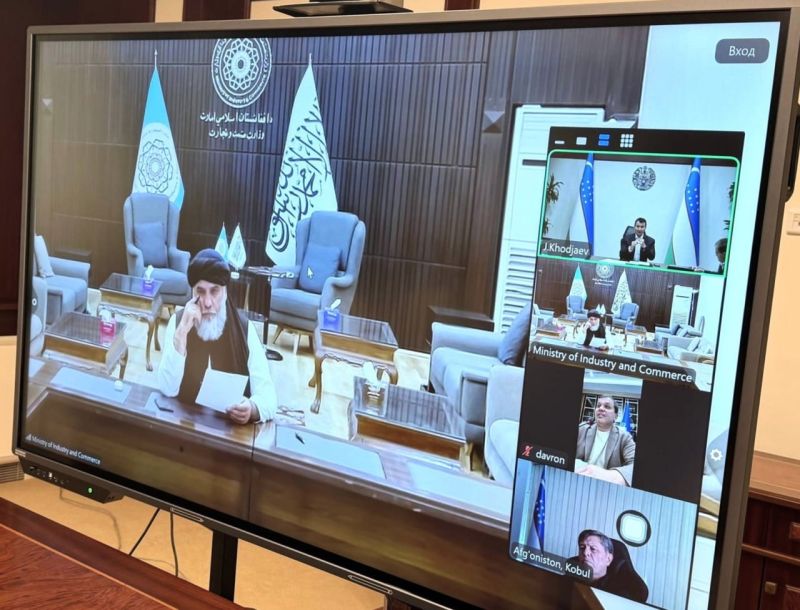
Uzbekistan and Afghanistan plan to accelerate the introduction of a preferential trade regime and significantly expand bilateral trade, Deputy Prime Minister Jamshid Khodjaev said.

In a post on his LinkedIn page, Khodjaev wrote that on February 24 he held a video conference with Afghanistan’s Minister of Industry and Trade, Nuriddin Azizi. “We discussed practical steps to expand trade and economic cooperation and preparations for an upcoming visit of the Afghan delegation to Uzbekistan,” he said.

Khodjaev noted that Uzbekistan values its “friendly and constructive relations” with Afghanistan. According to him, over the past five years bilateral trade has grown 2.5 times, from $653 million in 2021 to $1.7 billion in 2025. “Our shared goal is to increase this figure to $5 billion,” he wrote.

The discussions also addressed the development of interregional ties and the infrastructure needed to promote goods, including showrooms and warehouse facilities. The two sides considered industrial cooperation in agricultural processing, construction materials, and textiles, as well as joint initiatives in food security.

“We agreed to accelerate the entry into force of the Preferential Trade Agreement and to advance projects in investment and industrial cooperation,” Khodjaev stated. He added that, after Ramadan, work would continue in a practical format, including a business forum in Kabul and the preparation of a roadmap outlining priority areas.

Earlier data indicate that in 2024 bilateral trade reached approximately $1.1 billion, with more than $1 billion accounting for Uzbek exports to Afghanistan.

Uzbek Janitor Who Saved Child in St. Petersburg Receives Awards and Ticket Home

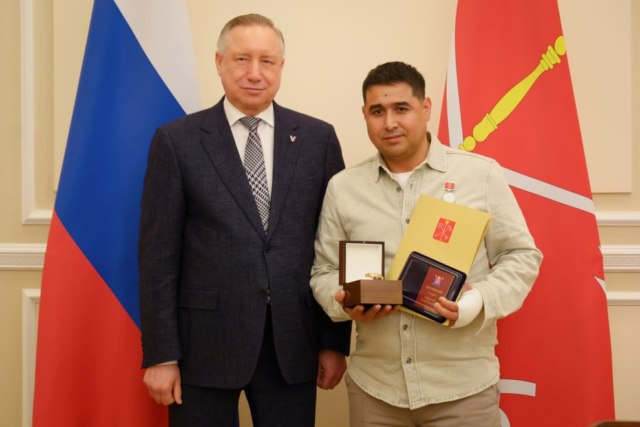
Khayrullo Ibadullayev, an Uzbek migrant worker who saved a child from falling out of a seventh-floor window in St. Petersburg, has received official recognition in both Russia and Uzbekistan, as well as a return air ticket to his home country.

According to the press service of Uzbekistan’s Migration Agency under the Cabinet of Ministers, the agency presented Ibadullayev with a plane ticket to Uzbekistan and thanked him for his bravery. Officials stated that his actions had strengthened the image and reputation of Uzbek citizens working abroad.

Ibadullayev was also awarded the Jasorat medal by President Shavkat Mirziyoyev, a state decoration given for acts of courage. His wife, Gullola Safarova, expressed gratitude to the Uzbek authorities.

“First of all, I want to thank our President for awarding my husband the Jasorat medal and honoring him so highly,” she said. Safarova recalled that when her husband called and told the family he was holding a child in his arms, they were initially alarmed. “When he said he had caught a child who fell from above, the first thing we asked about was the child’s health. We were happy and told him he did the right thing,” she said.

She added that her husband had previously demonstrated similar compassion. In 2025, he reportedly donated blood during a child’s surgery, contributing to saving the patient’s life.

Russian state news agency TASS reported that St. Petersburg Governor Alexander Beglov presented Ibadullayev with the “For Valor in Rescue” distinction during a ceremony at the Smolny government complex. According to the city administration’s press service, Beglov said: “You did not think about yourself. You were injured but saved the life of a seven-year-old child. Our entire city thanks you.”

Ibadullayev, who has been working in St. Petersburg since December 2025 for a cleaning company, also received a commemorative watch from the governor.

The child survived the fall and was hospitalized. Officials have described his condition as stable.