• KGS/USD = 0.01144 0%
  • KZT/USD = 0.00196 -0%
  • TJS/USD = 0.10899 -0%
  • UZS/USD = 0.00008 -0%
  • TMT/USD = 0.28490 0%
  • KGS/USD = 0.01144 0%
  • KZT/USD = 0.00196 -0%
  • TJS/USD = 0.10899 -0%
  • UZS/USD = 0.00008 -0%
  • TMT/USD = 0.28490 0%
  • KGS/USD = 0.01144 0%
  • KZT/USD = 0.00196 -0%
  • TJS/USD = 0.10899 -0%
  • UZS/USD = 0.00008 -0%
  • TMT/USD = 0.28490 0%
  • KGS/USD = 0.01144 0%
  • KZT/USD = 0.00196 -0%
  • TJS/USD = 0.10899 -0%
  • UZS/USD = 0.00008 -0%
  • TMT/USD = 0.28490 0%
  • KGS/USD = 0.01144 0%
  • KZT/USD = 0.00196 -0%
  • TJS/USD = 0.10899 -0%
  • UZS/USD = 0.00008 -0%
  • TMT/USD = 0.28490 0%
  • KGS/USD = 0.01144 0%
  • KZT/USD = 0.00196 -0%
  • TJS/USD = 0.10899 -0%
  • UZS/USD = 0.00008 -0%
  • TMT/USD = 0.28490 0%
  • KGS/USD = 0.01144 0%
  • KZT/USD = 0.00196 -0%
  • TJS/USD = 0.10899 -0%
  • UZS/USD = 0.00008 -0%
  • TMT/USD = 0.28490 0%
  • KGS/USD = 0.01144 0%
  • KZT/USD = 0.00196 -0%
  • TJS/USD = 0.10899 -0%
  • UZS/USD = 0.00008 -0%
  • TMT/USD = 0.28490 0%
08 December 2025

Nursultan Nazarbayev Poses for the Cameras – in Uzbekistan

Nursultan Nazarbayev, the former longtime president of Kazakhstan whose legacy was tarnished by accusations of autocracy and corruption, has made a rare public appearance, visiting several sites in the historic Uzbek city of Bukhara.  

Uzbekistan24 television showed Nazarbayev with Uzbek President Shavkat Mirziyoyev as the pair walked, prayed and posed for cameras together on Friday. Local media reports said they discussed the preservation of cultural heritage and the education of young people. Mirziyoyev returned to Tashkent on Saturday and was in Astana, Kazakhstan on Sunday to attend the opening of the World Nomad Games, an international event celebrating traditional sports in Central Asia.  

Nazarbayev’s appearance resembled more of a stroll with an old friend than a formal event. But it was unusual to see the 84-year-old former leader out and about because he has tended to keep a low profile in recent years. The government of his successor, President Kassym-Jomart Tokayev, has distanced itself from parts of Nazarbayev’s legacy, promising to be more responsive to people’s concerns and launching corruption investigations of some of the former leader’s relatives in order to recover state assets. 

Nazarbayev had ruled Kazakhstan since the collapse of the Soviet Union in 1991, burnishing his reputation with the help of the young country’s massive oil wealth and skilled outreach to foreign investors and governments. 

However, as inequality and economic pressures grew, he resigned in 2019 while retaining some powerful roles in government. He was stripped of those posts as Tokayev grappled with fallout from protests and riots in January 2022 in which Nazarbayev was condemned as an authoritarian holdover. More than 200 people were killed in the violence, which ended after troops from Russia and other regional countries intervened.
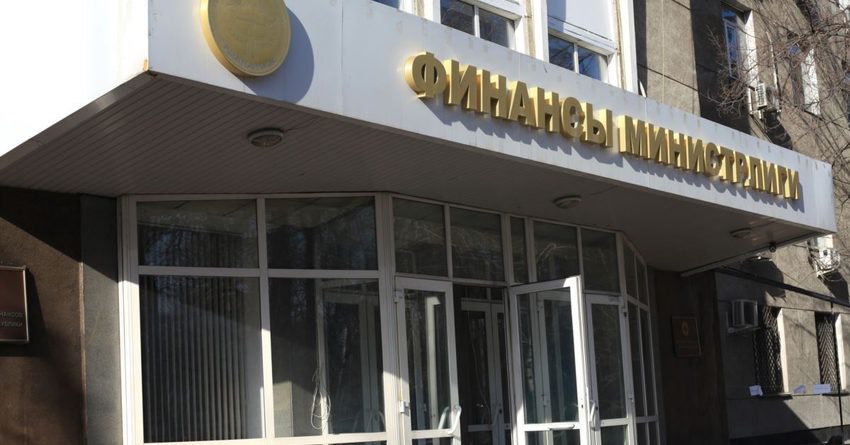

Kyrgyzstan Forecasts Five-Year Budget Surplus

The Ministry of Finance of Kyrgyzstan has published a forecast of total revenue for the next five years, indicating that by 2029, the country’s state budget revenue will grow to KGS 655 billion ($7.8 billion).

At the end of 2024, Kyrgyzstan’s state budget surplus will amount to KGS 11.2 billion ($131.7 million), while revenue this year amounted to KGS 414 billion ($4.8 billion).

As  previously reported by TCA, the introduction of cash registers and the fight against crime have impacted on growth.

Another contributing factor was mentioned by Head of the Cabinet of Ministers, Akylbek Japarov, who stated, “In fiscal policy, we are adopting technology that is fit for the times. Taxpayers are pleased with these changes. They no longer have to wait in queues; they can quickly file reports and receive the necessary documents online.”

He also commended the promotion of domestic and foreign investments and the development of Kyrgyzstan’s industrial sector which facilitate the growth of the republic’s economy and, in turn, state budget revenue: “Since the beginning of 2024, 29 enterprises have been put into operation. Major projects are being implemented, such as constructing the Kambarata hydroelectric power plant and the China-Kyrgyzstan-Uzbekistan railroad. There are plans to develop the tourism sector.”

The Kyrgyz Finance Ministry said in a report that the annual growth in state budget revenue will provide a surplus which will be used to repay public debt.  The state budget is currently projected to receive KGS 414.5 billion ($4.8 billion) in 2024, KGS 465 billion ($5.4 billion) in 2025, KGS 505 billion ($5.9 billion) in 2026, and KGS 655 billion ($7.7 billion) in 2029.

In a statement to TCA, the Finance Minister explained, “Large expenditures are projected for the medium term to pay down public debt. The projected budget surplus will be used for expenditures related to activities of economic orientation and covering the state’s liabilities.”

Turkmenistan Tries to Eradicate Soviet Imagery

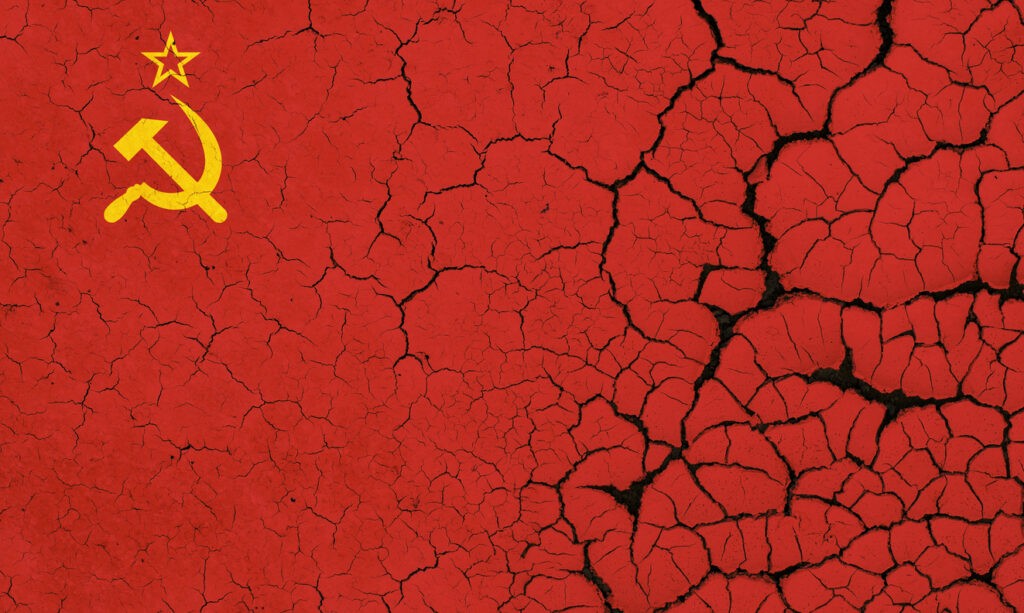
A campaign to fight symbols of the former Soviet Union, such as the hammer and sickle and the Soviet flag, has been launched in Turkmenistan’s Balkan region. Authorities have involved national security and internal affairs officers, actively cracking down on clothing and accessories with Soviet symbols.

According to residents, law enforcement agencies interrogate entrepreneurs selling such goods and even those wearing them. These operations take place in the markets and stores of Balkanabad and Turkmenbashi.

“At Kenar market, I saw police seizing t-shirts, caps, notebooks, and other items with communist symbols while questioning sellers about the origin of these goods,” a resident of the region said.

The active fight against Soviet symbols reportedly began in September, coinciding with preparations to celebrate the 33rd anniversary of Turkmenistan’s independence. The country gained independence in 1991 after the collapse of the Soviet Union. Although Turkmenistan did not openly discuss the Soviet legacy for a long time, the process of decommunization did take place — many towns and villages named after Soviet figures were renamed.

Turkmen authorities continue to create a national ideology, emphasizing the country’s independence and identity within a new historical identity.

The Balkan region added: “In western Turkmenistan, at various events and gatherings, people in their 50s have increasingly started to start conversations and praise the Soviet era. They say that during the Soviet times, one ruble could buy many things: a box of matches for 1 kopeck, 10 rubles could buy a 50-kilogram sack of flour, and now we can’t buy meat or candy for months. There are more and more such people. They say that soon the USSR will be restored, and the communists will rule the world again.”

The Times of Central Asia has written about a 74-year-old resident of Uzbekistan, Ergashkul Hasanov, who was convicted for spreading “propaganda” for the restoration of the USSR.

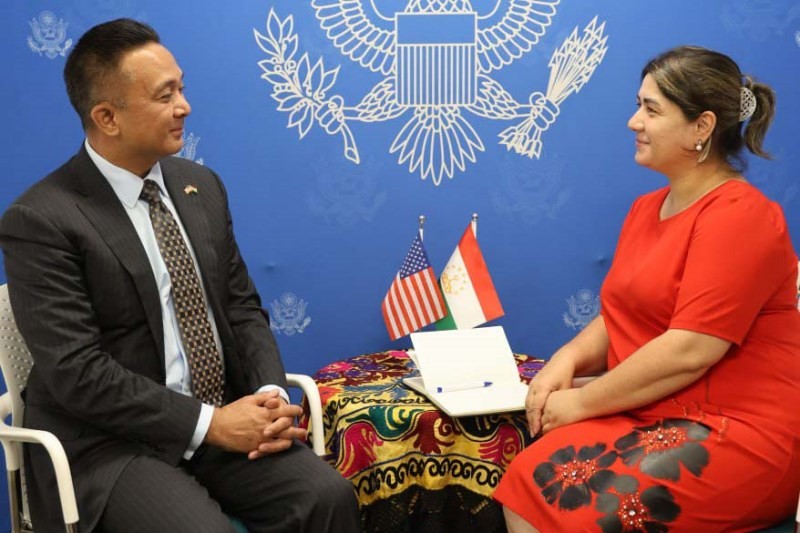
U.S. Ambassador: America Supports Tajikistan’s Role in the Trans-Caspian Trade Route

The United States supports Tajikistan’s participation in the Trans-Caspian Trade Route project, connecting China with Europe through the Caspian Sea, Asia, and the Caucasus. U.S. Ambassador to Tajikistan Manuel Micaller spoke about this in an interview with Khovar.tj.

“We continue to advocate for Tajikistan’s participation in the Trans-Caspian Trade Route, which will connect Central Asia with the Caucasus and European markets. Through the C5+1 diplomatic platform, which brings together the United States and our five Central Asian partners, we hope to facilitate closer cooperation with these partners and access to global markets,” Micaller noted.

The Trans-Caspian Transport Route starts from Southeast Asia and China and runs through Kazakhstan, the Caspian Sea, Azerbaijan, Georgia, and further to European countries. It aims to facilitate trade and economic cooperation by connecting major economic regions through railways, highways, and maritime routes.

Transit time along the Trans-Caspian Route has been reduced from 38-53 days to 18-23 days. In 2024, this period is planned to be reduced to 14-18 days, and the journey through the territory of Kazakhstan from 6 to 5 days.

Uzbekistan’s Debt Reaches $37 billion

According to Kun.uz, based on data issued by the Ministry of Economy and Finance of Uzbekistan, as of July 1, 2024, the state debt of Uzbekistan –  $30.9 billion foreign and $6.1 billion domestic – exceeded $37 billion for the first time.

For comparison, as of July 1, 2023, the state debt amounted to $31 billion 628 million, indicating an increase of $5.4 billion or 17% in just one year.

As stated in the report, the growth rate of Uzbekistan’s foreign debt has increased sharply in recent years. In particular, at the end of 2017, the state debt amounted to $11.6 billion, and by the end of 2023,  reached $34.9 billion, a threefold increase.

By the end of the first half of the year, 42% of the total state external debt ($13 billion) was allocated to budget support, 19% ($5.7 billion) to the fuel and energy sector, 9% ($2.7 billion) to transport and transport infrastructure, and 9 % to agriculture and water management ($2.7 billion.)

Russia’s FM: U.S. Interest in Central Asia’s Economy Could Harm Russia’s Development

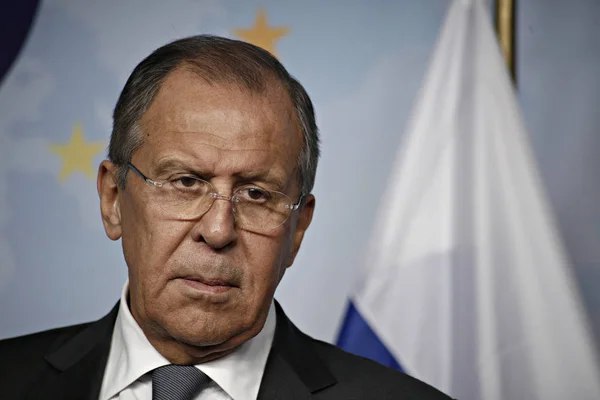
Russia’s Foreign Minister Sergei Lavrov, during a question-and-answer session with students at Moscow’s MGIMO University in early September, noted that “a growing number of extra-regional actors,” including the United States, have taken an interest in fostering trade via the so-called Middle Corridor — a route connecting Asia to Europe via Central Asia, bypassing Russia.

Lavrov’s speech suggests that the U.S. interest in the economic future of Central Asia will negatively impact Russia’s development.

Lavrov noted that Russia maintains “warm and allied” relations with Central Asian nations, which are bound to Russia economically and strategically via several agreements, including the Collective Security Treaty Organization, the Eurasian Economic Union, and the Commonwealth of Independent States. He added that Russia “cannot prevent anyone from establishing deeper ties with other partners.”

Lavrov couldn’t resist lashing out at the United States, saying the motives of American officials in Central Asia aren’t magnanimous. “When our partners and allies in Central Asia expand their relations with the West, I do not have the slightest doubt that they understand perfectly well that apart from pursuing its noble and transparent objectives, the West also seeks to undermine the Russian Federation’s influence there,” he said.

The U.S. engages with Central Asia through the B5+1 process, which promotes Western investment by encouraging reforms to reduce trade barriers and streamline customs. Recently, Central Asian countries have signed agreements to improve trade regulation, and the U.S. has helped some countries upgrade their infrastructure.

U.S. Ambassador to Kazakhstan Daniel Rosenblum has said in a statement: “In August … the United States provided Kazakhstan’s Customs Service with advanced Dell Technologies Inc. servers to help make border procedures more efficient. “Adopting innovative technologies will streamline processes, enhance accuracy, improve transparency, and foster a business-friendly environment, attracting more investors and boosting economic growth,”

Russia’s war in Ukraine has weakened the Kremlin’s ability to pressure Central Asian states to follow its wishes. Russia depends on covert trade through Central Asia to bypass sanctions and get goods for its war. Meanwhile, China is supplying dual-use technologies to Russia and has overtaken Russia as the leading trade partner for Central Asian countries. In his remarks, Lavrov called China “a reliable partner” but didn’t mention it in the context of Central Asia’s growing trade dynamics.