• KGS/USD = 0.01143 -0%
  • KZT/USD = 0.00192 -0%
  • TJS/USD = 0.10820 0.19%
  • UZS/USD = 0.00008 0%
  • TMT/USD = 0.28575 0%
  • KGS/USD = 0.01143 -0%
  • KZT/USD = 0.00192 -0%
  • TJS/USD = 0.10820 0.19%
  • UZS/USD = 0.00008 0%
  • TMT/USD = 0.28575 0%
  • KGS/USD = 0.01143 -0%
  • KZT/USD = 0.00192 -0%
  • TJS/USD = 0.10820 0.19%
  • UZS/USD = 0.00008 0%
  • TMT/USD = 0.28575 0%
  • KGS/USD = 0.01143 -0%
  • KZT/USD = 0.00192 -0%
  • TJS/USD = 0.10820 0.19%
  • UZS/USD = 0.00008 0%
  • TMT/USD = 0.28575 0%
  • KGS/USD = 0.01143 -0%
  • KZT/USD = 0.00192 -0%
  • TJS/USD = 0.10820 0.19%
  • UZS/USD = 0.00008 0%
  • TMT/USD = 0.28575 0%
  • KGS/USD = 0.01143 -0%
  • KZT/USD = 0.00192 -0%
  • TJS/USD = 0.10820 0.19%
  • UZS/USD = 0.00008 0%
  • TMT/USD = 0.28575 0%
  • KGS/USD = 0.01143 -0%
  • KZT/USD = 0.00192 -0%
  • TJS/USD = 0.10820 0.19%
  • UZS/USD = 0.00008 0%
  • TMT/USD = 0.28575 0%
  • KGS/USD = 0.01143 -0%
  • KZT/USD = 0.00192 -0%
  • TJS/USD = 0.10820 0.19%
  • UZS/USD = 0.00008 0%
  • TMT/USD = 0.28575 0%
13 December 2025

CSTO to Hold Series of Military Exercises in Central Asia

In the coming days, the Collective Security Treaty Organization (CSTO) will hold a series of exercises to protect stability in the Central Asia region.

The director of the First Department of the CIS countries, Mikael Agasandyan, told RIA Novosti: “Russia is consistently making efforts to develop the CSTO’s potential as an effective structure responsible for maintaining stability in member states and the vast Eurasian space. In the coming weeks, a series of exercises are planned with various components of the Organization’s Collective Forces on the territory of Kazakhstan, Kyrgyzstan, and Tajikistan, aimed at practicing joint actions in the Central Asian region to protect the stability and collective security, in particular, taking into account the situation in Afghanistan.”

He also noted the interest in the CSTO’s work on the part of Eurasian states that share the opinion on the importance of creating a single, indivisible, and reliable security space on the continent.

The Times of Central Asia has previously written about other CSTO military exercises held in Kazakhstan.

Better Buses Help Air Quality in Bishkek to Improve

Officials claim that the air quality in Kyrgyzstan’s capital, Bishkek, has significantly improved over the last two years due to the ongoing renewal of the municipal transport fleet, switching residential heating from coal to natural gas, and extinguishing the sanitary landfill near Bishkek that had burned for decades.

Chyngyzbek Abdymalik Uulu, an atmospheric air specialist at the Kyrgyz Ministry of Natural Resources, Ecology, and Technical Supervision, told Birinchi Radio that the primary sources of air pollution in Bishkek were low-quality coal, exhaust gases from motor transport, and the burning of municipal solid waste at the city landfill.

The official says that, in large part, the air quality has improved due to the decreasing number of minibuses on Bishkek streets.

Over the past 30 years, “markhrutka” minibuses — mainly aged Mercedes minivans — have been the primary type of municipal transport in Bishkek, vastly surpassing in number the limited fleet of large buses and trolleybuses. Running on diesel, these old marshrutkas spew harmful gases into the atmosphere and congest city traffic, since they stop anywhere on demand.

Abdymalik Uulu said more than 3,000 minibuses ran in the capital until 2022. After their number was reduced over the last two years, diesel fuel consumption decreased by 100 tons daily.

The Bishkek municipality has now removed the minibuses from the central part of the city and replaced them with large buses running on liquefied natural gas.

In 2023, Bishkek purchased a thousand large buses from China, which have been arriving in the capital city in batches over the past year. Today, the municipal fleet has 1,200 buses. In addition, by the end of 2024, the city will receive 100 12-meter-long buses, and 120 electric buses will arrive in the second quarter of 2025.

Both officials and analysts agree that renewing the municipal transport fleet will improve the air quality in Bishkek.

Abdymalik Uulu added that gasification is another reason for the improved air quality. To date, about 20,000 households have been connected to natural gas networks, which has decreased coal burning by 58,000 tons. Also, he said, all of Bishkek’s 74 large boiler houses that used to burn large amounts of coal daily have now been converted to electricity and natural gas.

Finally, the Bishkek sanitary landfill, which burned for decades and released large volumes of harmful emissions, has been completely extinguished.

New Container Transport Route Connects India and Uzbekistan

JSC “Uztemiryulkonteyner” reports on its Telegram channel that container transportation had been launched on a new multimodal route connecting India and Uzbekistan.

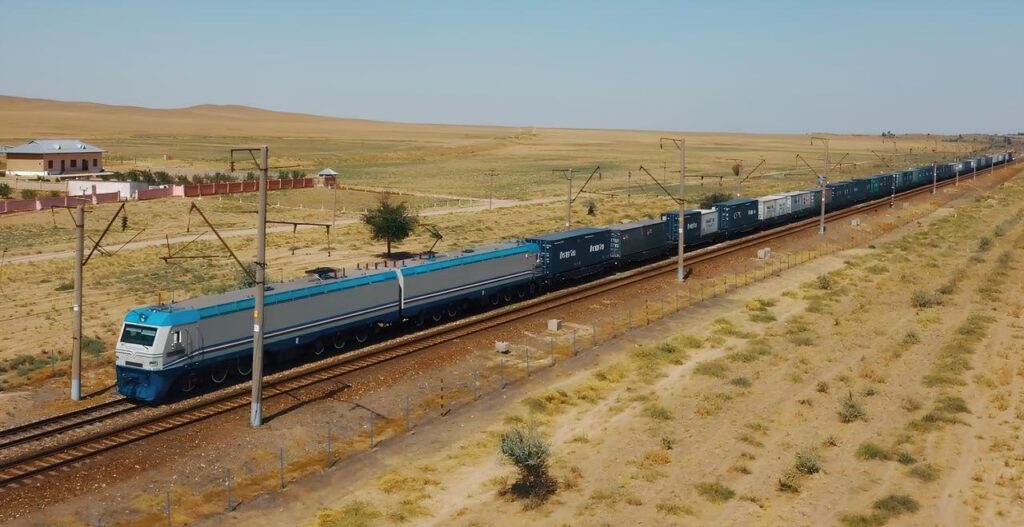
It was reported that transportation from the Indian ports of Mundra, Nhava Sheva, and Chennai to Uzbekistan was successfully organized using a new multimodal route. The cargo was delivered by sea from India to the Iranian port of Bandar Abbas and then by rail to the Sergeli station in Uzbekistan.

The containers are first transported from the Bandar Abbas port to the Sarakhs station on Iranian platforms, reloaded onto JSC “Uzbekistan Railways” platforms, and sent to Uzbekistan via Turkmenistan.

According to JSC “Uztemiryulkonteyner”, a freight train consisting of 20 20-foot containers took 20 days to cover the distance. The total length of the railway is 2673 km. In the future, the transportation period is planned to be reduced to 15 days.

Kazakhstan Bans Wheat Import to Protect Domestic Market

The Kazakh Ministry of Agriculture announced on August 20 a ban on importing wheat to Kazakhstan. This applies to all countries, including fellow members of the Eurasian Economic Union (Armenia, Belarus, Kyrgyzstan, and Russia).

The ban applies from August 21 to December 31, 2024, and does not apply to the transit of wheat through Kazakhstan’s territory.

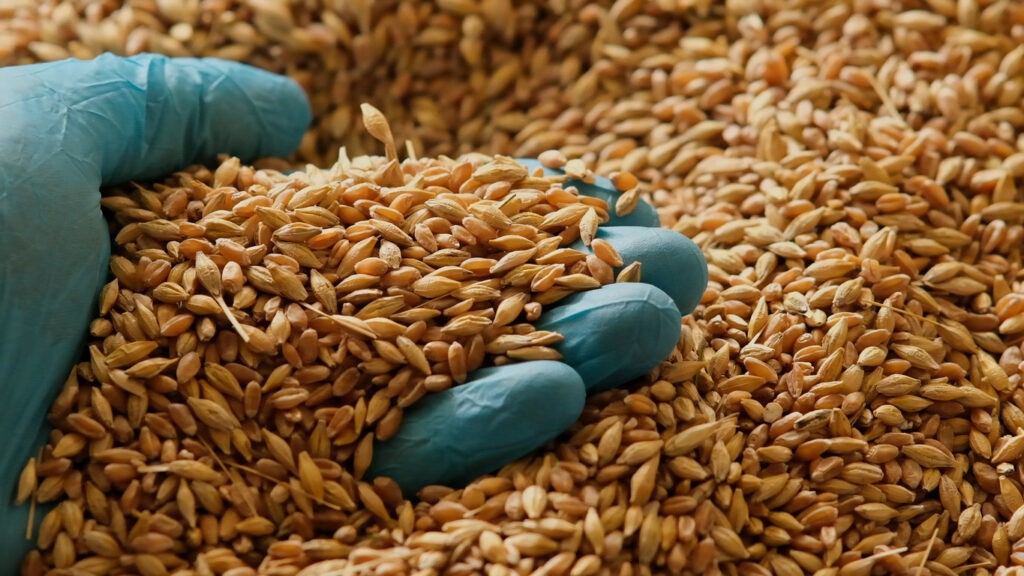
The ministry explained that the move was necessary to protect the domestic market. In the first half of this year, Kazakhstan imported 1.3 million tons of wheat, which is almost equal to the import volume for the entire 2023. The country’s domestic market has sufficient wheat left over from last year’s harvest.

As of 1 July 2024, Kazakhstan had wheat reserves of 5.1 million tons, including 4 million tons for food.

Due to favorable weather conditions during this year’s growing season, the ministry expects a good grain harvest, which would create an excess supply on the domestic grain market, considering the carryover stocks.

Kazakhstan’s total area under grain crops this year is 16.7 million hectares. Regarding wheat production, Kazakhstan is in 14th place in the world, with a production volume of more than 12 million tons per year.

According to the Food and Agriculture Organization of the United Nations (FAO), Kazakhstan’s wheat production in 2023 stood at 12.1 million tons. Wheat exports in the 2023/24 marketing year (July/June) were estimated at 9 million tons.

Russia Remains Tajikistan’s Largest Trade Partner

Russian news agency TASS is reporting that, according to the Statistics Agency under the President of Tajikistan, trade between Tajikistan and Russia has exceeded $1.1 billion in 2024 so far.

During the first seven months of 2024, the trade volume between the two countries was 12.1% more than in the same period of 2023.

Russia continues to be Tajikistan’s largest trade partner, and also accounted for 26.7% of all imports entering the country during this period.

In terms of bilateral trade, China remains in second place, with turnover to and from Tajikistan of almost $1 billion.

Rather surprisingly, Switzerland has now became Tajikistan’s leading export partner. In the first seven months of 2024, Tajikistan sent 26.6% of its products to Switzerland. In January-July of this year, the trade volume between the two countries amounted to more than $641 million, and compared to the same period in 2023, it increased almost 110 times.

Doctors in Turkmenistan Ordered Not To Perform Abortions

Turkmenistan has imposed severe restrictions on conducting abortions, effectively banning them. In recent weeks, government officials have been visiting hospitals and clinics, and warning doctors that they will be stripped of their diplomas if they do.

According to Radio Azatlyk, sources from different regions of the country say that doctors have been forced to refuse women seeking abortions, even though the law allows it within the first five weeks of pregnancy.

The authorities have not commented on the reasons for yet another tightening of measures to prevent abortions. However, according to several doctors in Ashgabat, it may be due to a sharp increase in teenage pregnancies. At the same time, doctors note that many young girls, unable to have a legal abortion, resort to dangerous methods of terminating pregnancy, resulting in serious risks to their health.

Despite the bans, there are still doctors who continue to perform abortions clandestinely. The cost of such services has increased significantly, and varies depending on the term of the pregnancy.