• KGS/USD = 0.01144 0%
  • KZT/USD = 0.00211 0%
  • TJS/USD = 0.10454 -0.1%
  • UZS/USD = 0.00008 0%
  • TMT/USD = 0.28571 0.28%
  • KGS/USD = 0.01144 0%
  • KZT/USD = 0.00211 0%
  • TJS/USD = 0.10454 -0.1%
  • UZS/USD = 0.00008 0%
  • TMT/USD = 0.28571 0.28%
  • KGS/USD = 0.01144 0%
  • KZT/USD = 0.00211 0%
  • TJS/USD = 0.10454 -0.1%
  • UZS/USD = 0.00008 0%
  • TMT/USD = 0.28571 0.28%
  • KGS/USD = 0.01144 0%
  • KZT/USD = 0.00211 0%
  • TJS/USD = 0.10454 -0.1%
  • UZS/USD = 0.00008 0%
  • TMT/USD = 0.28571 0.28%
  • KGS/USD = 0.01144 0%
  • KZT/USD = 0.00211 0%
  • TJS/USD = 0.10454 -0.1%
  • UZS/USD = 0.00008 0%
  • TMT/USD = 0.28571 0.28%
  • KGS/USD = 0.01144 0%
  • KZT/USD = 0.00211 0%
  • TJS/USD = 0.10454 -0.1%
  • UZS/USD = 0.00008 0%
  • TMT/USD = 0.28571 0.28%
  • KGS/USD = 0.01144 0%
  • KZT/USD = 0.00211 0%
  • TJS/USD = 0.10454 -0.1%
  • UZS/USD = 0.00008 0%
  • TMT/USD = 0.28571 0.28%
  • KGS/USD = 0.01144 0%
  • KZT/USD = 0.00211 0%
  • TJS/USD = 0.10454 -0.1%
  • UZS/USD = 0.00008 0%
  • TMT/USD = 0.28571 0.28%

Uzbekistan Shakes Up Top Security Positions

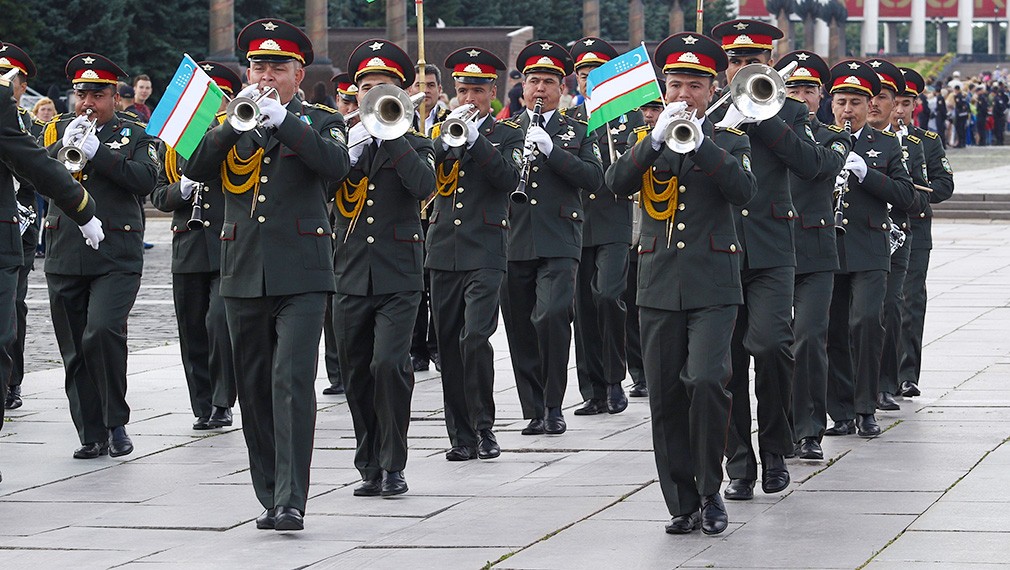
Uzbek President Shavkat Mirziyoyev has reshuffled several top posts in the government’s security establishment, a presidential aide said on Sunday.

Shukhrat Khalmukhamedov has been promoted to defense minister from his previous post as the ministry’s first deputy minister and chief of the general staff of the military, presidential press secretary Sherzod Asadov said on social media. Khalmukhamedov had held his previous job since 2021.

Khalmukhamedov replaced Bahodir Kurbanov, who was defense minister for five years and moved to chairman of the State Security Service, the national intelligence agency, according to the press secretary. Kurbanov, in turn, took over from Abdusalam Azizov, who was transferred to the Security Council secretariat under the president. Azizov previously held several high-level jobs, including defense minister, internal affairs minister and head of the Uzbekistan Football Association.

The government did not announce any reasons for the reshuffle. It came one month after a shooting attack on a vehicle in the Tashkent region that prompted reports by Uzbek media organizations and social media posts that a former high-profile figure in the government was traveling in the vehicle and was the target. There were no injuries in the attack.

The prosecutor general’s office has said several suspects were arrested, but has provided few other details about the case. Authorities warned that people who spread false information can be prosecuted because it can lead to panic and destabilize society.

In other security developments in the region, Kazakh President Kassym-Jomart Tokayev has told his government to upgrade protections at key military and civilian facilities because of escalating hostilities between Ukraine and Russia, which launched a full-scale invasion of Ukraine in early 2022.

Azerbaijan and Kazakhstan Stand Out at COP29

The 29th United Nations Climate Change Conference (COP29), held in Baku from November 11–22, 2024, has underscored the critical role of Azerbaijan and Kazakhstan in advancing Caspian Sea regional energy transitions. Both countries leveraged their positions along the Middle Corridor to present ambitious renewable and nuclear energy strategies.


Azerbaijan: Renewables and the Middle Corridor

Azerbaijan, the host and chair of COP29, has positioned itself as a renewable energy connector between Central Asia and Europe. Its energy strategy reflects a pragmatic approach to transitioning from hydrocarbons, which accounted for 88% of government revenues in 2023, to a diversified portfolio incorporating solar, wind, and hydropower.

Azerbaijan has prioritized key renewable energy projects to align with its goal of achieving a 30% renewable share in its electricity mix by 2030. Among these is the operational Garadagh Solar Power Plant, a 230-megawatt (MW) facility developed by the UAE’s Masdar, which generates 500 million kilowatt-hours (kWh) annually. Complementing this is the planned Alat Solar Project, a 400-MW solar installation expected to be operational by 2027. These projects aim to bolster domestic electricity supply and expand Azerbaijan’s capacity to export renewable energy.

The Caspian Offshore Wind Initiative, backed by the European Bank for Reconstruction and Development (EBRD), seeks to harness the Caspian Sea’s favorable wind conditions. A 1-gigawatt (GW) wind farm is under preliminary study, with construction anticipated to begin by 2026. This project could transform Azerbaijan into a renewable energy hub for the Middle Corridor, particularly as Europe reduces its dependency on Russian energy.


Kazakhstan: Nuclear Ambitions and Renewable Diversification

Kazakhstan’s energy strategy focuses on nuclear power and renewables, driven by the need to reduce coal dependency, which still accounts for two thirds of its electricity generation. The government’s approval of its first nuclear power plant, following a nationwide referendum in October 2024, is central to this strategy.

The planned nuclear reactor, located near Lake Balkhash, will generate 1.2-GW of electricity, replacing approximately 20% of coal-fired generation. This initiative complements Kazakhstan’s status as the world’s largest uranium producer, supplying over 40% of global demand and generating $3.6 billion in export revenues in 2023. Potential consortium members for the project include South Korea’s KEPCO, France’s Orano and EDF, China’s CNNC, and Russia’s Rosatom, although economic-sanctions issues complicate Russia’s involvement in the nuclear sector.

Kazakhstan is simultaneously scaling up renewable energy projects, with several key initiatives underway. The Zhanatas Wind Farm, operational since 2022, produces 100-MW of power, and the Shelek Solar Park, a 200-MW solar facility near Almaty, is expected to come online in late 2025. Together, these projects aim to increase renewables to 15% of Kazakhstan’s electricity mix by 2030, quintupling the level from 2023.


The Trans-Caspian Electricity Cable Project

At the COP29 conference, Azerbaijan and Kazakhstan, along with Uzbekistan, announced an ambitious trans-Caspian electricity cable project through an underwater transmission system. This infrastructure initiative, estimated to cost $2.5 billion, seeks to establish an electricity corridor linking Central Asia with European markets, representing a significant step in regional energy integration. The project would run 400 kilometers under the Caspian Sea and connect Azerbaijan’s Alat Free Economic Zone to Kazakhstan’s Aktau port.

Expected to be completed by 2028, with a plan to facilitate the transmission of up to 2-GW of electricity, the project will contribute to existing Middle Corridor infrastructure, which already supports trade and energy flows between Central Asia and Europe. The cable would link Azerbaijan’s electricity grid to Kazakhstan’s network, with Uzbekistan connecting through Kazakhstan’s infrastructure. For Azerbaijan, it would reinforce the country’s role as an energy hub between Central Asia and Europe; for Kazakhstan and Uzbekistan, it would be opportunity to monetize their growing electricity generation capacity, in line with their expanding renewable energy sectors.

The project faces unique engineering challenges due to the Caspian Sea’s marine environment. A submarine cable requires specialized high-voltage direct current (HVDC) technology to manage depths of several hundred meters. HVDC is preferred over alternating current (AC) due to its lower transmission losses over long distances, reducing the number of cables required. Multiple converter stations will transform AC power to DC for transmission, and back to AC for grid integration.

All three countries will need significant grid reinforcement, including new substations, AC transmission lines, and sophisticated control systems to manage power flow and ensure grid stability. Kazakhstan and Uzbekistan must strengthen their north-south transmission backbone to channel power to the Caspian connection point, while Azerbaijan will require robust interconnection infrastructure to manage power flows toward European markets.

This initiative forms part of broader efforts to enhance connectivity through the Middle Corridor (also called the Trans-Caspian International Transport Corridor, TITR). It aligns with European Union objectives to diversify energy sources and reduce dependence on Russian energy imports, making the project highly relevant in contemporary energy security discussions. By linking renewable energy generation across the Caspian, the project underscores Azerbaijan’s role as a bridge between resource-rich Central Asia and energy-demanding Europe. It also contributes to the broader Middle Corridor objectives, including reducing transit times for goods and energy, enhancing regional connectivity, and providing alternatives to China-dominated infrastructure.


Conclusion and Prospect

Both Kazakhstan and Azerbaijan face significant financial and geopolitical constraints in advancing their energy strategies. The Caspian electricity cable, for example, requires substantial investment from multilateral institutions, such as the European Investment Bank (EIB) and the Asian Infrastructure Investment Bank (AIIB). While Azerbaijan has allocated $1.2 billion for grid modernization, Kazakhstan’s nuclear program demands extensive international collaboration, which is complicated by sanctions and geopolitical rivalries.

Azerbaijan’s focus on renewables positions it as a critical bridge between Central Asia and Europe, while Kazakhstan’s nuclear and renewable investments reflect its leadership in addressing domestic and regional energy demands. The two countries are thus advancing distinct yet complementary energy strategies, underscored by the Caspian electricity cable and their integration into the Middle Corridor.

Repeal of Jackson-Vanik Amendment for Kazakhstan Discussed in Washington

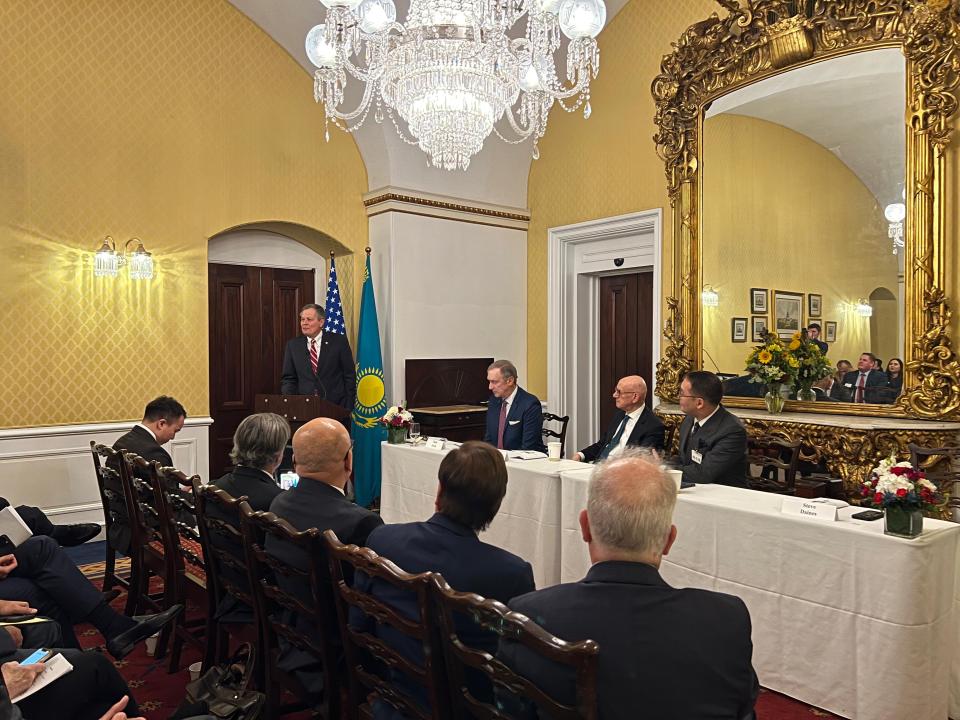
On November 19, the U.S. Congress hosted a discussion on repealing the Jackson-Vanik Amendment as it pertains to Kazakhstan. The event brought together members of Congress, officials from the U.S. State Department, Kazakhstan’s Ambassador to the United States, Yerzhan Ashikbaev, and representatives from business and expert communities.

A Cold War-era provision, the Jackson-Vanik Amendment to the 1974 Trade Act denied the U.S. normal trade relations with non-market economies — primarily countries in the former Soviet bloc — that restricted emigration for Jewish and other minority populations or violated human rights.

In his opening remarks, Ambassador Ashikbaev underscored the importance of repealing the amendment for Kazakhstan, highlighting the country’s transformation into a regional leader in attracting foreign investment and promoting stability in Central Asia.

“Over the past 30 years, Kazakhstan has emerged as the second-largest economy in the post-Soviet space, accounting for two-thirds of Central Asia’s GDP. The repeal of the Jackson-Vanik Amendment and the establishment of Permanent Normal Trade Relations with Kazakhstan is a strategic move that will strengthen ties between Kazakhstan and the U.S., providing stability and predictability for American investors,” the ambassador stated.

Congressman Tom Suozzi commended Kazakhstan for its efforts to promote religious freedom and the rule of law. He also emphasized that the U.S. recognizes Kazakhstan’s geopolitical challenges and the critical role of strengthening economic security in the region for mutual prosperity.

Senator Chris Murphy stressed the strategic importance of Central Asia in U.S. foreign policy. He argued that repealing the amendment would signal Washington’s serious commitment to the region. While the amendment’s sanctions were effective in the past, Murphy noted they are now irrelevant to Kazakhstan, which fully complies with international norms.

Senator Steve Daines, co-chair of the Senate Central Asia Caucus, reflected on his visit to Kazakhstan in March. He described the establishment of the caucus following his trip and assured participants of his ongoing efforts to achieve Permanent Normal Trade Relations between the U.S. and Kazakhstan.

Eric Rudenshiold, Senior Fellow at the Caspian Political Center and former National Security Council official, also emphasized the need for repeal. He noted that this step should have been taken earlier, given Kazakhstan’s significant political and economic progress over 33 years of independence. He described the repeal as both justified and timely.

Participants in the discussion concluded that, given Kazakhstan’s successful economic reforms and its adherence to market economy principles, the Jackson-Vanik Amendment is no longer relevant.

Kazakhstan on Alert as War in Ukraine Escalates

Kazakh President Kassym-Jomart Tokayev has instructed his government to take urgent steps to safeguard key military and civilian facilities because of escalating hostilities in Ukraine, which has been fighting Russian forces since they launched a full-scale invasion in early 2022.

Tokayev ordered the prime minister, the presidential chief of staff, security chiefs and regional governors “to ensure the security” of the facilities, presidential press secretary Berik Uali said on Facebook on Thursday. Uali’s message did not include any details about the security steps that were being taken.

Parliamentary leaders were notified of the measures, according to Uali.

“The President is personally monitoring the situation in the country,” he said.

The message came hours after Russia struck a site in the Ukrainian city of Dnipro with a new ballistic missile that amounted to a heightened warning from Russian President Vladimir Putin. The missile was only carrying conventional warheads, but it is in a class of missiles that can carry nuclear weapons.

On Wednesday, Kazakhstan’s embassy in Ukraine urged Kazakh citizens to consider leaving Ukraine for safety reasons, and Kyrgyzstan issued a similar message to its nationals.

Kazakhstan, which shares a long border with Russia, has called for an end to the conflict in Ukraine through negotiations. Kazakhstan and other Central Asian countries that, like Ukraine, were former Soviet republics have sought a neutral stance, maintaining trade and security ties with Russia while not publicly supporting the invasion.

Tajikistan’s External Debt Reaches $3.25 Billion

As of October 1, Tajikistan’s external debt stood at $3.25 billion, according to a report by Asia-Plus citing the Ministry of Finance. This represents a modest 0.2% increase, or $7.1 million, compared to January 1.

Approximately 96% of the debt comprises direct government debt, incurred to meet state obligations, while $138.8 million is under state guarantees. Tajikistan’s external debt-to-GDP ratio is 27%, which is considered a favorable level.

The largest creditors include the World Bank ($370 million), the Asian Development Bank ($260 million), the Islamic Development Bank ($212 million), and the European Bank for Reconstruction and Development ($167 million).

A significant portion of the debt, $500 million, consists of Eurobonds issued in 2017 to finance the completion of the Rogun Hydroelectric Power Plant. While the government adheres to the repayment schedule for these bonds, only interest payments have been made so far.
Next year, Tajikistan is expected to seek additional loans from development partners to continue work on the Rogun Hydroelectric Power Plant. This move is anticipated to substantially increase the country’s external debt.

By way of comparison, The Times of Central Asia recently reported that neighboring Uzbekistan’s public debt is projected to reach $45.1 billion by the end of 2025.

More Than 70,000 Kyrgyz Citizens Violate Russian Migration Laws

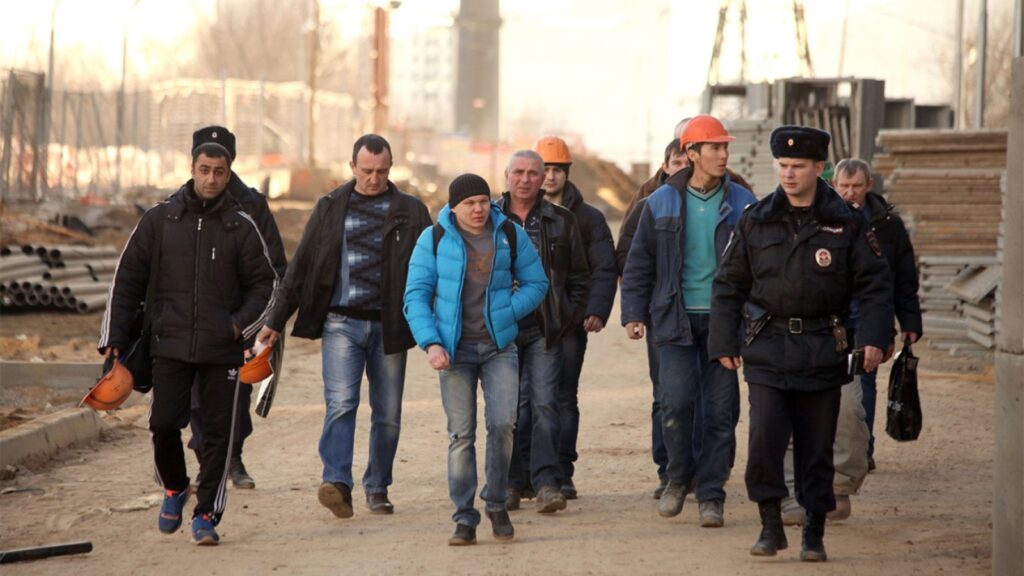
The Ministry of Foreign Affairs of Kyrgyzstan has reported that 71,949 Kyrgyz citizens working in Russia are at risk due to potential violations of Russian migration laws.

According to the ministry, the individuals at risk are those for whom the Russian Ministry of Internal Affairs’ database lacks information regarding the conclusion of labor or civil law contracts, fingerprint registration, medical examinations, or migration registration.

“For citizens with valid documents confirming legal residence in the Russian Federation, it is necessary to visit the territorial migration departments of the Russian Ministry of Internal Affairs and provide these documents to be included in the database and removed from the risk zone,” the Kyrgyz Foreign Ministry explained.

To assist its citizens, the Ministry of Labor, Social Security, and Migration of Kyrgyzstan will soon publish a list of migrants at risk on the portal migrant.kg. Citizens can use this portal to check their status and take steps to resolve any legal issues in advance.

From February 5, 2025, a new Russian law, “On the Legal Status of Foreign Citizens in the Russian Federation,” will come into force. Under this law, foreign citizens without legal grounds for staying in Russia will be added to the register of controlled persons and face expulsion.

Official data indicates that around 500,000 Kyrgyz migrants currently reside in Russia, though unofficial estimates suggest the figure exceeds one million.