• KGS/USD = 0.01144 0%
  • KZT/USD = 0.00212 0%
  • TJS/USD = 0.10432 0%
  • UZS/USD = 0.00008 0%
  • TMT/USD = 0.28490 0%
  • KGS/USD = 0.01144 0%
  • KZT/USD = 0.00212 0%
  • TJS/USD = 0.10432 0%
  • UZS/USD = 0.00008 0%
  • TMT/USD = 0.28490 0%
  • KGS/USD = 0.01144 0%
  • KZT/USD = 0.00212 0%
  • TJS/USD = 0.10432 0%
  • UZS/USD = 0.00008 0%
  • TMT/USD = 0.28490 0%
  • KGS/USD = 0.01144 0%
  • KZT/USD = 0.00212 0%
  • TJS/USD = 0.10432 0%
  • UZS/USD = 0.00008 0%
  • TMT/USD = 0.28490 0%
  • KGS/USD = 0.01144 0%
  • KZT/USD = 0.00212 0%
  • TJS/USD = 0.10432 0%
  • UZS/USD = 0.00008 0%
  • TMT/USD = 0.28490 0%
  • KGS/USD = 0.01144 0%
  • KZT/USD = 0.00212 0%
  • TJS/USD = 0.10432 0%
  • UZS/USD = 0.00008 0%
  • TMT/USD = 0.28490 0%
  • KGS/USD = 0.01144 0%
  • KZT/USD = 0.00212 0%
  • TJS/USD = 0.10432 0%
  • UZS/USD = 0.00008 0%
  • TMT/USD = 0.28490 0%
  • KGS/USD = 0.01144 0%
  • KZT/USD = 0.00212 0%
  • TJS/USD = 0.10432 0%
  • UZS/USD = 0.00008 0%
  • TMT/USD = 0.28490 0%

Uzbekistan and Germany Partner on Green Industrialization with €3 Million Grant

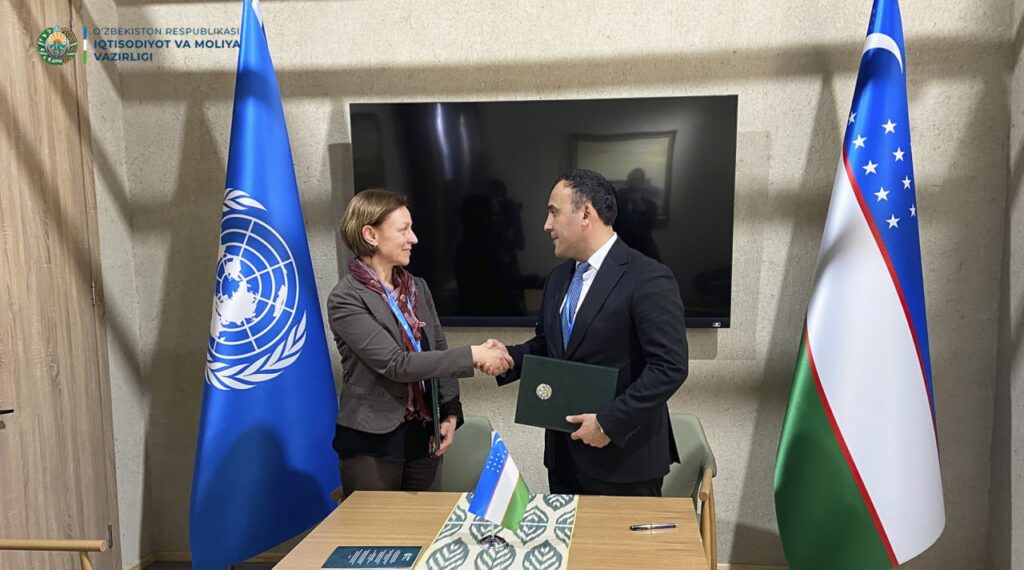
On November 13, at the 29th UN Climate Change Conference (COP29) in Azerbaijan’s capital Baku, Uzbekistan’s Ministry of Economy and Finance signed a memorandum with the German International Cooperation Society (GIZ) to secure additional funding for a project aimed at supporting the private sector in green industrialization.

As part of the initiative, Germany has allocated €9 million to help Uzbekistan’s private sector transition to a green economy. The project is designed to assist the Uzbek government in implementing economic reforms and fostering sustainable economic development, focusing on enhancing the capacity of both the public and private sectors to adopt green industrialization practices.

The initiative will also provide technical expertise in measuring and certifying greenhouse gas emissions, supporting Uzbekistan’s participation in international carbon trading mechanisms, and aligning with the European Union’s Cross-Border Adjustment Mechanism (CBAM). Additionally, it aims to promote resource-saving and sustainable production by encouraging the private sector to adopt green technologies, including circular economy practices and green industrial park models.

To further bolster the project, a €3 million grant was approved during the conference. This funding will complement the ongoing initiative, titled “Support to the Private Sector and Advice on Economic Policy in Uzbekistan.”

Strategic Partnership Dialogue: U.S. Allocates $500,000 for Registan Square Preservation

On November 13, the latest meeting of the U.S.-Uzbekistan Strategic Partnership Dialogue took place in Washington, D.C. Key participants included U.S. Assistant Secretary of State for South and Central Asia, Donald Lu, Uzbekistan’s Deputy Foreign Minister, Muzaffar Madrahimov, and the ambassadors of both countries. The delegations discussed the expanding partnership between Uzbekistan and the United States, focusing on economic development, human rights, security, and cultural ties. The United States reaffirmed its steadfast support for Uzbekistan’s independence, sovereignty, and territorial integrity.

At the meeting, both sides emphasized the importance of maintaining close consultations and celebrated new areas of collaboration. Notable progress was highlighted in critical minerals production and efforts to modernize Uzbekistan’s natural gas infrastructure. This follows the signing of a Critical Minerals Memorandum of Understanding (MOU) in September and Uzbekistan’s entry into the Minerals Security Partnership.

The delegations also underscored their commitment to diversifying trade and investment, advancing agricultural reforms in Uzbekistan, empowering women economically, addressing the climate crisis, and supporting the transition to clean energy.

The United States commended Uzbekistan for adopting USAID-supported English language textbooks and teachers’ manuals for public schools. Efforts to expand sustainable economic opportunities for women in Uzbekistan were similarly praised. Both nations highlighted the strength of their cultural ties, with the U.S. expressing gratitude for Uzbekistan’s leadership in archaeology and cultural preservation.
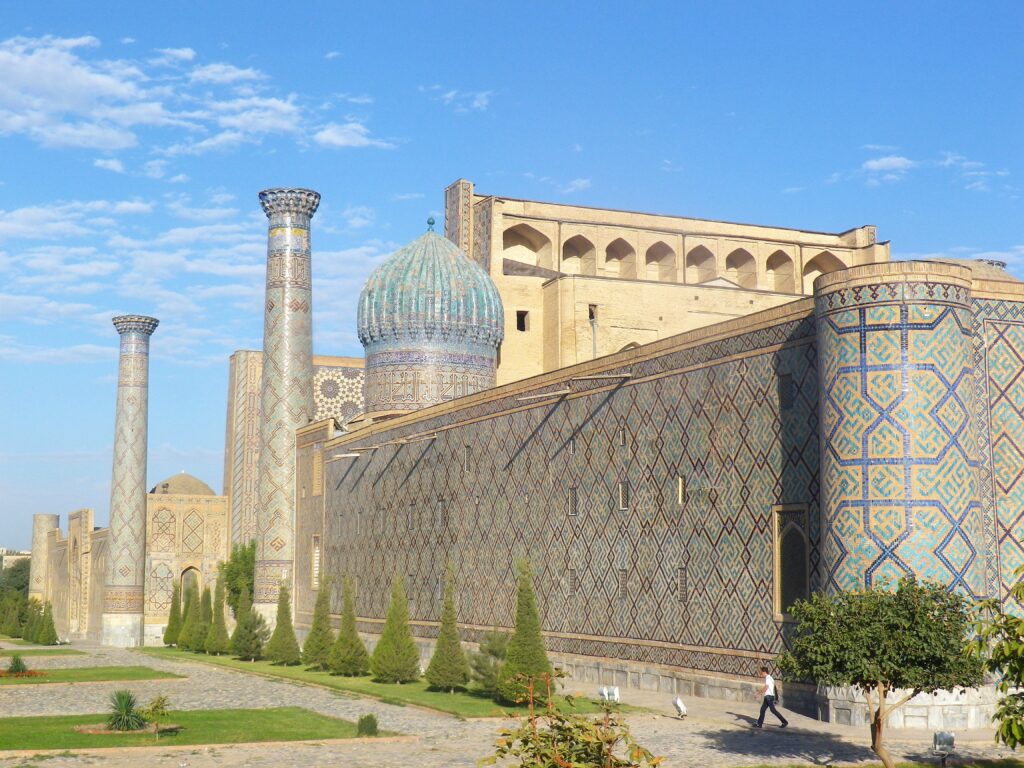
As part of these efforts, the U.S. State Department announced a $500,000 allocation from the U.S. Ambassador’s Fund for the Preservation of Cultural Heritage. The funding will support conservation efforts at Registan Square, a UNESCO World Heritage site in Samarkand.

Kyrgyzstan Opens New Village for People Resettled from Barak Exclave

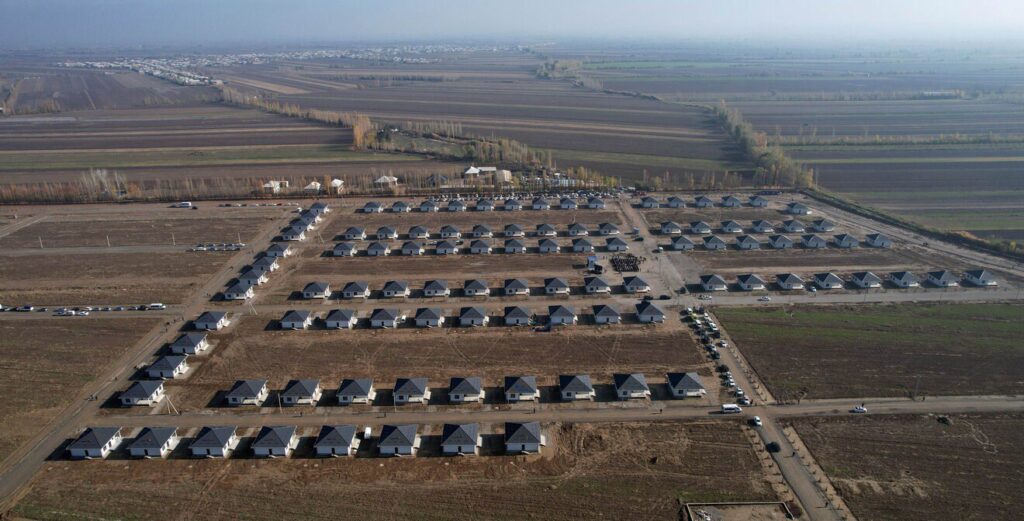
On November 15, Kyrgyzstan President Sadyr Japarov attended the opening of a new village, Jany-Barak, in the country’s southern Osh region. The village was constructed for Kyrgyz citizens resettled from the Barak exclave, previously Kyrgyzstan’s largest exclave, located in Uzbekistan’s Andijan region. For many years, the residents of the exclave experienced severe difficulties due to their partial isolation and the difficulty of traveling between the exclave and the Kyrgyz mainland.

After signing a border delimitation agreement with Kyrgyzstan, Uzbekistan ceded a portion of its land to Kyrgyzstan in exchange for control of the Barak exclave. Construction of Jany-Barak (New Barak) was launched in May 2024 and is now complete. Speaking at the opening ceremony, Japarov emphasized that the construction of the new village marked a significant milestone. He highlighted that residents, who had relocated from the exclave, can now live and work in Kyrgyzstan, on their native land, in new homes, with renewed confidence in their future.

Japarov highlighted the extensive work completed to establish infrastructure in the new village: 101 residential houses have been built, roads have been laid, electricity has been connected, and wells for clean drinking water have been drilled. The new village will have social amenities, including a school, a kindergarten, a park, a mosque, and a football (soccer) field.

Plots have been allocated to residents for agricultural use.

Turkmenistan and UK Strengthen Cooperation in Education

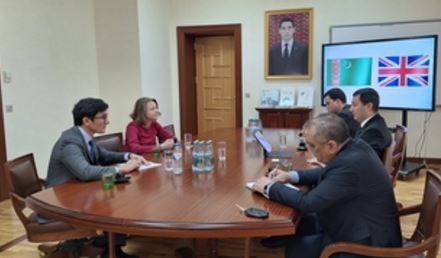
The Ministry of Education of Turkmenistan hosted a meeting between Deputy Minister Azat Ataev and Sarah Chidgey, Regional Export Director for Eastern Europe and Central Asia, to discuss prospects for educational cooperation between Turkmenistan and the UK.

Ms. Chidgey shared insights into the UK’s experience in delivering quality education, citing successful examples in Kazakhstan and Uzbekistan, where British universities, such as the University of Westminster, have actively sought to expand partnerships. During the meeting, the participants explored opportunities for British universities to offer educational services in Turkmenistan, including the accreditation of academic institutions to enhance secondary and higher education.

Chidgey announced plans to hold the Turkmen-British Trade and Industry Council early next year, with educational cooperation set to be a key topic. The British delegation also expressed its readiness for more in-depth discussions at the World Education Forum, held annually in London.

Ataev expressed interest in implementing the proposed initiatives and supported organizing webinars for Turkmen specialists. These webinars will focus on introducing Turkmen specialists to British educational standards and accreditation procedures and enhancing education quality. He emphasized that particular attention would be given to studying critical aspects of the British educational system to facilitate their successful adaptation and implementation in Turkmenistan.

Both sides expressed confidence that this partnership would contribute to developing Turkmenistan’s education system and creating new opportunities for students and teachers. In the long term, it is expected to support their integration into the global educational community.

Great Britain actively cooperates with Central Asian countries in the field of education: Kazakhstan has the Kazakh-British Technical University, founded in 2001, which offers programs in partnership with British universities, and British universities are opening branches in Uzbekistan, giving local students access to British education. The British Council also runs the region’s English language training and teacher development programs. In 2024, the British Foreign Secretary announced a new initiative to promote English in Central Asia by giving teachers access to online resources with local content.

#ForSaltanat: The Quest for Justice in Domestic Violence Cases in Kazakhstan

In the spring of 2024, the televised murder trial of Kuandyk Bishimbayev, Kazakhstan’s former Minister of the National Economy, captivated viewers across the country. Bishimbayev was found guilty of the brutal murder of his wife, Saltanat Nukenova, in a restaurant in Astana, and sentenced to 24 years in prison. Comparisons to the O.J. Simpson trial of 1995 were inevitable. Both trials involved a prominent figure — in this case, a politician previously pardoned by President Nursultan Nazarbayev after serving time for corruption — a victim who had endured domestic abuse, and a massive viewership. Bishimbayev’s trial underscored public fascination with the case, driven not only by its reality TV appeal but by a growing awareness of deeply ingrained gender inequities, particularly regarding the societal expectations placed on Kazakh women within marriage. The trial’s timing occurred shortly before — and perhaps by no coincidence — new legislation was signed by President Kassym-Jomart Tokayev on April 15, 2024, amending laws to protect the rights and safety of women and children. However, critics noted an omission: a clear, targeted focus on preventing domestic violence.

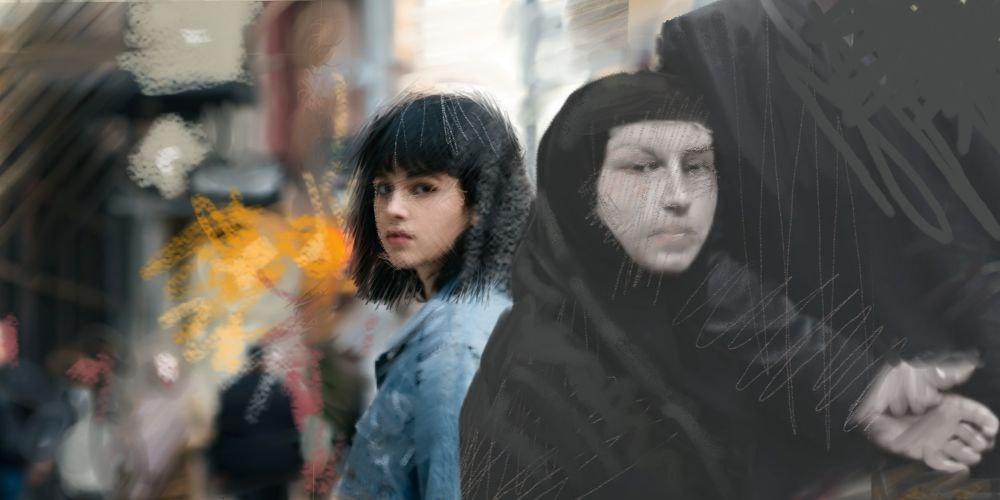
Two Kazakh women, who shared their stories with The Times of Central Asia, revealed the extent to which domestic violence remains embedded in Kazakh society. Rayana, from Astana, and Aliya, a Kazakh student in New York City, have never met, yet their stories echo shared challenges and hopes for change in their home country.

Rayana, a beauty industry professional in her mid-twenties, reflected on her brief and tumultuous marriage, which began when she was 23. “I loved my husband, but felt it was too early to marry. We married just four months after meeting, and within a month of living together, I wanted a divorce. He was unfaithful and violent.”

When Rayana sought help from her mother-in-law, she was told that her mother-in-law had also been a victim of domestic violence and that she, too, must learn to endure it. “It is worth mentioning that in Kazakhstan the north is very different from the south,” Rayana added. “I’m a northerner, he’s a southerner. I had never experienced abuse before, and then for the first time, I felt a panic attack, which I still live with. In the south, people adhere more to traditions and have a negative attitude towards divorce and washing their dirty linen in public. Women keep silent about domestic violence. I can’t say anything about his family’s attitude. I still don’t fully understand.”

Having grown up around domestic violence, she believes that one in two families is affected by it. After separating, Rayana’s family offered her support, while her in-laws disapproved, even throwing out her belongings.

Rayana’s life since then, however, has vastly improved. “I have been working in the beauty industry for a long time. In our field, at least, climbing the career ladder is not difficult. My first supervisor helped me a lot. He spoke fondly of his wife and cared about his female employees. This gives us faith that there are good men in Kazakhstan. Now, I provide consulting services for beauty salons and barbershops. In addition to organizing events, we are currently preparing a women’s forum for 500 people with speakers represented by successful women who inspire us. I’m not ready to start my own business yet, but I feel comfortable with hiring and I feel like I can help a lot of people here. There is already a lot of evil and violence, so we are trying to be kinder and more united.”

Now financially independent, Rayana is optimistic about the recent legal reforms, but wary of the road ahead. “Just because the constitution says you can’t beat a woman, men don’t stop,” she noted. “Our silence and fear are passed down to our daughters. This chain needs to be broken now.”

Having taken a break from entering into a new relationship, Rayana remains hopeful about remarrying and building a family in the future. “I hope to meet a man whose ego can embrace the success of his partner.”

Reflecting on the Bishimbayev trial and recent women’s rights law amendments, Rayana has thought carefully about what is needed to bring about real improvements in the lives of women and girls in Kazakhstan.

“Of course, the brutal murder of Saltanat Nukenova and the way her family fought for justice opened the eyes of the people. I believe that the educational program should include an elective on financial literacy. Quite a few women remain in abusive relationships due to financial dependence on their husbands. I urge parents to explain to their children from an early age what is bad and what is good, and if they are in trouble, there are always people who will help them. I hope the government will pay more attention to support centers for victims of domestic violence. I have experienced domestic violence, infidelity, and divorce. Today, I dictate the rules of my own life. I am surrounded by kind and successful people, and my past has taught me a lot and made me stronger.”

Aliya, 28, who moved from Kazakhstan to the United States six years ago and is now a student in New York City, has noticed significant differences in the support available to women in each country. “I experienced domestic violence here in the States when I was 24,” she said. “I lived in fear and constant anxiety. If I’d known that a simple protection order could help, I would have sought help sooner. I was shocked at how easy it was to get that protection and finally feel safe. This experience has given me a unique perspective on women’s rights issues in both countries. I understand deeply how difficult it is for many women in Kazakhstan who may not have the same option. I didn’t realize I was suffering from post-traumatic stress disorder, anxiety, and panic attacks until a therapist reached out to me after my police visit. I didn’t know I needed help as I’m from a country where mental health is ignored.”

Aliya believes that Kazakhstan’s patriarchal norms perpetuate abuse, with survivors often blamed for their situations, stigmatized if they divorce, and pressured to stay in unsafe marriages. “In Kazakh society, divorced women — especially mothers — face significant stigma, making it harder to leave abusive relationships.”

Reflecting on the Bishimbayev case, Aliya described the sentence as a small step in a long journey. “Bishimbayev represents all abusive men to me. His wife was brutally beaten for eight hours in a restaurant filled with staff who likely heard her cries for help, but chose to ignore them. I’m not fully satisfied with his 24-year sentence. His status as a political figure made it even harder for Saltanat to seek help, as men with money and power could easily influence the police and courts.”

Both women agree on the need for change at every level — from stronger laws to shifts in cultural attitudes. Rayana advocates for financial literacy education for girls, to reduce financial dependence on abusive partners, while Aliya emphasizes the need to educate boys and men about equality and respect. “Parents, teachers, and leaders should emphasize that no one has the right to harm others,” Aliya noted, “and girls should feel empowered and valued in society.”

Despite their challenges, Rayana and Aliya remain hopeful. “Kazakhstan is at a critical turning point,” Aliya remarked. “There’s a rising awareness among the younger generation, and recent legislative changes show promise. However, true progress will require both structural changes and a shift in cultural attitudes to ensure that women are treated with respect and dignity, free from fear and stigma.”

Six Key Names in the Music of Kazakhstan

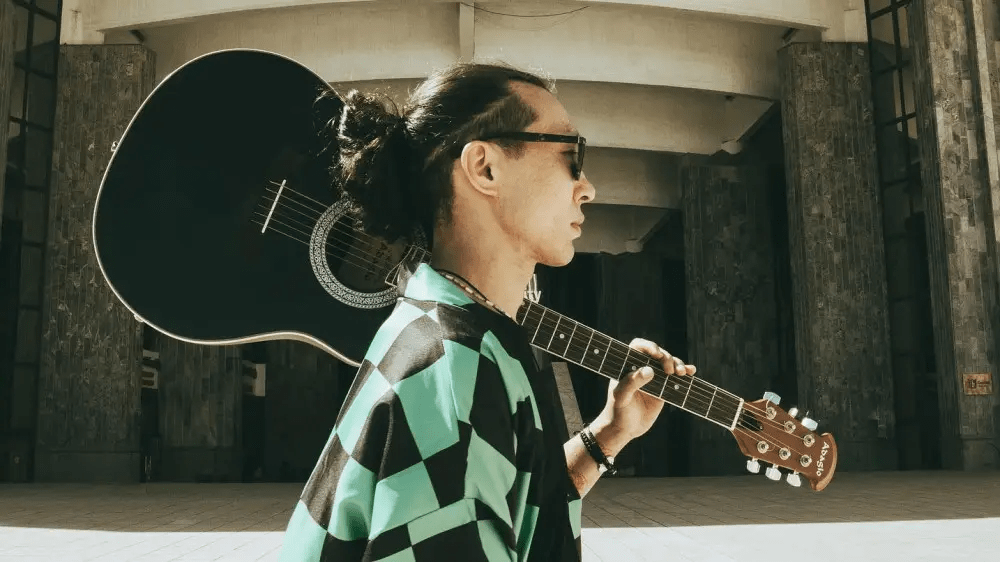
The music of Kazakhstan is a bright reflection of the national identity. From pop classics to groundbreaking hip-hop sounds, Kazakhstani artists are creating more than just songs – they’re blazing a new cultural trail, where every chord and lyric is imbued with a unique identity. TCA has compiled a list of six key names whose music has united generations, captured hearts and made Kazakhstan a prominent spot on the global music map.


Dos-Mukasan


Dos-Mukasan have been one of the most popular bands in Kazakhstan since the late 1960s. The group was created by students of the Kazakh Polytechnic Institute and soon became a firm favorite with the public. They combined folk motifs with elements of rock music, which was revolutionary at the time, and set a new vector for Kazakhstani pop music. Their compositions, such as “Aliya” and “Toi Zhyry”, remain popular and are played at various events, evoking a strong sense of nostalgia among the older generations.

Following the release of the movie Dos-Mukasan in 2022, the band gained a second lease of life with a younger audience. Now, the legendary band can be heard on a new generation of headphones, and the number of monthly listens on Spotify has already exceeded 19,000.


Roza Rymbayeva

Roza Rymbayeva, the “Nightingale of Kazakhstan”, is one of the most famous performers from Soviet-era Kazakhstan. Her career began in 1975 when she became a soloist with the Arai ensemble and quickly gained immense popularity. Rymbayeva continued her career performing on various international stages and won a plethora of awards. Her songs are characterized by strong vocals and deep content, and many, such as “Aliya,” have become true classics of Kazakhstani pop music.


Kairat Nurtas

Kairat Nurtas is one of the most commercially successful performers in modern Kazakhstan. He began his musical career as a teenager, and by the 2010s had become a star of the Kazakh pop scene. His songs, such as “Arman” and “Almaty tүni,” became hits, winning over fans across the country. Kairat is listened to by both the younger generation, who appreciate his modern pop sounds, and more mature listeners, who are drawn to his lyrics and national motifs. Thanks to his charisma and ability to find a common language with different generations, Kairat has a huge army of fans and has a significant influence on the modern pop culture of Kazakhstan.


Dimash Kudaibergen

Dimash Kudaibergen is a singer with a unique voice, the range of which reaches six octaves. He became famous globally thanks to his participation in the Chinese show “I Am a Singer” in 2017, where he captivated the audience with his powerful voice. Dimash has won numerous international awards and actively popularizes Kazakh culture abroad, incorporating national themes into his performances. His compositions, “S.O.S” and “Acapella” have been recognized both in Kazakhstan and far beyond its borders.


Skriptonit

Skriptonit (Adil Jalelov) is one of the most influential rappers in Kazakhstan and the CIS. His style combines elements of hip-hop, rap, and various experimental genres. He became popular thanks to his debut album “House with Paranormal Phenomena” and subsequent works, which reflected both his depth of personal experiences and social themes. Skriptonit has set a new standard in Kazakhstani rap, and inspired a generation of young artists.


Darkhan Juzz

Darkhan Juzz (Darkhan Juzbay) is one of the brightest representatives of the Kazakhstani alternative scene. His style combines elements of indie rock, jazz and soul, which makes his music both unique and deeply emotional. Darkhan Juzz has found his audience through his sincere and melancholic lyrics, which touch upon such themes as loneliness, love, and self-awareness. His compositions, such as “Úıde” and “Sheker” have gained popularity among young people, and Darkhan has become a symbol of modern Kazakh music.