• KGS/USD = 0.01144 0%
  • KZT/USD = 0.00214 0%
  • TJS/USD = 0.10508 0.48%
  • UZS/USD = 0.00008 0%
  • TMT/USD = 0.28490 -0.28%
  • KGS/USD = 0.01144 0%
  • KZT/USD = 0.00214 0%
  • TJS/USD = 0.10508 0.48%
  • UZS/USD = 0.00008 0%
  • TMT/USD = 0.28490 -0.28%
  • KGS/USD = 0.01144 0%
  • KZT/USD = 0.00214 0%
  • TJS/USD = 0.10508 0.48%
  • UZS/USD = 0.00008 0%
  • TMT/USD = 0.28490 -0.28%
  • KGS/USD = 0.01144 0%
  • KZT/USD = 0.00214 0%
  • TJS/USD = 0.10508 0.48%
  • UZS/USD = 0.00008 0%
  • TMT/USD = 0.28490 -0.28%
  • KGS/USD = 0.01144 0%
  • KZT/USD = 0.00214 0%
  • TJS/USD = 0.10508 0.48%
  • UZS/USD = 0.00008 0%
  • TMT/USD = 0.28490 -0.28%
  • KGS/USD = 0.01144 0%
  • KZT/USD = 0.00214 0%
  • TJS/USD = 0.10508 0.48%
  • UZS/USD = 0.00008 0%
  • TMT/USD = 0.28490 -0.28%
  • KGS/USD = 0.01144 0%
  • KZT/USD = 0.00214 0%
  • TJS/USD = 0.10508 0.48%
  • UZS/USD = 0.00008 0%
  • TMT/USD = 0.28490 -0.28%
  • KGS/USD = 0.01144 0%
  • KZT/USD = 0.00214 0%
  • TJS/USD = 0.10508 0.48%
  • UZS/USD = 0.00008 0%
  • TMT/USD = 0.28490 -0.28%

Kyrgyzstan Adds First Three Organizations to List of Foreign Agents

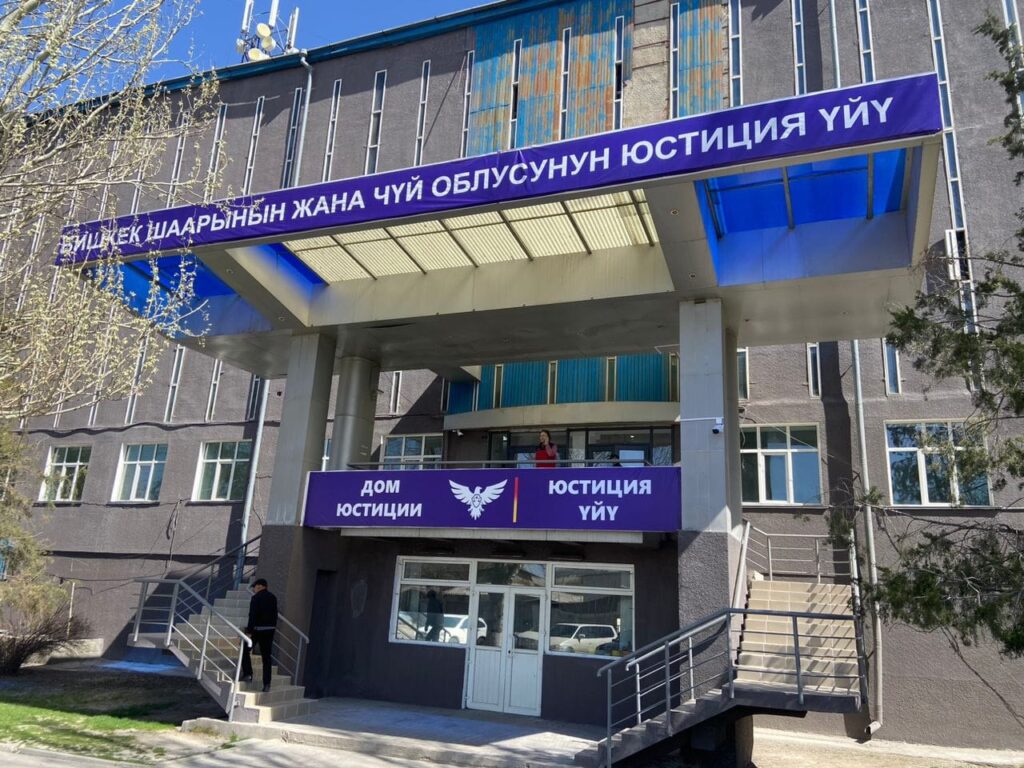
The Kyrgyz Ministry of Justice has posted a list of non-profit organizations that have been given the status of “foreign agent”.

On August 27 the Cabinet of Ministers of Kyrgyzstan adopted a decree “On non-profit organizations”. The new law came into force on September 9, since when any NPO engaged in political activities and receiving funding from abroad must apply for inclusion as a foreign agent.

The first three organizations to declare themselves as “foreign agents” are the Eurasian Club association of entrepreneurs, the business association JIA, and a branch of the environmental organization Fauna and Flora International.

“Applications shall be submitted to the authorized body to maintain the register of NPOs within two months from the date of entry into force of this decree,” the Ministry of Justice explained to The Times of Central Asia. After receiving an application, the ministry has 60 days to verify the information provided.

The law stipulates that foreign agent status can be removed if an organization has not received funds or property from foreign sources in the past 12 calendar months, or if it has not been engaged in political activity in the past 12 months.

Kyrgyzstan’s president Sadyr Japarov has promised the public that the authorities would not prosecute foreign agents and their representatives. “I, as head of state, guarantee that there will be no persecution. We are not a nuclear country. We are not going to fly into space yet. Our state has no secrets to hide from you and your donors,” Japarov said earlier this year.

Adoption of Latin-Based Common Turkic Alphabet

The Turkic Academy has announced that the Turkic World Common Alphabet Commission is to adopt a Latin-based Common Turkic Alphabet consisting of 34 letters.

At a meeting in Baku (Azerbaijan) on September 9-11, the Commission finalized its two-year development of a proposed standard alphabet for Turkic languages in which each letter in represents different phonetic sounds in Turkic languages.

Emphasizing its historic significance, the Turkic Academy stated that the development of the Common Turkic Alphabet, first proposed by scientists in 1991, promotes mutual understanding and cooperation among the Turkic peoples while preserving their linguistic heritage.

Based in Astana, Kazakhstan, the Turkic Academy is an international organization established under the Organization of Turkic States. Founding member states include Azerbaijan, Kazakhstan, Kyrgyzstan, and Türkiye, with Hungary and Uzbekistan joining as observers in 2018 and 2022, respectively.

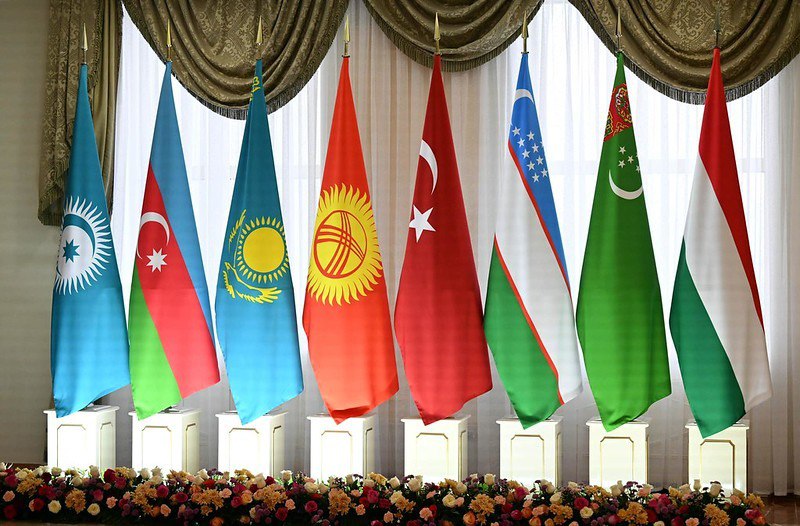
 The Organization of Turkic States currently comprising Azerbaijan, Kazakhstan, Kyrgyzstan, Turkey, Uzbekistan and Turkmenistan, with Hungary and the Turkish Republic of Northern Cyprus as observers, was founded in 2009 to foster comprehensive cooperation among Turkic-speaking nations.

The alphabet issue in post-Soviet Turkic-speaking countries dates back to 1929, when the Soviet government replaced traditional Arabic-based alphabets used by Muslim minorities in the Soviet Union with Latin-based national alphabets. In 1940, the Latin alphabet was replaced with Cyrillic, used for the Russian language. After the breakup of the Soviet Union in 1991, former Soviet republics of Azerbaijan and Turkmenistan switched to Latin-based alphabets, while Uzbekistan has used both Latin and Cyrillic alphabets since 1992.

In 2017, Kazakhstan’s then-President Nursultan Nazarbayev ordered the government to develop a Latin-based alphabet for the Kazakh language. The switch, initially planned for 2025, was then postponed till as late as 2031.

Citing the complexity of a transition from the Cyrillic to a Latin-based alphabet, in June 2022, Nazarbayev’s successor, President Kassym-Jomart Tokayev stated that linguistic reform should not be rushed.

Kyrgyzstan is the only post-Soviet Turkic-speaking nation committed to the use of the Cyrillic alphabet.

Talk about switching from Cyrillic to Latin in post-Soviet Central Asia has always irritated Moscow, which considered such moves by the former Soviet republics as a means of distancing themselves from Russian influence.

Kazakhstan’s Home Credit Bank Stops Working with Russian VTB Bank

Kazakhstan’s Home Credit Bank has stopped its cooperation with the Russian VTB Bank because of the risk of secondary sanctions, Home Credit has reported.

“In connection with international sanctions imposed on JSC DO Bank VTB Kazakhstan (VTB Kazakhstan), JSC ‘Home Credit Bank’ has decided to cease cooperation with VTB Kazakhstan to exclude the risks of secondary sanctions. In this regard, any transfer operations in tenge and foreign currency on customers’ accounts to/from VTB Kazakhstan will be stopped,” the bank’s statement read.

VTB remains the only Russian bank with a subsidiary structure in Kazakhstan. Earlier, Sberbank and Alfa Bank sold their subsidiary banks in the country. The US, EU, and UK are enforcing sanctions on VTB.

As of July 1, 2024, VTB Kazakhstan ranked 18th in assets among the country’s 21 banks.

Home Credit Bank Kazakhstan was previously owned by Home Bank, but fully exited the asset at the end of 2022. Home Credit Bank CEO Kirill Bachvarov explained that this was necessary to restore the bank’s rating, as the link to the Russian shareholder negatively affected its position.

In July 2024, the U.S. Treasury tightened sanctions against Russia, adding to the list of companies whose work with Russia could lead to risks of secondary sanctions, including VTB Kazakhstan.

Work Begins on Afghan Section of the TAPI Gas Pipeline

Turkmenistan and Afghanistan have now begun construction of the Afghan section of the Turkmenistan-Afghanistan-Pakistan-India (TAPI) natural gas pipeline.

To mark the launch of work on the pipeline’s Serhetabat-Herat section, Chairman of the Halk Maslahaty (People’s Council) of Turkmenistan, Gurbanguly Berdimuhamedov, and Mullah Mohammad Hassan Akhund, the Prime Minister of the Taliban-led Afghan government, attended a ceremony  at a checkpoint on the Turkmen-Afghan border on September 11.

The staged installation of the TAPI pipeline, already completed in Turkmenistan, will eventually transfer 33 billion cubic meters of Turkmen natural gas annually to Afghanistan, Pakistan, and India.

At an estimated cost of $10 billion, the TAPI pipeline will span 1,814 kilometers.  With 816 kilometers running through Afghanistan, the project will meet the country’s gas needs, generating around $450 million in annual transit fees, before continuing on to Quetta and Multan in Pakistan and Fazilka in India.

Gas-rich Turkmenistan currently exports natural gas to China and Russia but once completed, the TAPI project will enable the country to diversify its export routes and help realize far-reaching plans to transport its gas across the Caspian Sea to Azerbaijan, Turkey, and Europe.

Mullah Mohammad Hassan Akhund stated that the commencement of work on the TAPI project on Afghan soil would strengthen relations between Afghanistan and Turkmenistan, whilst speaking from Ashgabat via videoconferencing, Turkmenistan President Serdar Berdimuhamedov, announced, “The commencement of the TAPI project [on the Afghan territory] and other projects is beneficial not only for Afghanistan but also for the countries in the region.”

In addition to TAPI, the ceremony opened a 177-meter-long railway bridge at the Turkmen-Afghan border on Serhetabat-Turgundi railroad, launched the construction of the Serhetabat-Herat (Afghanistan) fiber-optic communication line, a warehouse complex in the dry port of the Turgundi railway station at the Turkmen-Afghan border, and the Turgundi-Sanabar section of the Turgundi-Herat railway. The event also marked the commission of the Nur-el-Jahad power plant in Afghanistan’s Herat province,  as part of the first phase of the Turkmenistan-Afghanistan-Pakistan (TAP) power transmission line project.

German Company to Assemble Airplanes in Almaty

The German company “Linding Group” is set to invest about $10 million in assembling airplanes in Almaty, pending necessary permits from the government.

Based in the economic zone “PIT ‘Alatau”, production will begin in 2026. During the first year, 20 airplanes will be assembled, rising to 50 units annually thereafter.

Kazakhstan is already engaged in several joint projects with foreign enterprises in aircraft production. One such project  involves the “Russian Helicopters” company. Within the framework of the agreement with Kazakhstan’s aircraft repair plant No. 405, a large-unit assembly of Mi-8AMT and Mi-171E helicopters was launched in Almaty, predominantly serving the Ministry of Emergency Situations and the National Guard of Kazakhstan.

A further example of international cooperation is the contract between the Ural Civil Aviation Plant and Kazakhstan Aviation Industry (KAI) to produce the Baikal multi-purpose airplane. When fully assembled by the end of this year, the airplanes will be delivered to markets in Europe and Africa.

The realization of all of these projects will both strengthen Kazakhstan’s aviation industry and increase its presence in international aviation markets.

Celebrating Female Pioneers at the 2024 World Nomad Games

Like most dominating worldwide sports, the World Nomad Games are top-heavy with male athletes. Yet while women don’t participate in all the categories, in the 2024 WNG, a noteworthy number of them have become the center of attention. Among the packed crowds of the Hippodrome and Ethnoaul venues, one competitor and two ticket holders had a few things to say on the matter of WNG women.

Timea Janurik, known as Timi, is a folk musician and a PhD student in folk teaching methods, from Budapest, Hungary. She is competing as a player of the citera, the national stringed instrument of Hungary, at the Ethnoaul. The Hungarian representation at the WNG includes three men and three women, but Timi, who specializes in Turkic folk songs, is the only musician among them. While rehearsing in Astana, Timi chanced upon a Kazakh girl singer and asked her, “Do you want to join me in the concert?” Hence, a female alliance and a makeshift band were formed because Timi only knew how to sing one song in the Kazakh language. According to Timi, her new partner “can sing beautifully.” In Timi’s native Hungary, folk musicianship is an art form split evenly among men and women, but citera playing is dominated by women (and violin playing by men).

Timi is also participating in the female Assyk games, a type of traditional Kazakh board game in which players use small animal bones — assyks — to knock out multiple lines of their opponent’s assyks. The game rules differ according to gender. The male version of the game “is more popular,” says Timi, “because it’s more visible and looks so fancy to play.”

Image: TCA, K. Krombie

British visitors Naomi Ocean and Andy Myer (an archer), from Wales and Devon, respectively, came all the way from the UK to Astana to watch the horseback archery. Even though they are well-traveled in other regions of Central Asia, this is their first visit to Kazakhstan and the WNG. They remarked that they hadn’t noticed the UK team participating in anything they have witnessed thus far, but what they have seen has been “interesting and exciting.” Having just seen the Turkey team being “trashed in the kok boru,” they were happy to see Turkey’s subsequent victory in the Traditional Turkish Archery, in particular the female team member who performed victory laps before an exhilarated, mostly Kazakh crowd. “We were glad,” said Naomi, “and we loved seeing the female archers.” Naomi was equally, if not more impressed by the “mixed teams” in the horseback archery category. Having watched and enjoyed the 2016 Kazakh language documentary film, The Eagle Huntress, Naomi and Andy look forward to the Kusbegilik games. “We’re expecting to see women handling eagles, which should be good.”

Image: TCA, K. Krombie

A Turkish team victor, competing in Traditional Turkish Archery (mixed gender team), and an Uzbek athlete in horseback archery (with no specific male and female categories) drew huge support — arguably more than their fellow male competitors. Out of the 21 competitive sports, a handful, including some of the more rambunctious horseback and wrestling games, don’t include women. The very notion of incorporating women’s teams into the more rough-and-tumble divisions could draw further attention to these sports as well as a new vantage point for the ticket-purchasing general public.

“There was a lot of cheering for the women going on from the stands,” said Naomi, “a lot of support for the female riders.”