• KGS/USD = 0.01144 0%
  • KZT/USD = 0.00216 0%
  • TJS/USD = 0.10698 0%
  • UZS/USD = 0.00008 0%
  • TMT/USD = 0.28530 0%
  • KGS/USD = 0.01144 0%
  • KZT/USD = 0.00216 0%
  • TJS/USD = 0.10698 0%
  • UZS/USD = 0.00008 0%
  • TMT/USD = 0.28530 0%
  • KGS/USD = 0.01144 0%
  • KZT/USD = 0.00216 0%
  • TJS/USD = 0.10698 0%
  • UZS/USD = 0.00008 0%
  • TMT/USD = 0.28530 0%
  • KGS/USD = 0.01144 0%
  • KZT/USD = 0.00216 0%
  • TJS/USD = 0.10698 0%
  • UZS/USD = 0.00008 0%
  • TMT/USD = 0.28530 0%
  • KGS/USD = 0.01144 0%
  • KZT/USD = 0.00216 0%
  • TJS/USD = 0.10698 0%
  • UZS/USD = 0.00008 0%
  • TMT/USD = 0.28530 0%
  • KGS/USD = 0.01144 0%
  • KZT/USD = 0.00216 0%
  • TJS/USD = 0.10698 0%
  • UZS/USD = 0.00008 0%
  • TMT/USD = 0.28530 0%
  • KGS/USD = 0.01144 0%
  • KZT/USD = 0.00216 0%
  • TJS/USD = 0.10698 0%
  • UZS/USD = 0.00008 0%
  • TMT/USD = 0.28530 0%
  • KGS/USD = 0.01144 0%
  • KZT/USD = 0.00216 0%
  • TJS/USD = 0.10698 0%
  • UZS/USD = 0.00008 0%
  • TMT/USD = 0.28530 0%

Tashiyev Charged as Kyrgyzstan’s Elite Rift Deepens

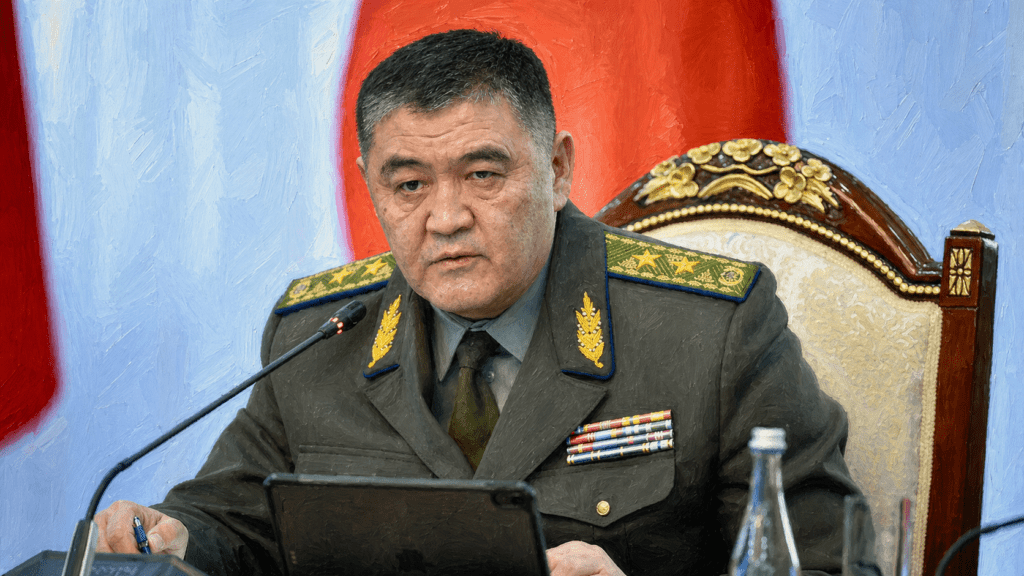
Former head of Kyrgyzstan’s State Committee for National Security (GKNB), Kamchybek Tashiyev, has been charged under two articles of the criminal code, his lawyer said, amid signs of escalating political tension in the country.

According to defense attorney Ikramidin Aitkulov, Tashiyev faces charges under Article 326, concerning forcible seizure or retention of power and actions aimed at forcibly changing the constitutional order, and Article 337, concerning abuse of office. The latter charge relates to alleged actions carried out for personal gain or for the benefit of others, and to conduct by a senior public official.

A restraint measure has been imposed on Tashiyev in the form of a written undertaking not to leave his place of residence. After questioning at the Interior Ministry, he left the building late on April 29. His lawyer said the former official denies all charges.

Tashiyev said he intends to defend himself through legal means. “I am innocent and, God willing, I will be acquitted,” he said in a statement. He also urged his supporters to remain calm and act within the law.

Media reports suggest that former Prosecutor General Kurmankul Zulushev and former parliamentary speaker Nurlanbek Turgunbek uulu may also be linked to the same case, though their legal status remains unclear. The Interior Ministry has not publicly confirmed or denied reports that they were questioned.

President Sadyr Japarov has previously said that any potential involvement by Tashiyev in the so-called “Letter of 75” should be determined by investigators and the courts. The letter, made public in February, urged Japarov and parliament to initiate an early presidential election, citing ambiguity over whether his current term should be treated under the six-year term in force at the time of his 2021 election or the five-year term introduced by the constitution adopted later that year.

Tashiyev’s fall has been one of Kyrgyzstan’s most significant political ruptures since Japarov came to power after the 2020 upheaval. The two men had long been seen as the central tandem in Kyrgyz politics, with Japarov controlling the presidency and Tashiyev heading the security apparatus. That arrangement ended on February 10, when Japarov dismissed Tashiyev as GKNB chairman and deputy chairman of the Cabinet of Ministers.

The official explanation was that the decision had been taken “in the interests of the state” and to prevent a split in society. The move was followed by a wider reshuffle inside the security services and parliament, where figures seen as close to Tashiyev came under pressure. The Times of Central Asia previously reported that Japarov’s decision appeared to have broken the Japarov-Tashiyev tandem that had shaped the country’s power structure since 2020.

The political pressure on Tashiyev’s network intensified in March and April. Tashiyev returned to Kyrgyzstan in March after more than a month abroad and was questioned by the Interior Ministry in connection with Kyrgyzneftegaz, the state oil company. TCA previously reported that the State Tax Service had revived allegations involving the company and private entities linked to Tashiyev’s relatives or associates, while maintaining that its evidence was separate from earlier reporting by Temirov Live.

The investigation widened further when Shairbek Tashiyev, the former security chief’s brother and a former member of parliament, was detained in early April after questioning at the Interior Ministry. His arrest came as the Tashiyev network faced growing pressure and as speculation mounted over whether the February dismissal marked a controlled reshuffle or the start of a deeper elite confrontation.

The latest charges now move that confrontation into a more serious phase and a potential kompromat war and corruption allegations against Tashiyev’s circle, raising questions about what information the former security chief may hold about the president’s own political network.

Kyrgyzstan remains one of Central Asia’s most politically volatile countries. Since gaining independence after the collapse of the Soviet Union in 1991, it has experienced major uprisings in 2005, 2010, and 2020. That history gives the current case added weight. Charges against a former security chief would be politically significant in any Central Asian state, but in Kyrgyzstan, where street politics and elite fractures have repeatedly reshaped the government, they carry a particular risk.

For now, Tashiyev has not been detained, and the charges remain allegations. But the case has already moved beyond speculation about a broken alliance. It now tests whether Japarov can dismantle his former partner’s network without triggering a wider political backlash, and whether Kyrgyzstan’s courts and investigators can handle the country’s most sensitive political case in years without appearing to serve one side of an elite struggle.

Uzbekistan Plans $5.8 Billion Expansion of Hydropower Sector

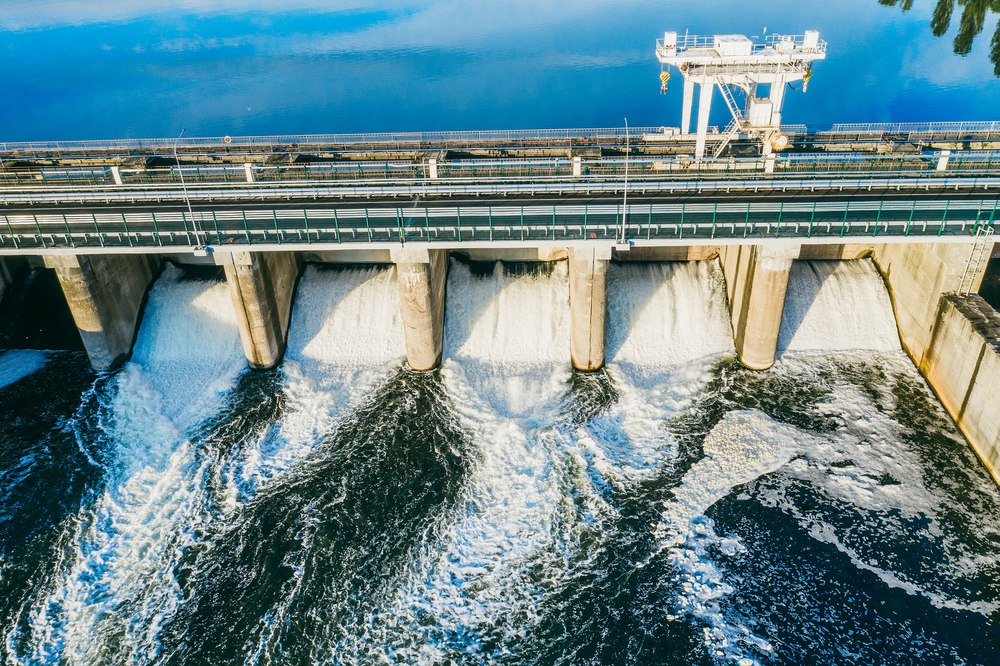
Uzbekistan is planning a major expansion of its hydropower sector, with 73 new projects worth $5.8 billion scheduled for implementation between 2026 and 2032, officials said during a presentation to Shavkat Mirziyoyev.

According to the briefing, the country aims to add 3.6 gigawatts of new generating capacity as part of efforts to diversify its energy mix. Currently, most of Uzbekistan’s electricity is produced from natural gas and coal, while hydropower accounts for only about 10-12%.

Officials emphasized that Uzbekistan’s extensive water network, more than 150,000 kilometers of rivers, canals, and streams, represents a largely untapped energy resource. Expanding hydropower is seen as key to improving energy stability, reducing dependence on fossil fuels, and making more efficient use of water.

The sector has already seen significant growth in recent years. The number of hydroelectric power plants has increased from 36 in 2017 to 100 in 2025, while installed capacity has risen from 1.6 gigawatts to 2.4 gigawatts.

Among the projects discussed, the Upper Pskem hydropower plant in the Bostanlyk district stands out. With an investment of $365 million, it is expected to generate 160 megawatts of electricity and supply power to around 161,000 households. In the Fergana region, a 15-megawatt plant is planned in the Sokh district, which is expected to cover 71% of local electricity demand.

Authorities also reviewed the potential for constructing 42 small hydropower plants in the Upper Tupalang area, which could add 541 megawatts of capacity and generate up to 1.9 billion kilowatt-hours annually. In addition, nearly 3,000 small and micro hydropower plants are planned, with a combined capacity of 164 megawatts.

This year alone, 13 hydropower plants and one wind power facility are expected to come online, with a total capacity of 114 megawatts and annual generation of 537 million kilowatt-hours. A 20-megawatt wind project is also under construction in Bostanlyk with $28 million in grant funding.

Officials said Uzbekistan is also considering the construction of three pumped-storage hydropower plants with a combined capacity of 1.4 gigawatts, which would help balance electricity supply and demand.

The presentation highlighted ongoing efforts to modernize the sector through digital technologies. More than 3,500 monitoring devices have already been installed to track water levels, weather conditions, and infrastructure performance in real time.

The plans build on earlier developments in the sector. Last year, Uzbekistan launched the first stage of the Naryn hydropower cascade, a project valued at over $428 million. The initial plant, built using domestic materials and equipment, produces 171 million kilowatt-hours annually and supplies electricity to around 430,000 households.

Tajikistan’s 100 Somoni Banknote Shortlisted Among World’s Best

A 100 somoni banknote issued by Tajikistan in 2025 has been named among the world’s top new banknotes, according to international experts.

The annual “Banknote of the Year” competition is organized by the International Bank Note Society. The organization said that around 100 new banknotes were issued globally in 2025, but only 17 were deemed sufficiently innovative in terms of design and security features to be shortlisted. Tajikistan’s 100 somoni note was among those selected.

The banknote features a vibrant, multi-colored design and includes a watermark with a portrait of ancient ruler Ismoil Somoni. It incorporates advanced security elements such as Rolling Star color-shifting features, a windowed security thread with dynamic effects, and a concealed “100” numeral. Additional features include see-through registration elements and complex geometric patterns. The note was printed by German firm Giesecke+Devrient and entered circulation on October 30, 2025.

Kazakhstan also received recognition in the competition, with its 1,000 tenge banknote making the shortlist as well. However, neither country ultimately emerged victorious.

The top prize went to a 200 guilder banknote issued by Curaçao and Sint Maarten, themed around the underwater world. The design combines a horizontal obverse with a vertical reverse. Fiji’s 5-dollar note took second place, while Zambia’s 100 kwacha banknote ranked third. Banknotes from the Falkland Islands and Papua New Guinea made up the top five.

The International Bank Note Society says the competition highlights excellence in currency design, with banknotes judged not only as means of payment but also as expressions of national identity.

Chinese Firm Eyes Virus-Free Potato Production in Kazakhstan

Kazakhstan is in discussions with China’s Inner Mongolia Muland Agricultural Technology Co., Ltd over the establishment of a high-tech facility to produce virus-free seed potatoes, according to the Ministry of Agriculture.

The proposal was reviewed during a meeting between Agriculture Minister Aidarbek Saparov and the company’s CEO, Wei Jinglong.

Virus-free seed potatoes are cultivated using in vitro techniques that eliminate pathogens and diseases, improving varietal purity and significantly boosting yields. Specialists estimate that such methods can increase output by 30-50% compared with conventional seed tubers.

Saparov said potato farming remains a strategically important sector of Kazakhstan’s agricultural industry. In 2025, potatoes were planted on 131,000 hectares, with total production reaching 2.8 million tons.

“Developing a technologically advanced domestic seed production system is a key priority for the sector. It is about building a sustainable foundation for food security,” Saparov said.

He added that expanding biotechnology and scaling up the production of virus-free planting material would help reduce dependence on imports and enhance the competitiveness of Kazakhstan’s domestic breeding programs.

At present, 22 specialized farms in Kazakhstan produce original and elite seed potatoes. Biotechnological laboratories, including the Kazakh Research Institute of Fruit and Vegetable Growing, play a crucial role.

The Chinese company has expressed interest in building a laboratory and greenhouse complex using advanced technologies to produce micro- and mini-tubers, drawing on its experience implementing similar projects.

“The project envisions launching industrial-scale production of high-quality seed material and developing export potential targeting Central Asian markets,” the ministry said.

Company representatives indicated they plan to begin implementation in the near term, with the first batch of seed material expected within a year.

The Times of Central Asia previously reported that another Chinese firm, Snow Valley Agricultural Group Co. Ltd, is planning to build a deep-processing potato facility in Kazakhstan’s Pavlodar region.

Kazakhstan’s Nuclear Diplomacy Offers Lessons for Iran Crisis

Ongoing negotiations between the United States and Iran have yet to resolve a key issue: what will happen to the enriched uranium currently held by a country engulfed in conflict. Beyond political considerations, there are also significant technical challenges, namely, how such material could be safely removed from Iran if an agreement is reached. Kazakhstan, however, has previously carried out a unique operation of this kind, later documented in detail through U.S. and Kazakh accounts, and has a long track record of constructive engagement in nuclear diplomacy.

The Uranium Question

The parties to the conflict, the United States, Israel, and Iran, remain deeply divided on core issues. Various countries, including Pakistan, have been involved as mediators. At the same time, the situation is complicated by broader military and economic tensions, including the U.S. naval blockade of Iranian oil exports and Iran’s continuing obstruction of shipping through the Strait of Hormuz.

The ongoing crisis in the Strait of Hormuz dominates headlines, often diverting attention from the central issue: the fate of Iran’s uranium stockpile.

Axios reported that U.S. and Iranian negotiators had discussed a possible arrangement involving the release of frozen Iranian funds, with a figure of $20 billion under discussion. One U.S. official described that figure as a U.S. proposal, while U.S. President Donald Trump later denied that any money would change hands. IAEA-linked figures put Iran’s stockpile at about 440 kilograms of uranium enriched to 60%, close to weapons-grade levels if further enriched.

Trump has expressed confidence that Iran will agree to a deal and that the uranium can be removed. Iranian officials, however, have rejected this claim, stating that they do not intend to transfer enriched uranium to the United States or any other country.

Tokayev’s Position

On April 17, 2026, Kazakhstan’s President Kassym-Jomart Tokayev addressed the issue during a diplomatic forum in Antalya, warning that excessive focus on trade routes and the Strait of Hormuz risks overshadowing the core problem, the nuclear issue.

“The essence of the problem lies in the proliferation of nuclear technologies and nuclear weapons. This must be the central topic of negotiations when it comes to the conflict around Iran,” Tokayev said.

Experts have since highlighted the complexity of the task facing policymakers: not only negotiating terms but physically removing enriched uranium from Iran. This would involve dealing with potentially damaged facilities, ensuring security, deploying specialist teams, defining transport routes, establishing international oversight, and determining a final destination for the material.

Against this backdrop, Tokayev’s remarks carry particular weight. While the United States is reported to be insisting not only on limiting future enrichment but also on transferring existing stockpiles, Iran is seeking to separate the nuclear issue from the broader regional crisis. Tokayev, by contrast, has emphasized that energy and shipping disruptions are symptoms of a deeper conflict, with the nuclear issue at its core.

Operation Sapphire

Following the collapse of the Soviet Union, Kazakhstan inherited the world’s fourth-largest nuclear arsenal, after Russia, the United States, and Ukraine. The country was also home to the Semipalatinsk nuclear test site, where the USSR carried out its first nuclear test in 1949. Over the next four decades, the USSR conducted 456 nuclear tests at the site.

The risks associated with uncontrolled nuclear proliferation have therefore had particular resonance in Kazakhstan. The test site was closed in 1991, after decades of environmental and human impact.

After gaining independence, Kazakhstan voluntarily renounced its nuclear arsenal. In 1994, it facilitated the removal of highly enriched uranium to the United States under a complex operation known as “Operation Sapphire,” details of which have since been published in U.S. and Kazakh accounts, including KNB-linked archive material released in 2021.

The operation involved the removal of approximately 600 kilograms of highly enriched uranium, reportedly enriched to about 90% U-235, from the Ulba Metallurgical Plant in Ust-Kamenogorsk. It required highly sophisticated technical and logistical planning and was conducted under strict secrecy to prevent leaks and deter interest from non-state actors, including terrorist groups.

A Legacy of Nuclear Diplomacy

Kazakhstan has also played a direct role in diplomatic efforts related to Iran’s nuclear program. In 2013, Almaty hosted two rounds of negotiations between Iran and the P5+1 group. While these talks did not produce a final agreement, they helped sustain the process that ultimately led to the 2015 Joint Comprehensive Plan of Action (JCPOA).

As part of the agreement’s implementation, Kazakhstan supplied Iran with 60 tons of natural uranium in exchange for the removal of low-enriched uranium from the country.

Although Kazakhstan did not play a leading role in the agreement, it served as a neutral platform and trusted partner. The country has built a strong international reputation for its commitment to nuclear non-proliferation. It maintains working relations with key stakeholders, including the United States, Iran, China, Russia, and Israel.

Lessons for Today

The situation in Iran is far more complex than Kazakhstan’s experience with Operation Sapphire, not least because Kazakhstan voluntarily relinquished its arsenal. The current Middle East crisis is broader in scope, involving multiple actors and potentially damaged or inaccessible nuclear facilities. For Iran, relinquishing nuclear materials would carry significant political costs.

Nevertheless, Kazakhstan’s experience offers a practical model for the safe removal of enriched uranium. Any future agreement with Iran will likely require either the removal or dilution of uranium while allowing the country to maintain access to peaceful nuclear energy.

The International Atomic Energy Agency would be expected to play a central role, and the involvement of a neutral country with a strong non-proliferation track record could help build trust. Notably, Kazakhstan hosts the IAEA Low Enriched Uranium Bank.

Tokayev’s remarks in Antalya serve as a reminder that discussions of trade routes or maritime disruptions must not overshadow the nuclear issue.

Any agreement will need to address practical questions: where the uranium will be stored, who will oversee the process, what Iran will receive in return, and which countries can serve as credible guarantors.

Kazakhstan may not be the only potential mediator, but its experience places it among the few nations that have successfully managed complex nuclear disarmament operations in practice. That experience could prove invaluable in de-escalating the current crisis.

Kyrgyzstan Expands Efforts to Promote Safe and Organized Labor Migration

A new office of the Center for Employment of Citizens Abroad and the Pre-Departure Training and Migrant Reintegration Center has opened in Osh, Kyrgyzstan’s second city, as part of efforts to promote safer and more structured labor migration.

The opening ceremony took place on April 29.

The project was implemented by the International Organization for Migration under the “Labour Migration – Central Asia” program, with support from the Swiss Agency for Development and Cooperation.

The new center in Osh is designed to provide comprehensive support to citizens at all stages of labor migration from pre-departure preparation to reintegration upon return.

Services include information on legal and safe employment channels abroad, pre-departure training, consultations on migrant rights and contract conditions, as well as guidance on the risks of labor exploitation and human trafficking.

In addition, the center assists job seekers in finding vacancies and organizes online interviews with prospective employers.

According to Esenbek Ergeshov, head of the labor migration department at the Center for Employment of Citizens Abroad, around 5,500 Kyrgyz citizens were placed in jobs overseas through the center in 2025, while private agencies facilitated employment abroad for an additional 19,500 people.

Kyrgyzstan is also working to diversify its labor migration destinations. While Russia remains the primary destination, interest is growing in countries such as Turkey, South Korea, Japan, and several European countries.