Water in Central Asia: Between Reality and Alarmism

The Regional Ecological Summit 2026 will take place in Astana on April 22-24. The event is intended to elevate Central Asia’s water and environmental agenda to the level of systemic solutions.
Alongside preparations for the summit, however, an increasingly alarmist narrative is gaining traction among some experts. In this framing, water resources in Central Asia are presented as being in crisis, with predictions of shortages, threats to food security, and even potential conflict. Phrases such as “there is not enough water,” “the harvest is at risk,” and “the region is on the brink” are used with growing frequency.
Such assessments are typically based on generalized and dramatized claims that fail to differentiate between countries or specific river basins. This creates the impression of a single, simultaneous crisis, whereas in reality the situation is far more complex.
Yes, there is a problem, but it is not sudden or one-dimensional. Water scarcity in Central Asia is real. However, it must be interpreted accurately and objectively.
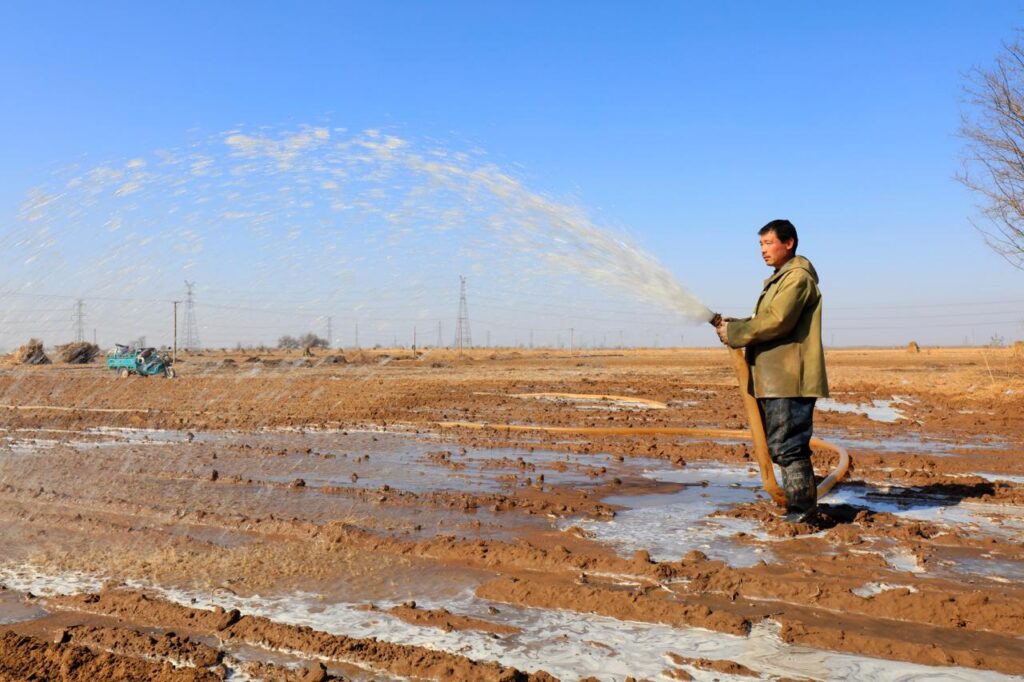
According to expert estimates, up to 40% of water in the region is lost through deteriorating irrigation infrastructure, while more than 80% of water consumption is accounted for by agriculture.
Current practice supports these figures.
In southern Kazakhstan, seasonal water supply restrictions are regularly imposed. This year, for example, the government approved consumption limits for southern regions due to an expected shortage during the growing season.
Uzbekistan has said, in joining the World Bank’s Water Forward initiative, that it aims to introduce water-saving technologies across its 4.1 million hectares of irrigated land and reduce irrigation losses by 25%.
Equally important are developments in upstream countries, Kyrgyzstan and Tajikistan. According to a study by the Organisation for Economic Co-operation and Development, the region exhibits a structural interdependence between water and energy. More than 80% of electricity in these countries is generated by hydropower, meaning water resources are used simultaneously for energy production and irrigation. This creates systemic interdependencies. At the same time, coordination of water releases and electricity generation remains suboptimal, and the absence of long-term regulatory mechanisms has already led to water shortages during certain summer periods.
This is a key point: the issue is not so much an absolute lack of water, but the complexity of coordination between upstream and downstream countries, as well as between sectors within individual states.
In other words, water shortages in Central Asia are often driven less by natural conditions than by how water is distributed and managed.
Particular attention in alarmist narratives is given to Afghanistan and the Kushtepa Canal.
Estimates commonly suggest that the Qosh Tepa Canal could eventually divert around 6-10 km³ of water per year from the Amu Darya, although projections vary and depend on how fully the canal is completed and operated.
While the canal is not yet fully operational, regional officials already treat it as a serious medium-term risk, with the precise scale of future withdrawals still under discussion.
Countries in the region, especially Uzbekistan, have been pursuing dialogue with Afghanistan over the canal and its future water withdrawals.
In this context, portraying Afghanistan as a “source of crisis” reflects a combination of politicization and premature alarmism.
In a similar vein, some analyses increasingly link water issues in Central Asia to developments surrounding Iran. The logic typically presented is as follows: instability around Iran leads to disruption of transport routes, which drives up food prices, increases pressure on domestic resources, and ultimately worsens water shortages.
While superficially plausible, this reasoning oversimplifies the situation.
First, Central Asian countries have limited dependence on food imports via Iranian routes. A substantial share of trade is conducted through intra-regional exchanges, northern corridors, and alternative logistics channels.
Second, even when prices rise, the impact is generally indirect, affecting the cost of goods rather than the physical availability of water.
Overall, this line of reasoning illustrates how external factors are layered onto an existing issue, water scarcity, to amplify its perceived severity.
At the same time, institutional mechanisms in the region are evolving. The Central Asian Interstate Commission for Water Coordination remains active, infrastructure modernization projects are ongoing, and policy coordination is gradually strengthening. The Regional Ecological Summit 2026 is part of this broader process.
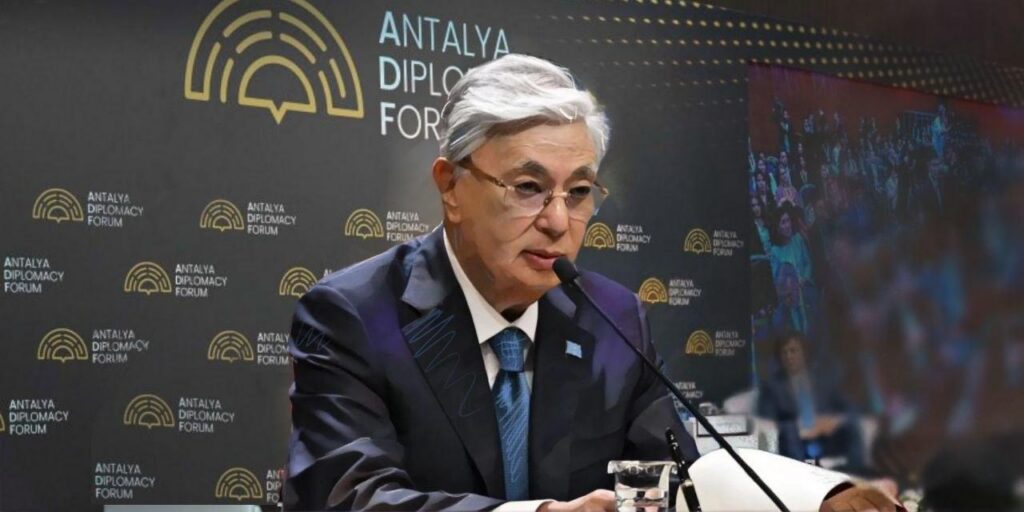
The initiative, proposed by Kassym-Jomart Tokayev, was conceived not as a one-off event but as a long-term platform. Its purpose is not only to identify problems, but to develop coordinated approaches and practical mechanisms for cooperation.
Discussions are also underway regarding a potential meeting of the heads of state of the founding members of the International Fund for Saving the Aral Sea alongside the summit, which could further strengthen the regional agenda.
Another Kazakhstani initiative, the proposal to establish an International Water Organization under UN auspices, also reflects this thinking. While still conceptual, it underscores an important principle: when the consequences of water projects extend beyond national borders, regulatory mechanisms must also be international.
Ultimately, the water issue in Central Asia is not a sudden crisis, but a long-term governance challenge. The evidence shows that much of the deficit is linked to inefficiency and losses, while the impact of new factors, including Afghanistan, is gradual. At the same time, the C5 countries already possess coordination mechanisms and are working to improve them.
It is this process, not alarmism, that will shape the region’s water dynamics in the years ahead.