Malaysian Prime Minister Anwar Ibrahim arrived in Turkmenistan on June 18 for an official visit focused on energy cooperation, with the two countries signing a new strategic partnership involving Petronas and Turkmenistan’s energy authorities the following day.
Anwar and Turkmen President Serdar Berdimuhamedov witnessed the signing on June 19, Malaysian media reported. The agreement followed earlier comments by Malaysian Deputy Economy Minister Akmal Nasrullah Mohd Nasir, who said Malaysia was seeking to strengthen its energy supply chains through long-term hydrocarbons cooperation with Turkmenistan.
Anwar’s visit follows Turkmen President Serdar Berdimuhamedov’s official trip to Malaysia in 2024, which Turkmen officials have described as opening a new stage in bilateral relations.
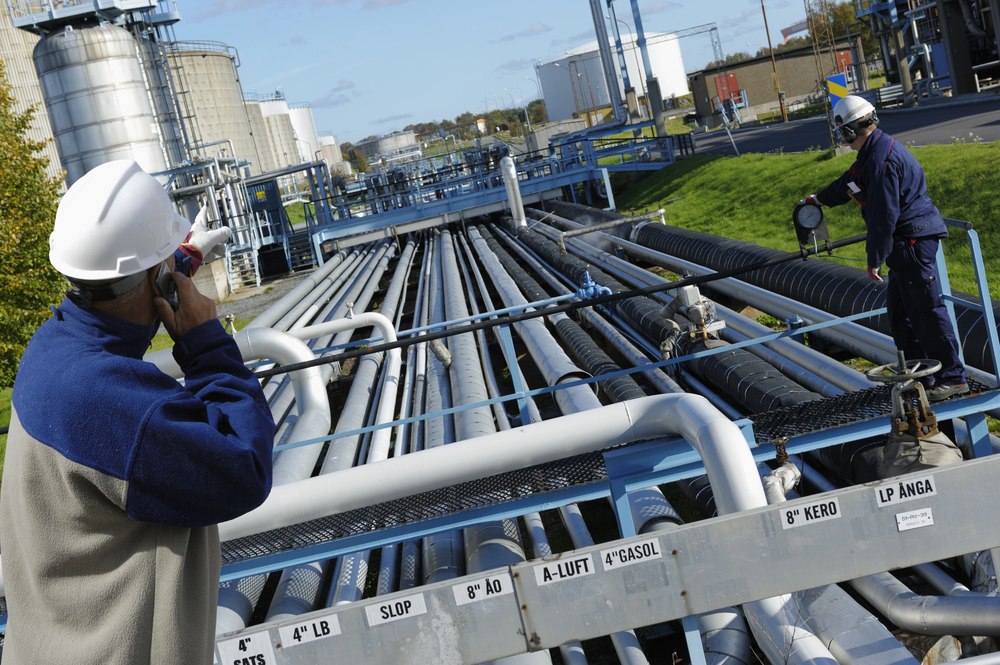
Energy is the central pillar of economic ties between the two countries. Malaysian state energy company Petronas has operated in Turkmenistan since 1996, when it became one of the first foreign companies to develop offshore oil and gas fields in the Turkmen sector of the Caspian Sea. Since then, the company has invested about $11 billion in Turkmenistan’s hydrocarbon sector.
Petronas’ main asset is Block 1, linked to the Kiyanly Gas Treatment Plant and Onshore Gas Terminal on Turkmenistan’s Caspian coast. Block 1 currently produces about 400 million cubic feet of natural gas per day, equivalent to roughly 4.1 billion cubic meters per year, and holds more than 7 trillion cubic feet of gas resources.
In 2025, Petronas signed a new production-sharing contract for the block with Abu Dhabi’s XRG, state enterprise Hazarnebit, and state concern Türkmennebit. Under that arrangement, Petronas retained 57% as operator, XRG took 38%, and Hazarnebit held 5%.
Berdimuhamedov also approved a resolution authorizing Türkmennebit to conclude an agreement with Petronas and Hazarnebit on the development of licensed offshore blocks in Turkmenistan’s sector of the Caspian Sea.
Malaysia’s role in Turkmenistan is smaller than China’s, but more technical and operational. Petronas has been an upstream investor and offshore operator, while China is Turkmenistan’s dominant gas customer. Turkmenistan exports around 30 billion cubic meters of gas a year to China.
In April 2026, China and Turkmenistan signed an agreement on the fourth phase of the Galkynysh gas field, under which China National Petroleum Group (CNPC) is to build gas-processing facilities capable of handling an additional 10 billion cubic meters of gas per year. Reuters reported the project value at $5.1 billion.
Turkmen state media said the two countries are also seeking to broaden cooperation across a range of sectors from transport to science and education. Talks in Ashgabat are expected to focus on energy cooperation, investment projects, and expanding trade links.