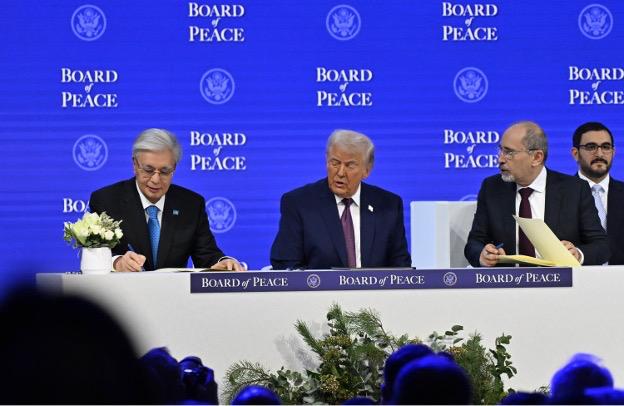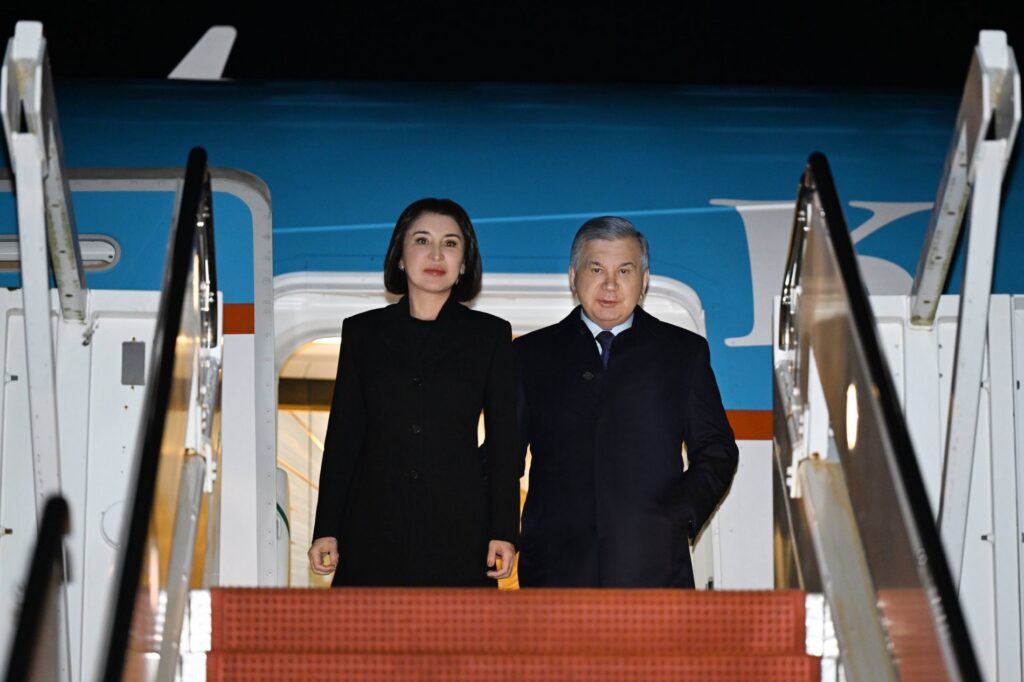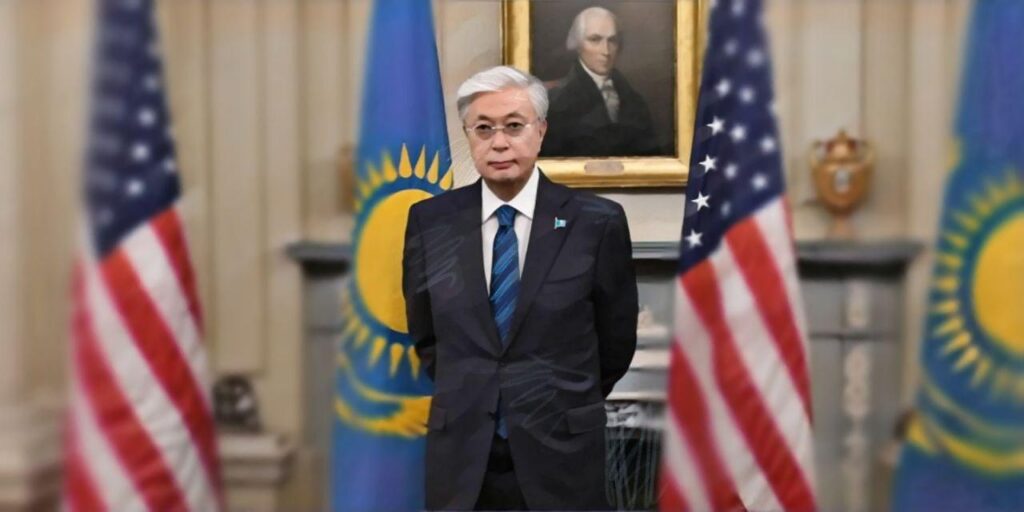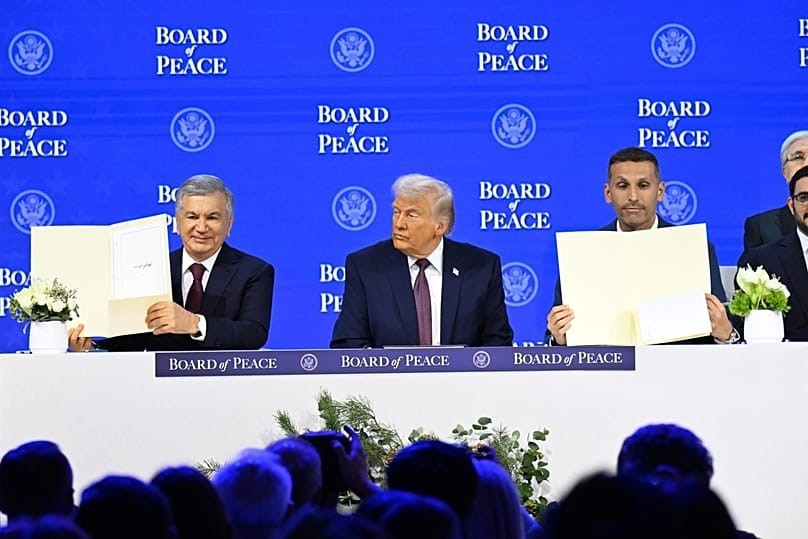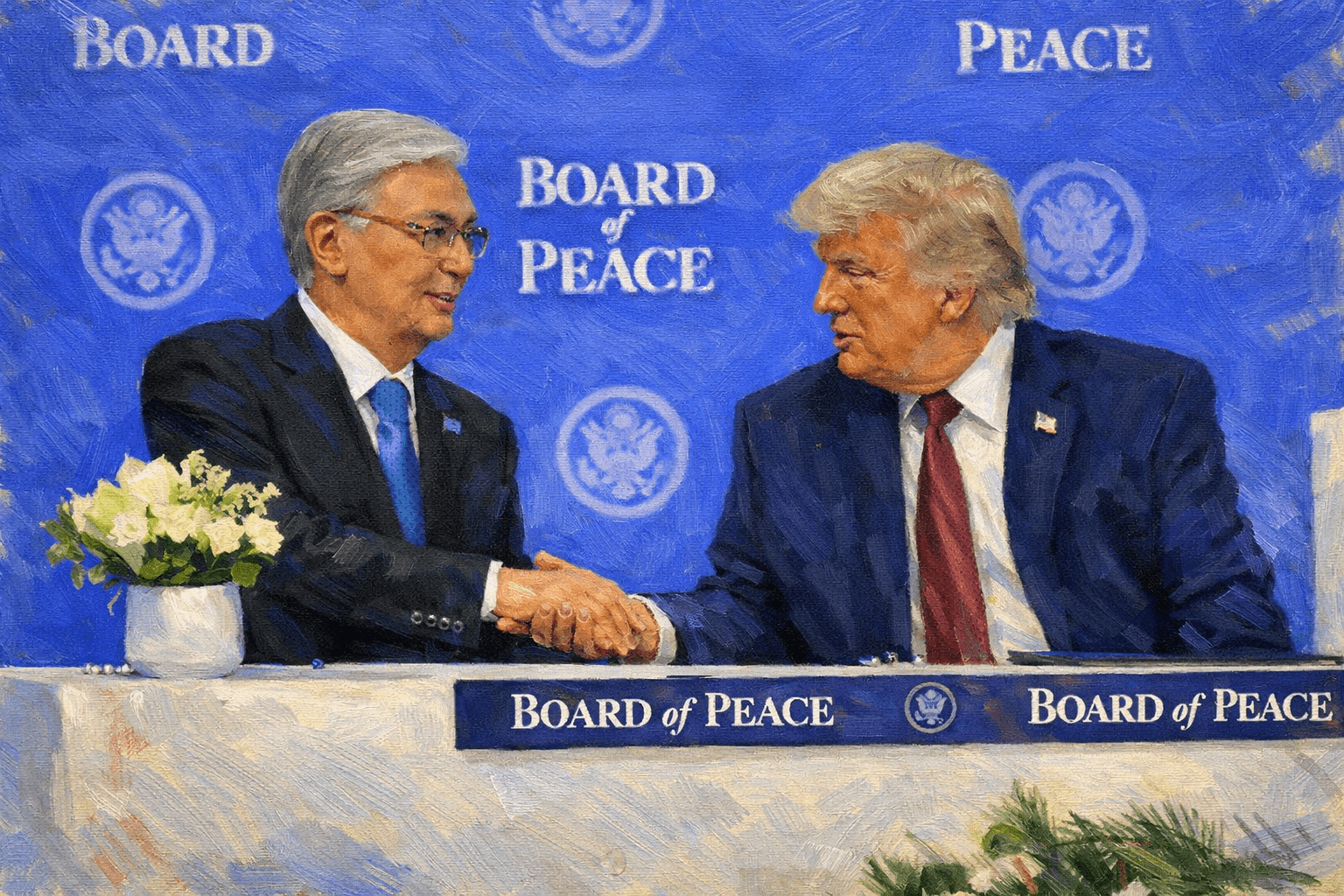
Washington is hosting the first summit of the Board of Peace, an initiative convened by U.S. President Donald Trump. Aircraft carrying leaders from several post-Soviet states have arrived at Joint Base Andrews. While Russia and Belarus have been invited – representation levels vary – the presidents of Kazakhstan, Uzbekistan, and Azerbaijan have traveled to the United States in person.
Although each leader has a separate bilateral agenda, Kassym-Jomart Tokayev, Shavkat Mirziyoyev, and Ilham Aliyev share a broader objective: presenting a consolidated regional grouping, informally referred to as the C6, in which Kazakhstan is seen as playing a leading role.
Tokayev, a career diplomat who previously served as a senior United Nations official, has developed a consistent approach to foreign visits, which typically includes a meeting with Kazakh citizens residing abroad, particularly students and young professionals, and the publication of an opinion piece in a leading outlet in the host country. During his current visit to the United States, he met members of the Kazakh diaspora and published an article in The National Interest outlining his vision for international stability.
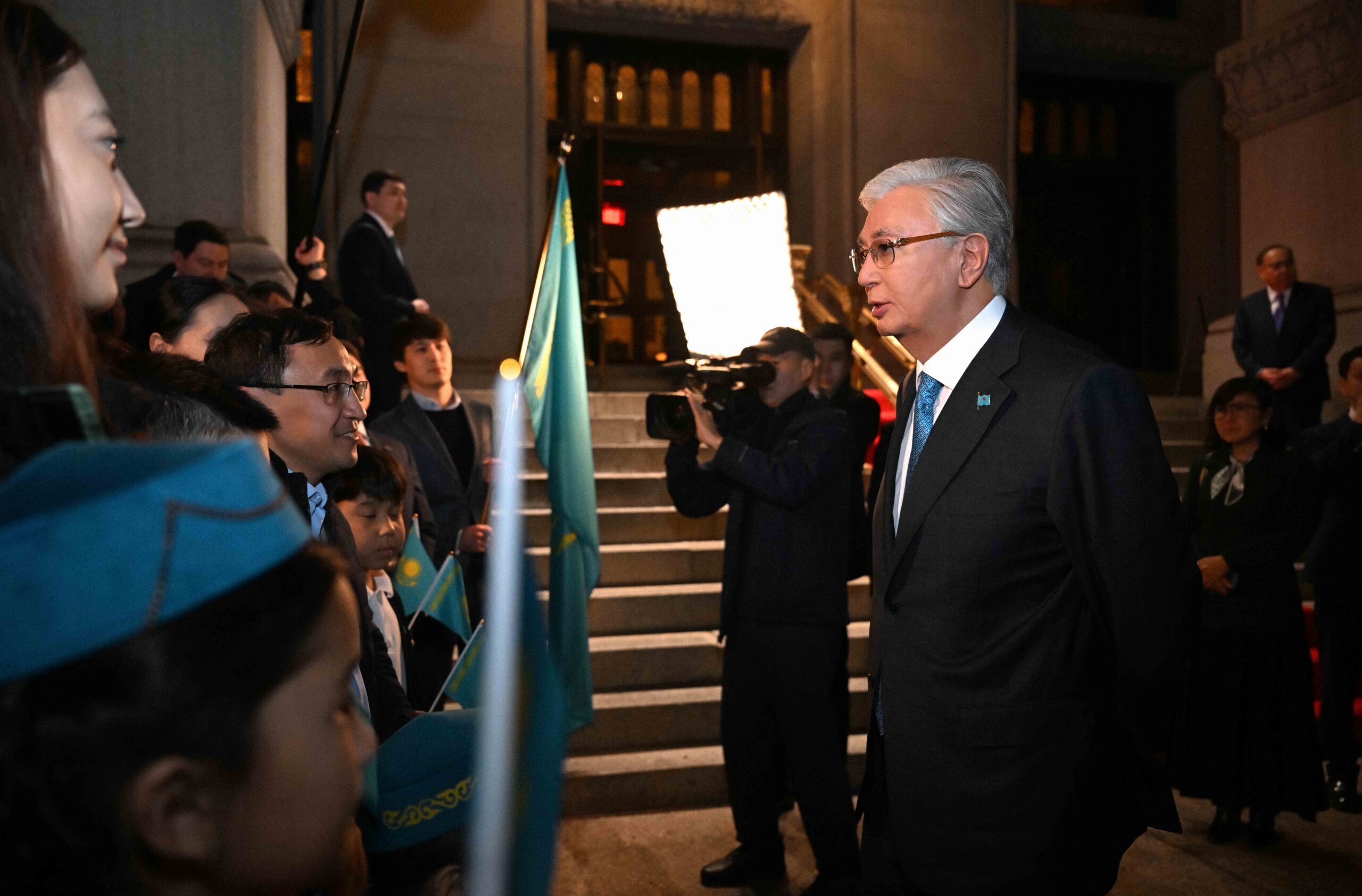
President Kassym-Jomart Tokayev meets with Kazakh citizens living and studying in the United States; image: Akorda.kz
According to Kazakh political analyst Andrei Chebotarev, the central theme of Tokayev’s article is the importance of stability amid intensifying geopolitical rivalry and growing international conflicts. Chebotarev emphasized Tokayev’s call for a pragmatic international order grounded in the rule of law, accountability, predictable commitments, and respect for national and cultural identities, arguing that ideologically driven frameworks have proven ineffective.
Tokayev described the Board of Peace as “not just another forum for endless discussions,” but as a practical initiative aimed at delivering tangible outcomes, particularly in relation to the Gaza Strip and the broader Middle East. He characterized the White House’s approach as one that views peace “not as a slogan, but as a project” built around infrastructure, investment, employment, and long-term stability.
“This initiative deserves respect and international attention,” Tokayev said.
During his visit to the United States last November for the C5+1 summit, Tokayev held meetings with senior U.S. officials, including Commerce Secretary Howard Lutnick, as well as executives from major international corporations.
A delegation led by Deputy Prime Minister and Minister of National Economy Serik Zhumangarin is also in Washington during the current visit. In addition to promoting investment and technology partnerships, the delegation engaged with members of Congress involved in efforts to repeal the Jackson-Vanik amendment, which continues to complicate trade relations between the United States and certain Central Asian countries.
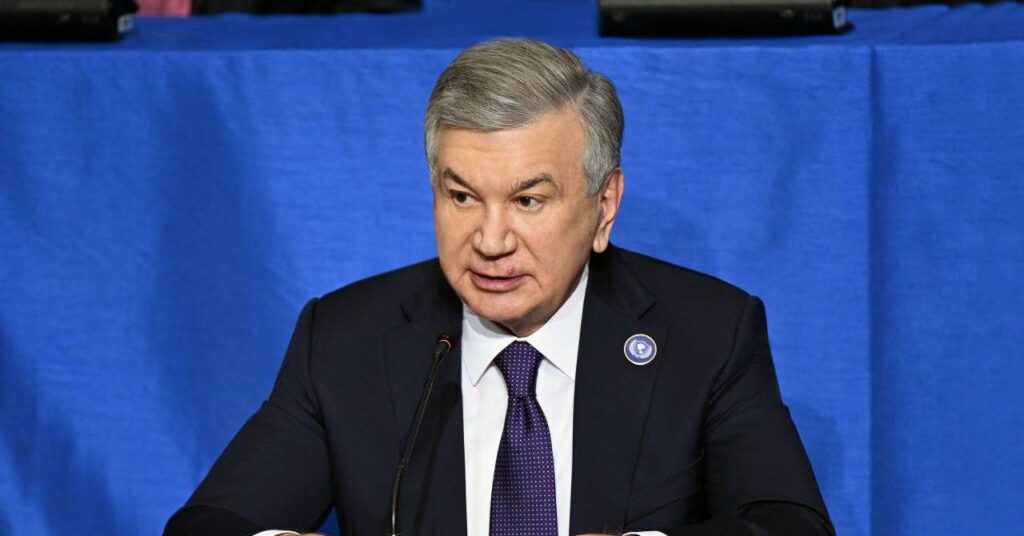
Mirziyoyev has pursued a similar agenda during his current visit, holding meetings with U.S. Commerce Secretary Howard Lutnick and U.S. Trade Representative Jamieson Greer. He also met representatives of American businesses and signed an agreement establishing a new investment platform.
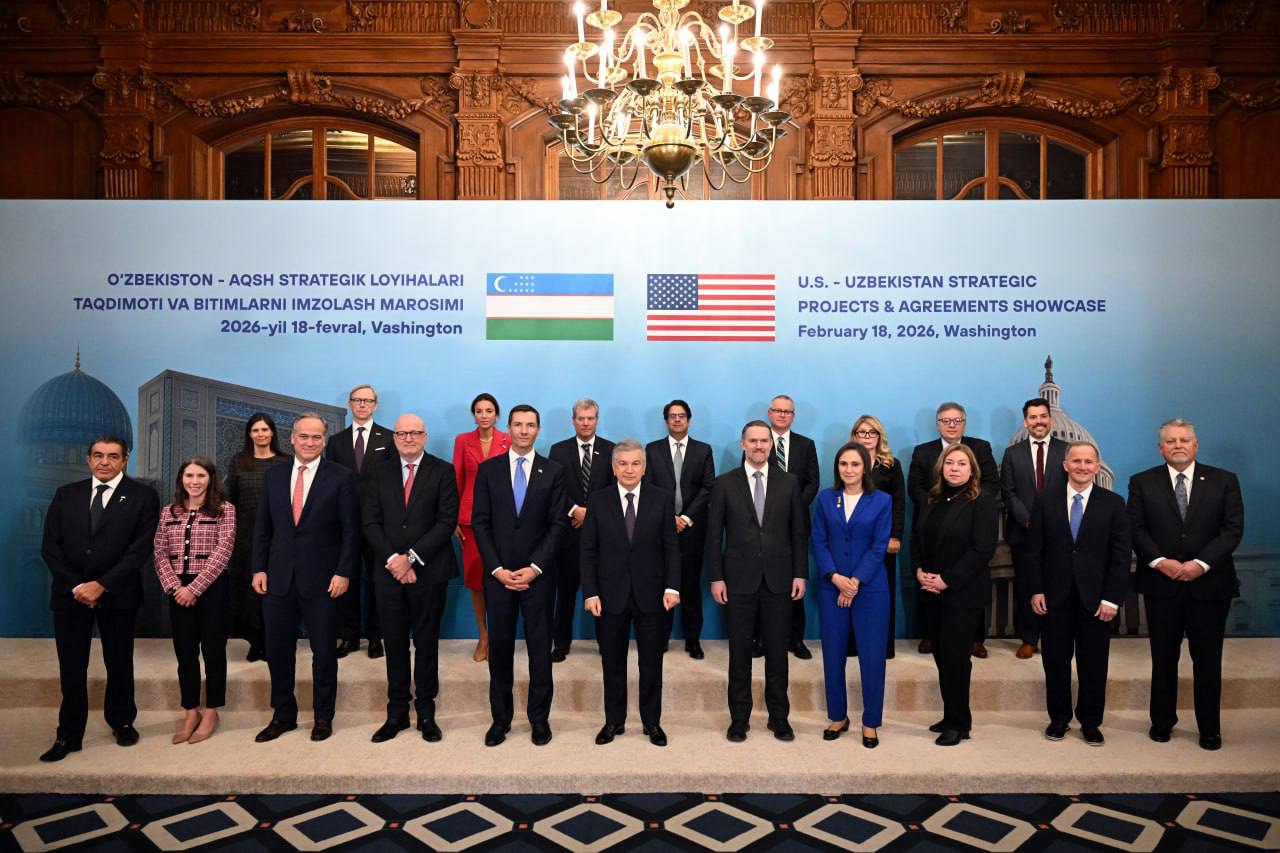
A set of bilateral agreements on priority areas of Uzbekistan-U.S. cooperation was signed; image: President.uz
Aliyev, for his part, met in Washington with the leadership of the American Israel Public Affairs Committee, including Executive Director Elliot Brandt. During the meeting, Aliyev highlighted the organization’s role in strengthening Azerbaijani-American and Azerbaijani-Israeli relations.
Bilateral groundwork between Baku and Washington had already advanced earlier in February, when U.S. Vice President JD Vance visited Azerbaijan. During that visit, a strategic partnership charter was signed, outlining cooperation in security, energy, and counterterrorism.
Kazakhstan’s strategic partnership with the United States dates back to the late 1990s, when Washington formally identified Central Asia as a region of national interest.
The renewed focus on Central Asia reflects Washington’s broader reassessment of the region’s strategic importance, particularly amid economic competition and geopolitical balancing with China. Within this framework, the traditional C5 format, comprising the five Central Asian states, appears to be evolving into the C6, incorporating Azerbaijan into a broader geo-economic configuration.
Kazakh political analyst Samat Kushkumbayev argues that the C6 format represents not the creation of an entirely new structure, but rather the revival of historical regional interconnections. He recalls that in August 1991, shortly before the dissolution of the Soviet Union, the leaders of the Central Asian republics and Azerbaijan met in Tashkent to establish an Inter-Republican Consultative Council. Although the collapse of the USSR subsequently placed these states on divergent geopolitical trajectories, Kushkumbayev suggests that renewed integration efforts are now emerging.
In his assessment, Azerbaijan’s inclusion significantly alters the region’s strategic configuration by providing Central Asia with a direct link to the South Caucasus, Turkey, and the Mediterranean. This shift, he argues, marks a transition from a transit-centered model toward the construction of a broader regional economic ecosystem.
Against this backdrop, the inaugural Board of Peace summit may serve as a platform to present this evolving regional architecture, including discussions of proposed transport initiatives such as the Zangezur corridor.