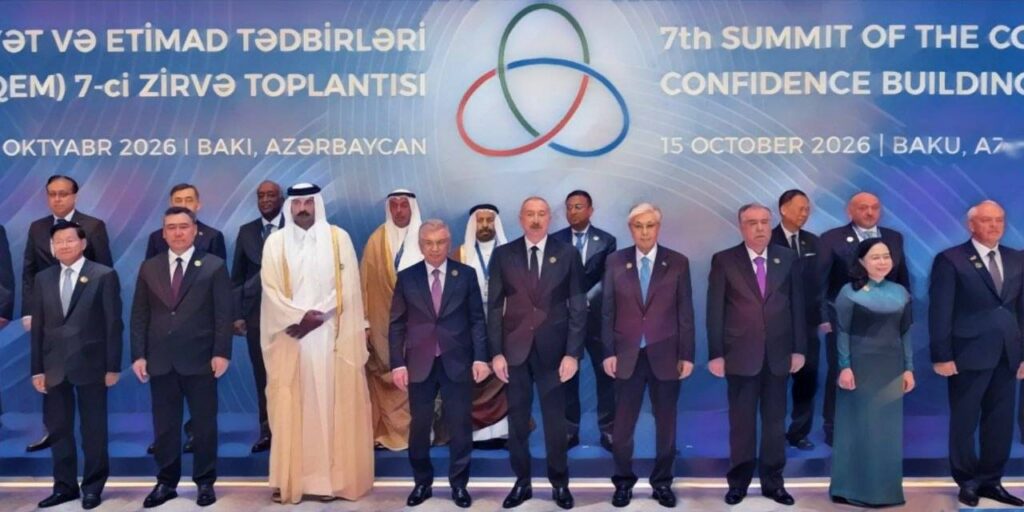
The Ukraine war has fundamentally changed Central Asia’s strategic positioning, accelerating diversification away from Russian dependence. Kazakhstan and Uzbekistan are navigating between maintaining necessary ties with Moscow, while asserting sovereignty through expanded partnerships with China, Turkey, and the West.
The Sovereignty Imperative
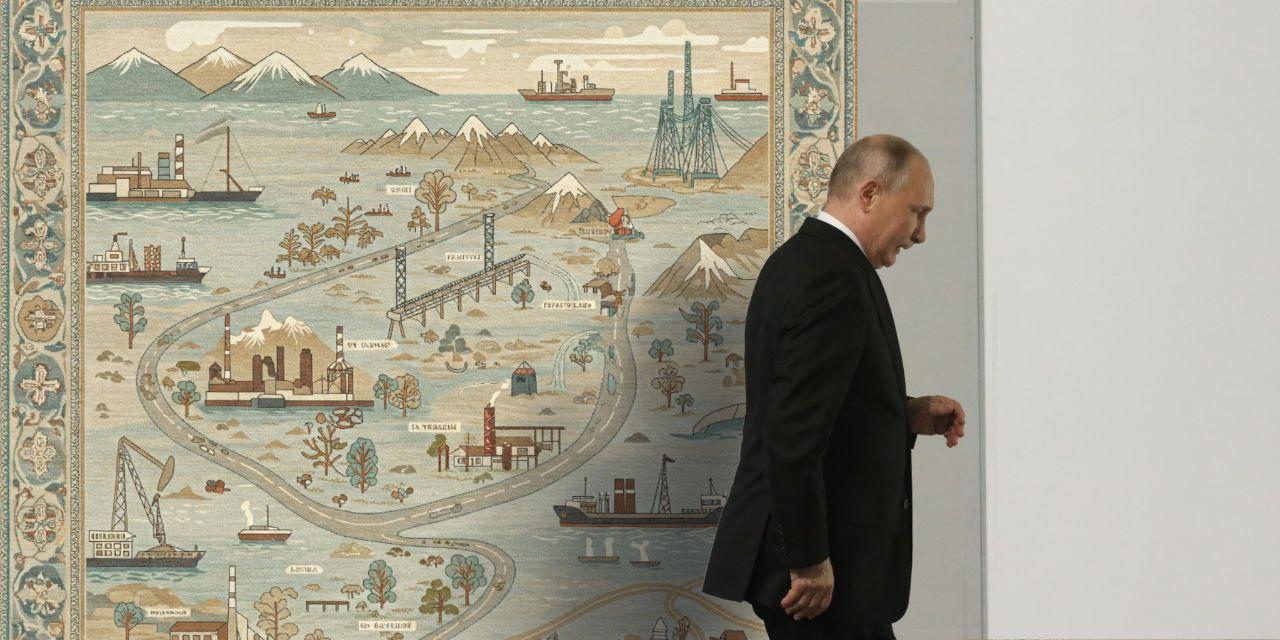
When Russian forces crossed into Ukraine in February 2022, the violation of territorial integrity sent immediate shockwaves through Central Asia. For leaders whose nations had endured centuries of Russian and Soviet rule, Vladimir Putin’s denial of Ukrainian statehood carried threatening undertones. This concern proved well-founded; since 2014, Russian officials have increasingly questioned Central Asian independence, with Putin dismissing Kazakhstan as never having “any statehood,” and nationalist figures like Zakhar Prilepin suggesting the outright annexation of territories “labor migrants come from.”
This threat became tangible post-2022. Duma member Konstantin Zatulin warned that “with friends, we don’t raise territorial questions… With the rest — like with Ukraine — everything is possible,” while media personality Tigran Keosayan told Kazakhstan to “look at Ukraine carefully.” Such rhetoric has deepened Central Asia’s resolve to defend its sovereignty, even as economic and security constraints limit dramatic policy shifts.
Measured Defiance
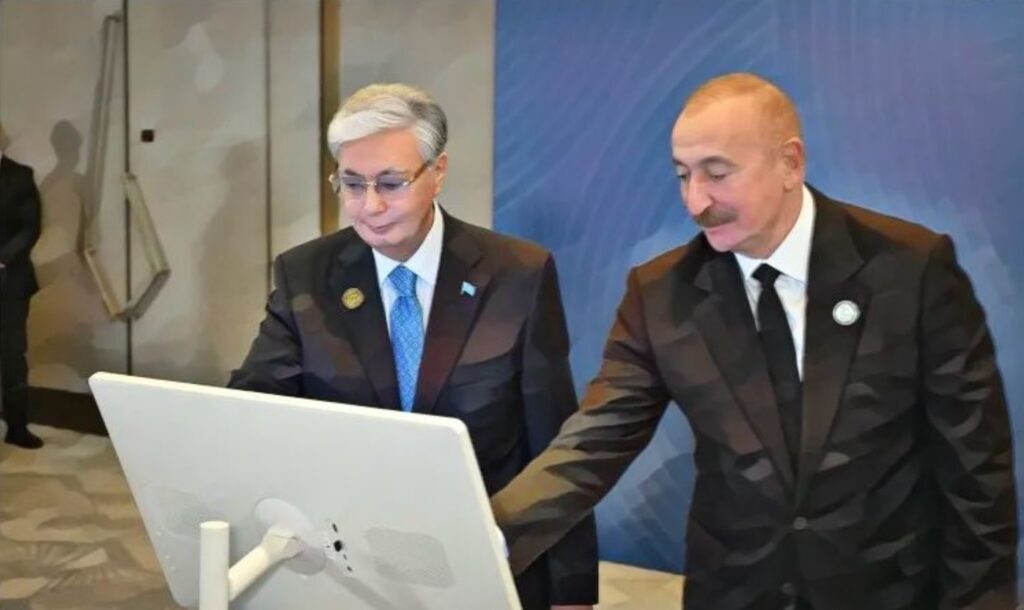
Despite expectations in some quarters that Kazakhstan would align with Moscow following the Russian-led CSTO intervention during the January 2022 unrest, President Kassym-Jomart Tokayev defied such predictions. Sitting beside Putin in June 2022, Tokayev refused to recognize the “quasi-state territories” of Donetsk and Luhansk, drawing fierce Russian criticism. This principled neutrality, supporting neither Russia’s war nor “blindly follow[ing]” Western sanctions, has largely succeeded in keeping Kazakhstan shielded from the ire of Moscow.
Uzbekistan’s President Shavkat Mirziyoyev adopted a similar positioning, with then Foreign Minister Abdulaziz Kamilov declaring Uzbekistan’s recognition of Ukrainian territorial integrity. Though Kamilov was subsequently reassigned amid reports of Russian pressure, Tashkent has maintained its “balanced and neutral position,” refusing to endorse any territorial changes achieved through force.
Public Opinion is Divided but Shifting
The war has polarized Central Asian societies along generational and ethnic lines. In Kazakhstan, surveys show roughly 27-32% of respondents still accept the Kremlin justifications for its invasion of Ukraine, while 24-28% view Russia as the aggressor. Critically, only 15% explicitly support Russia versus 20% backing Ukraine, with the majority remaining neutral. More telling is the growing anxiety about Russia’s intentions: 26% of Kazakhstanis now consider a Russian attack on their country a possibility.
In Uzbekistan, state media control limits public polarization, but the historical memory of Russian colonization has reinforced the appreciation for independence. Prilepin’s 2023 annexation comments sparked widespread patriotic indignation, while the government’s firm rebuttal drew popular praise.
Strategic Diversification Accelerates
The war has catalyzed Central Asia’s pivot toward multiple partnerships, exploiting Russia’s distraction and resource constraints.
China is already the region’s largest economic partner. China has deepened its influence through the first China-Central Asia summit in 2023 and Xi Jinping’s pledge that Beijing “categorically opposes” interference in Kazakhstan’s internal affairs. Chinese investment in alternative corridors bypassing Russia has accelerated, while modest military cooperation provides security alternatives to Russian guarantees.
Ankara has also leveraged its shared heritage through the Organization of Turkic States, positioning itself as a cultural and security alternative. Turkish Bayraktar drones sold to Uzbekistan and Kyrgyzstan demonstrate growing defense ties, while Turkey’s mediation of the 2022 Kyrgyz-Tajik border conflict showcased its emerging role as a regional problem-solver.
Institutional Erosion
Russian-led structures also face credibility challenges. The CSTO’s failure to respond to Armenia’s appeals and its ineffectiveness during the Kyrgyz-Tajik clashes has prompted member states to seek supplementary security arrangements. Kyrgyzstan canceled a scheduled CSTO exercise in 2022, while Kazakhstan continues NATO Partnership exercises despite Moscow’s objections.
The Eurasian Economic Union similarly faces strain as members assert their economic sovereignty. Kazakhstan’s refusal of joint currency proposals and its compliance with Western sanctions monitoring demonstrate the limits to integration when national interests diverge from Moscow’s preferences.
Three Scenarios for Regional Futures
Victory for Ukraine would likely accelerate this Central Asian strategic distancing, legitimizing de-russification efforts and deeper Western/Turkish cooperation. However, economic dependencies and ethnic Russian populations would moderate the pace of change, preventing any dramatic realignment.
A negotiated Stalemate is the most probable outcome and one that would reinforce current multi-vector approaches. Central Asian states would continue diversifying partnerships while avoiding provocative moves, evolving toward strategic ambiguity rather than clear alignment.
A Russian consolidation, meanwhile, would pose the biggest challenge, potentially triggering authoritarian strengthening as leaders prepare for renewed imperial pressure. However, the war has already demonstrated Russia’s limitations, reducing Moscow’s capacity for effective coercion.
Identity and Decolonization
The conflict has accelerated “decolonizing” narratives across Central Asia. Kazakhstan has intensified efforts to counter Russian historical revisionism, with new textbooks explicitly debunking Putin’s claims about Kazakh statehood. Street renaming campaigns and monument removals, once sporadic, have also gained broader support. Similar trends have appeared in Uzbekistan and Kyrgyzstan, where the promotion of native languages and Latin scripts signals cultural independence.
Critically, governments have managed ethnic tensions carefully. Kazakhstan’s handling of Russian draft evaders, welcoming them for economic benefits while monitoring for extremist activity, demonstrates sophisticated crisis management that gives Moscow no pretext for “protection” interventions.
Constrained Transformation
More than three years into the latest installment of the Ukraine war, Central Asia has achieved a remarkable strategic realignment without triggering any Russian retaliation. The region’s leaders have successfully balanced assertions of sovereignty with pragmatic engagement, exploiting great power competition for economic and security benefits.
This represents the most significant shift in Central Asian geopolitics since the Soviet collapse, a shift toward greater autonomy within existing constraints. The war has weakened Russian dominance without eliminating it entirely, creating space for multi-polar partnerships that enhance regional sovereignty.
For policymakers in Washington, Brussels, and Beijing, Central Asia’s careful balancing act offers both opportunities and reasons for caution as the region welcomes diversified partnerships. Success requires an understanding that Central Asian sovereignty, hard-won and carefully guarded, is non-negotiable, regardless of which great power comes calling.
For policymakers in Washington, Brussels, and Beijing, Central Asia’s careful balancing act offers both opportunities and reasons for caution as the region welcomes diversified partnerships. Success requires an understanding that Central Asian sovereignty, hard-won and carefully guarded, is non-negotiable, regardless of which great power comes calling.