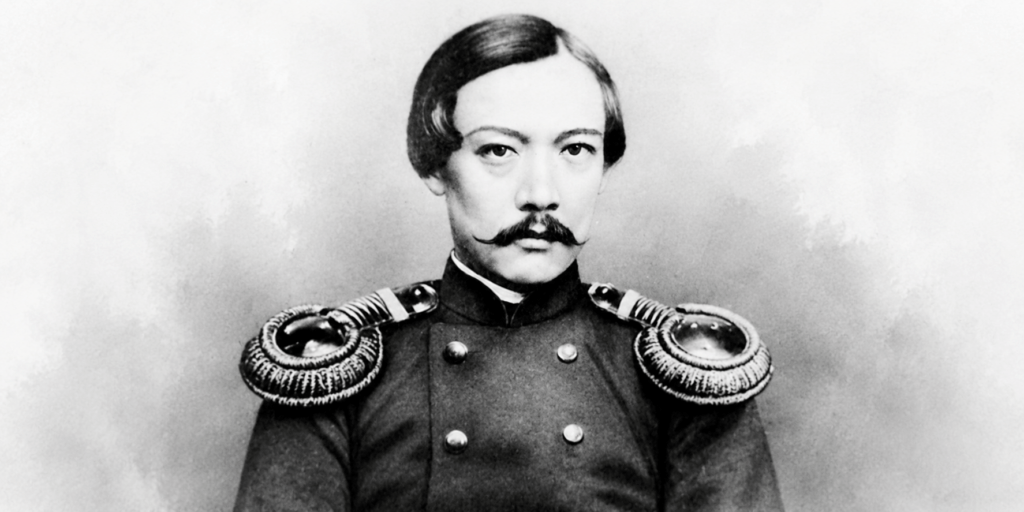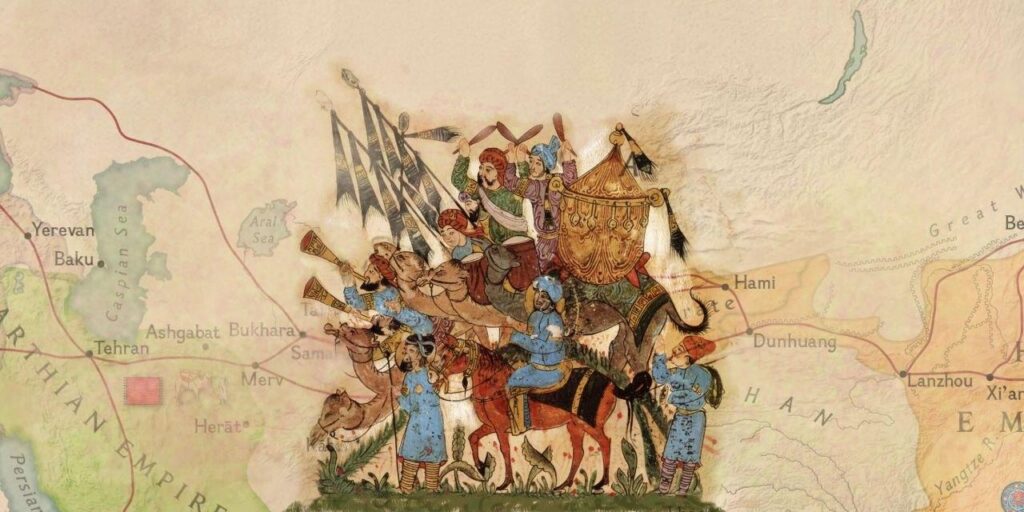
In the early 20th century, educated Kazakh thinkers were known as Alash intellectuals. Disillusioned by the Russian Empire’s growing control over the Kazakh people, they sought to establish an independent Kazakh state and protect their nation from imperial oppression. Their political and cultural struggle laid the foundation for modern Kazakhstan’s independence.
The Alash Orda, a successor to the 19th-century Kazakh enlightenment movement, evolved into a more politically assertive and nationalist organization representing Kazakhs in southern Central Asia. Formed in March 1917 by prominent figures including Alikhan Bokeikhanuly, Akhmet Baitursynuly, Mirzhakyp Dulatuly, and Khalel Dosmukhameduly, the group participated in the Pan-Muslim Congress in Moscow that May. However, the congress, largely driven by Tatar leaders, failed to address Kazakh concerns, further alienating them. As a result, the Kazakhs withdrew from future congresses and focused on developing their own political structures. The Alash movement ultimately became the leading force guiding the Kazakh people during this turbulent era.

Zhusipbek Aimauytov with his daughter; image: alash.semeylib.kz
Zhusipbek Aimauytov, one of the prominent members of the Alash movement, authored important literary works such as Kartkózha, Akbilek, and Kúnékéýdiń jazyq dalasy. He was also a statesman and cultural figure who fell victim to Soviet repression, accused of nationalist sympathies. Arrested in 1929, he was sentenced to death in absentia in 1931. Despite his short life, Aimauytov left a lasting mark on Kazakh culture and literature. His writings consistently emphasized that national progress requires sacrifice, effort, and resistance against ignorance and injustice.

Cover page of Aimauytov`s comic book published in 1929
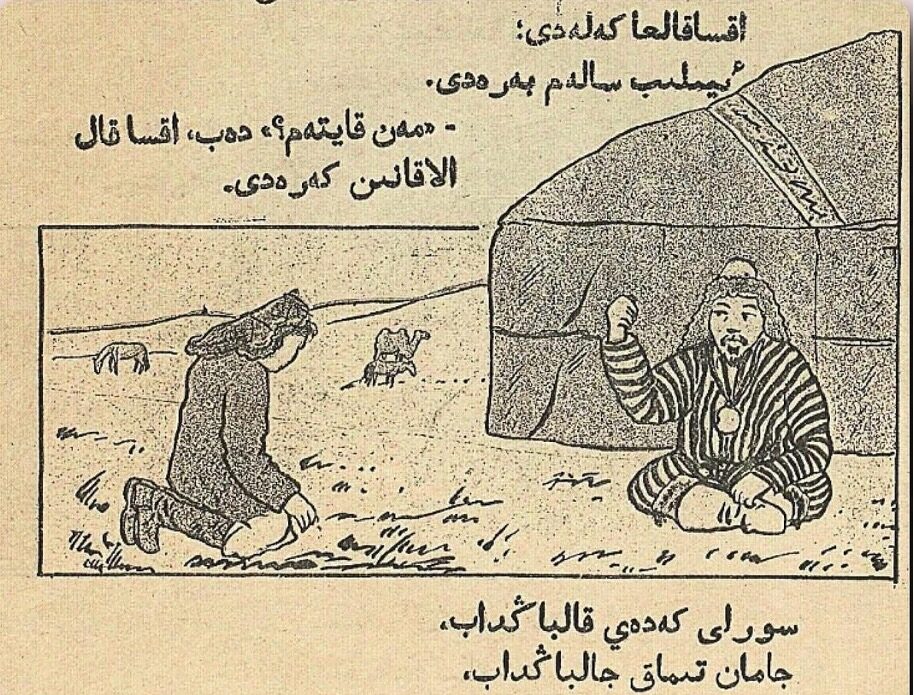
One of Aimauytov’s lesser-known yet significant contributions was the first Kazakh comic book, Ugly Headwear, which was written for children. Published in 1929 by the Kazidat publishing house, the work is composed in verse and meant to both entertain and educate young readers. The story explores timeless themes such as social injustice, class conflict, and moral reasoning.
The tale begins with a poor villager and his family — a frail wife and three strong sons. They own little: one brown horse and a single cow. When the village head visits and demands taxes, he takes the family’s only cow by force and beats the father. This dramatic opening immediately draws the reader in and sets the tone for the rest of the story, which critiques the social conditions of the time.
The motif of the marginalized challenging the dominant recurs across many world literatures. Known for addressing political and societal issues in his work, Aimauytov continues this in Ugly Headwear. The village leaders, religious figures, and even the wealthy refuse to help the poor man, claiming taxes are mandated by the Tsar and must be paid. Eventually, the desperate man turns to the Russian district chief, only to be humiliated and chased away.

In a symbolic scene, the man’s hat — the “ugly headwear” — becomes the central object of the story. It is lost, found by a dog, taken to a barn, and later discovered by someone who returns it to the Russian administration. When the Russian army collapses, the hat is “freed.” This metaphor serves as a powerful image: justice is restored, and oppression is reversed. As Aimauytov wrote:
Too many people crowded the street.
He was startled to spot the hat.
In an instant, all eyes were on it:
A Kazakh chasing the Russian troops.
Even his translator was seized.
In that moment, it seemed
the ugly hat brimmed with life.
Suddenly, it spun and glanced about,
then smacked itself and tumbled down.
That Russian officer got his beating
from the one who had made the poor man weep.

The last known photo of Aimauytov.
The final scenes of the story see crowds in the streets witnessing the fall of the Russian regime. The return of the hat to its owner, who once suffered under the same system, symbolizes the return of dignity and justice to the Kazakh people. It reflects the hope for a future in which all members of society are treated equally.
In essence, Zhusipbek Aimauytov created the first Kazakh comic nearly a century ago, during a period of severe political repression. Writing a socially critical, allegorical work during Soviet rule required exceptional courage. As a representative of the Alash movement, he remained committed to advancing Kazakh culture and education through literature. The Ugly Headwear stands as a testament to that mission — a small book with a powerful message and an enduring legacy.