• KGS/USD = 0.01144 0%
  • KZT/USD = 0.00194 -0%
  • TJS/USD = 0.10844 -0.46%
  • UZS/USD = 0.00008 0%
  • TMT/USD = 0.28571 0.28%
  • KGS/USD = 0.01144 0%
  • KZT/USD = 0.00194 -0%
  • TJS/USD = 0.10844 -0.46%
  • UZS/USD = 0.00008 0%
  • TMT/USD = 0.28571 0.28%
  • KGS/USD = 0.01144 0%
  • KZT/USD = 0.00194 -0%
  • TJS/USD = 0.10844 -0.46%
  • UZS/USD = 0.00008 0%
  • TMT/USD = 0.28571 0.28%
  • KGS/USD = 0.01144 0%
  • KZT/USD = 0.00194 -0%
  • TJS/USD = 0.10844 -0.46%
  • UZS/USD = 0.00008 0%
  • TMT/USD = 0.28571 0.28%
  • KGS/USD = 0.01144 0%
  • KZT/USD = 0.00194 -0%
  • TJS/USD = 0.10844 -0.46%
  • UZS/USD = 0.00008 0%
  • TMT/USD = 0.28571 0.28%
  • KGS/USD = 0.01144 0%
  • KZT/USD = 0.00194 -0%
  • TJS/USD = 0.10844 -0.46%
  • UZS/USD = 0.00008 0%
  • TMT/USD = 0.28571 0.28%
  • KGS/USD = 0.01144 0%
  • KZT/USD = 0.00194 -0%
  • TJS/USD = 0.10844 -0.46%
  • UZS/USD = 0.00008 0%
  • TMT/USD = 0.28571 0.28%
  • KGS/USD = 0.01144 0%
  • KZT/USD = 0.00194 -0%
  • TJS/USD = 0.10844 -0.46%
  • UZS/USD = 0.00008 0%
  • TMT/USD = 0.28571 0.28%
09 December 2025

Vatican, Uzbekistan United in Pursuit of Diplomacy and Peace

On 6 December 2025, Pope Leo XIV accepted the credentials of thirteen new ambassadors, among them Abat Fayzullaev of Uzbekistan, in Vatican City’s splendid, fresco-festooned Sala Clementia in the Apostolic Palace. The accreditation of Uzbekistan’s ambassador marks a further milestone in the development of Tashkent’s relations with the Holy See.

Addressing the new diplomats, Pope Leo XIV asserted the primacy of the Holy See accords peace and diplomacy, and its conviction that peace can take root whenever the will to embrace it exists. “Peace is not merely the absence of conflict, but an active and demanding gift, one that is built in the heart and from the heart,” the Pope stated.

He called on the ambassadors and the governments they represent to renounce “pride and vindictiveness,” and to resist “the temptation to use words as weapons. This vision of peace has become all the more urgent as geopolitical tension and fragmentation continue to deepen in ways that burden nations and that strain the bonds of the human family.”

Pope Leo XIV said the Vatican would continue to publicly condemn grave inequalities, human rights abuses, and systemic injustice, while it defended the dignity of the poor and vulnerable.  This assertion is consistent with the Church’s age-old social teaching and constitutes a veiled jab at the global economic system and its evident defects from the Christian perspective.

In line with Central Asia’s broader interest in stability and common-good capitalism, Pope Leo told the ambassadors that “in times of global instability, the poorest and most marginalized often suffer most.” He encouraged the new ambassadors to help lay “the foundations for a more just, fraternal and peaceful world.”

Uzbekistan has struck a similar chord but from a different angle: “If the greatest gift given to man is life, then the greatest goal humanity has always strived for is, without a doubt, peace and harmony. That is why we always wish each other peace and tranquility, health, and well-being,” Kahramon Sariyev, Chairman of the Committee on Interethnic Relations and Compatriots Abroad of the Republic of Uzbekistan, stated.

Central Asians will surely welcome the Pope’s belief that “religions and interreligious dialogue can make a fundamental contribution to fostering a climate of peace and that truly peaceful relationships cannot be built apart from truth.”  Uzbekistan’s state media—along with those of other Central Asian countries—have pointed out repeatedly that genuine interfaith and interethnic dialogue is not only possible but essential for peace and stability—perhaps an indication of the impact Central Asia’s Congress of Leaders of World and Traditional Religions has had in calling for a diplomacy rooted in respect for diverse traditions and cultural mores.

Tashkent’s diplomatic engagement with the Vatican—embodied in the Uzbek ambassador’s accreditation to the Holy See last week—reflects a convergence of values. The Pope’s call for dialogue over discord sets the stage for deeper Vatican cooperation with Uzbekistan and the wider Central Asian region.

Pakistani Developer Proposes “New Uzbekistan” Complex in Islamabad

Uzbekistan and Pakistan are exploring new avenues for cooperation in urban development, with discussions underway to construct a “New Uzbekistan” residential complex and park in Pakistan’s capital Islamabad. The talks were reported by the Dunyo news agency following a meeting between Uzbekistan’s Ambassador to Pakistan Alisher Tukhtaev and representatives of Pakistani developer Habib Rafiq Pvt. Ltd.

According to Dunyo, both sides discussed launching joint initiatives and strengthening long-term partnerships. Tukhtaev briefed the company’s leadership on Uzbekistan’s investment climate, including the role of free economic zones, the nationwide construction of New Uzbekistan residential areas, and the ongoing New Tashkent city project. He also highlighted the tax and customs incentives available to foreign investors, administrative support for large-scale developments, and Uzbekistan’s strategic location along key Eurasian transport corridors.

Habib Rafiq’s General Manager, Aslam Malik, praised Uzbekistan’s reform efforts, stating that they offer “very favorable conditions for foreign investors, especially in construction and infrastructure.” He noted that simplified procedures and expanded business guarantees are already yielding results.

“We are well aware of the changes taking place in Uzbekistan’s construction sector,” Malik said. “In recent years, the country has gained substantial experience in infrastructure development, modern housing, and new urban planning. We are interested in studying this experience and participating in future projects.”

The Pakistani side also showcased its flagship Capital Smart City development, a large-scale project near Islamabad covering 2,800 hectares. The complex already features residential buildings, schools, kindergartens, sports facilities, and modern recreational parks. Construction is also underway on Silicon Village, envisioned as a local version of Silicon Valley.

Malik proposed establishing a New Uzbekistan residential area and park within Capital Smart City, contributing to projects in New Tashkent, and organizing leadership visits to Uzbekistan. He also invited leading Uzbek construction companies to participate in projects in Pakistan.

Abid Kabir Chima, CEO of Silicon Village, expressed interest in expanding cooperation with Uzbekistan’s technopark.

Devaluation in Kazakhstan: Grim Forecast or Financial Strategy?

Expectations of a potential devaluation of Kazakhstan’s national currency, the tenge, are gaining momentum in the country, despite its recent strengthening against the dollar. While the government projects stability, some financial players and experts openly support a weaker tenge. But are these fears grounded in economic reality, or do particular interests drive them?

Kazakhstan’s currency is particularly sensitive to global market shifts because around half of the country’s export revenues come from oil and other raw materials. When commodity prices fall or external demand weakens, pressure on the tenge increases. The currency is also affected by high import dependence: many consumer goods, industrial inputs, and food products are priced in foreign currencies, making the economy highly responsive to exchange-rate movements.

One of the most vocal proponents of a free-floating tenge is economist Aidarkhan Kusainov, a former adviser to the head of the National Bank. A long-time advocate for a free-floating tenge, Kusainov maintains that the currency remains overvalued. In 2021, he predicted the exchange rate would reach 500 tenge to the $1. As of now, the rate hovers around 510.

Kusainov has recently gained broader attention following his criticism of rising taxes and utility tariffs during an appearance on a YouTube podcast hosted by Senate Speaker Maulen Ashimbayev. “Today, the singer of devaluation, a well-known but unpopular economist, woke up as a competent people’s professional (judging by the comments),” Kusainov wrote, replete with smiling emojis in assessing his newfound popularity on his Telegram channel.

His prediction of a $1-to-1,000-tenge exchange rate has indeed gone viral. “If our National Fund runs out today, the exchange rate will instantly soar above 1,000. As soon as we stop injecting petrodollars and transfers into the economy, the tenge will drop to 800–900, and then quickly weaken to beyond 1,000. I’ve always advocated for these measures,” he said in an interview with Ulysmedia.

These debates are unfolding against a backdrop of persistent inflationary pressure. Although headline inflation has moderated from its earlier peaks, price growth in consumer-credit-driven segments remains elevated. Any significant weakening of the tenge would likely feed directly into consumer prices, especially for imported goods, which still account for a large share of household consumption.

Kusainov’s projection is not shared by the majority of analysts, however, who see such a scenario occurring only under the weight of severe external shocks. In contrast, the National Bank’s forecasts remain more conservative. According to analysts surveyed by the Central Bank in November 2025, the exchange rate is expected to reach 525.8 tenge by the end of 2025. For 2026 and 2027, the tenge is projected to weaken gradually to 548.2 and 565, respectively.

Economist Serik Kozybaev, among others, rejects the idea of a sharp devaluation. He has attributed the tenge’s recent strength to currency interventions by the National Bank: “There are no serious reasons for such a significant weakening. On the contrary, over the past month, the exchange rate improved from 540 to 518 due to announced interventions. I expect this trend to continue, possibly bringing the rate down to 500. In 2026, we’re likely to see fluctuations between 510 and 540.”

Financial analyst Rasul Rysmambetov also sees current trends as natural. He points to three key drivers of the tenge’s strengthening. First, the National Bank’s decision to raise the base rate to 18% has increased the attractiveness of tenge-denominated instruments. Second, this higher yield has prompted some holders of dollar assets to shift part of their funds into tenge, boosting demand for the national currency. Third, the seasonal period of converting funds from the National Fund into tenge to cover budget expenditures has expanded the supply of foreign currency on the market, contributing further to the tenge’s appreciation.

“Investments in tenge instruments are now profitable because their yield is 18% and above,” states Rysmambetov.

These market-driven explanations stand in sharp contrast to more political interpretations of the tenge’s trajectory.

Eldar Shamsutdinov, chairman of the Public Council under the Ministry of National Economy, has accused some financial players, particularly second-tier banks, of manipulating public sentiment in favor of devaluation.

“People say we’re in a crisis, but the statistics show economic growth above 5%. These are not signs of a downturn,” Shamsutdinov wrote. “Banks had bet on the tenge’s constant depreciation, but the currency strengthened, leaving them in the red.”

A clear divide has now formed within Kazakhstan’s expert community, and powerful interests stand behind both sides of the currency debate. On one side is the government, facing pressure both through closed channels and in the public information space. On the other are those who stand to gain from a weaker tenge — actors whose revenues are tied to foreign currency. This group includes not only second-tier banks but also major raw-materials exporters, particularly in the oil sector, representing some of the country’s most influential financial players. The current clash of opinions, therefore, reflects deeper, competing interests within Kazakhstan’s financial landscape. Whether these tensions will lead to broader economic or political confrontation, however, remains uncertain.

Uzbekistan, Kyrgyzstan Strengthen Energy Ties as Kambarata-1 Project Advances

Uzbekistan and Kyrgyzstan are deepening their energy partnership as progress continues on the Kambarata-1 Hydropower Plant (HPP), one of Central Asia’s most ambitious infrastructure projects. Uzbek President Shavkat Mirziyoyev met with Kyrgyz Energy Minister Taalaibek Ibrayev in Tashkent to discuss regional energy cooperation, according to Kyrgyz news agency 24.kg, citing the Kyrgyz Ministry of Energy.

The talks focused on strengthening strategic ties between the two countries, with particular emphasis on hydropower development. Both sides acknowledged the growing momentum in bilateral relations and reaffirmed their commitment to joint regional energy initiatives.

Mirziyoyev underscored the importance of collaborative water and energy projects, identifying Kambarata-1 as a top priority for all three participating countries, Uzbekistan, Kyrgyzstan, and Kazakhstan.

“For the effective use and joint management of the region’s hydropower potential, next year we will begin financing the construction of the Kambarata-1 Hydropower Plant together with Kyrgyzstan and Kazakhstan,” Mirziyoyev said, as quoted by the Kyrgyz Ministry of Energy.

He also expressed gratitude to Ibrayev and representatives from major energy companies in the United Arab Emirates, Turkey, and Azerbaijan for supporting Uzbekistan’s efforts to attract investment and adopt advanced energy technologies.

The Kambarata-1 project is a trilateral initiative involving Kyrgyzstan, Uzbekistan, and Kazakhstan. With a projected cost of $4.2 billion, the venture has already secured $5.6 billion in committed financing from international financial institutions, according to Uzbek Energy Minister Jorabek Mirzamahmudov.

Mirzamahmudov noted that the most recent trilateral ministerial meeting took place in Brussels in late September, coordinated by the World Bank. The event brought together representatives from 10 major financial institutions, including the European Bank for Reconstruction and Development, the European Investment Bank, the OPEC Fund, the Asian Infrastructure Investment Bank, and the Asian Development Bank.

Despite strong financial and political backing, the project faces unresolved technical concerns. At a recent parliamentary session in Bishkek, Kanatbek Abdrakhmatov, president of Kyrgyzstan’s National Academy of Sciences, warned that seismic microzonation, a critical safety assessment, has not yet been conducted at the planned construction site.

Kambarata-1 is expected to have an installed capacity of 1,860 MW, a reservoir volume of 4.5 billion cubic meters, and a dam height of 256 meters. The facility will house four turbines capable of producing over 5.5 billion kWh of electricity annually. Under the current ownership structure, Kyrgyzstan will hold a 34% stake in the project, while Uzbekistan and Kazakhstan will each hold 33%.

Kyrgyzstan Reports Strong Economic Growth and Budget Surplus

Kyrgyzstan’s consolidated budget for 2025 is expected to exceed $12.5 billion, marking the first time it will cross the historic threshold of one trillion soms. The announcement was made by Chairman of the Cabinet of Ministers Adylbek Kasymaliev during a government meeting on December 8.

Kasymaliev stated that while the 2025 state budget was initially approved at the equivalent of $8 billion, it had expanded by $4.3 billion by year-end, leaving the country with a budget surplus of more than $110 million.

According to the Statistics Department of the Eurasian Economic Commission, Kyrgyzstan was the only member of the Eurasian Economic Union (EAEU) to post a budget surplus in the first nine months of 2025. The surplus totaled $1 billion, with revenues reaching $4.9 billion and expenditures at $3.9 billion. By comparison, the surplus in the same period of 2024 was $0.5 billion.

Citing International Monetary Fund data, Kasymaliev noted that Kyrgyzstan ranked among the top three countries globally in terms of real GDP growth in 2024.

The national economy grew by 10% in the first ten months of 2025, with all major sectors showing expansion. The construction sector led with a remarkable 42.8% growth rate.

GDP per capita for 2025, initially projected at $2,616, is now expected to reach $2,770 by the end of the year.

Kyrgyzstan’s international reserves also saw a significant increase. As of the end of October 2025, reserves stood at $7.955 billion, up by $3.02 billion compared to October 2024, according to the National Bank.

The National Statistics Committee earlier reported that Kyrgyzstan’s GDP grew by 11.5% in 2024. Services accounted for the largest share of GDP at 52.3%, followed by goods-producing industries at 33.3%, industry at 17%, construction at 7.7%, and agriculture at 8.6%.

The Eurasian Development Bank (EDB) forecasts record-high economic growth for Kyrgyzstan in 2025, driven by robust investment activity. From January to October, fixed capital investment rose by 18.9%, with state budget funds and company resources accounting for 31% and 23% of that total, respectively.

Tajikistan Introduces Prison Terms for Crypto Mining Using Stolen Electricity

Tajikistan has formally introduced criminal liability for the unauthorized use of electricity to mine cryptocurrency. On December 3 the country’s parliament approved amendments to the Criminal Code, adding Article 253(2): “Illegal use of electricity for the production of virtual assets.”

Under the new law, violators face penalties ranging from fines of $1,650 to $8,250 or prison sentences of two to eight years, depending on the severity of the offense.

The base-level offense, using stolen electricity for mining, carries a fine equivalent to $1,650 to $4,070. If committed by a group acting in coordination, penalties increase to $4,125-8,250 or two to five years’ imprisonment.

In cases involving organized groups and “particularly large-scale” electricity theft, offenders may face five to eight years in prison.

Presenting the bill to parliament, Attorney General Khabibullo Vokhidzoda warned that unregulated mining has already contributed to regional power outages and an uptick in related crimes.

“The illegal circulation of virtual assets contributes to a number of crimes, such as electricity theft, damage to state infrastructure, and the laundering of criminal proceeds,” Vokhidzoda said.

He reported that damages from illegal mining operations have reached $3.52 million to date, with four to five criminal cases currently under investigation. Law enforcement officials have recorded cases of mining equipment being smuggled into the country and illegally connected to the national grid.

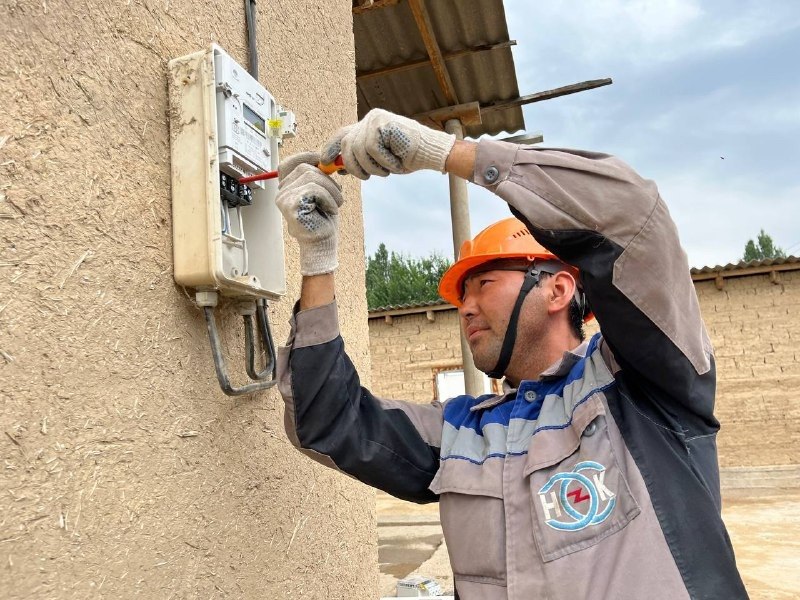
Member of Parliament Shukhrat Ganizoda outlined the technical challenges posed by such operations. “A typical ASIC consumes up to 3.5 kWh, while more powerful models use 5–6 kWh. Large farms run thousands of these devices, placing an enormous strain on the electrical system,” he said.

Ganizoda added that perpetrators often bypass meters or make illegal connections to reduce operating costs and maximize profits. The new legislation, he said, aims to deter tax evasion schemes, unauthorized data encryption, and attempts to circumvent commodity tracking systems.

The law will take effect after it is signed by President Emomali Rahmon and officially published in state media.

Tajikistan had already strengthened penalties for illegal electricity use and non-payment. Currently, such offenses are punishable by fines ranging from $2,970 to $9,900 or prison terms of three to ten years.

The legislative crackdown comes amid the country’s annual autumn-winter energy crisis. This year, electricity shortages are particularly severe, with some regions receiving just two to four hours of power per day. Authorities hope the new measures will ease pressure on the national grid and help prevent further outages.