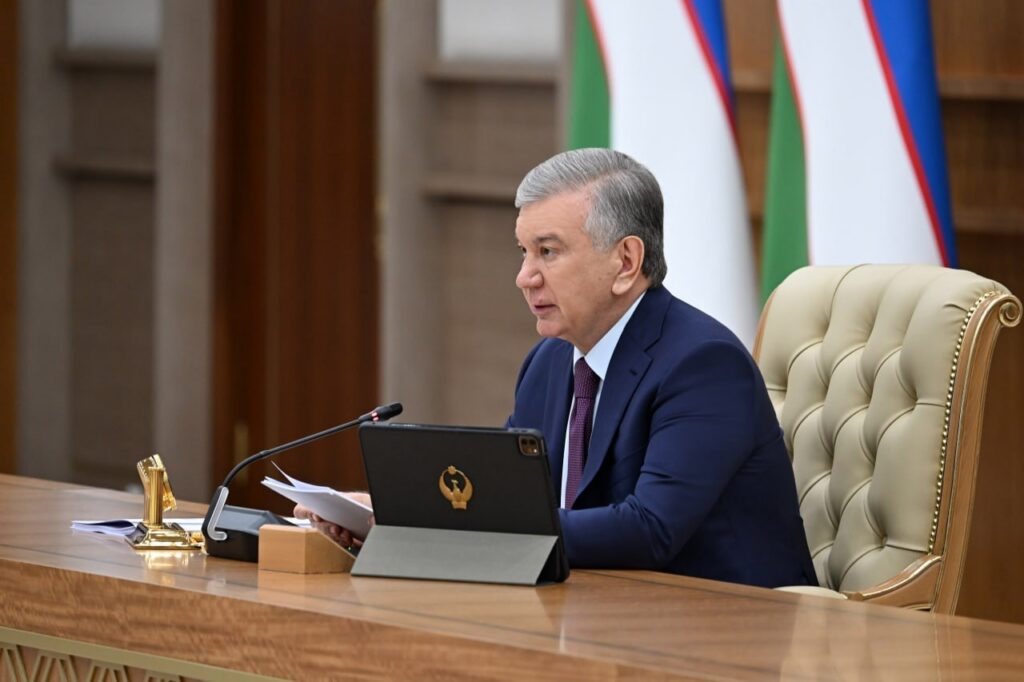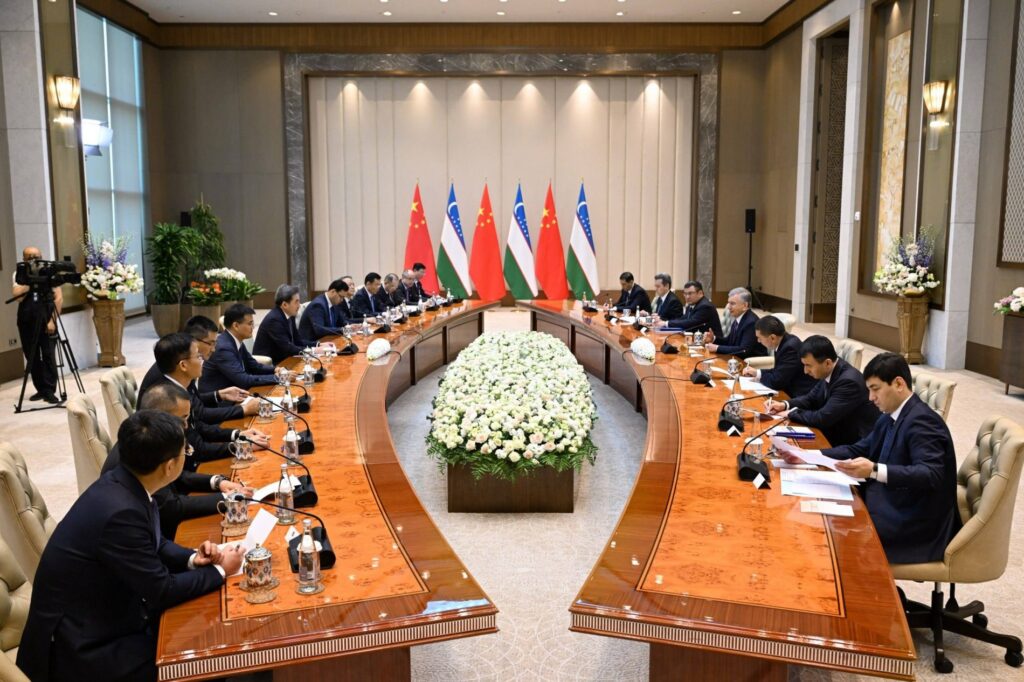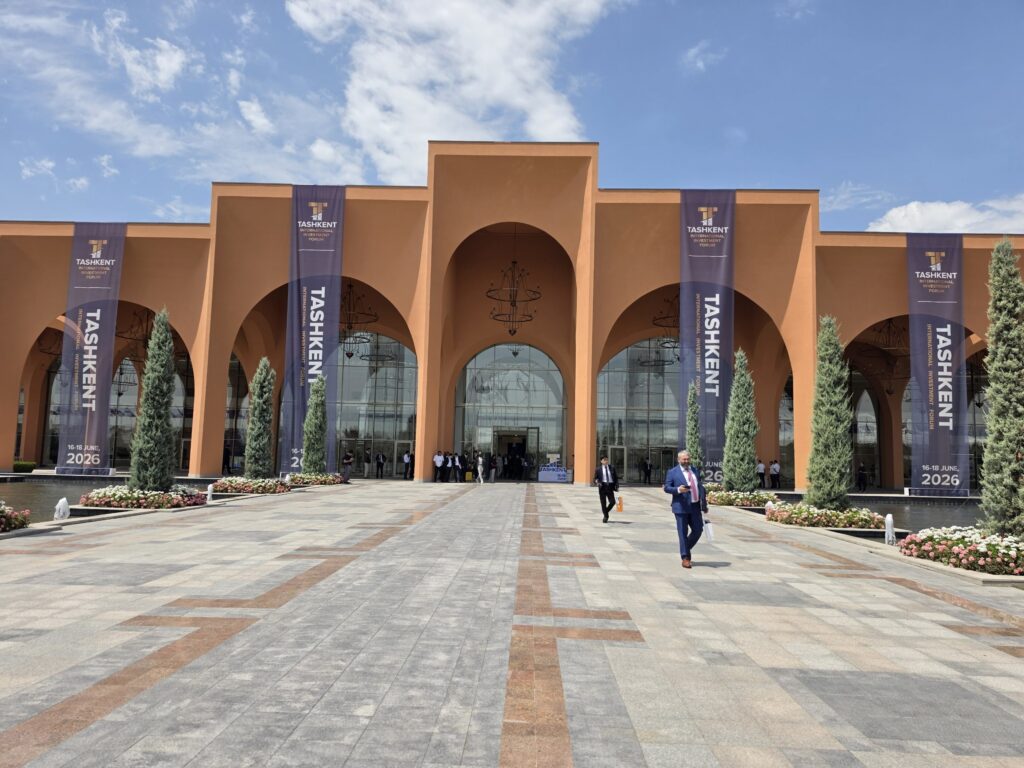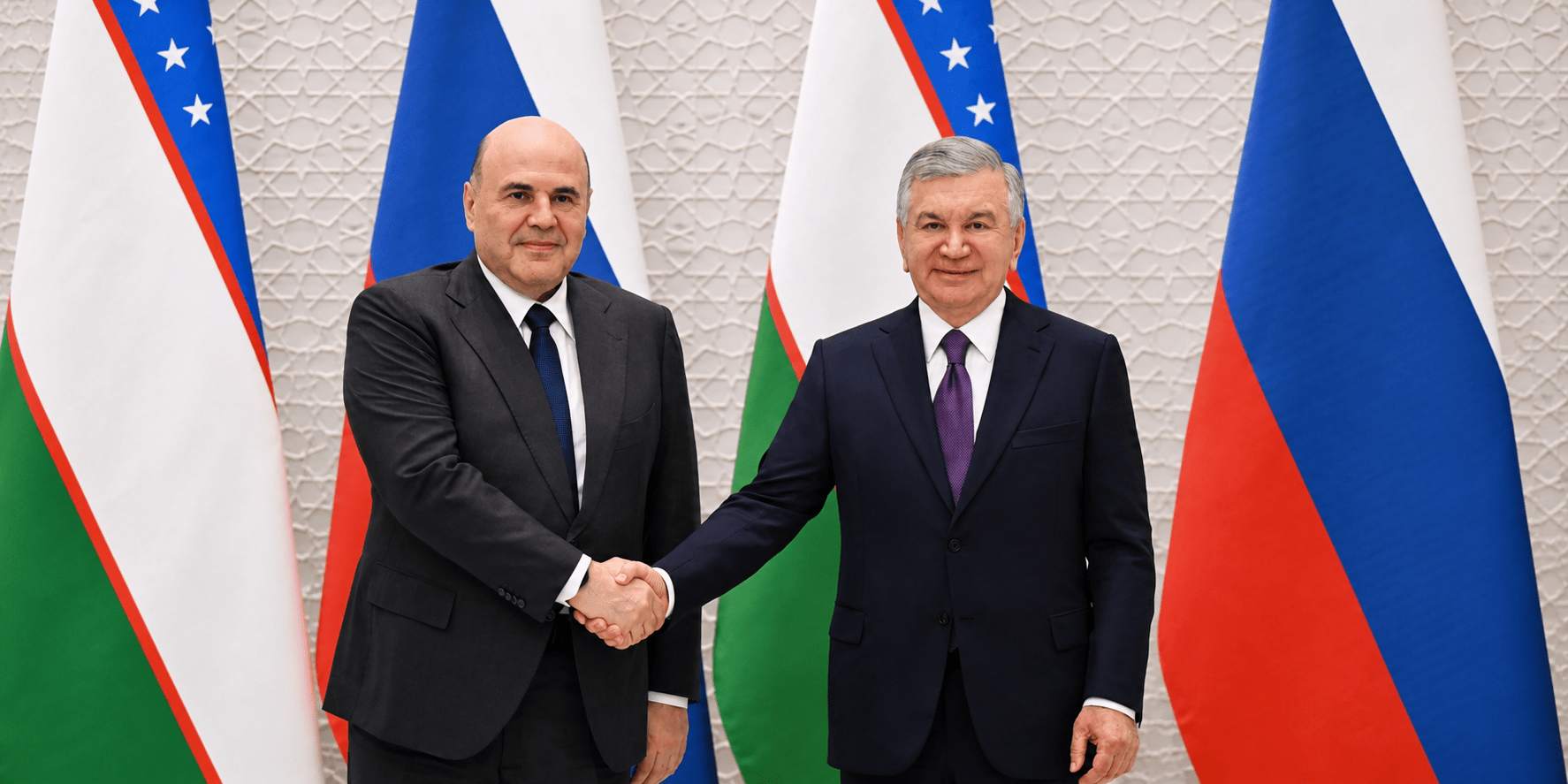
TASHKENT, June 17, 2026 — President of the Republic of Uzbekistan Shavkat Mirziyoyev received Chairman of the Government of the Russian Federation Mikhail Mishustin in Tashkent on June 16, as the Russian premier arrived to take part in the Fifth Tashkent International Investment Forum (TIIF). In their meeting, the two leaders reviewed progress on implementing agreements reached at the highest level within the framework of Uzbek-Russian relations and their strategic partnership.
Mirziyoyev and Mishustin backed deeper private-sector ties, regional cooperation in oil, gas, mining and agriculture, and expanded cultural and educational exchanges, points also raised in Mishustin’s separate meetings with Prime Minister Abdulla Aripov and Saida Mirziyoyeva, head of the presidential administration. They expressed satisfaction at a 20% rise in bilateral trade turnover since the start of the year, and noted that major joint projects in energy, metallurgy and other priority sectors are continuing.
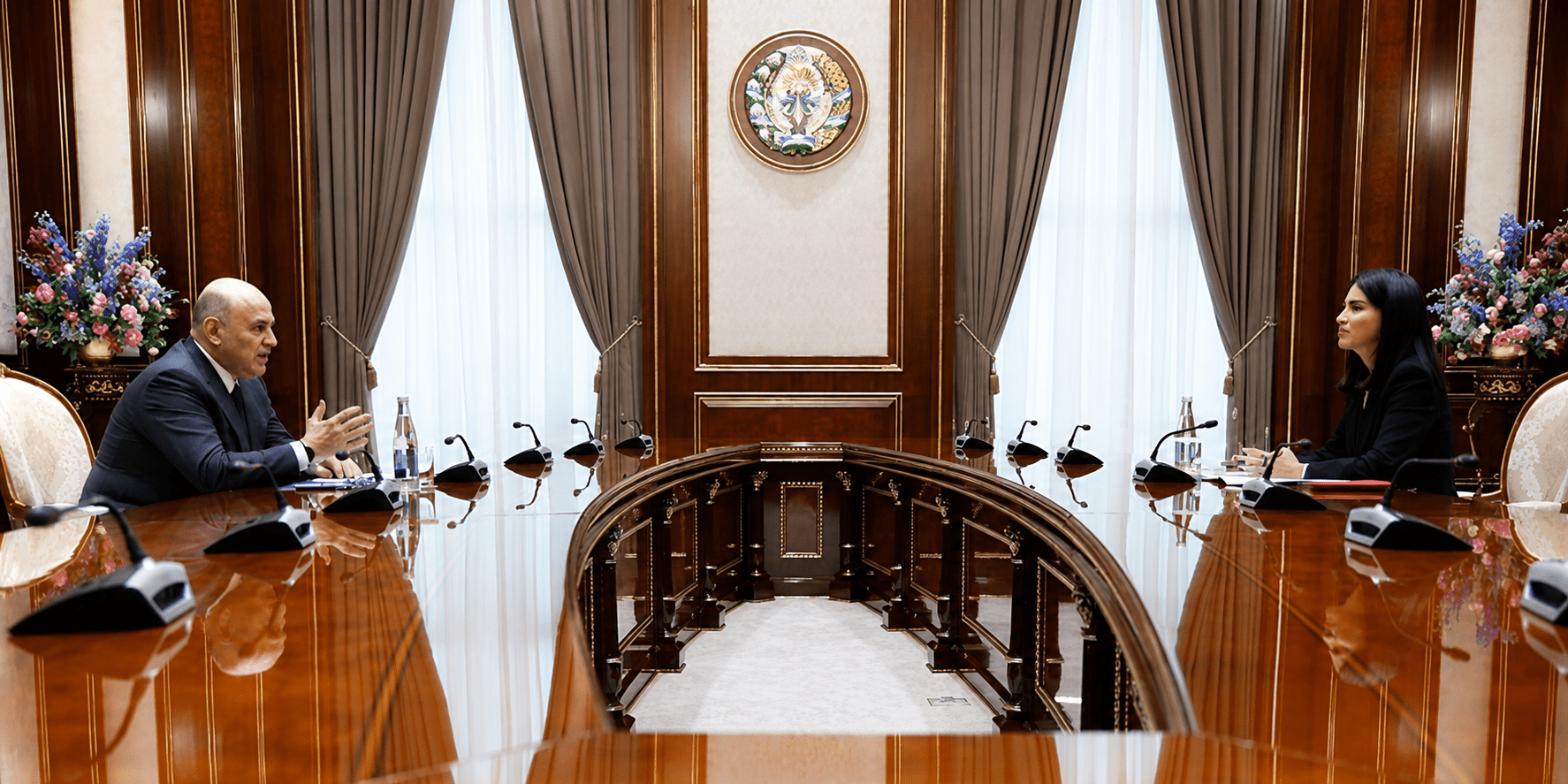
Saida Mirziyoyeva, Head of the Presidential Administration of the Republic of Uzbekistan, and Mikhail Mishustin, PM of the Russian Federation. Image: RF website
Those parallel meetings underscored that the relationship now extends well into the cultural and academic sphere alongside the commercial one. Aripov congratulated Mishustin and “all our Russian friends on Russia Day. I wish the multi-ethnic people of Russia peace, stability, and continued prosperity,” he said.
Aripov went on to note that two-way trade has more than tripled over the past decade to surpass $13 billion, with the combined portfolio of joint projects now standing near $47 billion.
Mirziyoyeva, in turn, highlighted recent cultural exchanges held around the St. Petersburg International Economic Forum, including a Mariinsky Theatre premiere of the opera “Tamerlane” and exhibitions at the Hermitage and the Fabergé Museum, while officials on both sides pointed to the large number of Russian university branches operating in Uzbekistan as evidence of deepening educational ties.
Of key significance in the Uzbek-Russian relationship is the construction of Uzbekistan’s first integrated nuclear power station, which will be built to a Russian design. Putin and Mirziyoyev marked the launch by video link during the St. Petersburg forum, as concrete was poured at the project site. Russian engineers are also involved in the construction of the country’s largest hydropower plants. A joint center for managing drilling operations has been created, and a major project is underway to upgrade the Central Asia-Centre gas pipeline and expand its capacity.
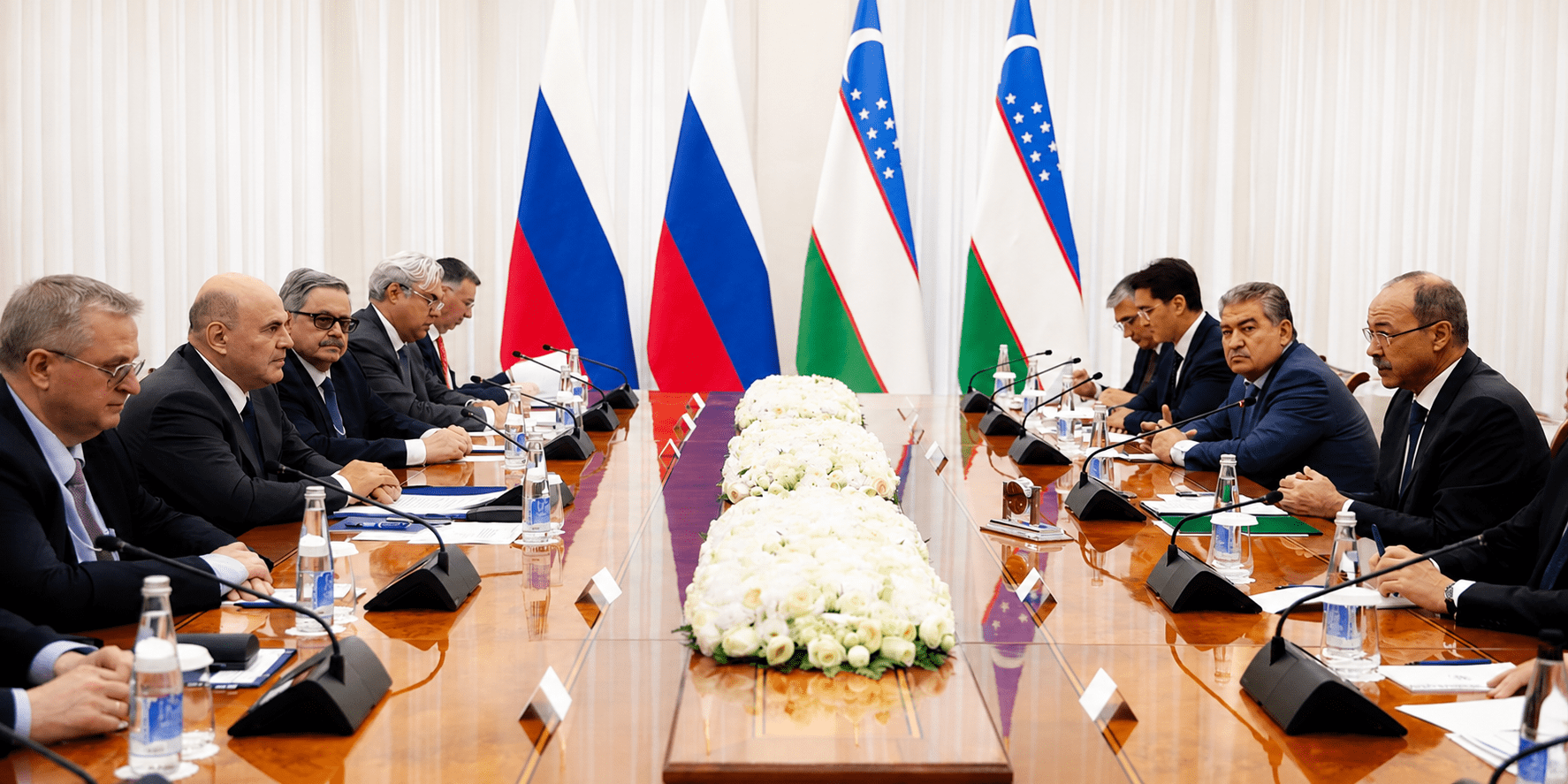
Image: President.uz
Mishustin’s TIIF Address
Speaking at the TIIF opening ceremony on June 17, Mishustin set the bilateral relationship against the backdrop of a strained global economy. “The global economy is undergoing a profound transformation these days amid growing turbulence and escalating trade wars, the wide application of protectionist measures and unfair competition. Of course, all this means that we, our countries, must work on systemic objectives. The way we address them will define whether we succeed in fostering steady economic development for our countries and improving the quality of life for our people,” he said.
Mishustin told the forum that “Russia is among the leading investors in Uzbekistan’s economy,” noting that roughly 3,000 Russian companies are now engaged in some 150 major investment projects in the country, with a combined value exceeding four trillion rubles, or roughly $55 billion. He said agricultural trade between the two countries grew by nearly 50% in the first four months of the year compared with the same period last year, crediting development institutions such as VEB.RF, Russia’s state development corporation, and the Russian Export Center for supporting the expansion.
On Uzbek-Russian industrial cooperation, Mishustin said “cooperation in manufacturing has reached a new level,” citing joint technology parks already operating in the Tashkent and Jizzakh regions, a new industrial park that opened in Navoi in April, and ongoing construction of a railway rolling-stock manufacturing cluster and commercial-vehicle assembly facilities. He added that a joint investment platform has been launched and that its first pilot projects have already received financing.
Mishustin confirmed that “the Russian Government remains committed to strengthening trade and economic cooperation with Uzbekistan.” He said that Moscow is already acting on initiatives Mirziyoyev proposed at the St. Petersburg forum, including a Eurasian technological industrialization belt and a joint digital ecosystem built around artificial intelligence, a unified digital employment profile, and a human capital development platform. He noted that Mirziyoyev had also suggested establishing a cultural tourism corridor linking Samarkand and St. Petersburg, and said the proposal would be taken up the following day at an international conference on cultural ties and creative industries in St. Petersburg.
Closing his remarks, Mishustin said “I am confident that we can take our cooperation to an even higher level,” and invited Uzbek officials and business representatives to the Innoprom international industrial trade fair in Yekaterinburg in early July. Taken together, the two days of talks in Tashkent were framed by both governments as resting on more than commerce alone: personal trust between the two heads of state, expanding educational and cultural links, and a deepening investment relationship now worth tens of billions of dollars.