Kazakhstan’s shift to a unicameral, party-list Kurultai is meant to strengthen political parties. But the ruling Amanat party’s June 12 vote to join the newly created Adilet party, followed by Adilet delegates’ approval on June 14, shows the first test of the new system will show whether the new party-list model broadens competition or mainly reorganizes the pro-presidential camp before the vote.
Why Parties Matter Now
On July 1, 2026, Kazakhstan’s new Constitution enters into force, abolishing the bicameral parliament and replacing it with a unicameral Kurultai of 145 deputies elected exclusively through party lists for a five-year term. The new basic law was approved in a referendum on March 15, 2026. According to the Central Election Commission, it was supported by 87.15% of voters, with turnout at 73.12%. More than 80% of the text of the 1995 Constitution was rewritten.
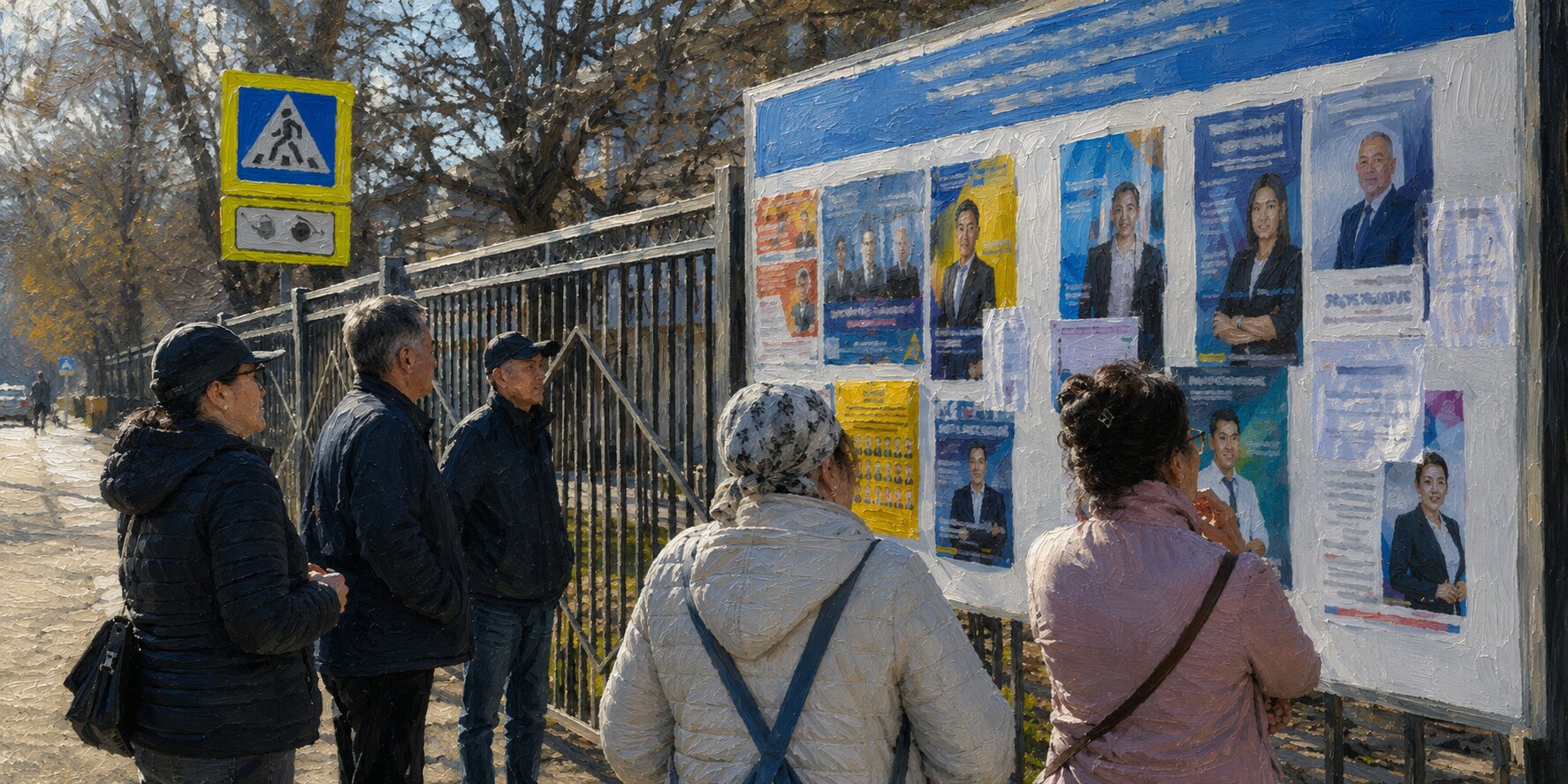
President Kassym-Jomart Tokayev has said elections to the new Kurultai will take place in August 2026. That makes Kazakhstan’s political parties especially important to watch: for the first time since 2004, key parliamentary players could change substantially. But the early signal is mixed: formal rules strengthen parties as electoral institutions, while the merger of pro-presidential forces consolidates the dominant camp’s organizational advantages.
How the Party System Works
Kazakhstan is a presidential republic in which parties operate under the Law “On Political Parties.” Until 2022, registering a party required at least 1,000 initiators and at least 20,000 members. After political reforms announced by Tokayev on March 16, 2022, the minimum number of initiators was reduced to 700, while the membership threshold was lowered to 5,000. The minimum size of regional branches was also reduced from 600 to 200 people, and the period allowed for forming branches was extended from six months to one year.
In 2023, 98 deputies were elected to the Mazhilis, the lower house of parliament: 69 through party lists and 29 in single-mandate constituencies. The threshold for party lists was lowered from 7% to 5%. Under the new Constitution, single-mandate constituencies are abolished at the national level, and all 145 deputies of the Kurultai will be elected through party lists. Without single-mandate districts, independent political figures will need party access to enter national politics.
Parties also take part in elections to maslikhats, local representative bodies at district, city, and regional levels. Those elections were held simultaneously with parliamentary elections on March 19, 2023.
Eight Parties: The Current Landscape
As of June 2026, before the Amanat-Adilet merger process is completed, Kazakhstan has eight officially registered political parties, the highest number in two decades. Six are represented in the current Mazhilis: Amanat, Auyl, Respublica, Ak Zhol, the People’s Party of Kazakhstan, and the Nationwide Social Democratic Party.
The seventh, the environmental party Baitaq, was registered on November 30, 2022, as Kazakhstan’s first “green” party. It failed to clear the 5% threshold in the 2023 elections, receiving 2.30% of the vote.
The eighth, Adilet, was registered by the Ministry of Justice on June 1, 2026. It is headed by Aibek Dadebay, a former head of the Presidential Administration.
The dominant force has long been Amanat. The party was founded on March 1, 1999, as Otan at the initiative of first president Nursultan Nazarbayev. It was renamed Nur Otan in 2006 and, after the January 2022 events, became Amanat in March 2022. Since April 2022, it has been led by Mazhilis Speaker Yerlan Koshanov. According to the party leadership, it has more than 800,000 members.
In the 2023 elections, Amanat received 53.9% of the vote and 40 seats through party lists, while another 22 representatives won in single-mandate constituencies, giving the party 62 of the 98 seats in the Mazhilis. On June 12, 2026, delegates at Amanat’s 26th congress unanimously voted in favor of joining Adilet; on June 14, Adilet delegates approved Amanat’s accession. The united organization is expected to keep Adilet’s name, program, and visual identity, with legal integration to take around five to six months.
Other parliamentary parties occupy more specific political niches. Auyl, led by Zhiguli Dairabayev, focuses on rural and agrarian issues. It came second in the 2023 elections with 10.9% of the vote and eight seats.
Respublica, registered in January 2023, is associated with the business community and is led by agribusinessman Aidarbek Khojanazarov.
The Ak Zhol Democratic Party positions itself as a defender of entrepreneurs and an heir to the ideas of the Alash movement. It received 8.41% of the vote and six seats in 2023.
The People’s Party of Kazakhstan is the successor to the Communist People’s Party of Kazakhstan, which was renamed in 2020. It follows a left-wing agenda and received 6.8% of the vote and five seats.
The Nationwide Social Democratic Party, founded in 2006 by Zharmakhan Tuyakbay, has long presented itself as an opposition party. In 2023, after years of election boycotts, it gained parliamentary representation for the first time, receiving 5.2% of the vote and four seats.
What the 2023 Elections Showed
The snap elections on March 19, 2023, were held under updated electoral legislation. In addition to lowering the party-list threshold from 7% to 5% and reintroducing single-mandate constituencies, the right of the Assembly of the People of Kazakhstan to appoint Mazhilis deputies was abolished, and the total number of deputies was reduced from 107 to 98. Turnout was 54.21%, while 248,291 voters, or 3.9%, chose the “against all” option.
The OSCE/ODIHR observation mission noted progress, but said further legal changes were needed to ensure democratic elections and genuine pluralism.
The result was significant: for the first time since 2004, six parties entered the Mazhilis instead of the usual three. The Nationwide Social Democratic Party, Respublica, and Auyl all gained representation in this convocation. At the same time, Amanat retained more than half of the party-list vote, confirming its dominant position.
The Party System Between Reform and Real Competition
Since 2022, Kazakhstan has gone through a series of changes officially presented as a shift away from de facto one-party dominance and toward multiparty politics. Since that year, the Ministry of Justice has received notifications from ten initiative groups seeking to create political parties. Four were granted registration, while the others were rejected. These changes lowered formal barriers and widened the registered party field, but they have not erased the gap between legal pluralism and real competition.
Structural imbalances remain. In February 2026, Senate Speaker Maulen Ashimbayev said Kazakhstan’s party system remained underdeveloped and argued that Amanat was the only party with a solid social base and nationwide presence. Other parties, he said, had limited public support and only minimal activity in some regions.
Gender representation also remains limited. According to monitoring by the Equal Future project, as of July 2025, women accounted for 18.4% of Mazhilis deputies, or 18 out of 98, and 20% of senators, or 10 out of 50.
Party-list voting in the Kurultai is intended by the authorities to strengthen political parties. Yet it also gives registered parties a gatekeeping role and arrives as the strongest party machine is being folded into Adilet. At the same time, the 2026 Constitution introduces the office of vice president, appointed by the president with the consent of the Kurultai, while preserving broad presidential powers to appoint key officials. Some OSCE recommendations, particularly those concerning freedom of assembly, the media, and the formation of election commissions, have not yet been fully implemented.
Looking Ahead
The August elections to the Kurultai will be the first held under the rules of the new Constitution and the first major test for Kazakhstan’s registered parties, including the united pro-presidential force emerging from Amanat and Adilet. The results will determine which existing players retain a place in the legislative system under the new rules and which may need to seek cooperation or merger formats to remain politically relevant.
For external observers, the elections will show whether the new model — a single chamber, party-list voting, and a broader party field — creates more competition or mainly reorganizes dominance. Until then, Kazakhstan’s party system remains in a phase of restructuring, the contours of which will become clearer after the August 2026 vote.