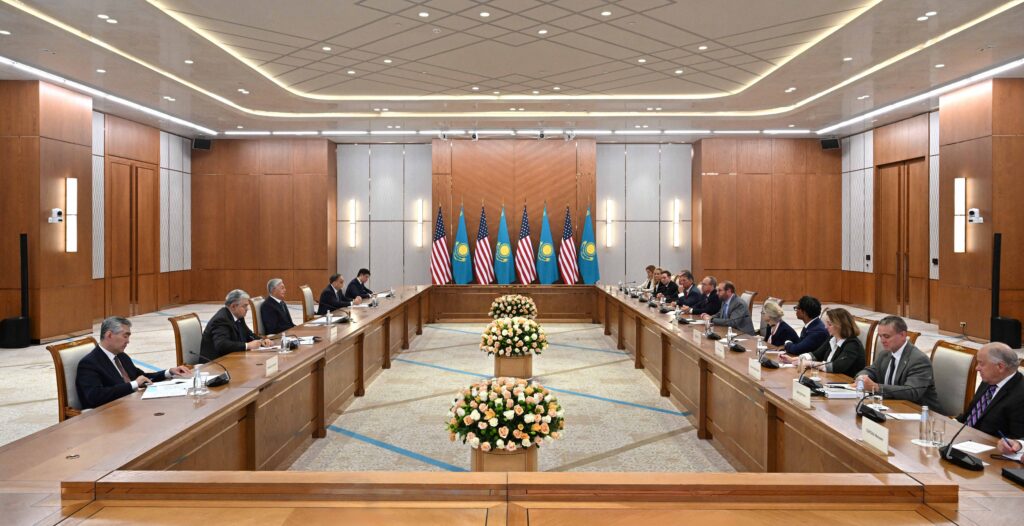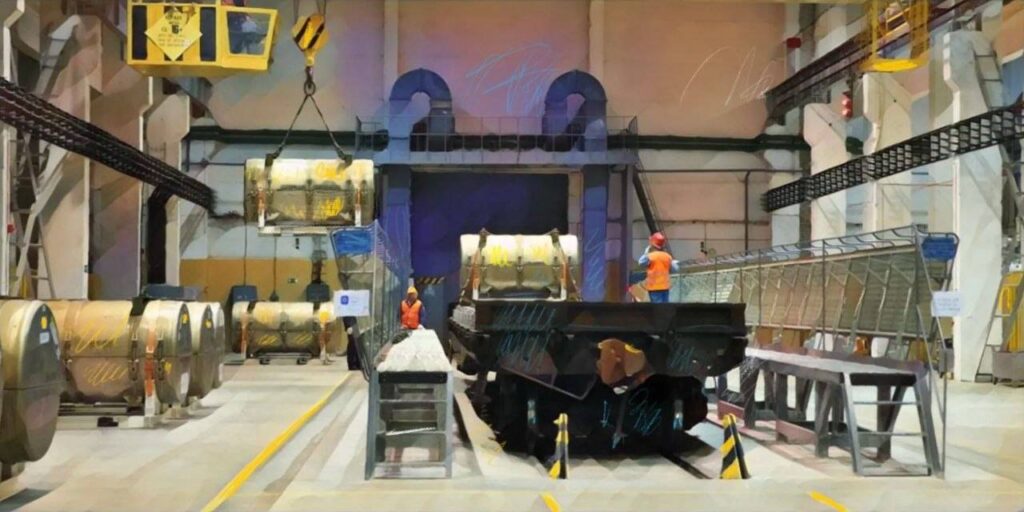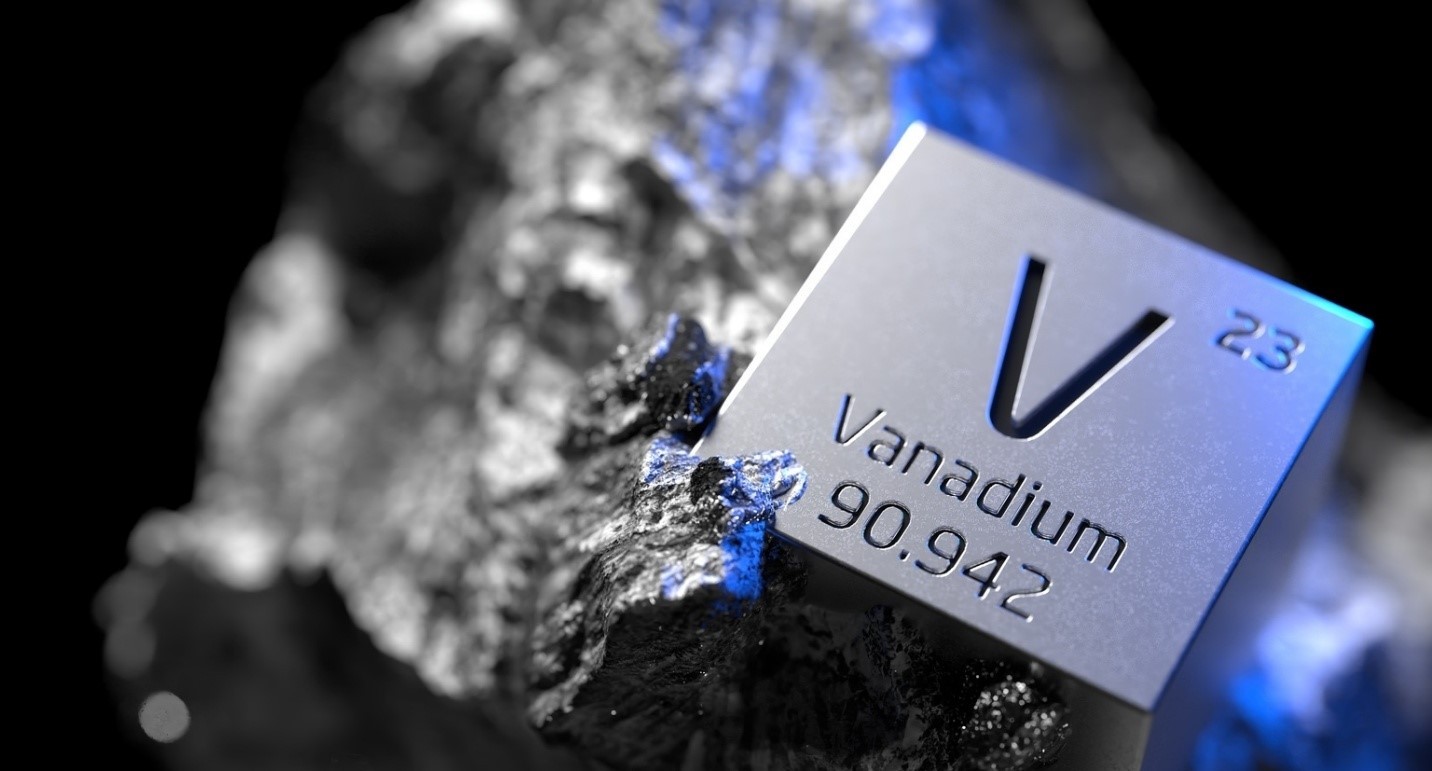
Vanadium is viewed as a critical mineral by the United States, the European Union, Russia, China and many other countries because of its importance to energy storage and industrial alloys. At the Astana Metals & Metallurgy (AMM) Congress, Ferro-Alloy Resources CEO Nicholas Bridgen discussed the company’s assets, strategy, and valuation with The Times of Central Asia, noting that the company appears undervalued amid supply chain disruptions and the rising strategic importance of vanadium. The discussion highlighted vanadium’s emerging demand-supply imbalance and efforts to better align market perception with fundamentals.
Of the critical metals that will define the next half-century, vanadium has perhaps the strongest claim to indispensability: it hardens the steel in our infrastructure and defense systems, and it stores the energy that our grids will increasingly depend on. Yet the market has consistently failed to price that future in, and nowhere is that mispricing more visible than in the vanadium deposits of Kazakhstan.
In 1941, with the Second World War raging, Soviet geologists fanned out across Central Asia looking for strategic minerals. Around 180 kilometers east of Almaty, in the foothills of the Tian Shan mountain range along the borders with China and Kyrgyzstan, they found tungsten at the Boguty deposit. At roughly the same time, they were delineating what would become the Northern Katpar and Upper Kairakty tungsten deposits. The geology was well understood, and the resource was real, but nothing happened for the better part of 75 years.
The deposits sat idle not because tungsten was unimportant, but because there was no pressing reason for, first, the Soviet Union or later the West to develop them. That changed when the scale of China’s dominance in critical metals became impossible to ignore.
By the early 2020s, China was producing over 75% of the world’s tungsten output, alongside similarly dominant shares of rare earth elements and a range of other strategic minerals. This concentration of supply was not accidental. It was the product of decades of deliberate industrial policy, patient capital, and a willingness to operate at low margins long enough to drive out competitors.
The Tungsten Lesson
Chinese mining company Jiaxin International Resources Investment Ltd. moved in 2014 to acquire Boguty for an undisclosed sum, almost certainly a modest one. The deal further consolidated China’s grip on global tungsten supply. Jiaxin then spent approximately $300 million developing the deposit and listed on the Hong Kong Stock Exchange at a valuation in excess of $600 million. The investment thesis seemed straightforward enough at the time. In 2025, it looked positively prescient: China imposed export controls on tungsten, and key prices outside China more than doubled. According to the Financial Times, Jiaxin’s market capitalization stands at close to HKD 22.3 billion, equal to $2.84 billion, approximately 9.5 times the stated development expenditure.
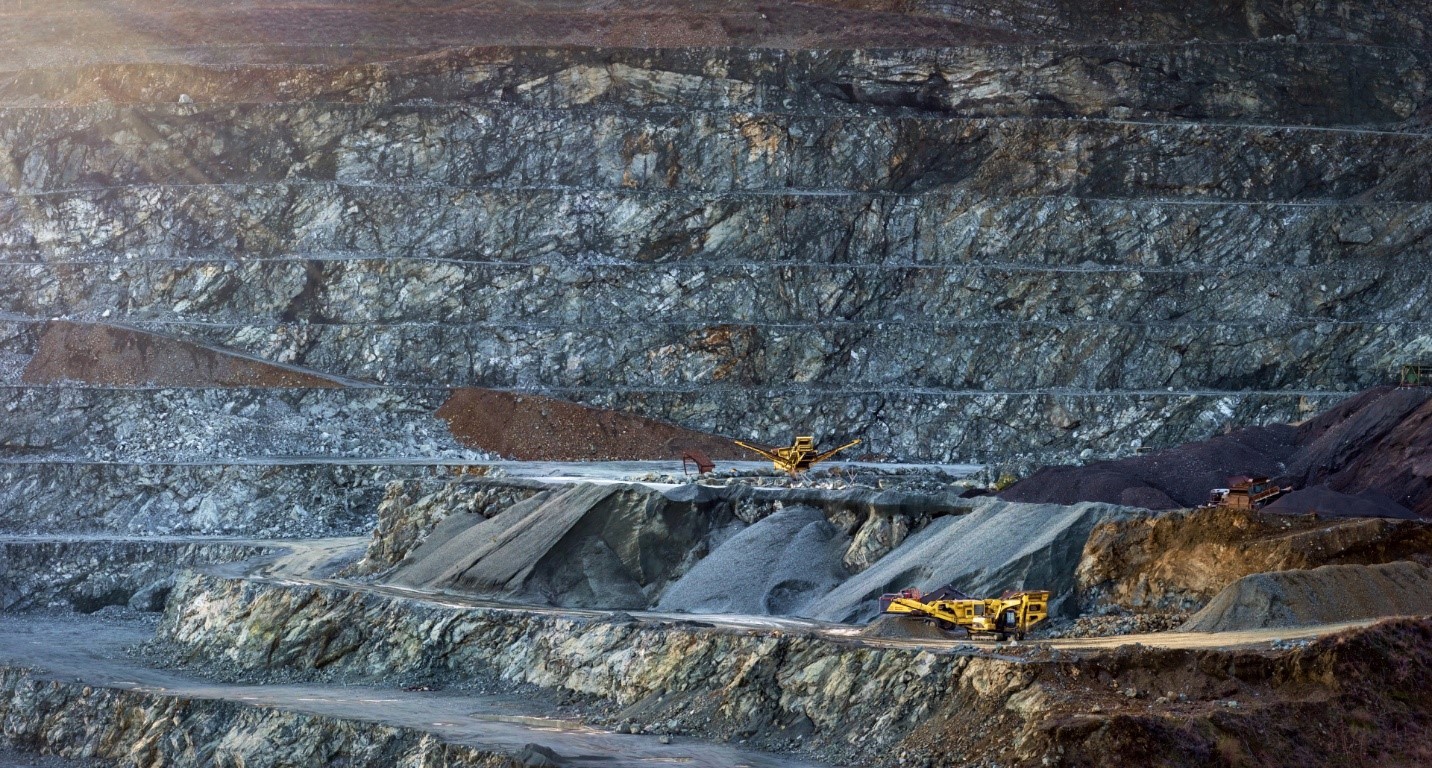
Image: Kaz Resources
Meanwhile, Skyline Builders Group Holding Ltd. and Cove Kaz Capital Group LLC (“Cove Kaz”) have moved to acquire the two other formerly dormant tungsten deposits in Kazakhstan, Northern Katpar and Upper Kairakty. On this occasion, the U.S. was not content to watch from the sidelines. Washington supported the projects through letters of interest totaling up to $1.6 billion. The Export-Import Bank of the United States (EXIM) issued a letter of interest for up to $900 million under its Supply Chain Resiliency Initiative. The U.S. International Development Finance Corporation issued a separate letter of interest for up to $700 million in debt and project-development financing.
Cove is a private company, so there is no market capitalization to examine, but the directional logic is not hard to follow. The pattern is instructive in its simplicity.
Consider a critical mineral deposit, known for decades, that sits undeveloped and undervalued despite being well-understood and strategic. Over a brief period of time, geopolitics shifts the price calculus. The early mover captures extraordinary value. The late mover pays a strategic premium to catch up. The question worth asking now is: where is the next version of this story to play out?
The Case for Vanadium
The answer may already be visible if the tungsten lesson is applied with any consistency.
China currently accounts for over 72.4% of global vanadium production, according to the U.S. Geological Survey, while Russia supplies around 18.5%. Producers outside this duopoly are under pressure: South African output fell sharply in 2025, while Brazil’s Largo cut output amid financial strain. The supply picture for the West has been deteriorating for a variety of reasons at exactly the moment that demand is beginning a structural upswing.
Vanadium has two distinct demand drivers. The first, and older, is its use as an alloying agent in high-strength steel, which is essential to infrastructure, including pipelines, and to defense applications.
The second is its role in vanadium redox flow batteries (VRFBs), increasingly viewed as the optimal technology for large-scale, long-duration electricity storage on power grids. As renewable generation capacity grows and grid operators require multi-hour storage to manage intermittency, VRFB deployment is moving from pilot scale to industrial rollout.
While projections vary across research firms, the consensus base case points to growth of four to six times in the VRFB market over the next decade, with Asia-Pacific leading installed capacity and North America recording the fastest growth. This is expected to contribute to a significant structural vanadium supply deficit. One major forecaster estimates that the vanadium market will grow at a compound annual growth rate of around 7% over the next 15 years.
Vanadium features on the critical minerals list of every country that maintains one because of both its supply concentration and its battery metal status. As previously reported by The Times of Central Asia, a congressional letter to the Pentagon made the supply problem concrete: the U.S. consumed 14,000 metric tons of vanadium in 2024 while producing only 3,800 tons domestically, with imports from South Africa and other producers at growing risk.
The current situation with vanadium is almost identical to what happened with tungsten before China imposed export controls in 2025. In other words, the warning signs are familiar. Like tungsten before it, vanadium is embedded in China-dominated mining, processing, and supply chains under geopolitical and national security strain. If history repeats, export restrictions and severe market disruption may follow.
Kazakhstan’s Balasausqandiq: The Numbers
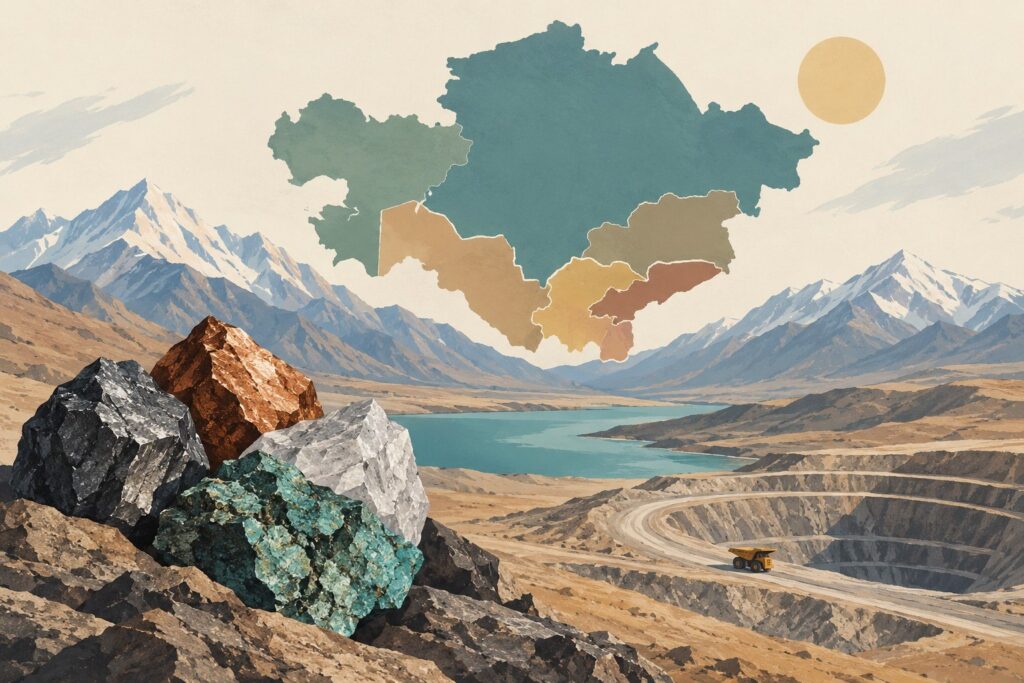
Ferro-Alloy Resources Limited (FAR), a company based in the United Kingdom and listed on the London and Astana stock exchanges, holds the exploration and development rights to the Balasausqandiq vanadium deposit in Kazakhstan. The company has been developing the project for more than two decades. Kazakhstan leads Central Asia in vanadium assets, and Balasausqandiq is the most advanced of its three known deposits.
Balasausqandiq’s most recent resource estimate stands at 32.9 million tons at a mean grade of 0.62% vanadium pentoxide (V₂O₅). However, this is from just one of seven known ore bodies covered by the company’s mining rights. According to FAR, the full deposit could meet the projected global shortfall on its own.
What distinguishes the project is not scale alone, but geology and cost structure. Most vanadium deposits are hosted in vanadiferous titano-magnetite ore, which requires energy-intensive roasting to process. Balasausqandiq is a shale deposit amenable to whole-ore acid leaching, a substantially cheaper and more environmentally benign processing route.
FAR CEO Bridgen has described this as giving the project the lowest production costs of any current or planned vanadium operation in the world, a structural advantage that persists regardless of where the vanadium price settles.
FAR’s October 2025 feasibility study sets out the financial case in detail. Phase 1, drawing on just one of seven identified ore bodies, targets annual production of 8,500 tons of vanadium pentoxide with a net present value (NPV) of around $0.75 billion and an internal rate of return (IRR) of 22% at conservative price assumptions that stand well below average levels this century in markets outside China. The IRR is notable: 22% represents a return profile that comfortably clears the hurdle rates of major mining houses and infrastructure funds, and it is calculated before any premium for the project’s strategic value to Western governments is factored in. Using a provisional capital cost estimate from a Chinese construction company, those figures rise to an NPV of nearly $1 billion and an IRR of 31%.
FAR’s strategy, according to Bridgen, is to scale output to 23,000 tons from four ore bodies, more than 10% of current global supply, drawn from a deposit that can be expanded in multiple open-pit stages, giving a mine life that would sustain operations well beyond any planning horizon currently relevant to investors.
FAR’s current market capitalization is approximately $37 million. Set against a Phase 1 NPV of close to $1 billion, the discount is not easily explained by project risk or development-stage uncertainty: the company has operated in Kazakhstan for over two decades, the feasibility study is complete, and it has an existing concentrate-processing operation.
The gap between its market value, what buyers and sellers are willing to pay at present, and its intrinsic value, what an asset is worth based on its fundamentals and discounted cash flows, is, instead, almost entirely a function of a depressed vanadium price driven by the Chinese construction slowdown, the same cyclical dynamic that periodically made Kazakhstan’s tungsten deposits look uninvestable to Western capital for decades at a stretch.
FAR: Ready for the Major Leagues
According to Bridgen, FAR is not a grassroots explorer. It is a company that has crossed the threshold that separates junior development-stage miners from operators capable of competing with the sector’s larger players. Two decades of in-country operations have produced an established relationship with Kazakhstani regulators, a functioning processing facility, and a management team with the track record to execute at scale. The feasibility study, the IRR, and the Phase 1 production plan are the outputs of a management team that has done the engineering work and is ready to scale up.
The strategic context reinforces the timing. In December 2025, President Trump held calls with the leaders of both Kazakhstan and Uzbekistan. The White House and the U.S. Department of State are focused on Central Asia and its critical minerals wealth. The November 2025 gathering of Central Asian heads of state at the White House under the C5+1 format placed the region more firmly on Washington’s strategic map than at any previous point.
At the 16th AMM Congress on June 11–12, David L. Fogel, assistant secretary of commerce and director general of the United States and Foreign Commercial Service, said the U.S. is moving from discussion to strategic execution in Central Asia’s critical minerals sector.
On June 30, the U.S. Department of War awarded Canada’s Largo Inc., through Largo Resources USA Inc., a five-year contract to supply high-purity vanadium pentoxide from its Largo Vanádio de Maracás operation in Brazil.
Kazakhstan, with its established record of foreign investment from major energy companies such as Chevron and ExxonMobil, and now with investment from Cove Kaz, is a natural entry point for Western governments, private funds, and corporate groups seeking to diversify and secure vanadium supplies outside China and Russia.
That is the niche FAR operates in and has operated in, at meaningful development cost, for more than 20 years.
The Boguty tungsten deposit was discovered in 1941. By 2025, the company that moved early had achieved a multibillion-dollar valuation. The Balasausqandiq vanadium deposit, meanwhile, has been known for decades, with a pilot and concentrate-processing facility already operating at the site, a completed feasibility study, a nearly $1 billion NPV, a 31% IRR, and a $37 million market cap.
Vanadium will not stay in a depressed pricing environment indefinitely. The question is who is positioned early enough to capture that value while securing geostrategic interests to boot.
The views expressed in this article are those of the author and do not necessarily reflect the official policy or position of the publication, its affiliates, or any other organizations mentioned.