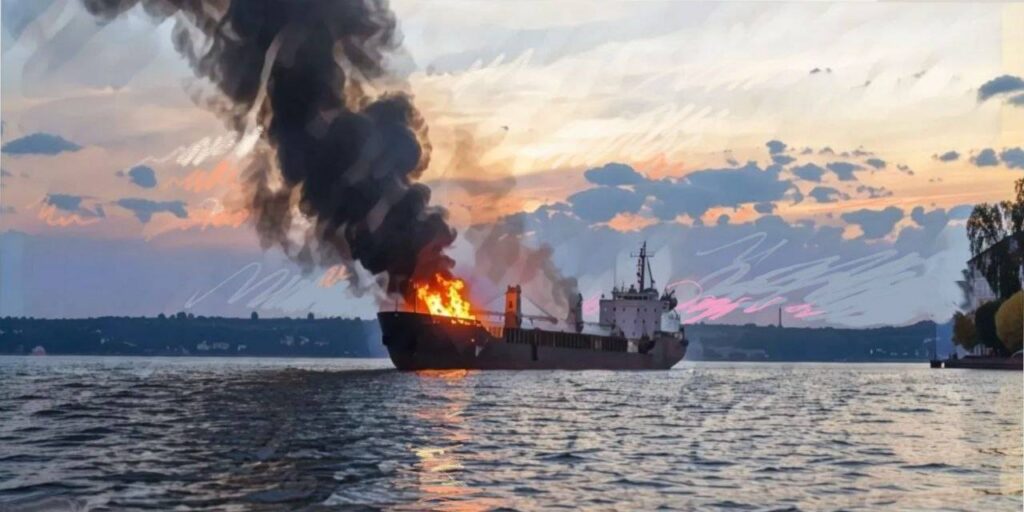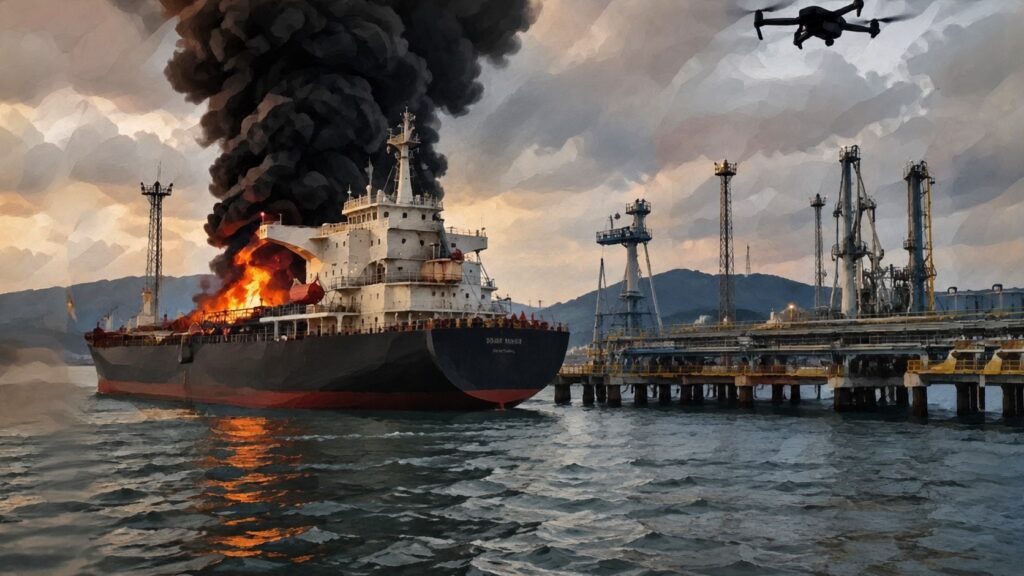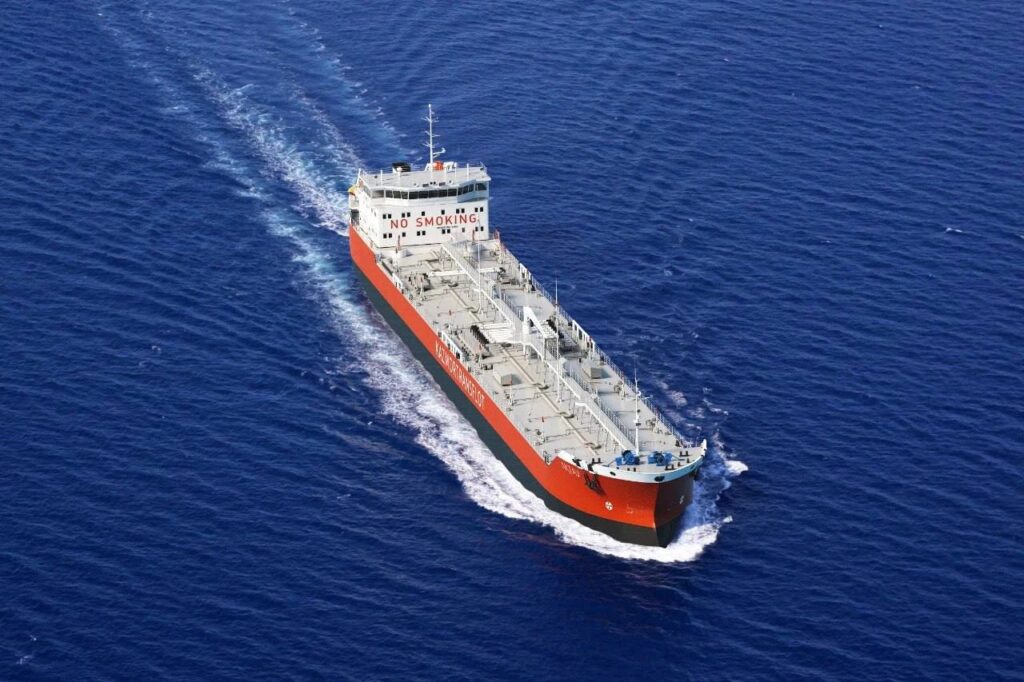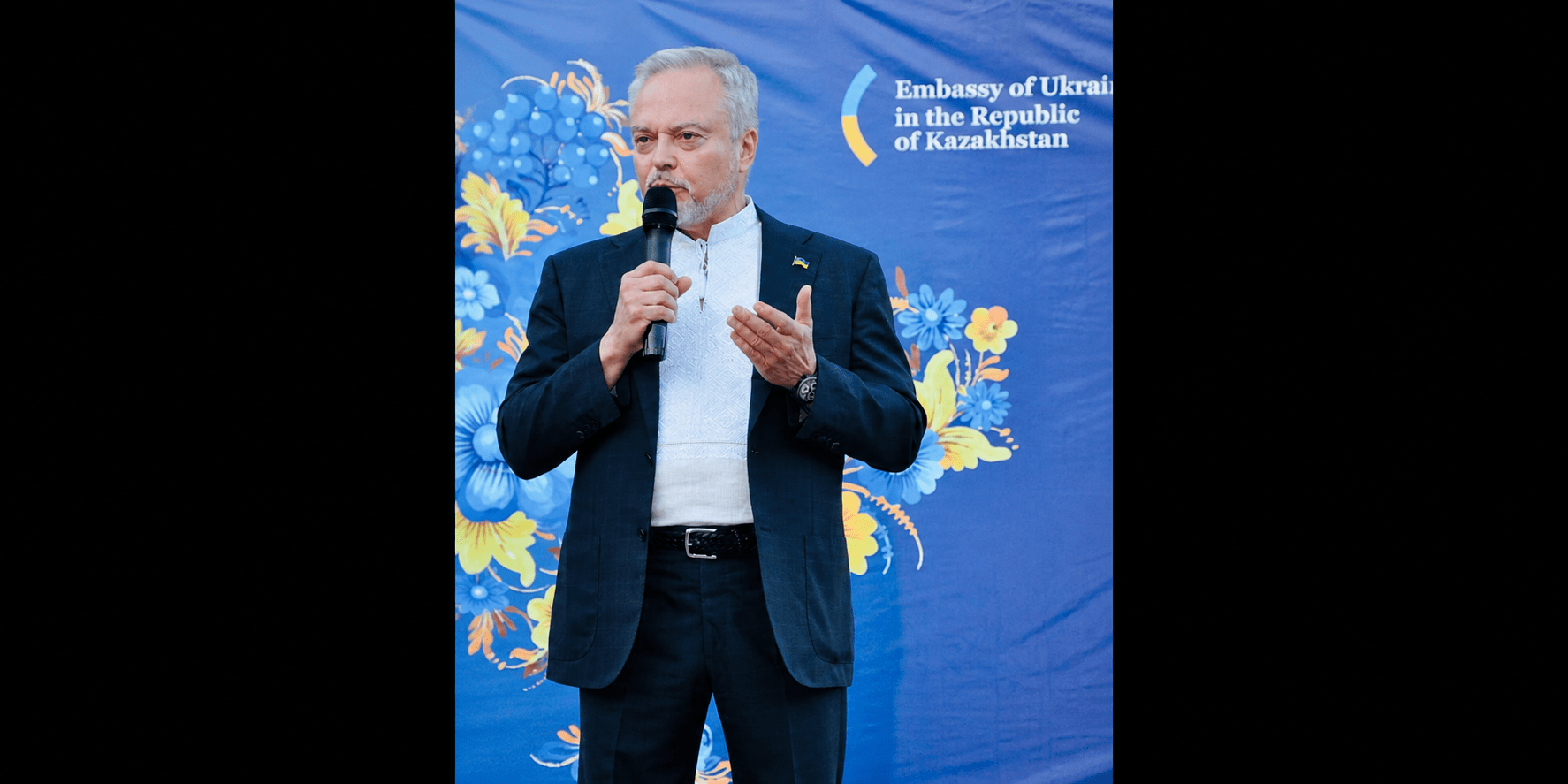
The Times of Central Asia has reported on drone attacks against tankers serving the Caspian Pipeline Consortium’s Black Sea terminal, including vessels loading Kazakh crude. Kazakhstan condemned the attacks on July 17 and 19 and called for an immediate halt. A fourth tanker, NELSA, was struck while loading on July 20. TCA asked Victor Mayko, Ukraine’s ambassador to Kazakhstan, to respond. His statement is published below in full.
“Ukraine understands the concerns of the Kazakhstani side regarding the incidents that occurred on July 17 and 19 involving tankers loading Kazakhstani oil through the Caspian Pipeline Consortium’s marine terminals in the waters of the Port of Novorossiysk. Let me put it this way—we understand and share these concerns.
“At the same time, I am convinced that any conclusions must be based solely on verified facts. As of today, there is no evidence whatsoever that the attacks in question were carried out by the Ukrainian side. Therefore, I ask that you refrain from making hasty and unfounded accusations, whether direct or indirect, against Ukraine.
“I would like to point out that the relevant Ukrainian authorities very recently warned of the possibility of Russian provocations, including those involving the use of Ukrainian drones. We have informed our international partners that Russia is actively employing various tactics: Russian electronic warfare systems are capable of disrupting the operation of Ukrainian drones, disabling them, and, in some cases, taking control of them.
“That is precisely why the possibility that the Russian side may be using such drones to carry out provocations and attempts to discredit Ukraine must be thoroughly investigated.
“War always brings immeasurable suffering and grief to millions of people. But even in the midst of this immense tragedy, there are certain rules recognized by international law, and violations of these rules constitute war crimes. It is forbidden to kill civilians. It is forbidden to torture children, women, and the elderly. It is forbidden to destroy civilian infrastructure in the middle of winter, leaving millions of people without heat, water, electricity, or even shelter. It is forbidden to deliberately kill rescue workers and medical personnel who are rushing to the scene of the tragedy to help the victims. It is forbidden to shoot at ambulances transporting the seriously wounded. The use of chemical weapons, including against the civilian population, is prohibited. It is unacceptable to attack civilian ships carrying Ukrainian grain bound for countries in Southeast Asia and Africa, thereby condemning millions of people to starvation. I could go on with this tragic list. Everything listed here constitutes war crimes. And those responsible for them must inevitably be punished.
“Our principled position, even against this backdrop, remains unchanged. The Armed Forces of Ukraine do not strike civilian targets, including those located on the territory of the Russian Federation. Legitimate military targets are exclusively military facilities and infrastructure that support the Russian war machine, which for more than four years now has been waging an armed, unprovoked aggression of unprecedented severity against Ukraine, its army, its civilian population, its natural environment, and all living things on our land.
“Kazakhstan, its citizens, infrastructure, and economic interests have never been and are not currently regarded by Ukraine as military targets. Any attacks on the infrastructure of the Caspian Pipeline Consortium or other economic and energy facilities of the Republic of Kazakhstan are not in Ukraine’s interests.
“Ukraine consistently regards the Republic of Kazakhstan as a friendly state and an important partner in Central Asia.
“We are convinced that Ukrainian-Kazakh relations must continue to develop based on mutual respect, trust, and constructive dialogue.”
Editor’s note: Caution is warranted before treating the ambassador’s rejection of Ukrainian responsibility as conclusive. On July 19, Ukrainian forces said they had struck two Russian oil tankers in the Black Sea, while CPC reported that ASIA and NISSOS IOS had been attacked that day while loading Kazakh crude. The two announcements do not establish that they concerned the same vessels, but the timing raises legitimate questions. Less than a month earlier, in a June 25 communication circulated by the International Maritime Organization, Kyiv argued that merchant vessels transporting oil and other strategic resources could generate revenue sustaining Russia’s military capabilities, raising questions about whether their activities remained purely commercial. The communication focused on Russian oil, resources removed from occupied territory and the shadow fleet, rather than Kazakh crude. It does not prove Ukrainian responsibility for the July attacks, but Ukraine’s campaign against maritime oil traffic, its stated targeting rationale and the overlapping timing provide Kazakhstan with reasonable grounds to seek a fuller accounting rather than accept the statement at face value.