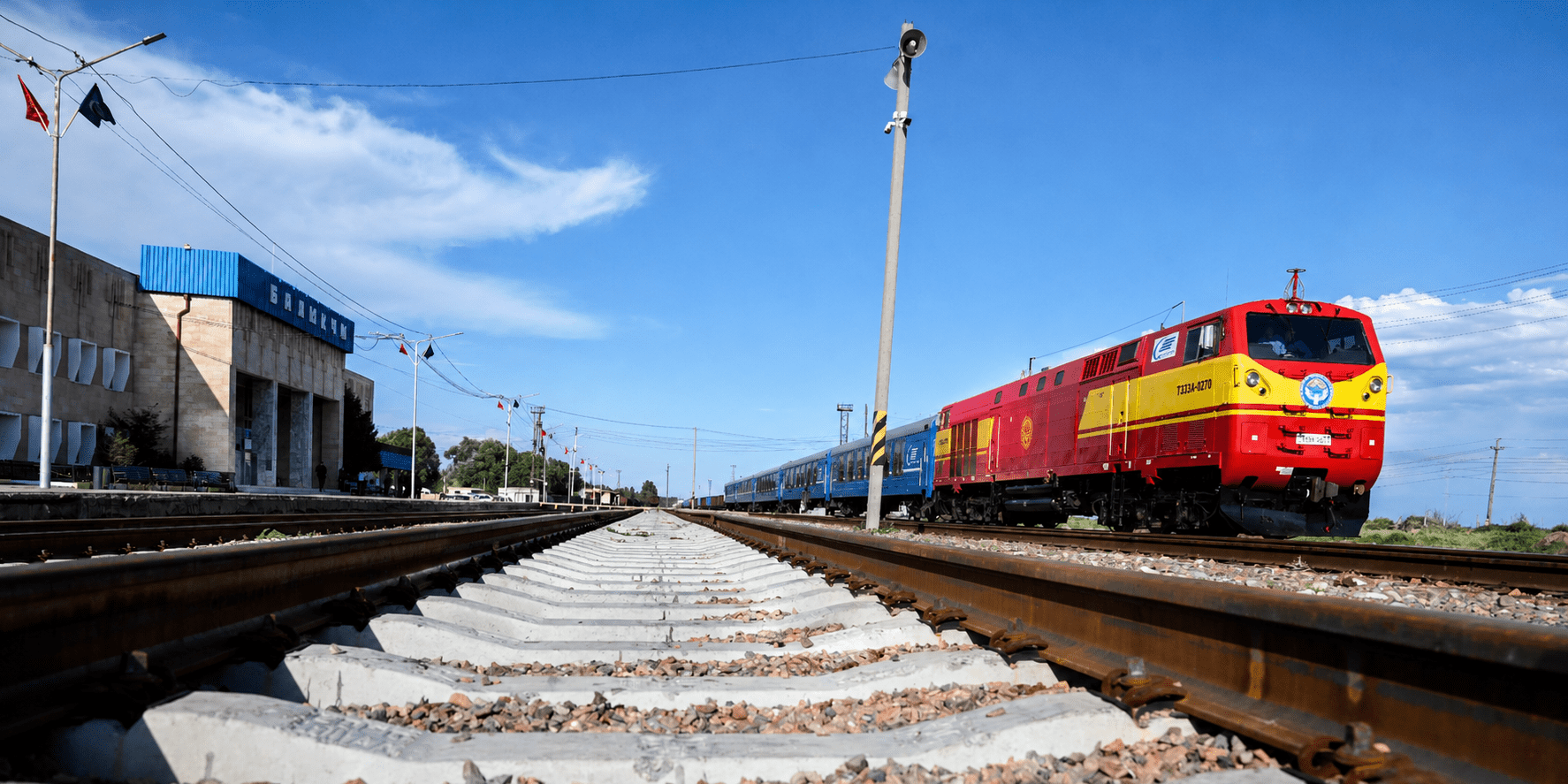
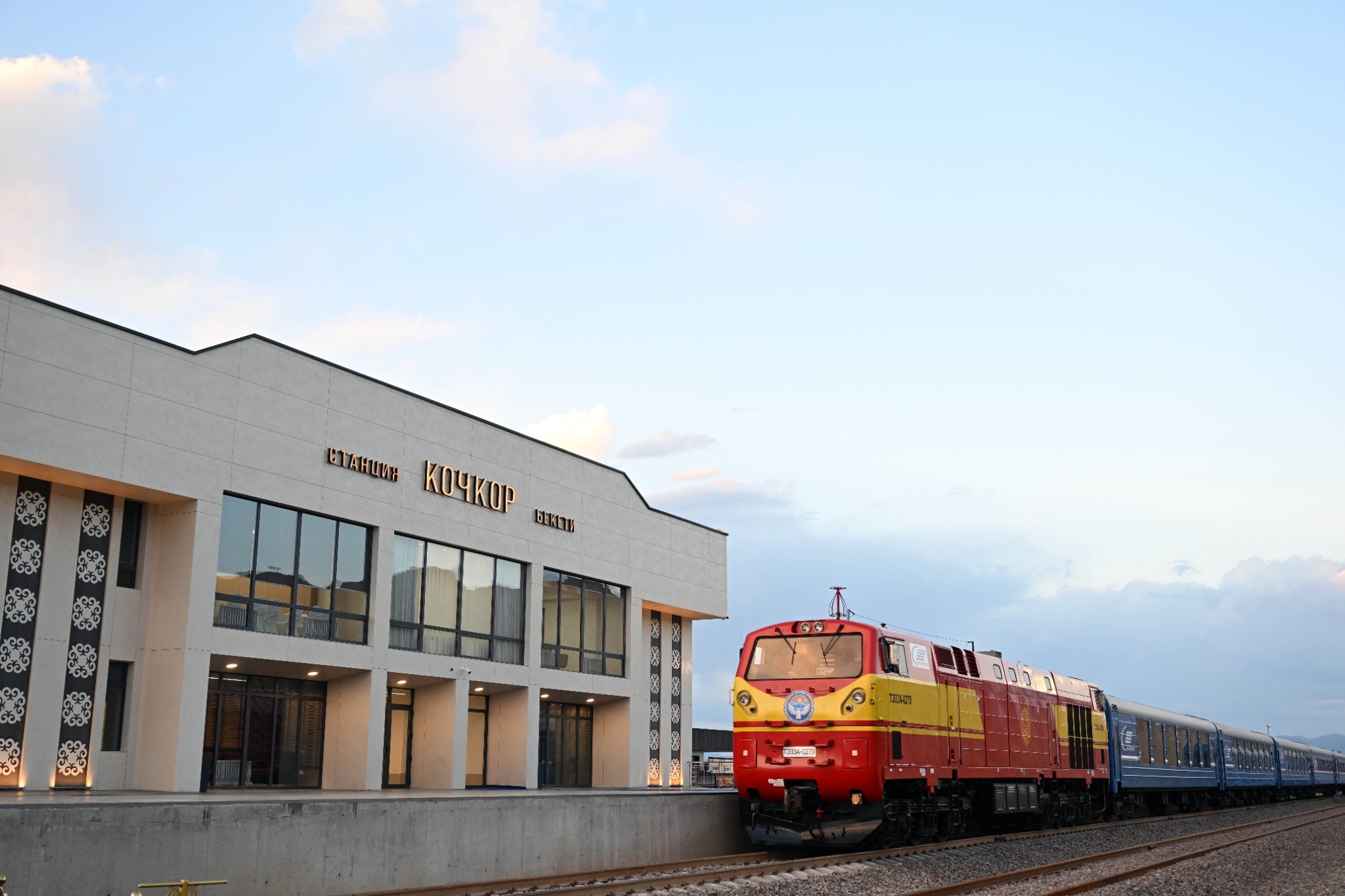
Kyrgyzstan has opened a 63-kilometer railway between Balykchy and Kochkor, completing the first stage of a domestic route intended to reach the Kara-Keche coalfield and eventually connect the country’s divided rail network.
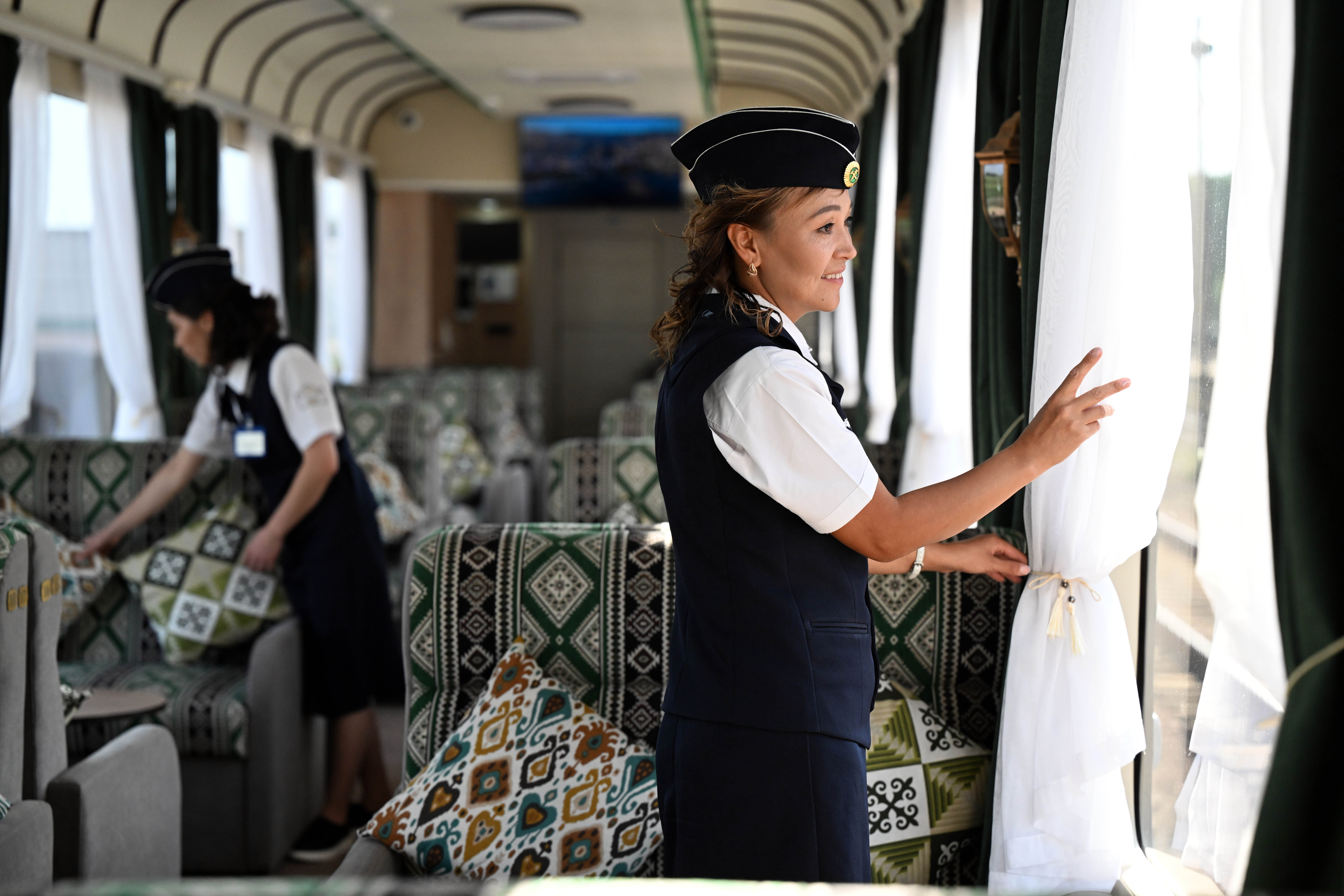
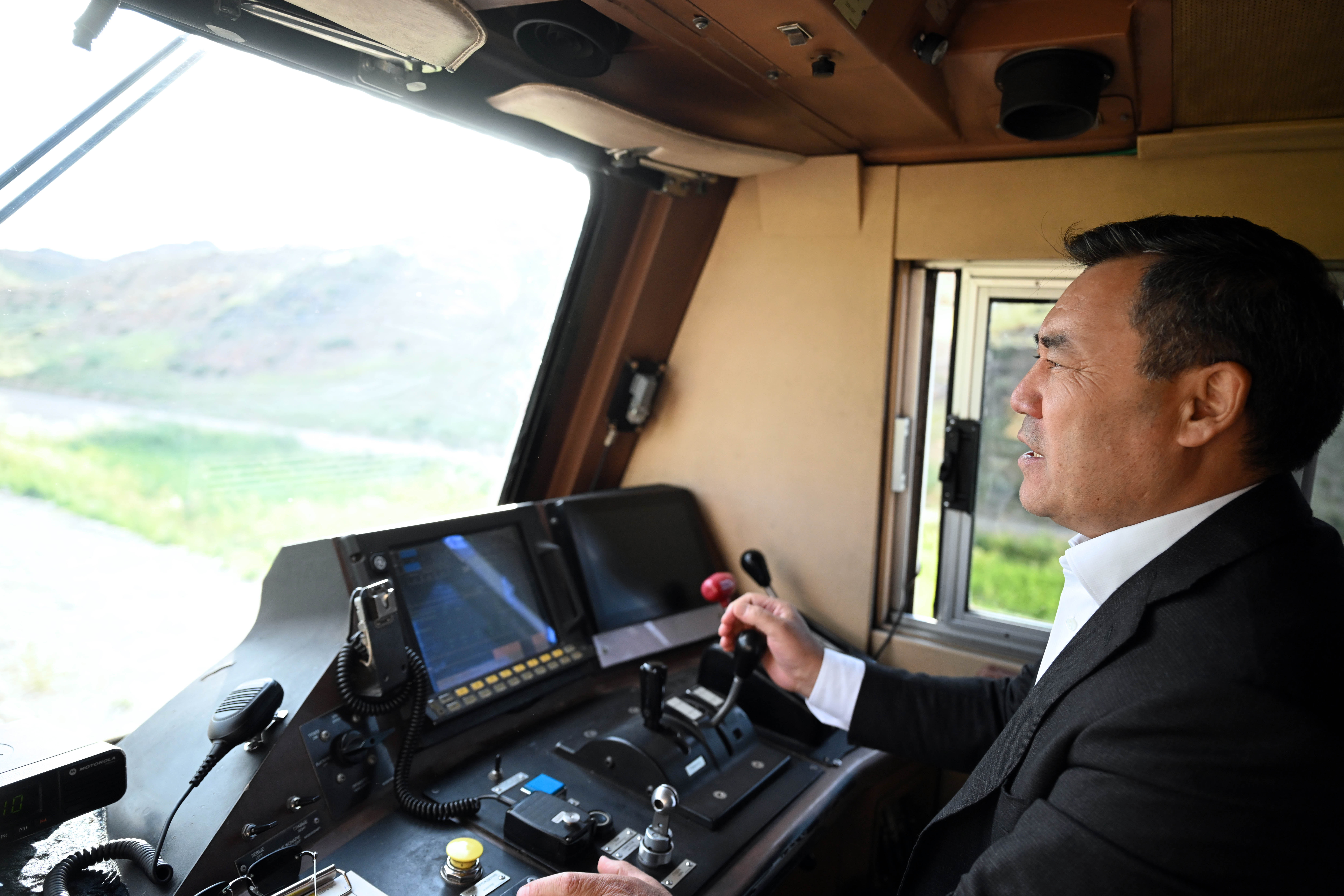
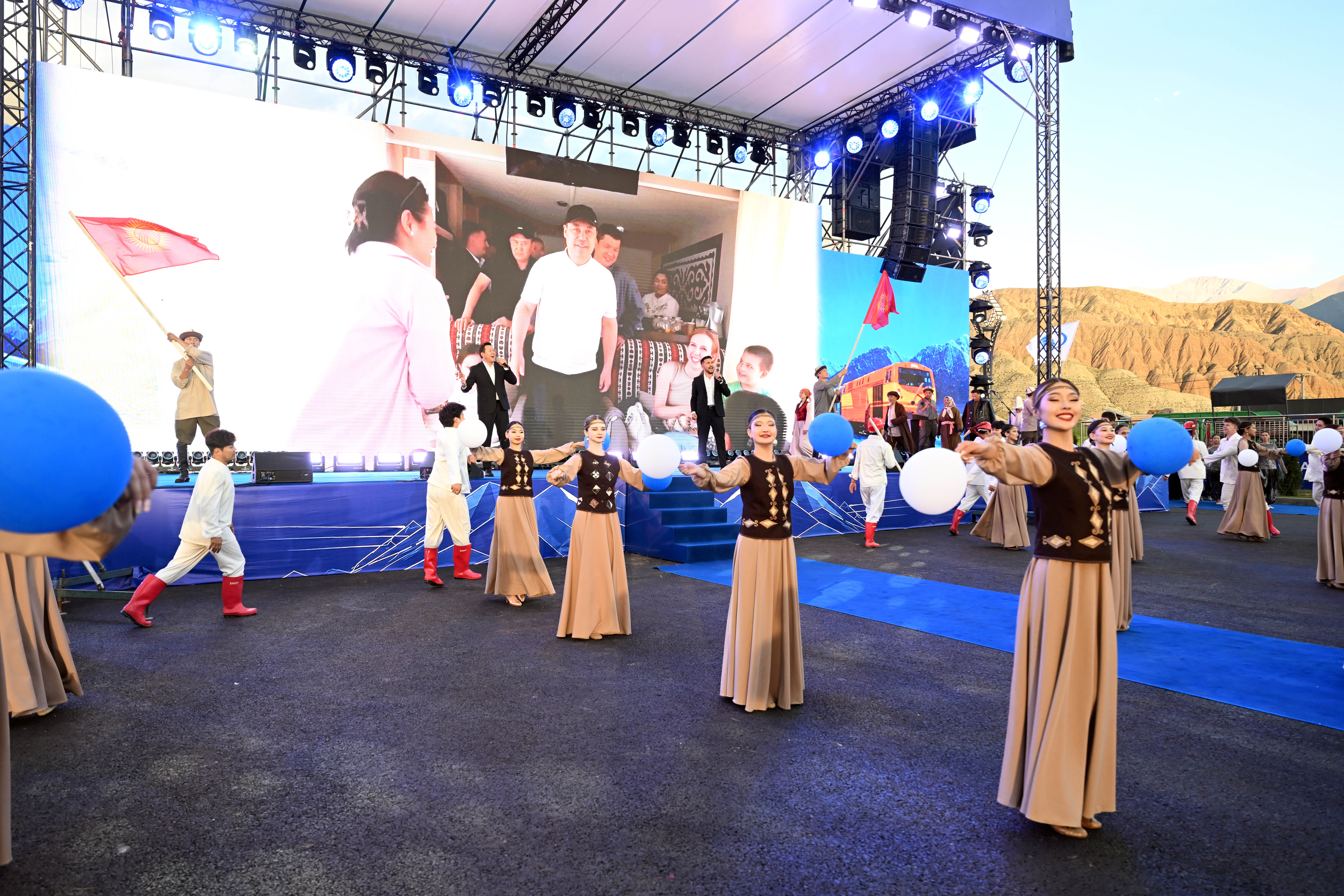
President Sadyr Japarov travelled to the new Kochkor station by train on July 25. The line extends rail service from the western edge of Lake Issyk-Kul into Naryn Region, where difficult mountain terrain has long limited transport links.
“We have revived the culture of railway construction, our engineering potential, and professional experience,” Japarov said. “This historic achievement proves that our country can independently carry out large infrastructure projects.”
For the first three decades after independence, Kyrgyzstan laid no new railway track. Construction of the planned 186-kilometer Balykchy-Kochkor-Kara-Keche line began in March 2022.
Japarov said crews carried out about one million cubic meters of blasting work and cleared eight kilometers through mountainous ground. The route also crosses wetland and rocky areas near the Orto-Tokoy reservoir, existing roads, and utility lines.
According to Japarov, construction of the track cost $955,000 per kilometer, which he compared with offers from foreign companies ranging from $4.8 million to $6.8 million per kilometer.
“We understood that this was too expensive, so we decided to take the risk and do the work ourselves,” he said.
The $955,000 figure appears to cover the track itself rather than the full cost of the line. In June 2025, Kyrgyz Temir Jolu estimated the 63-kilometer project at 9.472 billion som, or about $108 million at the official exchange rate, roughly $1.72 million per kilometer. Japarov’s speech did not set out what work was included in the foreign proposals.
The state railway financed the first stage from its own resources. An October 2025 cabinet decree allows Kyrgyz Temir Jolu to retain half the net profit it would otherwise pay into the state budget from 2026 through 2030, which can be used to fund the route to Makmal and the company’s wider development.
Turning to the alternative North-South highway between Balykchy and Jalal-Abad, Japarov said its projected cost was $2.5 million per kilometer and alleged that “more than half” of this sum had been embezzled. He did not identify any company, official, or investigation supporting the claim.
Questions over the highway’s costs predate Japarov’s accusation. A January 2023 Audit Chamber review found overstated work on the Aral-Kazarman section and said credit savings had been redirected contrary to the loan agreement. Three months later, local outlets cited security-service sources saying the GKNB had opened a case into suspected $123 million price inflation on the same section. No public outcome has been announced.
Construction of the 433-kilometer highway began in 2014 and has suffered repeated delays. The route opened for seasonal traffic from June to November 2026, but the Transport Ministry expects year-round operation only in 2028 after further safety work.
The new railway gives Kochkor a direct connection to Kyrgyzstan’s northern rail system. It does not yet join the country’s northern and southern lines. Before the opening, Kyrgyzstan’s railway network covered 425 kilometers and was divided into two geographically isolated sections linked to Kazakhstan and Uzbekistan. The new route extends the northern section, but leaves that division in place.
The government first presented Balykchy-Kochkor as the opening stage of a north-south railway which would then continue to Kara-Keche. Its immediate economic purpose was to create a cheaper way to carry coal from Kara-Keche to households and the Bishkek thermal power plant during winter. The authorities now plan to continue the tracks through Kara-Keche to Makmal. Japarov gave no budget or timetable for those stages.
Officials want the Makmal extension to meet the China-Kyrgyzstan-Uzbekistan railway under construction in southern Naryn. The $4.7 billion CKU line will run for 304 kilometers through Kyrgyzstan, with about 90% of that section crossing Naryn. Linking the two projects would connect Kyrgyzstan’s northern and southern rail systems and give the domestic route direct access to China and Uzbekistan. Rail freight between China and the two Central Asian countries currently relies on transit through Kazakhstan.
Balykchy is also becoming the center of a broader rail expansion. Work began in June on an 86-kilometer line through Tamchy to Cholpon-Ata on Issyk-Kul’s northern shore. The project would connect the lake’s main resort area and international airport to the national railway.
The Balykchy-Kochkor opening is Kyrgyzstan’s clearest result so far from its renewed railway program. Its immediate effect is local, with wider strategic promises depending on another long stretch of mountain construction. Those stages will determine whether the line becomes a national corridor or remains another branch.