Kazakhstan will host a major investment forum with China in Almaty on September 25, with artificial intelligence expected to feature prominently among potential new agreements. The meeting comes as Astana deepens technology cooperation with Beijing while remaining part of the U.S.-backed Pax Silica initiative.
Tokayev confirmed his participation in the forum in an interview with China’s Xinhua News Agency. “This forum is intended to serve as a platform for launching new concrete economic and investment cooperation projects,” the president said.
In the same interview, Tokayev outlined potential cooperation with China in AI and digital technologies, ranging from industry, mining, and energy to transport, healthcare, satellite technology, and data centers.
Some projects in these areas are already being discussed with Chinese businesses. During Tokayev’s July visit to Shanghai, Kazakhstan and Chinese companies signed more than 70 commercial agreements with a stated value exceeding $15 billion. They included projects involving Huawei, robotics development, AI in the automotive industry, and the Data Center Valley in Ekibastuz, where a complex with capacity of up to 1 GW is planned.
Two International Initiatives in Three Weeks
On June 25, Kazakhstan became the first country in Central Asia to join Pax Silica, a U.S.-backed initiative aimed at developing trusted supply chains for the AI economy. It covers areas including semiconductors, critical minerals, computing infrastructure, energy, and advanced manufacturing. Kazakhstan also signed a joint statement with the United States on an AI Opportunity Partnership.
On July 16, Kazakhstan joined 28 other countries in Shanghai in signing an agreement to establish the World Artificial Intelligence Cooperation Organization (WAICO). The organization, headquartered in Shanghai, says its goals include expanding international cooperation and developing approaches to global AI governance.
Its other founding participants include Brazil, China, Indonesia, Russia, and the four other Central Asian states: Kyrgyzstan, Tajikistan, Turkmenistan, and Uzbekistan.
Beijing is promoting wider access to AI technologies and open models, workforce development, and greater participation by developing countries in setting international rules. China is also seeking to reduce its technology sector’s dependence on U.S. components.
Kazakhstan, meanwhile, has remained part of Pax Silica.
Washington Raises the Question of Choosing Sides
On August 14, Reuters reported that the U.S. State Department had drafted a letter for countries partnering with Washington on AI. Countries participating in both Pax Silica and the China-backed initiative could be asked to choose between the two frameworks.
A U.S. official told Reuters that Washington wanted a clearer separation between the American and Chinese technology ecosystems. The report specifically identified Kazakhstan as a participant in both initiatives and said its dual participation had raised concerns in Washington.
At the time, the document remained a draft. There is no public evidence that Kazakhstan has received such a demand or that Washington has formally required Astana to choose between the two initiatives.
Several weeks later, Tokayev argued in his Xinhua interview against dividing technology along geopolitical lines.
“AI should not become the privilege of a narrow circle of the most technologically advanced states, much less turn into a new instrument of geopolitical confrontation and pressure,” the president said.
He then referred to Kazakhstan’s participation in the creation of WAICO and said Astana’s approach on this issue was aligned with Beijing’s.
There is no established direct connection between Tokayev’s statement and the document reportedly drafted in Washington. Kazakhstan has also made no announcement that it is reconsidering its participation in Pax Silica or the AI Opportunity Partnership.
Different Sources of Technology and Capital
Cooperation with the United States and China gives Kazakhstan access to different sources of technology, investment, and expertise.
Pax Silica brings countries together around supply chains for the AI economy – from critical minerals and semiconductors to computing and energy infrastructure. For Kazakhstan, the raw materials component is particularly significant: the country has substantial critical-mineral potential and is seeking foreign capital and technology to move further into processing and higher-value production.
Cooperation with Chinese companies already extends to telecommunications, data centers, robotics, and industrial digitalization. China also remains one of Kazakhstan’s largest trading and investment partners.
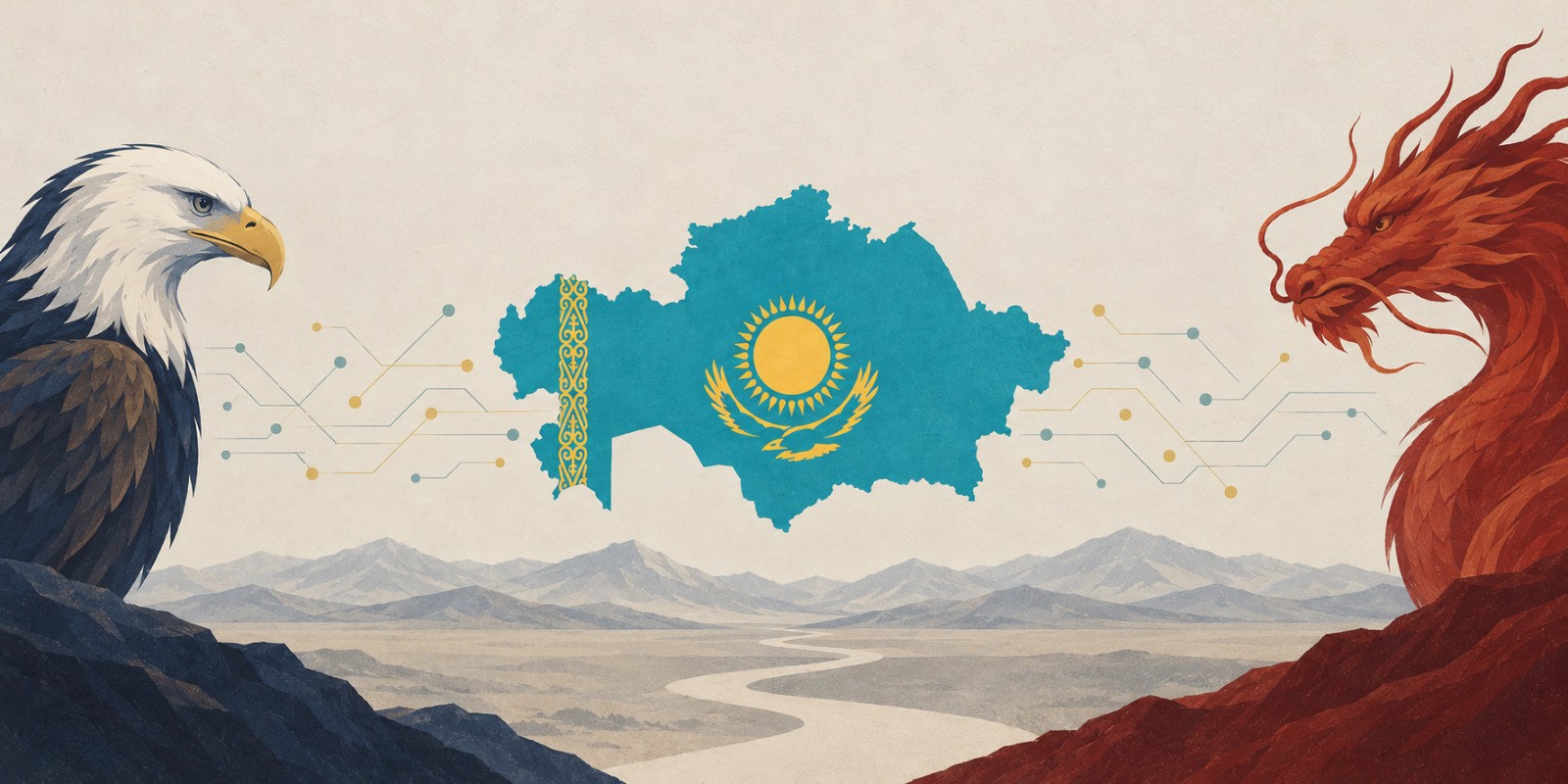
For now, simultaneous participation in Pax Silica and WAICO has not prevented Astana from developing projects with both countries. Whether that model remains sustainable may depend on whether Washington turns its reported demand to choose sides into a condition for future technology cooperation.
The September 25 forum will provide the next indication of how far Kazakhstan intends to deepen its technology relationship with China. After more than $15 billion in commercial agreements were announced in July, any new deals involving AI, data centers, or other digital infrastructure will also test how much room Astana retains to work with both Beijing and Washington.