Kazakhstan’s Shin-Line Group, a food manufacturer best known as Central Asia’s largest ice cream producer, plans to establish a food industry cluster modeled on South Korea’s Foodpolis. Korean specialists will help develop its management model and services for producers seeking to enter overseas markets.
Under the agreement, the Korean side will provide consulting and expert support on the cluster’s management and development strategy. Kazakhstan’s Ministry of Agriculture describes it as the country’s first project of its kind.
Foodpolis operates in the South Korean city of Iksan. The cluster brings food manufacturers and research laboratories together with centers that help businesses develop and test products. The centers also assist with certification and access to overseas buyers. Shin-Line intends to adapt this system to Kazakhstan’s market.
“It is important for us to create not just a standalone site, but an entire ecosystem where producers can access technology and expertise, develop processing, and enter new markets. This is a long-term project, and we are starting by studying and adapting the best Korean experience,” Shin-Line Group President Andrey Shin said in a statement released by Kazakhstan’s Ministry of Agriculture.
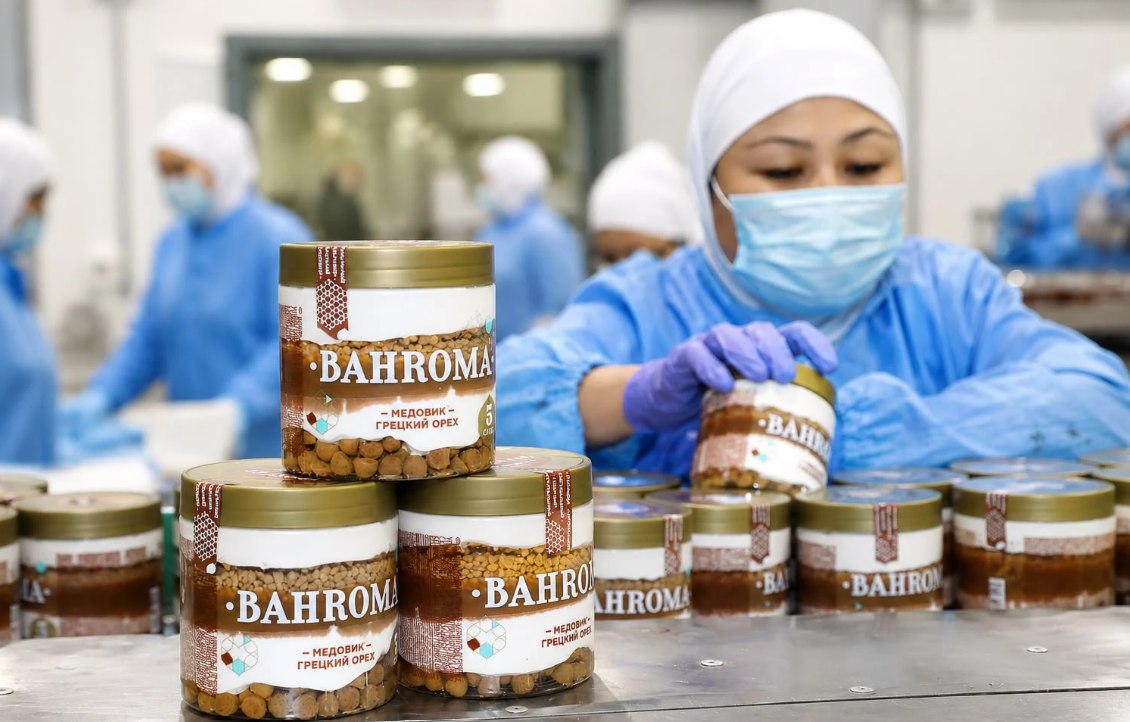
Shin-Line makes instant noodles and frozen prepared foods in addition to ice cream. Its total production reached 37,000 metric tons in 2025, the company reported. Kazakhstan’s Ministry of Agriculture said Shin-Line exported about 14,200 metric tons of ice cream that year, generating more than $49 million in export revenue and accounting for up to 95% of Kazakhstan’s ice cream exports. Its exports reach ten countries, including Central Asian states, China, Mongolia, and markets in the Caucasus.
Korean companies also hope to use Shin-Line’s distribution network to enter Kazakhstan’s market. The two sides discussed placing Foodpolis products in approximately 70 CU convenience stores operating in Kazakhstan. This could give the companies a ready-made route into Kazakhstan’s retail market and, eventually, other Central Asian markets.
The agreement continues a series of Asian partnerships for Shin-Line. In September, the company established a joint venture with Japan’s Shigemitsu Industry to develop the Ajisen Ramen chain. The partners plan to open up to 50 restaurants in Kazakhstan and other Eurasian countries between 2027 and 2031. A central kitchen will be established at Shin-Line’s facility in the Almaty Region to supply the network.
Kazakhstan aims to increase the share of processed goods in its agricultural exports. In 2025, exports from its agricultural and food-processing sector generated $7 billion, up 37% from the previous year. Processed products accounted for about $3.6 billion.
Expanding exports, however, depends on more than production volumes. Businesses also need help developing and certifying products, as well as access to retail networks. Shin-Line wants to bring these functions together in the future cluster.