In the contemporary, largely fragmented world order, the concept of minilateralism has become increasingly relevant. As less powerful, smaller states are struggling with often ineffective multilateral diplomatic frameworks, cooperation on a smaller scale has been gaining momentum in international relations.
Central Asian countries, although with an intrinsic set of strengths and resources, still lack the power to individually address some of their own issues and advocate more proactively for their interests, especially in global forums dominated by major powers and entities.
Geopolitical weaknesses of each Central Asian country lie in insufficiently developed domestic economic and military power to compete with much stronger neighbors such as Russia or China. Furthermore, unfavorable geography, where Central Asia, as a landlocked region, has limited access to global trade chains, also dilutes its geopolitical strength. In addition, the transboundary nature of critical resources, especially concerning water flows and supply, often causes tensions among states of Central Asia.
In such discouraging circumstances, minilateralism promises more realistic solutions that can place Central Asia on a more equal footing with external partners and enable the region to play a more significant role in regional and, to some extent, international politics. That is why the consultative meetings of the five Central Asian countries (C5), now expanded to include Azerbaijan as C6, and C5+1 dialogues with external partners have become important platforms for Central Asia’s diplomatic standing.
Minilateralism and Central Asia
Minilateralism represents an international relations concept that implies cooperation of a smaller group of countries (usually three to nine members) in order to resolve shared problems or pursue mutual objectives.
While bilateralism remains the main form of cooperation in international politics and multilateralism is necessary for tackling global issues, minilateralism has emerged as a more appropriate response for addressing specific regional issues in a more flexible and efficient manner.
One of the main features of minilateralism is prioritizing shared interests over values or ideological principles, which allows collaborating states to focus more on solving issues and avoid being burdened by ideological discrepancies.
Take, for example, the Abraham Accords that managed to gather countries with very different ideological views, especially Israel and the United Arab Emirates, but still produced tangible results of cooperation.
Another advantage of minilateralism is a quicker response to crises, as well as opportunities, with less of the bureaucratic hassle that often follows multilateral diplomacy.
For Central Asia, working together provides a stronger platform for negotiating better outcomes, especially in the economic area.
While the current major geopolitical tensions, such as the Russia-Ukraine conflict and the Iran war, continue to shake the international order, the Central Asian countries have become more aware of their opportunities, especially in terms of transit routes and natural resource demand.
Central Asia has definitely caught the attention of major powers, and its geographical position along alternative transportation routes, as well as its considerable wealth of natural resources, including hydrocarbons and critical materials, opens doors for the region to gain more influence and power.
However, for all of these opportunities to materialize, Central Asian countries need stronger and more formal cooperative frameworks both among themselves and with external partners.
Minilateral Formats
In 2018, the five countries of Central Asia began to organize consultative annual meetings among the heads of state to develop their regional ties and discuss common issues and opportunities regarding trade, water, security, and transit.
As the Trans-Caspian Transport Corridor started gaining more attention and offering numerous opportunities for the mostly politically isolated region of Central Asia, Azerbaijan’s role in the meetings has grown from a guest to a full member of the framework, transforming the platform from C5 to C6 in 2025.
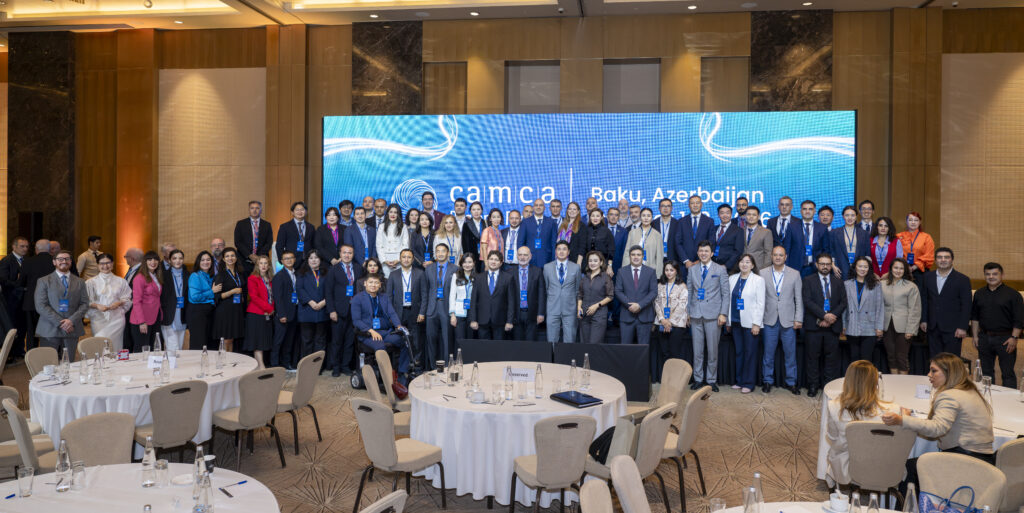
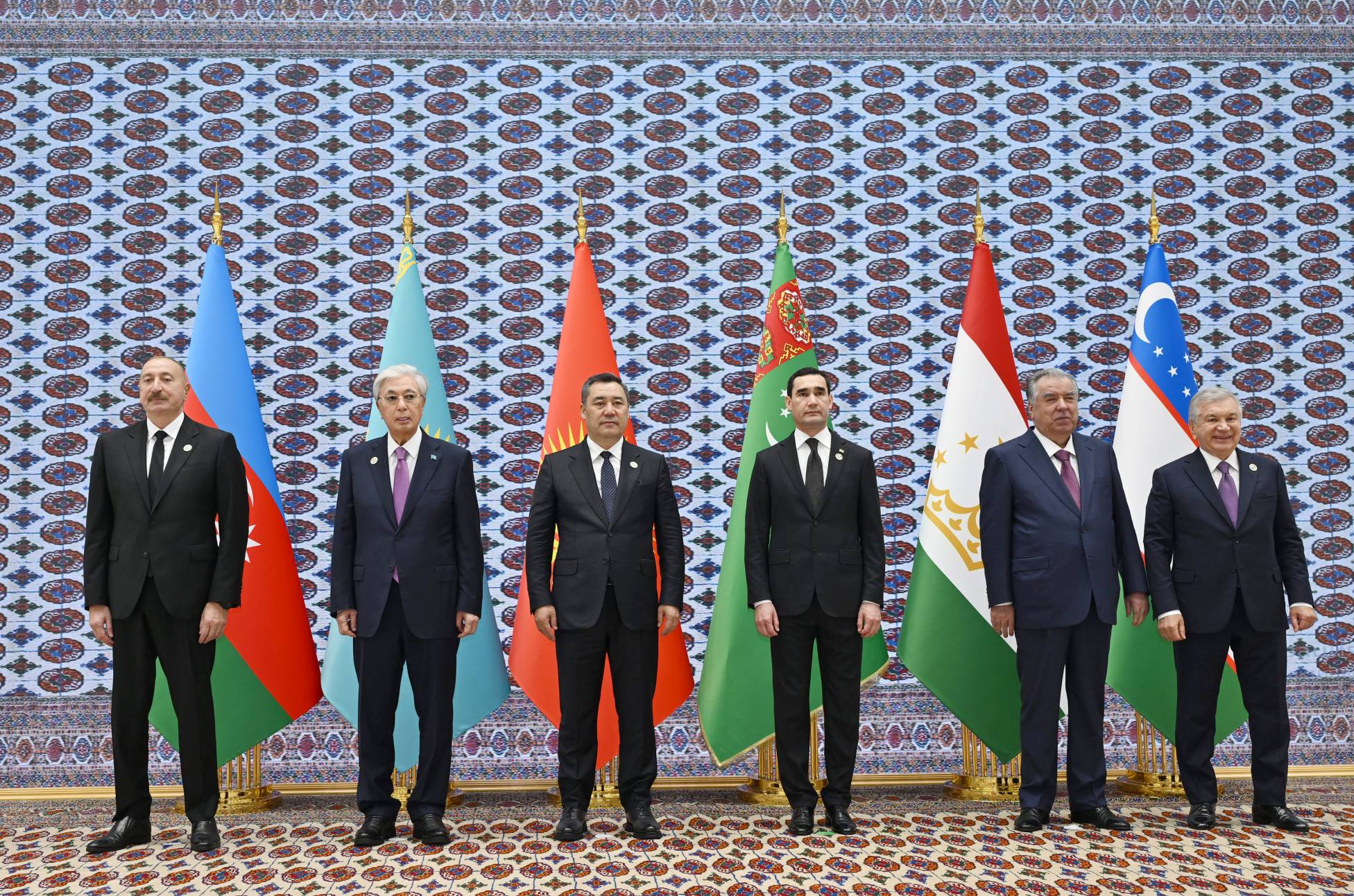
On October 8, leaders of Central Asian countries and Azerbaijan met in Turkmenistan for the 8th Consultative Meeting to deepen cooperation and discuss regional issues and opportunities. The meeting confirmed the extensive format of the platform that recognized Azerbaijan’s full membership and expanded its dialogue across the Caspian Sea.
One of the important outcomes of the meeting was of a regulatory nature. All six countries signed a Joint Statement of the Eighth Consultative Meeting and a Decision on the Regulatory Documents of the Consultative Meeting, which represents a further step toward developing the institutional side of the C6 format.
This meeting carries an important message: stronger collaboration between Central Asia and the South Caucasus is possible and even inevitable, considering the current geopolitical landscape that encourages creating new, alternative trade routes and boosting regional energy cooperation. Advancing logistics chains can also lead toward better connectivity between East and West.
The transformation from C5 to C6 only confirms how minilateralism allows greater flexibility, especially if the change promises greater benefits for participating states. A minilateral approach that implies stronger collaboration with more frequent diplomatic consultations enables member countries to utilize promising projects, like the Trans-Caspian Transport Corridor, to gain more economic and political leverage.
Central Asian countries also look beyond their immediate neighborhood. The C5+1 format is perceived as an opportunity to include global and regional powers in the region’s development strategy while expanding its diplomatic outreach. So far, Central Asia has included the United States, China, Japan, South Korea, and the European Union in its minilateral foreign policy pursuit.
Through the C5+1 platform, Central Asia and the U.S. are actively sustaining dialogue on critical minerals business, which has brought some targeted, billion-dollar investment commitments involving private capital to the region.
The minilateral format of C5+1 enables Central Asia to form collaborative relations with external partners and preserve its strategic autonomy and geopolitical stability, which further reinforces the region’s multi-vector balancing between competing powers.
Minilateralism as a Desirable Course of Action Despite Its Shortcomings
Minilateralism, like any other lateralism, is not without setbacks. Its exclusivity and prioritization of interests over values might lead to more fragmentation and interest-based politics, where it becomes extremely difficult to advocate for the resolution of global problems and long-term solutions.
In the case of Central Asia and Azerbaijan, minilateral frameworks can be beneficial for better organization of economic and energy-related activities. However, from a political and security point of view, the C6 format doesn’t go beyond words of mutual support and friendship.
In times of crisis and security threats, countries are still hesitant to provide meaningful support to each other. And the discussions in the meetings are more focused on areas that guarantee greater economic benefits, such as trade and transportation connectivity.
With C5+1 formats, Central Asia may be pressured to prioritize the interests of a more powerful partner. Even though the C5+1, in general, allows for greater balancing, the countries of Central Asia are still influenced by geopolitical realities where powerful states often have the upper hand in diplomatic negotiations and setting the terms of agreements.
However, countries rarely limit themselves to one type of lateralism but pursue a combined approach where collaborating with others on a bilateral and multilateral basis, alongside minilateral cooperation, gives more balanced and beneficial diplomatic engagement.
For Central Asian countries, minilateralism presents a fairly new concept that has become a promising format for their foreign policy endeavors. The newly developed geopolitical conditions with global and regional consequences, such as the emergence of multipolarity, made minilateral diplomacy across Central Asia a powerful diplomatic instrument for regional integration.
With every new meeting, the C6 format has been gaining more structural and institutional outlines, which opens an avenue for turning this diplomatic platform into a mechanism for achieving more concrete outcomes.
However, as geopolitical circumstances are often unpredictable, the evolution of the minilateral formats is difficult to anticipate. At the current pace and if the geopolitical landscape remains largely unchanged, Central Asian minilateral frameworks might achieve the status of effective mechanisms that produce practical results in the foreseeable future.
The views expressed in this article are those of the author and do not necessarily reflect the official policy or position of the publication, its affiliates, or any other organizations mentioned.