Tajikistan is exploring the possibility of building small nuclear power plants as the country struggles with recurring winter electricity shortages. On November 26, Energy and Water Resources Minister Daler Juma discussed potential projects with Dmitry Konstantinov, deputy director general of Russian state-owned nuclear company Rosatom’s Central Asian office.
The talks in Dushanbe covered technical and economic feasibility, environmental impacts, nuclear safety, and workforce training. Discussions remain at a preliminary stage, and the ministry announced no commitment to build a plant.
Rosatom is already pursuing nuclear energy projects across Central Asia. In June, construction began on the first reactor at Uzbekistan’s first nuclear power plant in the Jizzakh region.
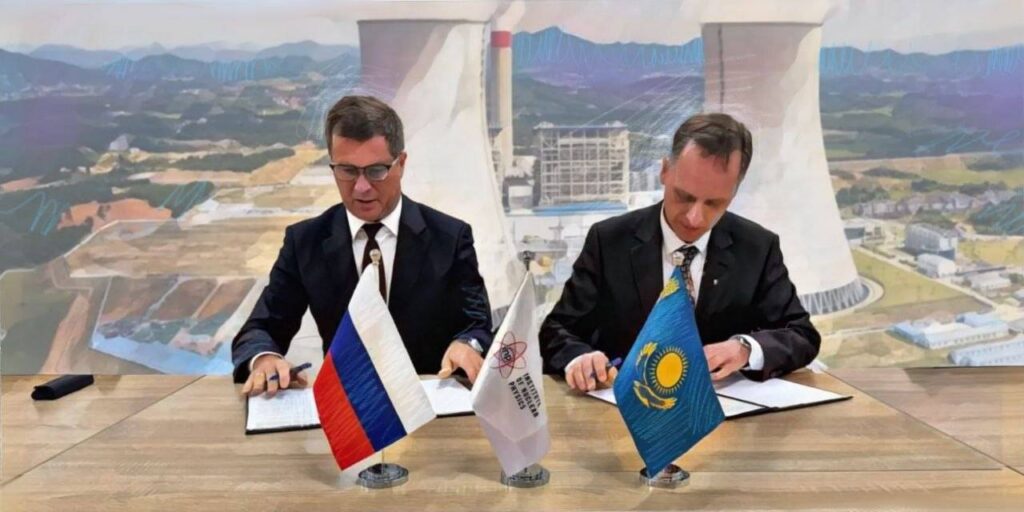
In September, Rosatom subsidiary Atomstroyexport signed a contract to design and build Kazakhstan’s first large-capacity nuclear power plant, named Balkhash, which will have two reactors and a combined capacity of 2,400 megawatts. Construction could begin in 2027, subject to regulatory approval.
Rosatom is also discussing the construction of a small nuclear power plant in Kyrgyzstan. However, in October, Kyrgyz Energy Minister Altynbek Rysbekov said the project would proceed only with public consent.
For Tajikistan, nuclear power could offer a source of electricity independent of seasonal fluctuations in river flows. Hydropower accounts for more than 90% of the country’s electricity generation. Tajikistan exports surplus electricity during the warmer months but faces shortages in winter, when river flows decline and demand for heating rises.
The country’s main effort to increase electricity production remains the construction of the Rogun Hydropower Plant on the Vakhsh River. The World Bank expects approximately half of the plant’s future output to meet domestic demand and help reduce winter shortages, with the remainder intended for export to Kazakhstan and Uzbekistan. In June 2026, the bank approved an additional $300 million grant for Rogun, bringing its total financing for the project to $650 million.
Until additional generating capacity becomes available, Tajikistan relies in part on seasonal electricity exchanges with neighboring Uzbekistan. Imports totaled 306 million kilowatt-hours during the winter of 2025–2026, compared with 350 million the previous winter. Under the arrangement, Tajikistan must return an equivalent amount in summer.