A Kazakhstani delegation led by Deputy Prime Minister and Minister of National Economy Serik Zhumangarin visited Kabul on June 19-21, combining humanitarian aid, medical cooperation, education and trade talks with Afghanistan’s Taliban-led authorities.
Kazakhstan has long treated Afghanistan as a central regional issue, arguing that stability and economic integration there are in the interests of Central Asia as a whole. Kazakh officials have framed engagement with Kabul as part of a broader effort to support Afghanistan’s reconstruction while keeping the country linked to regional trade, transport and humanitarian initiatives.
Kazakhstan has also taken steps to formalize working contacts with Kabul. It removed the Taliban from its list of banned organizations in 2023, has kept its embassy in Kabul open, and has allowed Afghanistan’s diplomatic mission in Astana and consulate in Almaty to continue operating. Kazakhstan has not, however, formally recognized the Taliban government.
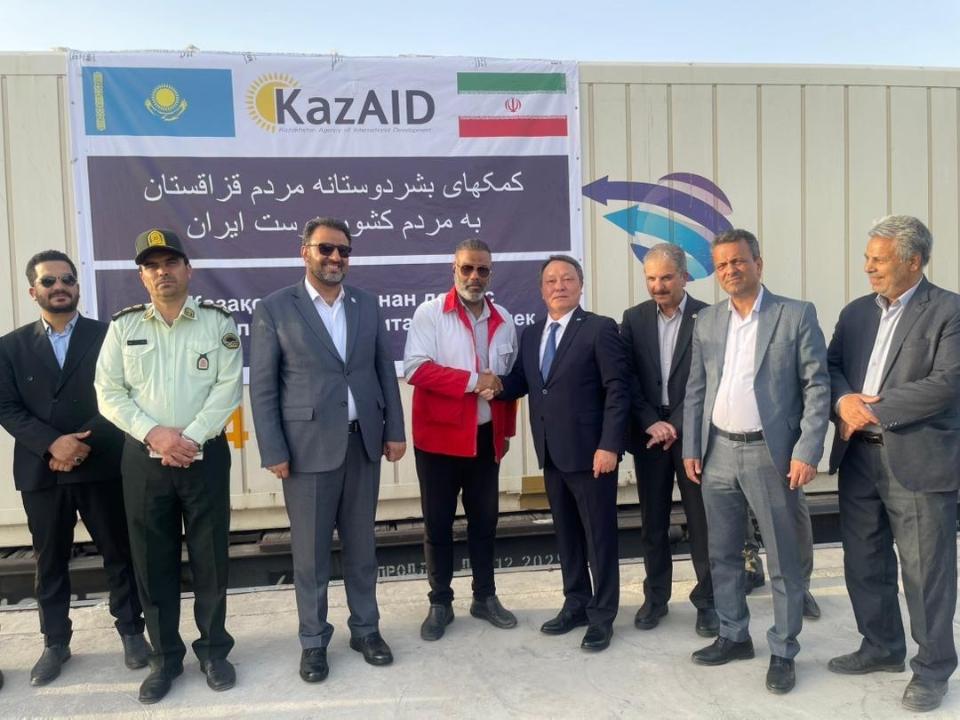
One of the central elements of the visit was the delivery of another shipment of humanitarian aid. The decision followed a request from Afghanistan’s National Disaster Management Agency after torrential rains affected 31 of the country’s 34 provinces in March, bringing with them floods and landslides.
UN figures from early April said the floods affected more than 73,000 people across 31 provinces, killing 93 people, injuring 181, destroying 7,672 homes and damaging farmland and roads.
In June 2026, Kazakhstan delivered humanitarian aid that included food and medical supplies. This assistance came as part of Kazakhstan’s broader policy of sustained humanitarian support for Afghanistan.
According to the UN, about 21.9 million people, roughly 45% of Afghanistan’s population, are expected to need humanitarian assistance in 2026. The mass return of Afghan citizens from Pakistan and Iran has created additional pressure. In 2025 alone, according to available estimates, about 2.5 million people returned to Afghanistan. Against this backdrop, any practical assistance is particularly important.
Healthcare was another focus of the visit. Kazakhstan already has a record of work in Afghanistan in this area. In 2025, a medical mission involving 13 Kazakhstani doctors was organized in Kabul. The doctors performed emergency surgeries, provided consultations, and held training courses for local medical personnel.
This year’s delegation included nine specialists from Kazakhstan’s leading medical institutions. As part of the Days of Kazakh Medicine in Afghanistan, they are expected to spend a week providing consultations, practical assistance and training for Afghan healthcare workers.
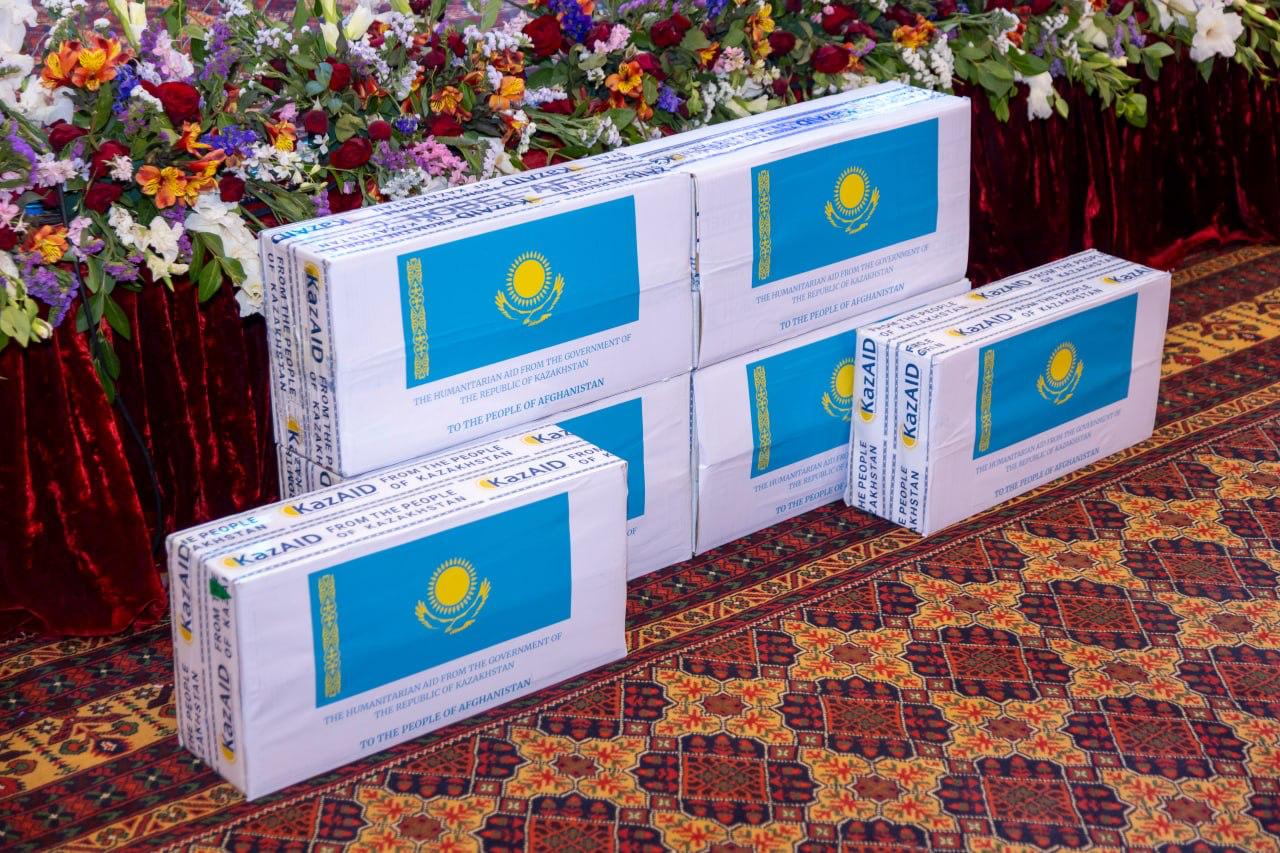
Image: Aidar Borangaziyev
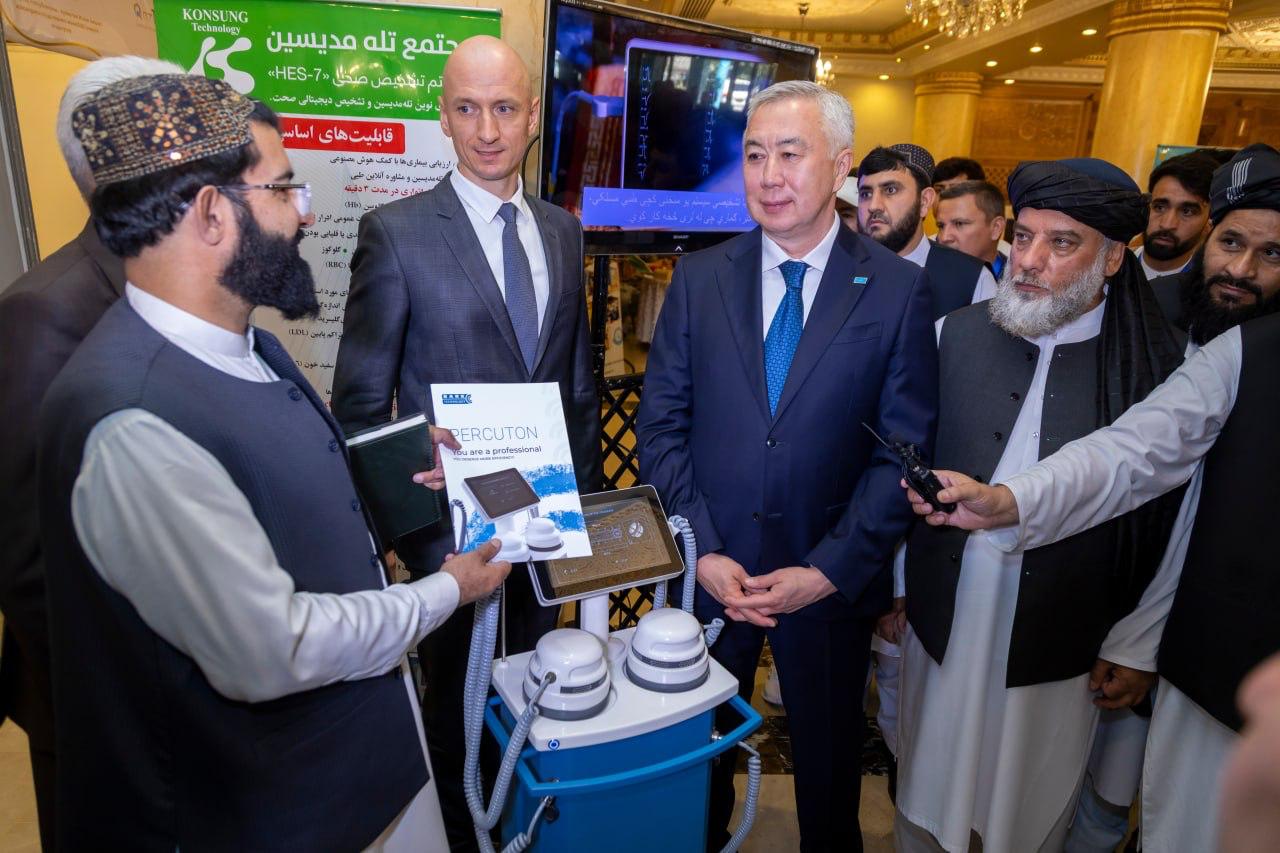
Kazakhstan also used the visit to promote medical technology exports. At the business forum, the Kazakh side presented the HES-7 system, a mobile diagnostic platform that uses artificial intelligence for ECG and functional diagnostics, rapid laboratory tests and screening for several diseases. Kazakh officials said the sides were expected to sign an agreement for the delivery of 4,500 units of the equipment to Afghanistan, worth $45 million.
Kazakhstan also handed over a VibroLUNG medical system to the Afghan side. The Kazakhstani device is designed to help restore respiratory function, improve bronchial drainage, expand lung capacity, prevent respiratory complications, and accelerate patient rehabilitation.
The medical equipment points to a wider Kazakh aim: to expand exports to Afghanistan beyond grain, flour, food products and humanitarian supplies. That shift remains at an early stage, but the Kabul visit showed that Astana wants medical devices, digital systems and education included in the bilateral agenda.
The visit also produced a letter of intent between Kabul University, the Kazakh National University of Water Management and Irrigation, and the Kazakh National Agrarian Research University. The parties intend to develop academic and scientific cooperation with a view to establishing a joint educational, research, and innovation center on water resources, irrigation, and sustainable agriculture.
For Afghanistan, the proposed center would focus on practical problems in irrigation, water use, climate adaptation and agriculture. For Kazakhstan, it offers another channel for engagement in a country whose water, food and transport challenges increasingly overlap with Central Asia’s wider regional agenda.
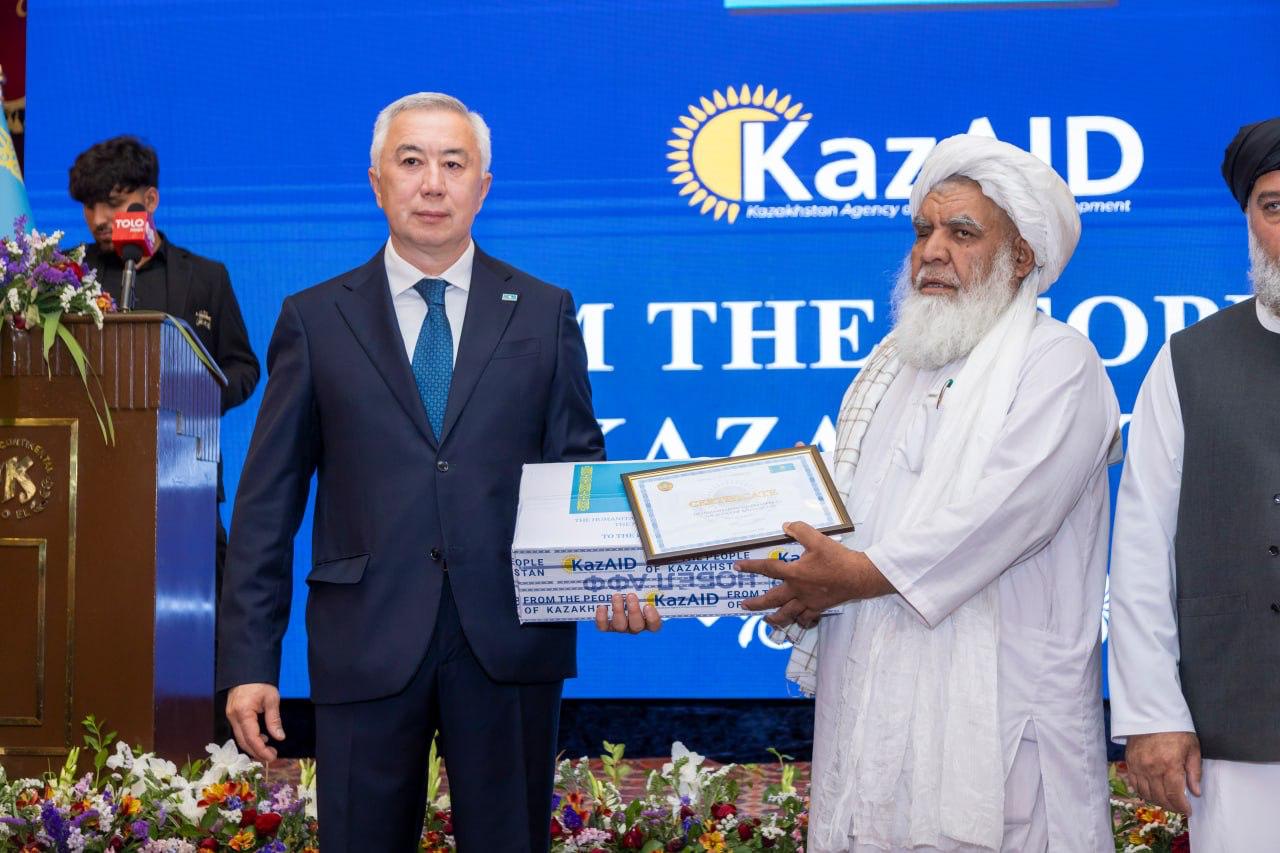
Photo courtesy of Aidar Borangaziyev
The economic component of the visit was marked by the opening of the Kazakhstan-Afghanistan Business Forum at the Kabul Intercontinental Hotel. The forum was opened by Nooruddin Azizi, Afghanistan’s acting minister of industry and trade, and Zhumangarin.
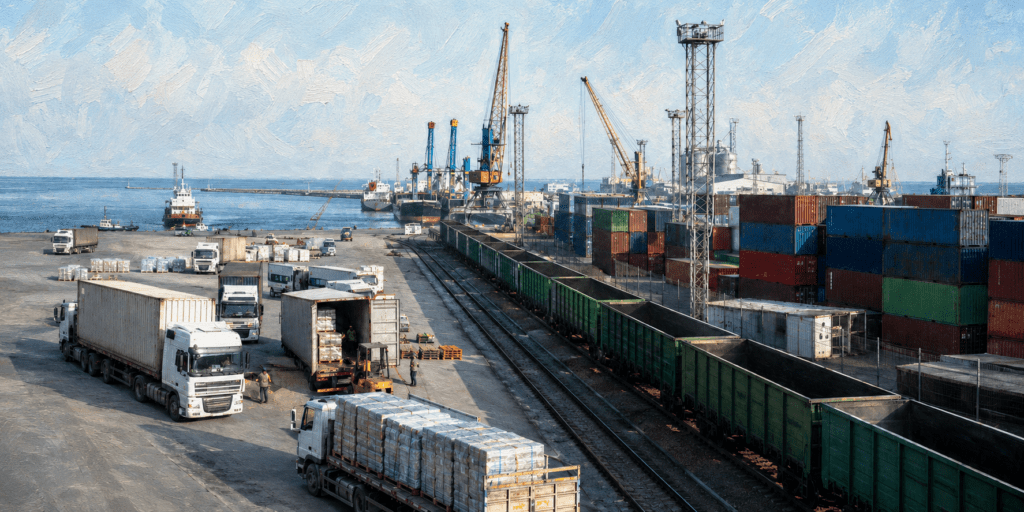
Kazakhstan reaffirmed its interest in expanding bilateral trade and increasing trade turnover to $3 billion. This goal was set out in a roadmap signed in 2024.
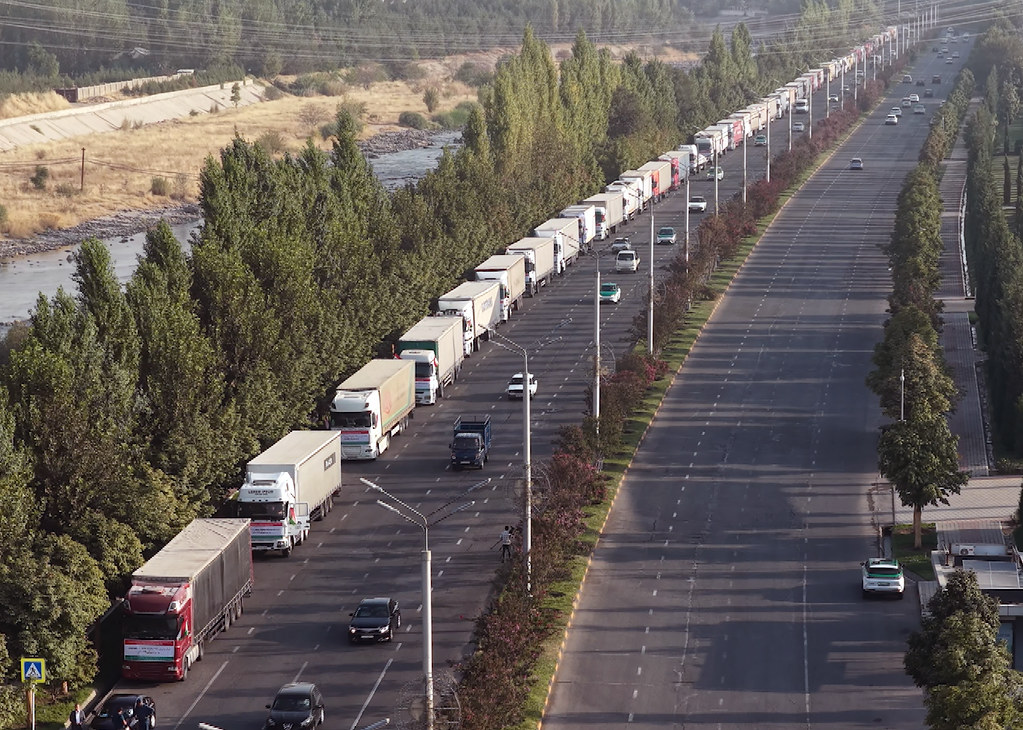
According to Kazakhstani data, trade turnover between Kazakhstan and Afghanistan in 2025 amounted to $541.8 million, of which Kazakhstan’s exports accounted for $519 million and imports from Afghanistan for $22.8 million. In January-March 2026, bilateral trade already totaled $242.6 million. Kazakhstan’s exports reached $240.1 million, while imports amounted to $2.5 million.
The figures show both the importance and the imbalance of the relationship. Afghanistan remains a significant market for Kazakh grain, flour, oil and other goods, while Afghan exports to Kazakhstan are still small by comparison. Kazakh officials have said they want to expand imports of Afghan fruit, vegetables, nuts and other agricultural products.
Another important part of the visit was the Kazakhstani trade fair. Since 2023, exhibitions of domestic goods have been held regularly in both Kazakhstan and Afghanistan, including in Astana, Almaty, and Kabul.
During the visit, meetings were held with Afghanistan’s acting Prime Minister Mohammad Hassan Akhund, acting Deputy Prime Minister Abdul Ghani Baradar, and acting Minister of Interior Sirajuddin Haqqani.
The agenda demonstrates that the Kazakh-Afghan dialogue is not limited to trade. Political trust, security guarantees, administrative support, and an understanding of the parties’ long-term interests are also essential for the development of economic cooperation.
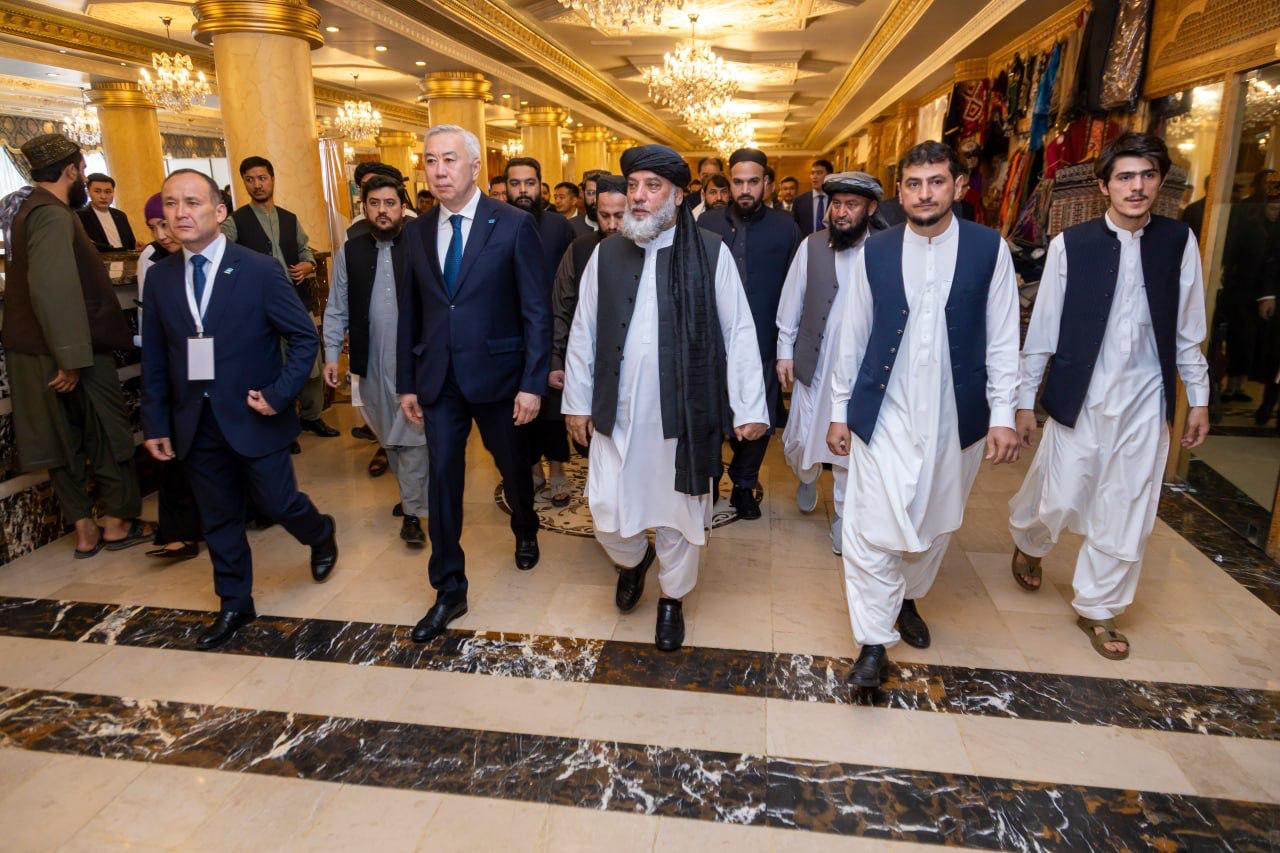
Photo courtesy of Aidar Borangaziyev