• KGS/USD = 0.01144 0%
  • KZT/USD = 0.00196 -0%
  • TJS/USD = 0.10899 -0%
  • UZS/USD = 0.00008 -0%
  • TMT/USD = 0.28490 0%
  • KGS/USD = 0.01144 0%
  • KZT/USD = 0.00196 -0%
  • TJS/USD = 0.10899 -0%
  • UZS/USD = 0.00008 -0%
  • TMT/USD = 0.28490 0%
  • KGS/USD = 0.01144 0%
  • KZT/USD = 0.00196 -0%
  • TJS/USD = 0.10899 -0%
  • UZS/USD = 0.00008 -0%
  • TMT/USD = 0.28490 0%
  • KGS/USD = 0.01144 0%
  • KZT/USD = 0.00196 -0%
  • TJS/USD = 0.10899 -0%
  • UZS/USD = 0.00008 -0%
  • TMT/USD = 0.28490 0%
  • KGS/USD = 0.01144 0%
  • KZT/USD = 0.00196 -0%
  • TJS/USD = 0.10899 -0%
  • UZS/USD = 0.00008 -0%
  • TMT/USD = 0.28490 0%
  • KGS/USD = 0.01144 0%
  • KZT/USD = 0.00196 -0%
  • TJS/USD = 0.10899 -0%
  • UZS/USD = 0.00008 -0%
  • TMT/USD = 0.28490 0%
  • KGS/USD = 0.01144 0%
  • KZT/USD = 0.00196 -0%
  • TJS/USD = 0.10899 -0%
  • UZS/USD = 0.00008 -0%
  • TMT/USD = 0.28490 0%
  • KGS/USD = 0.01144 0%
  • KZT/USD = 0.00196 -0%
  • TJS/USD = 0.10899 -0%
  • UZS/USD = 0.00008 -0%
  • TMT/USD = 0.28490 0%
08 December 2025

Kazakhstan and Germany Launch Mining and Metallurgy Consortium

The second Kazakh-German Week, Science and Education: Partnership between Kazakhstan and Germany, opened on September 23 at Serikbayev East Kazakhstan Technical University in Oskemen (Ust-Kamenogorsk), the industrial heart of East Kazakhstan region and a key hub for the country’s mining and metallurgical sector.

A major outcome of the opening ceremony was the establishment of the Consortium for the Development of the Kazakh-German Institute of Science and Technology. The institute, launched in 2024 at East Kazakhstan Technical University, focuses on specialized training for professionals in mining and metallurgy.

The new Consortium brings together leading academic institutions from both countries, including Serikbayev East Kazakhstan Technical University, Kazakh-German University, Technische Universität Bergakademie Freiberg (Freiberg University of Mining and Technology), Ruhr University Bochum, Clausthal University of Technology, Technical University of Dortmund, and the University of Duisburg-Essen.

Its mission is to promote joint research, academic exchange, technology transfer, and applied projects across critical industrial domains such as mining, geology, rare earth metals, energy, and environmental engineering.

Key industrial players in East Kazakhstan, including Kazzinc, the Ust-Kamenogorsk Titanium and Magnesium Plant, and the Ulba Metallurgical Plant, are actively supporting the initiative through applied science and innovation partnerships.

In a video address, Minister of Science and Higher Education Sayasat Nurbek emphasized that German universities remain strategic partners for Kazakhstan in developing a future-ready workforce.

Officials noted that the consortium’s launch holds particular significance for East Kazakhstan, where mining and metallurgy form a cornerstone of the national industrial economy. Long-term sustainability in the sector, they said, will depend on the integration of science, innovation, and high-level technical education.

Kazakhstan Enforces Fuel Export Ban

Kazakhstan’s Ministry of Energy has confirmed that the country’s six-month ban on fuel exports remains in full effect, with no gasoline shipments currently sent to Uzbekistan or other neighboring countries.

Officials acknowledged a single exception earlier this year, when surplus volumes of AI-92 gasoline were exported to Uzbekistan in the spring. The ministry characterized the shipment as a routine measure aligned with international practice, designed to optimize domestic storage and increase tax revenues.

Since June, all fuel exports have been suspended to build strategic reserves ahead of scheduled maintenance at Kazakhstan’s oil refineries. The ban, introduced on May 19, covers gasoline, diesel, and other petroleum products.

Reports of Fuel Shortages and Smuggling

Speculation over renewed fuel shortages in Kazakhstan surfaced in local media on September 22, with reports citing illegal cross-border smuggling as a contributing factor. Some sources also claimed that Uzbekistan had increased purchases of Kazakh gasoline amid a decline in fuel imports from Russia.

In response, the Ministry of Energy reiterated that no current fuel exports are taking place and emphasized that the export moratorium is being strictly enforced.

Uzbekistan’s Fuel Market in Transition

Uzbekistan’s state energy company Uzbekneftegaz recently announced plans to phase out production of AI-80 gasoline starting in September. Beginning in 2026, the country intends to supply only higher-octane grades, including AI-92 and AI-95, to align with international fuel standards.

The regional fuel market has already undergone significant restructuring. In April 2024, the Telegram channel Oil & Gas of Kazakhstan reported that Uzbekistan was scaling back crude oil imports from Kazakhstan in favor of cheaper Russian supplies.

During the first quarter of 2024, Uzbek companies imported 15,200 tons of crude oil from Kazakhstan by rail, down from 25,600 tons during the same period in 2023. Most of this volume was refined at the Ferghana plant.

Meanwhile, Russia’s Gazprom Neft significantly expanded deliveries to Uzbekistan. In the first quarter of 2024, the company shipped 75,000 tons of crude via pipelines through Kazakhstan, nearly seven times more than the 10,700 tons delivered a year earlier.

From Reform to Deals: Central Asia Steps Onto the Global Stage at UNGA-80

Ecology, global instability, and the need for UN reform dominated the speeches of all five Central Asian presidents at the 80th session of the UN General Assembly. Presenting a united front while emphasizing national priorities, the leaders made clear that Central Asia intends to play a pivotal role in shaping the global future.

UN Reform

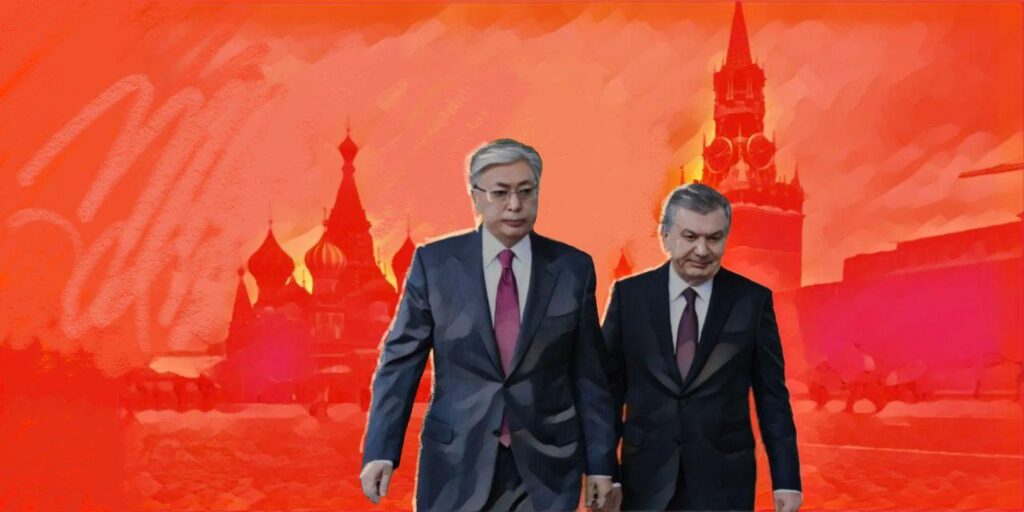
Kazakh President Kassym-Jomart Tokayev was the first among the CIS leaders to address the assembly, speaking of a growing crisis of trust in multilateral institutions and calling for sweeping reforms. Tokayev emphasized the need to expand the UN Security Council, arguing that major powers from Asia, Africa, and Latin America must receive rotational representation, and that the influence of middle powers should be strengthened.

“We need to create a new group of like-minded states that will professionally and decisively advance concrete proposals for reforming the UN so that it better responds to today’s challenges and tomorrow’s tasks,” he said, proposing Kazakhstan as a platform for these discussions.

Uzbek President Shavkat Mirziyoyev echoed these concerns, highlighting the weakening of international institutions and the proliferation of global conflicts. He endorsed UN Secretary-General António Guterres’ UN-80 initiative and voiced support for the Pact for the Future, which sets out commitments to strengthen multilateral cooperation and address global challenges through 2045, the UN’s centenary. Mirziyoyev also advocated for an expanded Security Council to better represent developing countries.

In his address, Kyrgyz President Sadyr Japarov called for a more just and representative Security Council, underscoring Africa’s right to greater participation. He also announced Kyrgyzstan’s candidacy for a non-permanent seat on the Security Council for 2027-2028, noting that his country has never before held such a position.

Tajik President Emomali Rahmon warned of growing instability, uncertainty, and complexity in world affairs. Rahmon stressed the UN’s role as a platform for dialogue and cooperation and called for equal partnerships between large and small states to restore adherence to international law.

Turkmen President Serdar Berdimuhamedov argued that the current global situation requires a “decisive shift toward coordinated interaction among states and international organizations to maintain peace and security.” He proposed declaring 2028 the Year of International Law to strengthen the legal foundations of global cooperation.

Ecology and Finance

On environmental issues, the Central Asian leaders focused on national and regional concerns. Tokayev addressed the ongoing shallowing of the Caspian Sea, while both he and Mirziyoyev raised the issue of the Aral Sea crisis, often described as “one of the world’s worst environmental disasters.” Rahmon highlighted the rapid disappearance of glaciers, a point supported by Japarov, given the critical dependence of Kyrgyzstan and Tajikistan on mountain water resources. Berdimuhamedov, meanwhile, proposed establishing a regional center for combating desertification in Central Asia. Other initiatives included the proposed Caspian Environmental Forum in 2026 and continued advancement of the Caspian Environmental Initiative, originally introduced by Ashgabat.

Financial concerns were also prominent. Rahmon called for reforms to international financial mechanisms, citing the continued suffering of vulnerable developing countries from the impacts of economic crises, poverty, disease, natural disasters, and food insecurity.

Japarov criticized the impact of unilateral sanctions on Kyrgyzstan’s financial system and accused Western nations of hypocrisy. “You demand that we stop cooperating with Russia, while you yourselves are actively developing trade and economic ties with it,” he said.

Japarov also demanded the return of Afghanistan’s frozen assets, arguing that withholding financial aid is unacceptable. More than $9 billion is held by Western nations, he claimed, and should be released to support Afghanistan’s reconstruction, banking sector, and agricultural development. “You use these funds and profit from them,” Japarov said, highlighting that over 15 million Afghans face hunger, while 24 million require humanitarian aid.

Major Deals

Uzbek President Shavkat Mirziyoyev and Kazakh President Kassym-Jomart Tokayev also drew the attention of U.S. President Donald Trump. During a meeting with Mirziyoyev, Trump praised a reported $105 billion deal for the purchase of American goods, including 22 Boeing aircraft. “They have a lot of money. A lot of oil and a lot of money,” Trump remarked.

Trump had earlier spoken by phone with Tokayev in a call facilitated by U.S. Commerce Secretary Howard Latnik. “I just concluded a wonderful call with the Highly Respected President of Kazakhstan, Kassym-Jomart Kemeluly Tokayev. They have signed the largest Railroad Equipment Purchase in History, $4 Billion Dollars’ Worth of United States Locomotives and Rail Equipment,” Trump wrote on Truth Social.

Currently struggling to meet global demand, Boeing has yet to deliver Kazakhstan’s long-awaited Dreamliner aircraft.

According to a statement issued by the Kazakh president’s press service, the $4.2 billion agreement with U.S. company Wabtec involves the production of 300 freight locomotives with upgraded specifications, along with long-term servicing within Kazakhstan.

“Wabtec, a recognized global leader in transport technologies, is one of the key partners in modernizing Kazakhstan’s railway industry. Since 2009, the Wabtec Kazakhstan locomotive assembly plant has been operating successfully in Astana. During this period, the company has invested over $230 million. The plant has produced more than 600 locomotives for Kazakhstan Temir Zholy and for export, achieving a localization level of 45%. In July 2024, Wabtec opened a Technology and Engineering Center in Kazakhstan, serving as a platform for innovation and workforce training,” the Akorda press release stated.

The locomotive deal underscores Kazakhstan’s growing role as a hub for localized U.S. technology and transport innovation. By expanding assembly and engineering capacity in Astana, Wabtec is embedding long-term cooperation into Kazakhstan’s industrial base. Meanwhile, Uzbekistan’s Boeing purchase highlights the region’s rising demand for modern aviation infrastructure. Taken together, these agreements signal a deepening U.S. economic footprint in Central Asia, rooted in high-value sectors such as transport and aviation.

A Collective Voice

From UN reform to ecology and major economic deals, Central Asia’s leaders used the UNGA-80 platform to project a stronger regional stance on global challenges. Their calls for reform, combined with multibillion-dollar agreements, underscored the region’s ambition to move beyond balancing external powers toward shaping the international agenda. In doing so, they signaled that Central Asia is seeking recognition, not as a peripheral actor, but as an emerging force in global governance.

Kyrgyzstan Prepares for High-Rise Era with Plans for 40-Storey Towers

Kyrgyzstan is preparing to enter the era of high-rise construction, according to Minister of Construction Nurdan Oruntaev, who spoke in a recent interview with state media. The ministry is currently working to create favorable conditions for investors in the sector, and the first major investor has already been identified.

At present, the tallest building in Kyrgyzstan stands at 27 storeys. Oruntaev confirmed that the country is ready to go higher: one 35-storey project is already in progress, and a Chinese company, whose name has not been disclosed, has received a license to build a 40-storey skyscraper in Bishkek.

The minister emphasized that all developers must demonstrate full financial independence and adhere strictly to seismic safety standards. “Thanks to new technologies and software, structural calculations are thoroughly verified before construction begins. We have reviewed the preliminary project and confirmed that the country is fully capable of building such structures. Kyrgyzstan should not lag behind others in this area,” Oruntaev said.

He cited Urumqi in neighboring China as an example, noting that despite similar seismic conditions, the city is home to buildings with 60 to 70 storeys. These developments are serving as reference models for Kyrgyz architects and engineers.

“In the construction sector, the number of investors both domestic and foreign, has increased. Currently, they face no barriers. We ensure equal conditions for all,” Oruntaev added.

As previously reported by The Times of Central Asia, Kyrgyzstan is experiencing strong economic momentum. In 2024, the country’s GDP grew by 9% and continues to expand steadily. The construction sector is playing a pivotal role in this growth. Under a state-led renovation program, both local companies and foreign investors are actively competing for development rights, particularly in Bishkek. The State Mortgage Company is also contributing to the surge in new projects.

According to the Ministry of Economy and Commerce, the production of construction materials has become the fastest-growing segment of the industrial sector. If high-rise construction accelerates, demand for building materials and labor is expected to rise further, unlocking additional potential for GDP growth.

Kazakhstan to Pilot Blockchain-Based Grain Token in Kostanay Region

Kazakhstan’s newly established Ministry of Artificial Intelligence and Digital Development, in cooperation with the Astana International Financial Centre (AIFC) and regional authorities, has announced a pilot project to introduce blockchain technology in the agricultural sector. The initiative, set to launch in the Kostanay region, will test the tokenization of grain, transforming a physical commodity into a digital asset.

Tokenization involves converting physical goods into digital tokens on a blockchain platform, enabling new forms of trade, payment, and financing. According to Deputy Minister of AI and Digital Development Kanysh Tuleushin, the use of blockchain in agriculture could transform how grain is managed, traded, and financed.

“Blockchain reduces the time and costs of financing for farmers, minimizes fraud, and turns grain into a fully-fledged financial instrument that can be used for payments, trade, loans, and risk insurance,” Tuleushin said during a recent government meeting.

From Pilot to National Rollout

The pilot will begin in the Kostanay region, one of Kazakhstan’s leading grain-producing areas alongside Akmola and North Kazakhstan regions. If successful, the program is expected to expand nationwide, Tuleushin added.

This is not Kazakhstan’s first foray into grain tokenization. In 2020, the Qoldau.kz platform launched a prototype cryptocurrency known as Bidaicoin, aimed at enabling direct settlement between wheat producers and traders without involving banks. In 2022, legal amendments allowed grain warehouse receipts to be replaced with digital tokens.

Harvest and Export Outlook

At the same meeting, Minister of Agriculture Aidarbek Saparov provided an update on this year’s harvest, projecting a total grain output of 24 million tons, slightly down from the 2023 record of 26.7 million tons.

“This year’s harvest will fully meet domestic demand for food, fodder, and seed grain while maintaining our export commitments. Subsidies for transportation to seaports will continue to support the diversification of export destinations,” Saparov said.

Kazakhstan exports between 8 and 9 million tons of grain annually, including 6.5 to 7.5 million tons of wheat, to over 40 countries. Between September 2024 and July 2025, total grain and flour exports, measured in grain equivalent, reached 12.4 million tons, marking a 34% year-on-year increase.

In 2025, the total sowing area for grains and legumes reached 16 million hectares. By late September, 10.2 million hectares had been harvested, yielding 15.5 million tons with an average productivity of 15.2 quintals per hectare.

As previously reported by The Times of Central Asia, Kazakhstan also aims to expand its annual grain exports to China to 2 million tons.

Kazakh AI Firm Partners with UK Driving Authority to Modernize Testing

Kazakh IT firm TrustExam.ai, operating under the brand Oqylyq.kz, has signed a strategic agreement with the UK’s Driving Instructors Association (DIA), the largest professional body in the UK’s driver training sector. The partnership aims to modernize the country’s certification and examination systems, making them more transparent, efficient, and technology-driven.

From London Tech Week to Strategic Deal

The agreement traces back to June 2025, when TrustExam.ai, with the support of the Embassy of Kazakhstan in London and Astana Hub, participated in London Tech Week, the UK’s flagship technology event, which annually attracts more than 45,000 attendees from 90 countries.

At the Kazakhstan national stand, the company showcased its AI-powered solutions and held negotiations with leaders in the British AI and fintech sectors. This ultimately led to cooperation with the DIA, opening access to one of Europe’s largest certification markets.

Transforming UK Driver Testing

The partnership will facilitate the digital transformation of theoretical exams for UK drivers and motorcyclists. TrustExam.ai’s technology promises to deliver:

  • Enhanced fairness and objectivity in testing
  • Accelerated examination timelines
  • Flexible scheduling and expanded exam center capacity without compromising quality

“DIA already sets a high standard for the reliability of practical exams and the quality of instructor training. Our new partnership with TrustExam.ai will allow us to deliver even more robust, efficient, and user-friendly solutions for candidate assessment,” said Carly Brookfield, CEO of the DIA.

For candidates, the changes will reduce waiting times and speed up access to licenses. For government agencies and driving schools, the system offers cost savings and greater transparency in the certification process.

A Kazakh Platform with Global Reach

TrustExam.ai already operates at scale, serving over 2 million users annually. A member of Stanford University’s StartX startup accelerator, the platform is used globally by universities, government institutions, and examination centers to maintain academic integrity and certification reliability.

The DIA represents thousands of UK driving instructors, and its subdivision, Diamond Advanced Motorists, holds international recognition in the field of advanced driver training.

Kazakhstan’s Expanding AI Ecosystem

Kazakhstan continues to advance domestic AI initiatives. At Al-Farabi Kazakh National University, researchers have developed “Zhurek AI,” a platform for the early diagnosis of cardiovascular disease. Using neural networks and SVM algorithms, it analyzes medical data to support clinical decision-making.

Meanwhile, at Sarsen Amanzholov East Kazakhstan University, AI systems integrated with drones and multispectral imaging are being used to evaluate soil and crop conditions. These “field health maps” help optimize resources, minimize harvest losses, and reduce investment risks in agriculture.

From education to healthcare and agriculture, Kazakhstan’s AI innovations are gaining global traction. The partnership between TrustExam.ai and the DIA underscores how technologies developed in Astana and Almaty are making their mark on the international stage.