• KGS/USD = 0.01144 0%
  • KZT/USD = 0.00211 0%
  • TJS/USD = 0.10460 0.19%
  • UZS/USD = 0.00008 0%
  • TMT/USD = 0.28490 0%
  • KGS/USD = 0.01144 0%
  • KZT/USD = 0.00211 0%
  • TJS/USD = 0.10460 0.19%
  • UZS/USD = 0.00008 0%
  • TMT/USD = 0.28490 0%
  • KGS/USD = 0.01144 0%
  • KZT/USD = 0.00211 0%
  • TJS/USD = 0.10460 0.19%
  • UZS/USD = 0.00008 0%
  • TMT/USD = 0.28490 0%
  • KGS/USD = 0.01144 0%
  • KZT/USD = 0.00211 0%
  • TJS/USD = 0.10460 0.19%
  • UZS/USD = 0.00008 0%
  • TMT/USD = 0.28490 0%
  • KGS/USD = 0.01144 0%
  • KZT/USD = 0.00211 0%
  • TJS/USD = 0.10460 0.19%
  • UZS/USD = 0.00008 0%
  • TMT/USD = 0.28490 0%
  • KGS/USD = 0.01144 0%
  • KZT/USD = 0.00211 0%
  • TJS/USD = 0.10460 0.19%
  • UZS/USD = 0.00008 0%
  • TMT/USD = 0.28490 0%
  • KGS/USD = 0.01144 0%
  • KZT/USD = 0.00211 0%
  • TJS/USD = 0.10460 0.19%
  • UZS/USD = 0.00008 0%
  • TMT/USD = 0.28490 0%
  • KGS/USD = 0.01144 0%
  • KZT/USD = 0.00211 0%
  • TJS/USD = 0.10460 0.19%
  • UZS/USD = 0.00008 0%
  • TMT/USD = 0.28490 0%

ADB Supports Turkmenistan’s Power Grid Modernization with $500 Million Project

The Asian Development Bank (ADB) has been working with Turkmenistan since 2018 to modernize the country’s electricity infrastructure, marking a milestone in cooperation, Business Turkmenistan reported on January 12.

At the core of this partnership is the $500 million National Power Grid Development Strategy, the first initiative by an international financial institution in Turkmenistan’s energy sector. According to the ADB, the project aims to enhance the reliability of the national power network and bolster the country’s electricity export capacity.

The project has financed the construction of approximately 1,400 kilometers of power transmission lines at 110, 220, and 500 kilovolts. In addition, 11 substations have been built across the regions of Akhal, Balkan, Dashoguz, and Lebap, as well as in Ashgabat. Technical assistance valued at $1.5 million was also provided through a grant from the Japan Fund for Prosperous and Resilient Asia and the Pacific.

The ADB reported that the project is already yielding measurable results. Electricity exports rose from 3.4 terawatt-hours in 2017 to 9.3 terawatt-hours in 2023, driven by increased transmission capacity and system stability. The State Electric Power Corporation Turkmenenergo, the ADB’s local partner, contributed $175 million to the project’s implementation.

The ADB described its role as supporting sustainable economic growth and development across Asia and the Pacific through the provision of loans, grants, and technical assistance.

Cooperation between the ADB and Turkmenistan has also expanded into other sectors. In September 2025, the ADB approved a $75 million loan and a $2 million grant from the Japan Fund to strengthen Turkmenistan’s nursing and midwifery workforce. The initiative marked the ADB’s first health sector project in the country.

Kazakhstan’s Economy Grew by 6.5% in 2025

Kazakhstan’s economy expanded by 6.5% year-on-year in January-December 2025, according to preliminary data from the National Statistics Bureau.

The Ministry of National Economy reported that the key drivers of GDP growth were industry, transport, construction, and trade. At year-end, the industrial production index stood at 7.4%, with the manufacturing sector showing steady growth of 6.4%.

Positive dynamics in industry were attributed to an 8.1% increase in food production, a 5.9% rise in oil refining, 9.8% growth in the chemical industry, a 1.2% uptick in metallurgy, and a 12.9% increase in machine building .

The transport and warehousing sector recorded a substantial 20.4% growth in 2025, driven by increased freight transport by road and rail, alongside growth in passenger transport across various regions. The volume of ancillary transport services also expanded, including freight forwarding, air traffic control, airport and warehouse operations, and grain and refrigerated cargo storage.

Construction surged by 15.9%, linked to the implementation of major infrastructure and social development projects, including the building of schools, medical facilities, and transport and engineering infrastructure. In the same period, 20.1 million square meters of housing were commissioned, a 5.1% increase from 2024.

Trade posted an 8.9% increase by the end of the year, led by wholesale trade, which comprised more than two-thirds of the sector’s volume. Notably, wholesale trade in grain, seeds, and animal feed rose by 160%, trade in equipment nearly doubled, and pharmaceutical sales increased by 44.1%. Sales of automobiles grew by 33%, while dairy products, eggs, edible oils, and fats rose by 25.8%, and sugar, chocolate, and confectionery products by 21.2%.

Agriculture, forestry, and fisheries grew by 5.9%, supported by a 7.8% increase in crop production and 3.3% in livestock production. The information and communications sector posted 3.6% growth.

“Overall, the pace of economic development reflects the steady growth of key industries,” the Ministry of National Economy stated.

For comparison, GDP growth in 2024 stood at 5%, with the largest contributions from construction (15.3%), agriculture, forestry, and fisheries (13.7%), transportation and warehousing (9.4%), wholesale and retail trade (8.9%), and manufacturing (6.8%).

As previously reported by The Times of Central Asia, President Kassym-Jomart Tokayev forecast in early December 2025 that GDP would exceed 6% growth by year-end.

From Tehran to Tashkent: How Iran’s Crisis and U.S. Tariffs Reverberate Across Central Asia

At the end of 2025, Iran once again emerged as a flashpoint on the global political map. Mass protests erupted across the country, fueled by spiraling inflation and economic hardship. At present, the Iranian rial has plummeted to the point where it is effectively worth less than the paper it’s printed on. The current wave of unrest, already the largest and deadliest nationwide unrest Iran has seen since 2022, is not occurring in isolation.

U.S. President Donald Trump has renewed what his administration describes as a policy of “maximum pressure” on Tehran, and his administration is now pursuing what observers have characterized as a strategy of “pushing the falling,” a move aimed at reshaping the political order of the Middle East. What might this mean for neighboring Central Asia?

Tajik political analyst Muhammad Shamsuddinov argues the crisis must be viewed within a broader geopolitical context.

“The situation in Iran is directly tied to Trump’s second-term pressure campaign,” Shamsuddinov said, referencing a string of destabilizing events. “These include the 12-day U.S.-Israel war against Iran and the reimposition of U.N. sanctions in September 2025,” he added, referring to the 12-day June 2025 conflict between Israel and Iran, during which U.S. forces also struck Iranian nuclear facilities. “All of these have deepened the domestic crisis in Iran.”

In a further escalation, on January 12, Trump announced 25% tariffs on countries conducting trade with Iran. The move appears targeted primarily at Russia, China, and India – Iran’s largest international partners, but also has implications for Central Asian economies.

In the first nine months of 2025, trade between Kazakhstan and Iran grew by nearly 45%, reaching $310.8 million. Tajikistan, which maintains the closest economic ties to Tehran among Central Asian states, reported trade worth $430.7 million in the first eleven months of 2025, an increase of 28% over the same period in 2024.

Uzbekistan, while less directly exposed to Iran than Kazakhstan or Tajikistan, has also moved cautiously in recent years to expand trade links with Tehran, making it sensitive to further sanctions pressure. Turkmenistan, meanwhile, faces its own exposure through gas swap arrangements involving Iran, which could become collateral damage of escalating regional tensions.

Iranian investments in Tajikistan are also substantial. Among the most prominent projects is the Sangtuda-2 hydroelectric power plant, estimated at $256 million. The Iranian government contributed approximately $180 million, with an additional $36 million from an Iranian contractor. The remainder was financed by Tajikistan.

According to official data, roughly 160 companies with Iranian capital are currently operating in Tajikistan across multiple sectors. In Kazakhstan, around 650 Iranian companies are registered, with over 350 operational, primarily in manufacturing, infrastructure, and agriculture.

By contrast, trade between Iran and Russia, a strategic partner since the signing of a bilateral cooperation agreement in January 2025, increased by only 8% in the first nine months of 2025, according to official figures. Despite modest growth, Russian analysts view the figures optimistically.

“Growth is happening under challenging geopolitical conditions, with sanctions, logistical restructuring, and financial hurdles,” said Farhad Ibragimov, a political analyst at the Faculty of Economics of the Peoples’ Friendship University of Russia. “The North-South transport corridor linking Russia, Iran, and India offers a strategic advantage by reducing shipping costs and transit times compared to the Suez Canal.”

Inside Iran, the government has reportedly shut down internet access nationwide, aiming to prevent coordination among protest groups. Whether this move will succeed in quelling the unrest remains uncertain.

Georgian Middle East analyst Vasiko Papava believes the standoff has reached a critical impasse. “There is no clear path to victory for either side. Both the regime and the protest movement possess significant resources, but each also faces existential threats,” he said.

“In this case, ‘victory’ means the ability to define the country’s future narrative, not necessarily defeating the opponent outright,” Papava added. He forecasts a painful and protracted transformation: “The regime could morph into a military dictatorship cloaked in Islamic rhetoric, led by IRGC-linked technocrats. Conversely, a popular movement might erode the regime’s legitimacy over time through sustained civil disobedience.”

Beyond immediate economic and security concerns, Iran’s turmoil is also being interpreted in Central Asia through a broader lens of alliance fatigue and declining great-power credibility. For ordinary citizens, Iran’s crisis, following Venezuela’s turmoil after the U.S. armed intervention and capture of its president, signals something more personal: a visible decline in Moscow’s regional influence. As Russia loses key allies, countries such as Kazakhstan and Uzbekistan are witnessing a rise in anti-Russian sentiment, adding volatility to domestic politics.

Notably, Russia’s own state media has contributed to these sentiments. Their increasingly belligerent rhetoric has drawn more public attention in Central Asia than the unfolding events in Iran itself, underscoring the region’s growing unease with the Kremlin’s messaging and its geopolitical consequences.

Central Asian Tourists Among Injured in Boat Collision in Thailand

Police in Thailand are investigating a collision between a fishing vessel and a speedboat carrying tourists from countries including Russia, Kazakhstan, Kyrgyzstan, and Uzbekistan. A Russian citizen was killed, and dozens of others were injured, according to official accounts. 

The collision happened at about 9 a.m. on January 11 while the speedboat was heading from Phuket to the Phi Phi Islands in the Andaman Sea, the Russian embassy in Thailand said. 

“According to preliminary information, there were 33 Russian citizens on board the boat, as well as citizens from Kazakhstan, Kyrgyzstan, Uzbekistan, and several other countries,” the embassy said. “As a result of the incident, a Russian girl born in 2008 died. 23 of our citizens with various degrees of injuries were hospitalized in several medical institutions in Phuket, where they are receiving medical care.”

Thai authorities said the Russian who died was 17 years old. 

Kazinform, a state news agency in Kazakhstan, said eight nationals from that country were on the speedboat at the time of the accident and that three were hospitalized in stable condition. 

Akhror Burkhanov, press secretary to Uzbekistan’s Foreign Minister Bakhtiyor Saidov, said on Tuesday that there were three people from Uzbekistan on the speedboat. Two suffered minor injuries and were released from a hospital after treatment, he said. 

“In addition, all medical and other necessary expenses of the injured parties were fully covered by the insurance funds of the company that owns the speedboat,” Burkhanov said on X. 

Kyrgyzstan’s Ministry of Foreign Affairs said its embassy in Malaysia had immediately worked with its honorary consul in Thailand and learned that two Kyrgyz citizens were on the speedboat but did not suffer injuries. It said the two tourists will return to Kyrgyzstan on January 15. 

Thailand’s Department of Disaster Prevention and Mitigation said several Thai citizens were also injured and that government marine authorities, as well as private fishing vessels, helped the tourists after the collision. It said the accident between the speedboat, Koravich Marine 888, and the fishing vessel, Pichai Samut 1, is under investigation. 

Video of the incident that was posted on Instagram by the Thai Enquirer publication showed an overturned boat and people in the water nearby.

On Tuesday, the Russian embassy in Thailand urged people to obtain extended medical insurance, with coverage of at least $100,000 if possible, before traveling to the country.

“The presence of a valid insurance policy allows for promptly receiving the necessary medical assistance, covering the costs of treatment, hospitalization or emergency evacuation, as well as significantly reducing financial risks in unforeseen situations,” the embassy said. 

Russian TV Host’s Talk of ‘Military Operations’ in Central Asia Triggers Backlash in Uzbekistan

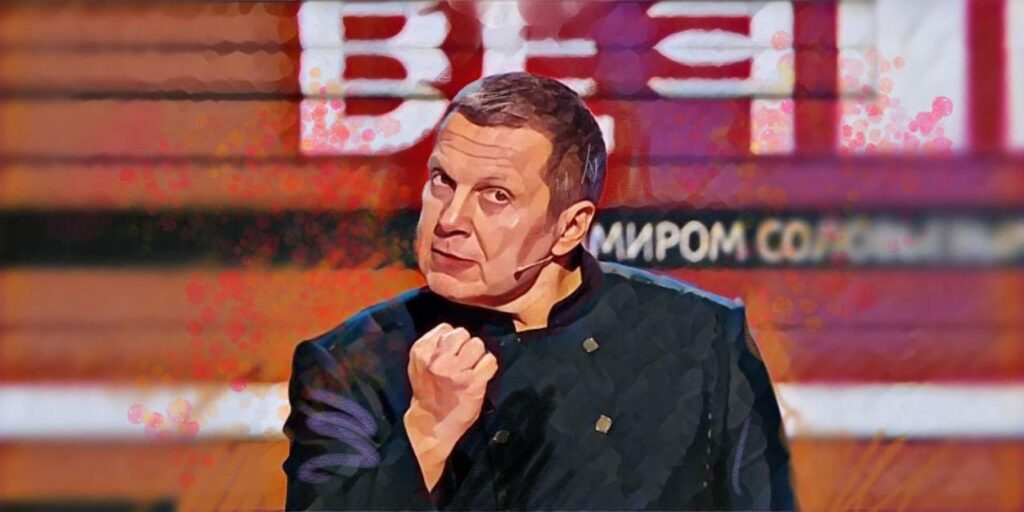
Controversial remarks by Russian television host Vladimir Solovyov, suggesting that Moscow could launch “special military operations” in Central Asia and Armenia, have provoked a strong backlash in Uzbekistan, where scholars, journalists, and political analysts warn that such rhetoric reflects dangerous political tendencies.

Speaking on his Solovyov Live program, the prominent pro-Kremlin commentator claimed that regions like Armenia and Central Asia are far more critical to Russia’s national interests than distant allies such as Syria or Venezuela. He urged Russian authorities to abandon international law if it stands in the way of what he described as Russia’s national security.

Solovyov was born in Moscow in 1963 and trained in economics and philosophy; after the collapse of the Soviet Union, he spent part of the early–mid-1990s living in the United States, where he worked as a businessman involved in commercial ventures rather than journalism or politics, before returning to Russia following financial difficulties. In the late 1990s and early 2000s, he entered radio and television, initially presenting himself as a liberal, pro-market commentator, but over time evolving into one of Russia’s most prominent pro-Kremlin television hosts, known for his hardline nationalist rhetoric and for aggressively promoting state narratives on domestic and foreign policy.

“We must say openly: the games are over. International law and the international order mean nothing to us,” Solovyov declared, openly questioning why, if a so-called special military operation was justified in Ukraine, similar actions should not be carried out elsewhere within Russia’s claimed zone of influence.

Solovyov characterized Central Asia as “our Asia,” framing it as part of Russia’s rightful sphere of influence. He warned that instability in the region represents a direct threat to Russia’s security and advocated for the Kremlin to clearly define the boundaries of its “zone of influence,” regardless of international norms.

He also criticized Russia’s approach to the war in Ukraine, arguing that a lack of early harsh measures prolonged the conflict and resulted in greater losses. “We should stop casting pearls before swine and openly state that we do not care what Europe thinks,” he added.

In recent years, tensions over Russian attitudes toward Central Asia have surfaced in regional discourse. In 2024, Uzbek political figure Alisher Qodirov publicly criticized what he called rising “Russian chauvinism,” responding to televised statements by Russian nationalists such as Zakhar Prilepin advocating territorial claims on Uzbekistan and Russian commentators on state TV asserting that peoples like the Uzbeks and Kazakhs did not exist before 1917, comments that Qodirov said were enough to call for cutting Russian broadcasts into Uzbekistan. Observers have also linked broader social trends in Russia – including xenophobic attacks on Central Asian migrant workers and statements by Russian officials linking Central Asian migration and security to Russia’s interests – to a narrative among some Russian public figures framing Central Asians as outsiders within Russia and Central Asia as a contested space.

The remarks triggered immediate condemnation in Uzbekistan.

Sherzodkhon Qudratkhodja, a political scientist and professor, said Solovyov had expressed, in plain terms, ideas that are usually framed in coded language. “He said on air what is usually wrapped in paper: that international law can be dismissed, that sovereignty is symbolic, and that independent states can simply be declared part of a ‘sphere of influence,’” he said. He described Solovyov’s use of the phrase “our Asia” as colonial rhetoric that dehumanizes nations and disregards borders.

Qudratkhodja also noted a stark reversal in Solovyov’s public stance. “This same person once said attacking Ukraine would be a crime. Today, that ‘crime’ is reframed as a necessity,” he said, warning that propaganda often works by erasing past positions and enforcing new narratives without explanation. “In high-level politics, such statements are not just philosophy, they are rehearsals for future actions,” he added, referencing the Laozi quote: “Pay attention to your thoughts, because they are the beginning of your actions.”

Journalist Ilyos Safarov also dismissed the idea that the remarks were merely sensationalist. “This is a political signal that reflects the most aggressive direction of Russian propaganda,” he said. Safarov emphasized that Solovyov frequently amplifies narratives that align closely with Kremlin thinking and works to legitimize pressure on sovereign states through the language of spheres of influence.

“This kind of rhetoric psychologically prepares the public for violence and intervention, especially dangerous in a region as geopolitically sensitive as Central Asia,” Safarov warned. He urged Uzbekistan and other countries to treat such statements as manifestations of a broader political doctrine, not as isolated outbursts. He further recommended that public figures who question sovereignty should be declared persona non grata and called on Uzbekistan’s Foreign Ministry to apply new legal mechanisms adopted in 2024, arguing that laws “should not be kept like antiques.”

Political analyst Shukhrat Rasul offered a more urgent interpretation, describing Solovyov’s comments as a thinly veiled call for occupation. “He is not speaking to himself; this could be Russia’s plan,” he said. Rasul called on Uzbekistan’s Foreign Ministry to demand an official response from Moscow and to insist on accountability.

American Scholar Mark Reese Fights Intellectual Property Theft of Uzbek Classic ‘Bygone Days’

When American scholar Mark Reese set out to share Uzbekistan’s most celebrated novel with the world, he never imagined that his work would be pirated by the very institutions he had hoped to support.

Reese, who first came to the country as a Peace Corps volunteer in the 1990s, spent more than a decade translating O‘tkan Kunlar (Bygone Days), the seminal 1920s novel by Abdulla Qodiriy. His English edition was a scholarly milestone – the first time the novel, considered Uzbekistan’s literary classic, had been made accessible to English-speaking readers.

The book was warmly received. In 2019, Reese was awarded the Uzbek state’s Order of Do‘stlik, or Friendship, for his contribution to cultural understanding. During a follow-up visit the next year, he gave signed copies of the book to universities and ministries across the country.

“All parties asked how they could support my work,” he tells The Times of Central Asia. “I presented a copy and explained that they could purchase more at a steep discount.” Each donation came with a clear stipulation: the book was not to be copied, resold, or distributed further.

For a time, the project seemed to blossom. Uzbek students used the book in academic papers. One university even adapted it into an English-language stage play. Reese granted permission for such use, as long as it remained non-commercial and he was credited. By 2021, he had entered a publishing partnership in Tashkent and was preparing to distribute 5,000 official copies in 2026. Agreements to publish in Turkey and Qatar were also underway.

Then, quietly, the book escaped his hands.

Reese learned from students in the Ferghana Valley that a full PDF of the translation had been uploaded to the Telegram channel of a university library. When he opened the file, he recognized something chilling – his own handwriting on the inside cover. The scan had been made from a gifted copy. It was high-resolution and clearly done using professional equipment.

The source of the leak soon became clear. The rector of Uzbekistan’s State World Languages University, known locally as Jahon Tilli, confirmed in an interview that his vice rector had scanned the book as part of a digitisation initiative.

“They did so without my permission,” Reese said. “And the file was then shared with 1.3 million university students and 6.3 million school students.” The book was everywhere – on servers, in group chats, on flash drives. In at least one case, students tried to send the file to a printer and sell it.

Reese took the case to court. The verdict was in his favour: the court ruled that copyright theft had occurred. But instead of holding the university responsible, the judge placed the blame squarely on the vice rector. Reese believes this was a calculated move. “It’s a common ploy to reduce damages,” he said. “I’m now expected to sue the individual for up to $30,000, but courts usually award just 20 to 40 percent of that.”

This, for Reese, is the deeper problem. There is no effective system to hold Uzbek institutions accountable for intellectual property violations. Unlike in neighbouring Kazakhstan, where IP law allows claimants to pursue damages against organisations, Uzbekistan restricts claims to individuals. The result, according to Reese, is institutional impunity.

“There are no real IP rights in Uzbekistan,” Reese tells The Times of Central Asia. “Nothing meaningful is being done. Government agencies avoid liability. The leadership of those institutions avoid liability. It’s plausible deniability.”

Reese’s warning is stark: the unchecked spread of piracy is not only unjust to creators, it undermines Uzbekistan’s ambitions to build a creative economy. “IP theft is the rule, not the exception,” he said. “And that puts a knowledge-based economy at risk.”

Over the past few years, Uzbekistan has opened up to foreign investment and launched an ambitious university-building drive. But Reese questions whether the country is doing enough to protect the intellectual output those institutions are supposed to foster. “Why would a university or business come to Uzbekistan if it still remains a place of IP banditry?” he asked. “IP is the centre of the American experience. It is what we do.”

He is not the only American with these concerns. Dan Patterson, CEO of the Uzbek-American agribusiness firm Silverleafe, is also seeking damages, for a different kind of dispute, in the country’s courts. Both men are recipients of the Do‘stlik medal.

While Reese continues to pursue legal action, his concern extends beyond compensation. He sees the situation as emblematic of a broader cultural challenge. “You can and should expect your work to be co-opted and stolen,” he said of the Uzbek system, which he has engaged with for three decades. “It’s not about one book. It’s about setting the rules for what kind of society you want to have.”

For now, his hopes remain simple. He still dreams of seeing his book on sale at Tashkent Airport, nestled among the souvenir chocolates and keychains – an English-language gateway into Uzbekistan’s literary history. But until basic protections for authors and translators are in place, he says, the country’s creative economy will remain built on uncertain ground.