• KGS/USD = 0.01144 0%
  • KZT/USD = 0.00196 -0%
  • TJS/USD = 0.10896 -0%
  • UZS/USD = 0.00008 0%
  • TMT/USD = 0.28571 0.28%
  • KGS/USD = 0.01144 0%
  • KZT/USD = 0.00196 -0%
  • TJS/USD = 0.10896 -0%
  • UZS/USD = 0.00008 0%
  • TMT/USD = 0.28571 0.28%
  • KGS/USD = 0.01144 0%
  • KZT/USD = 0.00196 -0%
  • TJS/USD = 0.10896 -0%
  • UZS/USD = 0.00008 0%
  • TMT/USD = 0.28571 0.28%
  • KGS/USD = 0.01144 0%
  • KZT/USD = 0.00196 -0%
  • TJS/USD = 0.10896 -0%
  • UZS/USD = 0.00008 0%
  • TMT/USD = 0.28571 0.28%
  • KGS/USD = 0.01144 0%
  • KZT/USD = 0.00196 -0%
  • TJS/USD = 0.10896 -0%
  • UZS/USD = 0.00008 0%
  • TMT/USD = 0.28571 0.28%
  • KGS/USD = 0.01144 0%
  • KZT/USD = 0.00196 -0%
  • TJS/USD = 0.10896 -0%
  • UZS/USD = 0.00008 0%
  • TMT/USD = 0.28571 0.28%
  • KGS/USD = 0.01144 0%
  • KZT/USD = 0.00196 -0%
  • TJS/USD = 0.10896 -0%
  • UZS/USD = 0.00008 0%
  • TMT/USD = 0.28571 0.28%
  • KGS/USD = 0.01144 0%
  • KZT/USD = 0.00196 -0%
  • TJS/USD = 0.10896 -0%
  • UZS/USD = 0.00008 0%
  • TMT/USD = 0.28571 0.28%
09 December 2025

Uzbekistan Approves Share Purchase Plan to Join Eurasian Development Bank

President Shavkat Mirziyoyev has approved Uzbekistan’s plan to acquire shares in the Eurasian Development Bank (EDB), formally initiating the country’s accession to the institution’s 2006 founding agreement. The decision was published on the official legal portal, Lex.uz.

Under the approved terms, Uzbekistan will receive 777,777 shares in the EDB’s charter capital, each valued at $1,000. Of these, 168,411 shares (21.7%) are payable, while the remaining 609,366 shares (78.3%) will be paid on demand. The president’s decree also outlines a payment schedule, with funding to begin from the state budget in 2025.

The Ministry of Investments, Industry, and Trade has been tasked with executing the share purchase in accordance with established procedures. The Ministry of Economy and Finance will allocate the necessary funds, which will be included in the state budget from 2026 onward. The Central Bank of Uzbekistan will serve as the depository for EDB funds and assets within the country.

President Mirziyoyev described Uzbekistan’s participation in the EDB as a strategic move to strengthen regional economic ties. “Joining the Eurasian Development Bank will open new opportunities for financing infrastructure, industrial, and trade projects that directly serve our long-term development goals,” he said.

Deputy Prime Minister Jamshid Khodjaev has been appointed Uzbekistan’s authorized representative to the EDB, with Deputy Minister Khurshid Teshabaev designated as his deputy. The Ministry of Investments, Industry, and Trade will serve as the country’s authorized body in dealings with the bank.

This move is part of Uzbekistan’s broader strategy to deepen integration with Eurasian economic institutions. In 2024, officials confirmed that Uzbekistan aims to complete its accession to the EDB by early 2025.

Uzbekistan has held observer status in the Eurasian Economic Union (EAEU) since 2020 and already participates in collaborative projects on trade, transport, e-commerce, and climate change.

Founded in 2006 by Russia and Kazakhstan, the EDB now also includes Armenia, Belarus, Kyrgyzstan, and Tajikistan. The bank’s core mission is to finance large-scale investment projects that promote economic growth and regional integration.

Kyrgyzstan Says It’s Close to Being Removed from EU Flight Ban

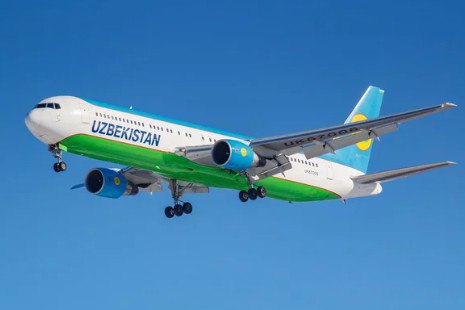
A delegation from Kyrgyzstan’s Civil Aviation Agency will meet European officials in Brussels next month, marking another step in the campaign to end a two-decade ban on Kyrgyz airlines operating in the European Union because of safety concerns.  

The October 7 meeting will be followed by a final European audit in December as Kyrgyzstan moves into the last stage of being removed from the EU’s so-called “blacklist” of air carriers, Kyrgyz President Sadyr Japarov said last week during the re-opening of two of the country’s airports, Naryn and Kazarman.  

“Thus, we firmly believe that the European skies, which have been closed since 2006, will reopen for Kyrgyzstan,” said Japarov, who predicted that the possible removal of the ban would boost international tourism in the Central Asian country. 

Kanat Tologonov, deputy director of Kyrgyzstan’s Civil Aviation Agency, said this week that European officials will decide on whether to lift the air ban on Kyrgyzstan in May 2026, according to the 24.kg news agency. Speaking to a parliamentary committee on budget and fiscal policy, Tologonov said Kyrgyzstan successfully passed 2023-2024 audits of the International Civil Aviation Organization, a U.N. agency that oversees safety and other aspects of air travel. 

As Kyrgyzstan’s bid to regain access to EU skies gains momentum, civil aviation chief Daniyar Bostonov met representatives of the International Air Transport Association this week to discuss upgrading air navigation and the digitization of passenger and air cargo transportation. 

The EU Air Safety List is a list of air carriers that it says do not fulfil international safety standards and it bars those airlines “from operating to, in and from the EU, including the overflight.”

Sixteen carriers from Kyrgyzstan are on the list, out of a total of 169 banned airlines, according to a June update. The EU barred Kyrgyzstan because of inadequate regulation in the aviation sector and failure to comply with international safety standards. 

Civil aviation has been developing in some other parts of Central Asia, including Uzbekistan and Kazakhstan. 

From Astana to the World: Kazakhstan Expands Academic Frontier

Kazakhstan is rapidly establishing itself as a regional center for higher education, attracting students from around the world. The number of branches of foreign universities operating in the country is steadily increasing, complemented by a growing domestic academic base, especially in fields such as artificial intelligence. Today, Kazakhstan is viewed as a viable regional alternative to Russia, which has long been considered a destination for affordable, high-quality education.

Expanding Options for Students

In June, the Ministry of Science and Higher Education of the Republic of Kazakhstan unveiled a map of foreign university branches operating in the country. The government is positioning Kazakhstan as a leading academic hub in Central Asia by enhancing international cooperation and expanding opportunities for students.

Partnerships have already been established with 39 foreign universities. Currently, 23 branches of institutions from the UK, Italy, China, Russia, the U.S., France, and South Korea operate in Kazakhstan.

Map of foreign university partnerships; image: Ministry of Science and Higher Education of Kazakhstan.

Seven more branches are expected to open in the 2025-2026 academic year, namely Coventry University, the Moscow State Institute of International Relations (MGIMO) in Astana, Gazi University in Shymkent, Woosong University in Turkestan, Anhalt University in Almaty, Politecnico della Marche in Taldykorgan, and Dong Eui University in Kostanay.

A standout example of this strategy arrived in early September:

Notably, on September 3, Cardiff University opened its first campus outside the UK in Astana. It is also the first member of the prestigious Russell Group to begin operations in Kazakhstan. The Russell Group comprises 24 leading UK universities responsible for two-thirds of all research grants and contract funding in the UK, and 56% of doctoral degrees awarded. Cardiff University Kazakhstan is now accepting students for four-year bachelor’s programs in computer science, business management, civil engineering, and geology and mineral exploration.

Kazakhstan has witnessed a surge in the establishment of foreign university branches since 2021. These include the Peking University of Languages and Culture at Astana International University, and the National Research Nuclear University MEPhI (Russia) at Al-Farabi Kazakh National University. Additional branches include the University of Lorraine (France) at the Kazakh National Pedagogical University named after Abai, and the University of Anhalt (Germany) at the Almaty University of Power Engineering and Telecommunications named after Gumarbek Daukeev.

Other notable branches include the University of Hong Kong at Satpayev University in Almaty, Berlin Technical University in Aktau, De Montfort University (UK) in Almaty, and Queen’s University Belfast (Ireland) at Narxoz University, among others.

These branches offer programs in mining, water resource management, and mineral exploration and extraction, along with biotechnology, electrical engineering, energy, mechatronics, logistics, chemical technology, robotics, and related disciplines.

In 2023, Korkyt Ata University in Kyzylorda launched an Institute of Artificial Intelligence, in partnership with Seoul National University of Science and Technology. It currently offers programs in computer science, cybersecurity, software development, and information systems.

An Ambitious Vision

Observers note that Kazakhstan’s education drive is unfolding amid growing global competition for international students. Neighboring Uzbekistan has also launched partnerships with European institutions, while Turkey and the Gulf states are actively courting students from Asia and Africa. By moving early and offering relatively low tuition, Kazakhstan hopes to secure a durable niche in this crowded market.

Kazakhstan is aiming to become the top education destination in Central Asia. The government is working with globally recognized universities to align its education system with international standards. As previously reported by The Times of Central Asia, Minister of Science and Higher Education Sayasat Nurbek has stated that Kazakhstan aims to attract 150,000 foreign students by 2029, nearly five times the current number.

The country offers several advantages: a strategic location bridging Europe and Asia, political and economic stability, and lower tuition fees compared to Western countries and Russia. “Kazakhstan is not only a leader in education in Central Asia; we are becoming a new Eurasian center,” said Nurbek. “Our partnerships with global universities and the growth in world-class campuses show that students no longer need to leave the region to access international-quality education.”

To support this goal, the government is providing tuition grants, building new dormitories, and investing in research clusters. Thirty-five Kazakhstani universities have been included in the QS Asia University Rankings 2025. Al-Farabi Kazakh National University, L.N. Gumilyov Eurasian National University, and Satpayev University are ranked among the top 100, reflecting growing international recognition.

Officials emphasize that attracting students requires more than campuses and programs. Work is underway to improve dormitory conditions, expand visa services, and create cultural integration programs. Several universities now run orientation courses for foreign students, including Kazakh language basics and intercultural workshops, aimed at easing adjustment and retention.

Building an AI-Ready Future

Kazakhstan has also made significant investments in AI infrastructure. In May 2025, the country acquired the most powerful supercomputer in Central Asia, with a processing capacity of approximately two exaflops. Based on NVIDIA’s H200 graphics chips, the system is available to government agencies, universities, and startups.

The country has also established partnerships with Huawei, Coursera, and Astana Hub, supporting a practical and applied approach to education. AI studies are being integrated across higher and secondary education curricula.

The government also sees higher education as a tool for economic diversification. By training specialists in AI, engineering, and energy, officials hope to reduce reliance on extractive industries and foster a knowledge-based economy. Analysts argue that international campuses can serve as incubators for research partnerships, tech startups, and innovation clusters that will spill over into broader economic growth.

A Competitive Alternative

For decades, Russia was the primary destination for students from the post-Soviet space. That dynamic is shifting, not only due to the war in Ukraine, but because Russia’s withdrawal from the Bologna Process has complicated degree recognition in Western countries.

Kazakhstan is well-positioned to fill the gap. It offers a Russian-speaking environment while increasingly improving English and other foreign language instruction in its universities.

As a result, Kazakhstan is attracting more students from countries such as China, India, Pakistan, across Asia and Africa, Eastern Europe, and even Russia and other post-Soviet states. This trend is supported by deliberate government policies, expanding global university partnerships, and growing international awareness of Kazakhstan’s academic strengths. Whether this momentum can be sustained will depend not only on Kazakhstan’s ability to attract prestigious partners, but also on how its institutions deliver. For now, as new campuses open and domestic programs grow, Kazakhstan’s higher education system is entering a decisive phase in its evolving regional role.

Central Asia Deepens Trade Links with India Amid Growing Economic Ties

Trade between the countries of Central Asia and India is growing, edging closer to the $2 billion mark and signaling a new phase in cooperation across the Eurasian continent. According to data from the Eurasian Development Bank (EDB), this surge reflects the expanding economic footprint of both regions.

Nikolay Podguzov, Chairman of the EDB, emphasized that Central Asia and India are not only continental neighbors but also markets with significant untapped potential. Of the bank’s seven member states, four — Kazakhstan, Kyrgyzstan, Tajikistan, and Uzbekistan — form the heart of Central Asia. Their growing engagement with New Delhi is now setting the tone for broader regional cooperation.

Strong Growth as a Foundation

The economic fundamentals supporting this trend are healthy. Central Asia has maintained steady growth of around 4.5% annually, while India’s economy continues to expand even faster, at roughly 6% per year. But despite this positive backdrop, there are still logistical hurdles. Trade routes between India and Central Asia must pass through intermediary countries such as Iran, Russia, or Azerbaijan — each adding layers of bureaucracy, customs costs, and delays.

Experts argue that overcoming these transit bottlenecks will be crucial if India and Central Asia are to unlock the full potential of their partnership. New initiatives like the International North-South Transport Corridor and discussions on India’s role in developing Chabahar Port in Iran reflect ongoing efforts to make these pathways more efficient.

Kazakhstan: The Leading Partner

Kazakhstan is India’s largest trading partner in Central Asia, with bilateral trade crossing $1 billion — more than half of the region’s total trade with India. Astana supplies uranium, which is important for India’s civilian nuclear energy program, along with crude oil and steel products. In return, India exports pharmaceuticals, textiles, and consumer goods, with exports valued at around $260 million.

The two countries also collaborate in strategic sectors such as energy security and defense. In 2022, India and Kazakhstan conducted joint military drills under the Kazind exercise, which reflects a broadening relationship beyond commerce.

Uzbekistan: A Growing Market

Trade with Uzbekistan has risen steadily, approaching $500 million in bilateral turnover, while India’s exports to Uzbekistan are valued at around $1.3 billion. Pharmaceuticals, machinery, and agricultural products dominate New Delhi’s exports, while Uzbekistan provides fruits, minerals, and cotton to the Indian market.

Uzbekistan and India recently increased engagement through forums like the India-Central Asia Dialogue, where issues of connectivity, counterterrorism, and energy cooperation are regularly discussed.

Tajikistan: Small but Strategic

Although trade volumes with Tajikistan hover around $100 million, the partnership has strategic importance. Aluminium from Tajikistan’s massive TALCO smelter is a key export, while India provides medicines and consumer goods to Tajikistan. Beyond commerce, Dushanbe is a vital security partner for New Delhi. India operates a military facility in Tajikistan — the Farkhor Air Base, its only such presence abroad.

Kyrgyzstan: Modest Trade, Strong Ties

Kyrgyzstan’s trade with India is relatively small, at about $50 million, but the relationship is significant in the context of regional institutions like the Eurasian Economic Union (EAEU). The two nations also cooperate in education and tourism, with thousands of Indian students studying medicine in Kyrgyz universities. These people-to-people connections are seen as a foundation for stronger economic engagement in the future.

Looking Ahead

The trajectory of India-Central Asia trade is clear: while current figures remain modest compared to India’s dealings with other global partners, they are trending upwards. Both sides see opportunities in energy, infrastructure, and digital technology. Yet the success of this partnership will depend on how effectively they address logistical challenges, and diversify beyond traditional trade items.

For Central Asia, closer ties with India offer a chance to balance relationships with traditional partners such as Russia and China, while tapping into India’s massive consumer market.

Astana Forum Signals Growing Momentum for Green Projects

Kazakhstan is positioning itself as a regional hub for green energy, with hydrogen emerging as a central focus. This direction was highlighted at the Second Central Asian and European Forum on Decarbonization Diplomacy, where hydrogen featured prominently on the agenda.

At the forum, the Ministry of Energy presented an updated Concept for Hydrogen Energy Development aimed at attracting investment and laying the groundwork for the country’s first large-scale hydrogen projects.

“By the end of this year, we expect to adopt legislation that will provide the foundation for hydrogen energy development in Kazakhstan. For us, this is not merely a goal, it is a strategic choice, just like green energy more broadly. Forums like this one help transform ideas into tangible partnerships,” said Deputy Energy Minister Ilyas Bakytzhan.

The central question raised at the forum was how to convert growing interest into actual investment. Institutions including the World Bank, European Bank for Reconstruction and Development (EBRD), Asian Development Bank (ADB), United Nations Development Programme (UNDP), and the International Renewable Energy Agency (IRENA) expressed willingness to consider pilot projects in Kazakhstan. However, experts warned that financial commitments will depend on the establishment of long-term hydrogen supply contracts and a transparent certification framework.

Deputy Energy Minister Bakytzhan Ilyas, @gov.kz

While viable business models are still evolving, Kazakhstan has the potential to become a key hydrogen supplier to Europe and Asia. In the early stages, however, building domestic demand, in sectors such as metallurgy, transportation, and energy, will be critical. A balanced strategy that prioritizes both export orientation and local industrialization is seen as essential for long-term project sustainability.

Forum participants identified several key challenges:

  • High capital requirements and extended payback periods
  • Integration with renewable energy infrastructure
  • Exposure to volatile global pricing and certification standards
  • The need for green financing tools and risk insurance mechanisms

A significant development at the forum was the signing of a cooperation agreement between Kazakhstan’s Ministry of Energy and the Hydrogen Diplomacy Office (H2-Diplo GIZ). The agreement provides access to European technical expertise and advisory support, including the design of financing structures.

Experts agree that the next few years will be decisive. Kazakhstan must show that it can provide a stable and predictable investment climate. The Astana forum made clear that international institutions and private investors are already showing interest. The determining factor now will be the quality and credibility of the regulatory framework the country establishes.

Uzbekistan Aims to Cut Poverty Rate to 6% by End of 2025

Uzbekistan aims to cut its national poverty rate to 6 percent by the end of 2025, President Shavkat Mirziyoyev announced at the opening of the third international forum From Poverty to Prosperity in Namangan on September 17.

The forum brought together representatives from more than 30 organizations and approximately 200 experts, including Islamic Development Bank President Muhammad Al-Jasser, Asian Development Bank Vice President Yingming Yang, Japan International Cooperation Agency Senior Vice President Sachiko Imoto, United Nations Special Representative for Central Asia Kaha Imnadze, and World Bank Global Director for Poverty Reduction Luis Felipe López-Calva.

Mirziyoyev warned that the world is entering a period of increasing instability, citing climate change, water scarcity, pandemics, and slowing economic growth. Since 2015, global economic growth has averaged just 3 percent annually, while the number of people living in poverty has risen from 650 million to over 800 million.

In Uzbekistan, poverty reduction has become a national priority. Over the past eight years, government reforms have focused on human rights, employment, and income generation, supported by international institutions such as the World Bank and the United Nations. According to official data, 7.5 million people have been lifted out of poverty, bringing the national poverty rate down to 8.9 percent in 2024. “By the end of this year, we aim to reduce it further to 6 percent,” Mirziyoyev said.

Uzbekistan’s economy has doubled in size in recent years, with per capita income projected to reach $3,500 by the end of 2025. Growth has been driven by targeted social programs, mahalla-based community initiatives, and land reforms. During the COVID-19 pandemic, more than 2 million families received social assistance, while the redistribution of 235,000 hectares of farmland provided an additional source of income for 800,000 families.

“Every neighborhood is becoming a hub for business, and every family is seeing the benefits of prosperity,” Mirziyoyev said. He added that Uzbekistan is on track to halve poverty by 2030, in line with the UN Sustainable Development Goals, and could eradicate absolute poverty by the end of the decade.

The president also called for a “new financial architecture” to mobilize global resources for sustainable development. He proposed hosting an international conference in Khiva in 2026, with the participation of donor organizations, financial institutions, and partner governments.

“Uplifting human dignity through decent living conditions and poverty reduction lies at the heart of all our reforms,” he concluded.