• KGS/USD = 0.01144 0%
  • KZT/USD = 0.00215 0%
  • TJS/USD = 0.10691 0.09%
  • UZS/USD = 0.00008 0%
  • TMT/USD = 0.28530 0%
  • KGS/USD = 0.01144 0%
  • KZT/USD = 0.00215 0%
  • TJS/USD = 0.10691 0.09%
  • UZS/USD = 0.00008 0%
  • TMT/USD = 0.28530 0%
  • KGS/USD = 0.01144 0%
  • KZT/USD = 0.00215 0%
  • TJS/USD = 0.10691 0.09%
  • UZS/USD = 0.00008 0%
  • TMT/USD = 0.28530 0%
  • KGS/USD = 0.01144 0%
  • KZT/USD = 0.00215 0%
  • TJS/USD = 0.10691 0.09%
  • UZS/USD = 0.00008 0%
  • TMT/USD = 0.28530 0%
  • KGS/USD = 0.01144 0%
  • KZT/USD = 0.00215 0%
  • TJS/USD = 0.10691 0.09%
  • UZS/USD = 0.00008 0%
  • TMT/USD = 0.28530 0%
  • KGS/USD = 0.01144 0%
  • KZT/USD = 0.00215 0%
  • TJS/USD = 0.10691 0.09%
  • UZS/USD = 0.00008 0%
  • TMT/USD = 0.28530 0%
  • KGS/USD = 0.01144 0%
  • KZT/USD = 0.00215 0%
  • TJS/USD = 0.10691 0.09%
  • UZS/USD = 0.00008 0%
  • TMT/USD = 0.28530 0%
  • KGS/USD = 0.01144 0%
  • KZT/USD = 0.00215 0%
  • TJS/USD = 0.10691 0.09%
  • UZS/USD = 0.00008 0%
  • TMT/USD = 0.28530 0%

Uzbekistan and China to Develop Early Warning Systems for Dust Storms

Uzbekistan and China have agreed to expand cooperation on environmental protection, including the development of early warning systems for dust and sandstorms, according to Uzbekistan’s National Committee on Ecology and Climate Change.

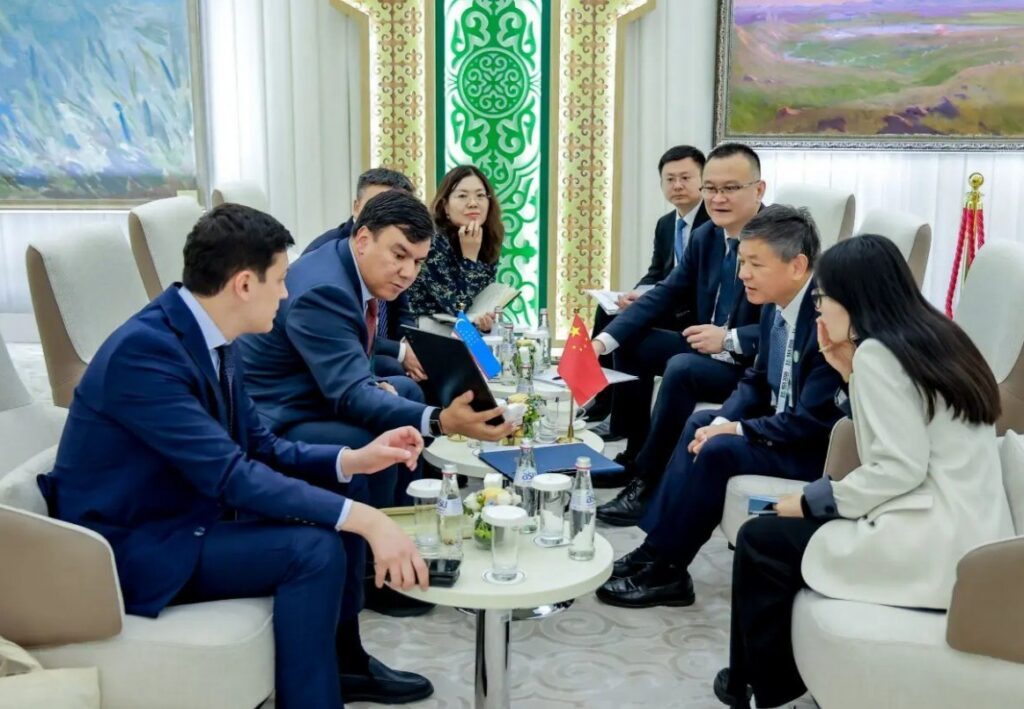
The agreement was discussed during a meeting between Aziz Abdukhakimov, Advisor to the President of Uzbekistan on environmental issues, and Huang Runqiu, China’s Minister of Ecology and Environment. The talks took place on the sidelines of a regional environmental summit.

Both sides noted that cooperation between the two countries in environmental protection has been expanding and becoming more practical. Officials focused on joint efforts to address environmental challenges, introduce modern technologies, and strengthen scientific collaboration.

Uzbekistan expressed appreciation for China’s support in establishing the Central Asian Regional Research Center for Combating Desertification and Developing Desert Economies at Green University, created with the participation of the Chinese Academy of Sciences. The center is expected to serve as a platform for research, training, and the development of solutions to land degradation.

According to Huang Runqiu, cooperation between the two countries has already produced concrete results. He noted that 11 waste-to-energy plants are currently being built in Uzbekistan by Chinese investors, reflecting what he described as “a high level of trust” and effective bilateral cooperation.

The Uzbek side proposed several new areas for collaboration, including studying China’s use of satellite systems for climate monitoring, gaining experience in tracking dust and sandstorms, and exploring the work of China’s national environmental monitoring centers. Other proposals included organizing a joint international forum on ecology and establishing a shared laboratory to monitor air and water quality.

China expressed support for these initiatives and confirmed its readiness to move toward practical implementation. The two sides discussed creating a joint laboratory for environmental monitoring and expanding scientific research, including cooperation with international organizations such as the World Meteorological Organization.

A key outcome of the meeting was an agreement to apply China’s experience in early warning systems for dust and sandstorms in Uzbekistan. These systems are expected to improve preparedness and response to environmental risks.

China also offered to send scientists and experts to Uzbekistan to support training and capacity building, while inviting Uzbek specialists to China for knowledge exchange.


AI in Kazakhstan to Affect Four Million Jobs in Next Decade, Says Labor Ministry

Around half of all professions in Kazakhstan are expected to change under the impact of AI over the next decade, with some jobs declining and others disappearing entirely, lawmakers and government officials have said.

Daniya Yespayeva, Deputy Chair of the lower house of parliament, the Mazhilis, citing data from the Ministry of Labor, stated that by 2035, transformations will affect 562 jobs, about 44% of the labor market, equivalent to roughly 4 million workers.

According to her, employment in 46 professions, covering around 362,000 people (about 4% of the labor market), is expected to decline, while 14 professions, employing approximately 49,000 people, may disappear completely.

Yespayeva did not specify which professions are at greatest risk. However, Minister of Science and Higher Education Sayasat Nurbek noted that couriers and taxi drivers could be among the first affected.

He said that around 700,000 people in Kazakhstan currently work in these sectors through platforms such as Glovo, Yandex, and Wolt.

“These are temporary forms of employment. As early as this year, several Kazakh companies are launching autopilot technologies in both taxi services and delivery, so within a few years, couriers and taxi drivers may no longer be needed,” Nurbek said, urging citizens to focus on more sustainable career paths.

Earlier reports indicated that a pilot drone delivery project could be launched in Almaty, while driverless taxis are planned for introduction in Astana.

Askhat Aimagambetov, a Mazhilis deputy, also warned about risks facing several popular academic fields. According to him, in 2025, the highest competition for university admissions was in programs such as Translation Studies, International Relations, and Law, fields that, in his view, could be among those most affected by automation.

Aimagambetov stressed the need to revise the allocation of state-funded educational grants to avoid encouraging training in professions at high risk of decline.

He also noted that employment among young developers aged 22-25 declined by nearly 20% over the past year, despite significant investment in IT education.

“We are training an army of coders at a time when AI is already writing code itself. It is no longer enough to train ‘coders of yesterday,’” he said.

Nurbek agreed with this assessment, pointing to a shortage of specialists in eight key sectors, including advanced manufacturing, digital technologies, clean energy, finance, life sciences, defense, creative industries, and professional services.

According to him, part of the gap is being addressed through private-sector involvement. Kazakhstan has established 75 joint laboratories across 19 universities in partnership with companies such as Amazon Web Services, Cisco, Huawei, Schneider Electric, and Honeywell, as well as Eurasian Resources Group, Freedom Holding, and KEGOC.

More than 7,500 students are currently studying in these laboratories across 179 disciplines.

Business investment in these initiatives has totaled around $5.2 million, although the minister noted that such efforts remain limited in scope.

“If this gap is not addressed, the education system will continue to train specialists for yesterday’s economy,” Nurbek said, emphasizing that aligning education with economic needs has become a matter of national security.

U.S. Envoy Gor Meets Rahmon in Tajikistan for Trade, Security Talks

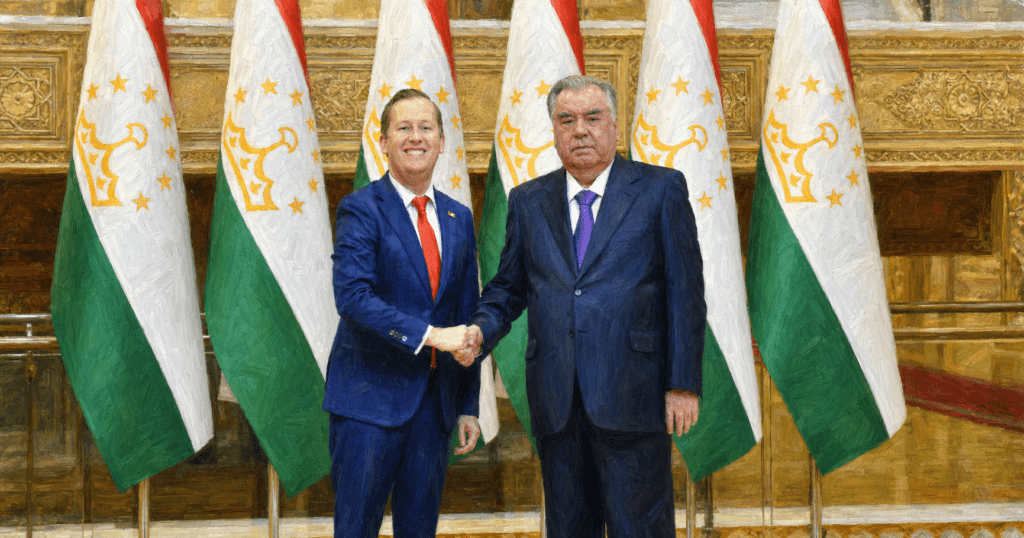
Tajik President Emomali Rahmon met Special Envoy of the President of the United States for South and Central Asia Sergio Gor in Dushanbe on April 28 for talks focused on trade, investment, security, and the next stage of cooperation under the C5+1 framework.

Gor also met Tajik Foreign Minister Sirojiddin Muhriddin during the visit. “Just landed in Tajikistan!” Gor wrote on X. “Excellent meeting with Foreign Minister Sirojiddin Muhriddin in Dushanbe on deepening U.S.-Tajikistan ties. Excited to build a stronger partnership that delivers greater security and prosperity for both our countries.”

The U.S. Embassy in Dushanbe said Gor’s meetings would continue over the next few days.

According to the Tajik president’s press service, the meeting with President Rahmon covered the current state of bilateral relations and prospects for expanding cooperation. Particular attention was given to agreements reached through the C5+1 dialogue, which brings together the United States and the five Central Asian states.

Rahmon said Tajikistan is interested in expanding ties with Washington in areas of mutual interest, noting that the United States is among Tajikistan’s top five investment partners. The sides discussed the use of the Trade and Investment Framework Agreement, known as TIFA, as a tool for developing practical cooperation.

The talks pointed to several sectors where Dushanbe hopes to attract greater U.S. involvement. These include hydropower, mining, mineral processing, light industry, food production, chemicals, and pharmaceuticals. Tajikistan has long promoted its hydropower potential as a basis for regional energy trade and industrial development, while mining and processing are increasingly tied to wider U.S. interest in critical minerals and supply-chain diversification.

Digital cooperation also featured, with the two sides identifying artificial intelligence, digital infrastructure, and the wider digitalization of the economy as promising areas for cooperation. They also discussed the creation of joint ventures to process agricultural products for export and attract investment.

The Tajik Foreign Ministry said Muhriddin and Gor discussed political, economic, investment, humanitarian, and security cooperation. It said they also exchanged views on the regional situation, emphasizing stability and the prevention of humanitarian risks. “Particular attention was paid to the need for coordinated efforts in addressing modern challenges and threats, including terrorism, extremism, and drug trafficking,” the ministry said.

Security remains a central part of Tajikistan’s relationship with Washington. Tajikistan shares a long border with Afghanistan, where narcotics trafficking, militant activity, and cross-border violence have repeatedly tested Dushanbe’s security forces. Earlier this month, Tajikistan said its security forces killed two alleged drug smugglers from Afghanistan who crossed into the Farkhor district of the Khatlon region. The State Committee for National Security said the group was trying to smuggle 25 kilograms of hashish.

The Afghan border has also become a concern for foreign investors. In late 2025, several Chinese workers were killed in attacks launched from Afghan territory, prompting China to urge Tajikistan to strengthen protection for Chinese citizens and businesses. The attacks sharpened attention on Tajikistan’s ability to secure border areas where foreign-backed infrastructure and mining projects are expanding.

Cooperation has also extended into health. Earlier this month, the United States and Tajikistan signed a five-year health memorandum under which Washington intends to provide about $38 million in global health assistance, subject to congressional approval. Tajikistan has committed to increasing its own domestic health spending by $40 million over the same period.

Gor’s visit to Dushanbe follows renewed U.S. engagement with Central Asia, which has increasingly focused on investment, critical minerals, energy, and digital infrastructure. For Tajikistan, those themes overlap closely. Hydropower is central to Dushanbe’s economic plans, both as a source of electricity and as a base for energy-intensive industry. Mining and mineral processing are also a natural fit for U.S. supply-chain priorities.

The talks also point to Tajikistan’s attempt to move beyond its image as a security partner on Afghanistan’s border. Dushanbe is pitching itself as a place for power projects, export-oriented processing, digital infrastructure, and joint ventures in agriculture. Tajikistan remains one of the region’s smaller economies, and its investment climate is more challenging than those of Kazakhstan or Uzbekistan. But the meeting showed that Dushanbe wants U.S. attention beyond border security.

How Kazakhstan Is Using Big Data to Reshape Its Social Protection System

Kazakhstan is accelerating its transition to a digital model of social protection, integrating government databases and introducing algorithmic oversight to improve the targeting of welfare payments and reduce corruption risks.

In spring 2026, the merger of databases between the Ministry of Labor and tax authorities was completed, marking a key stage of the reform. Authorities view this process not only as a technological upgrade but as a shift in the principles governing interaction between the state and citizens.

Historically, the country’s system of distributing social benefits has faced challenges related to the misuse of funds. In 2020, the Supreme Audit Chamber identified violations in the implementation of the “Enbek” employment program, resulting in significant budget losses.

In subsequent years, auditors continued to record similar cases. A report for 2023-2024 noted that targeted social assistance was being received by citizens who concealed their actual incomes.

According to anti-corruption authorities, approximately $50 billion has been allocated to social support over the past five years, of which around $6.5 billion was used inefficiently. The lack of transparent oversight enabled abuses, including fictitious employment schemes and payments to so-called “ghost recipients.”

A turning point came with the introduction of digital oversight. Since 2024, Kazakhstan has been integrating databases and automating processes. According to official reports, the implementation of digital tools helped prevent financial violations amounting to approximately $45 billion in 2025 alone.

At the core of the system is the transition to the international ISO 20022 standard, enabling real-time data processing.

Since 2026, algorithms have been automatically assessing citizens’ eligibility for social benefits without the involvement of officials, significantly reducing opportunities for fraudulent claims.

One example is a grant program for low-income citizens to start businesses, with grants of up to approximately $3,800. Funds are now transferred directly to suppliers, while transactions are monitored by tax authorities. If inconsistencies are detected, payments are automatically canceled.

Similar mechanisms are being applied in subsidized employment programs.

The system is also integrated with the “Social Wallet” project and the digital tenge platform. Payments are programmed through smart contracts, restricting their use to predefined purposes such as purchasing food, medicines, or paying utility bills.

In addition, algorithms track changes in the income of unemployment benefit recipients. If commercial activity is detected, payments are automatically terminated.

Despite these advances, experts warn of potential risks. International experience shows that such systems can both improve efficiency and lead to errors.

In Denmark, algorithms are used to provide proactive support, automatically offering benefits when life circumstances change. In Australia, however, a similar system wrongly accused citizens of welfare fraud, triggering lawsuits and a political crisis.

Analysts note that the effectiveness of digital systems depends on their design: they perform better when focused on identifying those in need, rather than solely detecting violations.

Uzbekistan’s ‘When Apricots Blossom’ Shortlisted for Fuorisalone Award at Milan Design Week

Uzbekistan’s first national exhibition at Milan Design Week 2026 has closed with strong international recognition, drawing large crowds and earning praise from critics for its focus on culture, craft, and environmental change.

Titled When Apricots Blossom, the exhibition ran from April 20 to 26 at Palazzo Citterio, welcoming around 25,000 visitors over seven days. Organized by the Uzbekistan Art and Culture Development Foundation (ACDF), the project was commissioned by its chairperson Gayane Umerova and curated by architect Kulapat Yantrasast, founder of WHY Architecture.

The exhibition was shortlisted for the main Fuorisalone Award, which recognizes leading installations among the thousands of events held across Milan during the week. It also received a Special Mention from a panel of media partners and critics. The jury praised the project for creating “a dialogue between the space and the content” and for encouraging deeper engagement with its themes.

Uzbekistan’s debut comes at a time when design is increasingly addressing global challenges, including climate change and sustainability. In this context, When Apricots Blossom stood out for its focus on the Aral Sea region, one of the world’s most widely recognized environmental disasters.

Cooking demonstration led by Bayrangul. Still from the film Where the Water Ends by Manuel Correa and Marina Otero 2026. Courtesy of ACDF

Over the past six decades, the Aral Sea has largely disappeared, reshaping life in Karakalpakstan, an autonomous region in northwestern Uzbekistan. The exhibition explored how communities in the area have adapted to these changes, not only through new solutions but also through long-standing traditions.

Rather than presenting craft as something of the past, the project framed it as a form of living knowledge.

“Our intention was for the Aral Sea to be recognized not only as a site of loss, but as a lens through which design considers broader questions of climate, culture, and responsibility,” Umerova said.

She emphasized that collaboration played a key role in the exhibition. Designers from different countries worked alongside Uzbek and Karakalpak artisans, creating a space for exchange between tradition and contemporary practice.

“The knowledge exchange between our craftspeople and international designers has helped reconnect past, present, and future,” she said.

Inside Palazzo Citterio, visitors moved through installations centered on three fundamental aspects of life: food, shelter, and clothing. These were represented through bread-making, yurt-building, and textile weaving, practices that have helped communities adapt to changing environments.

Twelve designers created new works inspired by these traditions, including bread trays and stamps used in the preparation of non, a staple of Uzbek cuisine. Made from materials such as wood, ceramics, felt, and reeds, the objects reflected both local resources and evolving design approaches.

The exhibition also included artifacts selected by participants of the Aral School, an international educational program focused on the region through design and research. A film, Where the Water Ends, offered visitors a closer look at the lives and landscapes shaped by the disappearance of the sea.

For Yantrasast, the project marks the beginning of a longer process.

“This is not about preserving craft as something from the past,” he said. “It is about understanding where it can go in the future, as something essential, resilient, and alive.”

Artefacts selected by participants of the Aral school – When Apricots Blossom. Courtesy of ACDF.

One of the most discussed elements of the exhibition was the Garden Pavilion, a structure inspired by traditional yurts. Designed by WHY Architecture, the installation reinterpreted portable homes used by nomadic communities, transforming them into a space for discussions, workshops, and reflection.

Yantrasast described the pavilion as both an architectural concept and a symbol.

“It shows how design can hold absence while creating new meaning,” he said, referring to environmental changes in the Aral Sea region.

Following its success in Milan, parts of the exhibition will return to Uzbekistan. The Garden Pavilion, a large textile installation, and the collection of bread-related objects are expected to be displayed again, extending the project beyond the design week.

According to the Uzbekistan Art and Culture Development Foundation, the exhibition is part of a broader effort to support long-term development in the Aral Sea region. This includes cultural, educational, and research initiatives aimed at strengthening local communities and encouraging new ideas.

Upcoming projects linked to this work include Uzbekistan’s national pavilion at the Venice Biennale, the first Tashkent Design Week, and the second Aral Culture Summit, scheduled to take place in Nukus in September.

Crackdown on Private Taxis Complicates Life for Residents of Ashgabat’s Outskirts

In Turkmenistan’s capital, Ashgabat, traffic police have intensified inspections of private taxi drivers in outlying districts such as Choganly, Garadamak, and Shor. While the measures are formally aimed at curbing informal transport services, they have had significant consequences for local residents.

Public transport technically operates in these areas, but routes largely run along main roads. Those living farther away often have to walk several kilometers to reach their homes. According to residents, private drivers previously helped bridge this gap by offering rides from bus stops. That option has now largely disappeared.

Drivers are being stopped, fined, or, according to eyewitness accounts, asked to pay bribes. As a result, not only the drivers, many of whom rely on informal taxi services as one of the few sources of income amid unemployment, are affected, but also passengers. People with children or heavy bags are increasingly forced to walk.

The situation is further aggravated by earlier restrictions. Around two years ago, at the request of city authorities, small shops were closed across the capital, including in these districts. As a result, residents must now travel to supermarkets or markets to buy groceries. This has led many to purchase goods in bulk, making the journey home even more difficult.

Conditions are particularly challenging on more remote streets. For example, Ashgabat Street deep within Choganly is poorly developed, lacking sidewalks and turning into muddy streams during rainy weather. Residents say that walking in such conditions is difficult and nearly impossible with strollers or heavy bags. The street branches into smaller roads, many of which are unpaved. As a result, even routine trips outside the home can become a serious challenge.

More broadly, residents note that restrictions are being introduced faster than basic infrastructure problems are being addressed. In such conditions, any tightening of regulations has an immediate and tangible impact on daily life.