• KGS/USD = 0.01143 -0%
  • KZT/USD = 0.00192 -0%
  • TJS/USD = 0.10820 0.19%
  • UZS/USD = 0.00008 0%
  • TMT/USD = 0.28575 0%
  • KGS/USD = 0.01143 -0%
  • KZT/USD = 0.00192 -0%
  • TJS/USD = 0.10820 0.19%
  • UZS/USD = 0.00008 0%
  • TMT/USD = 0.28575 0%
  • KGS/USD = 0.01143 -0%
  • KZT/USD = 0.00192 -0%
  • TJS/USD = 0.10820 0.19%
  • UZS/USD = 0.00008 0%
  • TMT/USD = 0.28575 0%
  • KGS/USD = 0.01143 -0%
  • KZT/USD = 0.00192 -0%
  • TJS/USD = 0.10820 0.19%
  • UZS/USD = 0.00008 0%
  • TMT/USD = 0.28575 0%
  • KGS/USD = 0.01143 -0%
  • KZT/USD = 0.00192 -0%
  • TJS/USD = 0.10820 0.19%
  • UZS/USD = 0.00008 0%
  • TMT/USD = 0.28575 0%
  • KGS/USD = 0.01143 -0%
  • KZT/USD = 0.00192 -0%
  • TJS/USD = 0.10820 0.19%
  • UZS/USD = 0.00008 0%
  • TMT/USD = 0.28575 0%
  • KGS/USD = 0.01143 -0%
  • KZT/USD = 0.00192 -0%
  • TJS/USD = 0.10820 0.19%
  • UZS/USD = 0.00008 0%
  • TMT/USD = 0.28575 0%
  • KGS/USD = 0.01143 -0%
  • KZT/USD = 0.00192 -0%
  • TJS/USD = 0.10820 0.19%
  • UZS/USD = 0.00008 0%
  • TMT/USD = 0.28575 0%
13 December 2025

Opinion: Ex-U.S. Ambassador Warns Washington Has Ceded Information Space in Central Asia

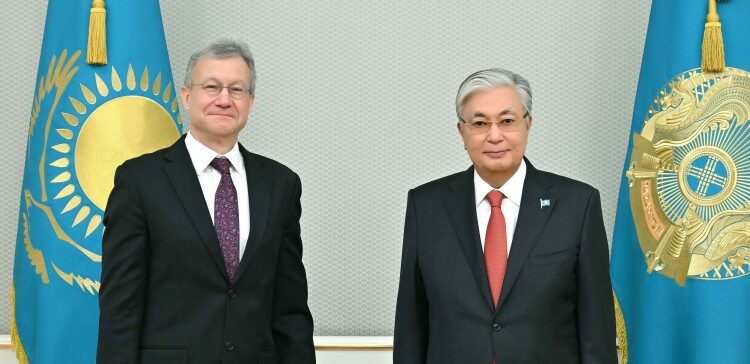
Former U.S. Ambassador to Uzbekistan and Kazakhstan, Daniel Rosenblum, has warned that Washington has “surrendered” its influence in Central Asia’s information sphere, allowing Russia and China to dominate the narrative. His remarks were reported by the Yale Daily News following a lecture at Yale University on September 15.

Rosenblum, who served as U.S. ambassador to Uzbekistan from 2019 to 2022 and to Kazakhstan from 2022 to 2025, delivered a speech titled “Battling the Firehose of Falsehood: Confronting Russian Disinformation in Central Asia.” He described how Russian disinformation campaigns frequently portrayed U.S. diplomats as destabilizing actors. In one example from 2023, Russian outlets falsely claimed a NATO base had opened in Kazakhstan. “While it is easy to joke about such an absurd idea,” Rosenblum said, “the intent behind such Russian information operations is deadly serious.”

Rosenblum noted that U.S. embassies attempted to counteract these narratives by highlighting tangible achievements, including COVID-19 health initiatives, agricultural partnerships, and academic exchange programs. However, he argued that much of this work has unraveled since 2023, citing the dismissal of over 1,300 State Department personnel, the elimination of USAID programs in the region, and recent cuts to Voice of America and Radio Free Europe/Radio Liberty. “Eight months into the second Trump administration, it seems clear that the information war is over in Central Asia, not because the Russians won. We have simply surrendered,” he said.

Rosenblum also emphasized China’s expanding influence through the Belt and Road Initiative, observing that Beijing “was doing a pretty good job of winning friends and influencing people” via infrastructure investment and cultural outreach.

In a post-lecture interview, Rosenblum underscored that the challenge is now largely domestic. “The biggest challenge today is ourselves,” he said. “We have to decide as a country, do we want to be engaged in the world or not? If we cut ourselves off from the world, we will ultimately be less secure and less prosperous.”

This concern was echoed in earlier analysis for The Times of Central Asia by Arman Amini, a term member of the Council on Foreign Relations and an Atlantic Council Millennium Fellow. “Over the past decade, China has steadily expanded its presence in Central Asia, not through military force, but by building roads, trade corridors, and digital infrastructure,” Amini noted. “As the United States scaled back its regional footprint following its withdrawal from Afghanistan, Beijing moved quickly to fill the void. Today, China has positioned itself as the region’s dominant external power, while the U.S. risks being left on the sidelines.”

The lecture was attended by approximately 80 people in person and online. It was organized by the Central Asia Initiative of the MacMillan Center, the Edward J. and Dorothy Clarke Memorial Fund, and Asian Crossroads, a student group dedicated to raising awareness of Central Asia.


Bishkek to Host Kyrgyzstan’s First-Ever Full Marathon as Part of Snow Leopard Run 2025

The Bishkek Snow Leopard Run 2025 will take place in the Kyrgyz capital on September 21, combining long-distance running with wildlife conservation. This year’s event will mark a milestone for the country, featuring Kyrgyzstan’s first-ever 42.2 km marathon.

Organized by the Public Association Nomad Sport, the race is part of the Association of International Marathons and Distance Races (AIMS) calendar and has also joined the Turkic Alliance of Long Runs (TAN), the first such alliance in Central Asia and the Caucasus.

In addition to the full marathon, runners will compete in 5 km, 14 km, and 21.1 km races. All routes will begin at Bishkek’s central Ala-Too Square and pass through the city’s main thoroughfares.

Nomad Sport General Director Arslan Maldybaev said more than 5,000 runners are expected this year, including participants from Kazakhstan, Uzbekistan, Azerbaijan, Russia, Belarus, and Ukraine. “It is important to us that people learn about Kyrgyzstan and our symbol, the snow leopard, through sport. This is an opportunity to make a name for ourselves and become a magnet for sports tourism,” he told local media.

A portion of the entry fees will support snow leopard conservation. Proceeds from this year’s race will fund the purchase of telescopes for wildlife monitoring.

First held in 2019, the Bishkek Snow Leopard Run drew 3,600 runners from 20 countries in its inaugural year.

The event highlights the growing symbolic role of the snow leopard in Kyrgyzstan. In December 2023, The Times of Central Asia reported that President Sadyr Japarov had signed a decree officially designating the snow leopard as a national emblem.

Future Games 2026 in Kazakhstan Face Possible Delay Over Funding

Kazakh MP Sergey Ponomarev has proposed postponing the third edition of the Future Games, currently scheduled to be held in Kazakhstan in the summer of 2026, citing fiscal constraints.

The Future Games are international competitions that combine traditional sports with their digital counterparts, with overall results determining the winners. The inaugural event took place in Kazan, Russia, in early 2024. The second edition, originally planned for Kazakhstan in 2025, was moved to the United Arab Emirates after the Kazakh government redirected funds to flood recovery efforts. The UAE is now set to host the event in December 2025.

Speaking at a plenary session of the Mazhilis, Kazakhstan’s lower house of parliament, Ponomarev submitted a formal request to Prime Minister Olzhas Bektenov urging the postponement of the 2026 event. He estimated the cost of hosting the Games at 62 billion tenge (approximately $115 million), warning that such expenditures may not be prudent amid current budgetary pressures.

“In 2024, the national budget posted a shortfall of 570.8 billion tenge (over $1 billion). Given the economic circumstances, it is worth questioning whether such large-scale spending in 2026 is appropriate,” Ponomarev stated. He noted that the estimated cost is equivalent to building at least six new schools.

The lawmaker stated that postponing the tournament would not diminish its importance for Kazakhstan’s IT sector or international reputation but would allow more time to prepare under better conditions. “We are confident that our partners will understand, and that the Head of State will support this decision,” he said.

The government has not yet issued an official response. As previously reported by The Times of Central Asia, the 2026 Future Games in Astana are expected to draw more than 1,500 athletes from nearly 100 countries, competing in 13 physical disciplines. The total prize fund is projected at $10 million.

Kazakhstan to Implement Artificial Intelligence in Social Assistance System

The Ministry of Labor and Social Protection of Kazakhstan is preparing to introduce artificial intelligence (AI) to improve the allocation of Targeted Social Assistance (TSA).

TSA is a cash benefit for low-income citizens whose earnings fall below 35% of the national average. The assistance can be permanent for individuals with disabilities or conditional for able-bodied citizens who are temporarily unemployed but enrolled in retraining programs. The amount is determined as the difference between a family’s per capita income and the regional poverty line.

The ministry now plans to automate the eligibility assessment process using AI technologies.

“Today, we are training an AI model using the Random Forest Classifier, one of the most effective machine learning algorithms. It allows for more accurate and consistent results by analyzing multiple factors,” said Vice Minister of Labor and Social Protection Olzhas Anafin. “The model has undergone comprehensive validation and demonstrated over 90% accuracy, confirming its readiness for implementation.”

The system will soon launch in pilot mode to handle new TSA applications. During the initial phase, AI-generated decisions will serve as recommendations for local executive bodies, with the possibility of becoming an official eligibility criterion in the future. In the second stage, the ministry plans to enhance the model’s capabilities by applying computer vision technologies to analyze visual data, including photographs and videos submitted with applications.

According to ministry experts, this approach will enhance the objectivity of assessments regarding applicants’ living conditions and overall well-being. The resulting data will be used to further train the model. In the project’s third phase, the AI will assist in developing personalized support plans to help families move out of vulnerable circumstances.

President Kassym-Jomart Tokayev has previously criticized the country’s social policy, stating that for over 15 years, the government “encouraged social dependency and social fraud” instead of pursuing rational reforms.

As previously reported by The Times of Central Asia, the Ministry of Labor has also drafted legislation aimed at eliminating the widespread use of “gray” salaries, undeclared wages. Approximately 30% of Kazakhstan’s working population is estimated to fall outside the Unified Accumulative Pension Fund (UAPF) due to this practice.

From Jalal-Abad to Manas: Kyrgyzstan Writes Its Epic in Stone

On September 18, Kyrgyz President Sadyr Japarov signed a law renaming the city of Jalal-Abad to Manas. Parliament had previously approved the bill unanimously on 10 September 2025, with lawmakers declaring that the change aims to strengthen national ideology and perpetuate the legacy of the Kyrgyz people’s national hero, Manas. The law will come into force ten days after its official publication.

History of Jalal-Abad

The city long known as Jalal-Abad sits in southern Kyrgyzstan, about 520 kilometers from Bishkek, near the Uzbek border. It traces its origins to a 19th-century caravanserai and spa. Jalal-Abad was first recognized as a town in 1877 under the Russian Empire, and its status was reaffirmed in 1927 during the Soviet period. Today, it is a regional hub of light industry, agriculture, and services, with a population of more than 180,000.

The city is famed for its mineral springs and the nearby walnut forests of the Ferghana foothills, which have been used for centuries as sources of food and medicine. Jalal-Abad has also been a focal point of Kyrgyz political life, serving as a southern stronghold during waves of protest that reshaped national politics.

Why “Manas”?

The Manas epic occupies a foundational place in Kyrgyz cultural identity. Recited by generations of manaschi (epic singers), it recounts the deeds of Manas, a legendary tribal leader who united the Kyrgyz and defended them from foreign enemies. The trilogy (Manas, Semetey, Seytek) runs to hundreds of thousands of lines, making it the longest epic poem in the world.

UNESCO describes the work as “an oral encyclopedia of the Kyrgyz people,” a living tradition that preserves values of unity, honor, hospitality, and courage. Performances of the epic remain central to weddings, funerals, and public celebrations. By renaming Jalal-Abad to Manas, lawmakers are seeking to embed these ideals in the civic identity of one of Kyrgyzstan’s largest cities.

Political Debate and Local Reactions

The renaming bill was introduced by Kudaibergen Bazarbaev, head of the State Agency for Civil Service and Local Government Affairs, and supported by both the Jalal-Abad City Council and the president’s regional representative. The cost of the change is estimated at about 15 million Kyrgyz som (roughly $150,000), to be paid from the local budget.

The debate in parliament highlighted the symbolic weight of the change. MP Mirlan Samyikozho told colleagues: “There should be no news on the Internet about Manas prostitutes, Manas corrupt officials, Manas rapists in the future.” Others suggested shifting the image of Manas away from the traditional horse-mounted warrior to that of a just ruler on a throne.

Supporters say the change reflects the wishes of residents and strengthens national pride. Critics argue it diverts attention from pressing issues such as infrastructure and employment. On social media, reactions have been mixed. An Instagram post documenting the decision drew both celebratory comments about cultural pride and skeptical remarks about municipal spending priorities.

The Epic as National Symbol

For many Kyrgyz, the name Manas is synonymous with the nation itself. The epic is woven into language, literature, and art, serving as a storehouse of collective memory. Scholars note that the poem not only chronicles battles and heroes but also encapsulates philosophy, moral codes, and customs.

Former President Askar Akayev once described the epic as “our spiritual foundation, our pride, our strength, and our hope.” By attaching this name to a major city, today’s leaders are hoping to reaffirm those values.

The Manas Air Base Legacy

The name also carries more recent, more controversial associations. From 2001 until 2014, the U.S. military operated the Transit Center at Manas at Bishkek’s international airport, a key hub for airlift and refueling operations, before formally handing it back to Kyrgyz authorities. Established in the wake of the September 11 attacks, it became a crucial transit hub for U.S. and NATO operations in Afghanistan. At its peak, it hosted around 3,000 troops and dozens of aircraft, moving personnel and billions of liters of fuel.

Initially welcomed as an economic boon, the base soon became entangled in scandal. Local fuel contracts were monopolized by well-connected elites, and only contractors willing to pay bribes were able to gain access. Public anger deepened after the 2006 killing of a local driver by a U.S. serviceman, who escaped punishment.

Kyrgyz presidents repeatedly used the base as a bargaining chip between Washington and Moscow. In 2009, President Kurmanbek Bakiyev announced its closure after securing a $2 billion aid package from Russia, only to reverse course and demand sharply higher U.S. rent payments. The maneuver backfired; Bakiyev was overthrown in a 2010 revolution fueled in part by perceptions of corruption.

Ultimately, President Almazbek Atambayev ordered the base’s closure. In June 2014, U.S. forces handed over the facility, ending 13 years of operations. The departure cost Kyrgyzstan an estimated $350 million annually in contracts, fuel purchases, and airport fees, along with $60 million in rent, around 3% of the state budget at the time. Russia consolidated its influence soon afterward, deepening Kyrgyzstan’s integration into Moscow’s economic and security orbit.

What the Renaming Means

Renaming Jalal-Abad to Manas ties together multiple strands of Kyrgyz history, invoking the epic hero as a symbol of unity, identity, and moral strength. It also echoes the memory of geopolitical contests that once swirled around the Manas Air Base.

For residents, the change means new signage, documents, and postal addresses. For the nation, it is meant to inspire pride and responsibility. Whether the city now called Manas can embody the virtues of its namesake rather than the corruption associated with the base that bore the same name remains to be seen.

As one lawmaker put it, the renaming is not just symbolic but a responsibility: citizens must ensure the city lives up to the honor of being named for their national hero.

Russia’s Crackdown Forces Central Asia to Rethink Labor Migration

The most recent World Bank study on labor migration highlighted the immense scale of the issue, describing it as “an ongoing development challenge in Europe and Central Asia, which is currently home to 100 million migrants,” roughly one-third of all migrants globally. Historically, Russia has been the primary destination for Central Asia’s mobile labor force. However, since March 2024, Moscow’s increasingly restrictive migration policies have forced Central Asian states to confront a dual challenge: managing displaced workers and rethinking the logistics of cross-border labor flows.

As of 2023, more than 80% of labor migrants from Tajikistan and Kyrgyzstan were working in Russia. Migration from Uzbekistan was more diversified, with 57% of migrants heading to Russia, 15% to Kazakhstan, and 10% to Ukraine.

For millions across the region, labor migration remains a vital economic lifeline. According to the World Bank report, The Journey Ahead: Supporting Successful Migration in Europe and Central Asia, remittances in 2024 accounted for 45% of Tajikistan’s GDP, the highest ratio globally. In Kyrgyzstan, remittances made up 24% of GDP, while in Uzbekistan the figure was 14%. A 2025 update increased the figure for Tajikistan further still, noting that domestic consumption was “supported by large remittance inflows – peaking at 49% of GDP in 2024.”

Since the start of the war in Ukraine, rhetoric in the Russian media and among some politicians toward Central Asian migrants has increasingly shifted toward overt hostility. Following the March 2024 terrorist attack at Moscow’s Crocus City Hall, in which Tajik nationals were named among the suspects, Russia began implementing harsher measures. This included widespread street inspections of Kyrgyz, Uzbek, and Tajik citizens, alongside new, more restrictive legal frameworks.

While certain steps, such as mandatory biometric data collection, were officially justified by security concerns, other policies have further complicated daily life for foreign nationals. For example, since January 2025, all foreign-owned SIM cards in Russia have been deactivated. Foreign citizens must now register with government agencies to obtain new mobile services, a policy framed as a response to telecom fraud.

Another measure, introduced on June 30, requires citizens of visa-free countries to register in the “Gosuslugi RuID” app before entering Russia. They must obtain a digital code to pass border control, effectively instituting a pre-entry surveillance mechanism.

Kazakhstan was the first to publicly respond, with Foreign Ministry spokesman Aibek Smadiyarov refusing to rule out reciprocal measures against Russian citizens. “We are studying this issue very carefully. It requires consultations with our government agencies,” Smadiyarov said.

Yet, despite these developments, none of the Central Asian countries currently maintains a comprehensive migration strategy equipped to handle these shifting dynamics. In Kazakhstan, the issue came to the fore in 2025 with a noticeable influx of Tajik nationals, the group most affected by Russia’s new rules.

At a government meeting in late July, officials noted that Kazakhstan had recorded a positive migration balance for the second consecutive year, as well as a 1.5-fold increase in the number of foreign citizens permanently residing in the country.

“The importance of transparent and accurate monitoring of migration processes was emphasized,” the Prime Minister’s press service reported. “A migrant ID card will be introduced at border crossings, enabling comprehensive tracking of foreigners’ movements.”

By November 1, the Ministries of Labor and Social Protection, Digital Development, and Aerospace Industry have been tasked with launching a Unified Digital Platform for Migration Monitoring.  The new digital card appears to be Kazakhstan’s implicit response to Russia’s shifting migration regime.

Uzbekistan, however, has taken a different approach. In August 2025, in partnership with the European Union and the International Centre for Migration Policy Development, a Migrant Resource Center was opened in Tashkent. The facility offers pre-departure consultations, information on legal employment opportunities, and reintegration support for returning workers. Tashkent is also actively seeking to redirect labor flows away from Russia and toward Europe.

In contrast, Kyrgyzstan and Tajikistan are still assessing the potential fallout. In Kyrgyzstan, returning migrants have already clashed with incoming workers from Pakistan and Bangladesh, raising tensions on the local labor market. Tajikistan has announced a “Migration Regulation Strategy until 2040,” though its specifics remain undisclosed. The long timeframe suggests a low level of urgency in planning for the return or reintegration of its labor force.

Observers across Kazakhstan, meanwhile, have reported a visible increase in Tajik nationals settling in major cities, a trend likely to continue if Russia maintains its current course.

Once a lifeline for three of Central Asia’s five republics, labor migration to Russia is now under increasing strain, pressuring governments to rethink economic dependencies and migration strategies amid a rapidly shifting geopolitical landscape.