• KGS/USD = 0.01144 0%
  • KZT/USD = 0.00192 -0%
  • TJS/USD = 0.10849 0.37%
  • UZS/USD = 0.00008 0%
  • TMT/USD = 0.28571 0.28%
  • KGS/USD = 0.01144 0%
  • KZT/USD = 0.00192 -0%
  • TJS/USD = 0.10849 0.37%
  • UZS/USD = 0.00008 0%
  • TMT/USD = 0.28571 0.28%
  • KGS/USD = 0.01144 0%
  • KZT/USD = 0.00192 -0%
  • TJS/USD = 0.10849 0.37%
  • UZS/USD = 0.00008 0%
  • TMT/USD = 0.28571 0.28%
  • KGS/USD = 0.01144 0%
  • KZT/USD = 0.00192 -0%
  • TJS/USD = 0.10849 0.37%
  • UZS/USD = 0.00008 0%
  • TMT/USD = 0.28571 0.28%
  • KGS/USD = 0.01144 0%
  • KZT/USD = 0.00192 -0%
  • TJS/USD = 0.10849 0.37%
  • UZS/USD = 0.00008 0%
  • TMT/USD = 0.28571 0.28%
  • KGS/USD = 0.01144 0%
  • KZT/USD = 0.00192 -0%
  • TJS/USD = 0.10849 0.37%
  • UZS/USD = 0.00008 0%
  • TMT/USD = 0.28571 0.28%
  • KGS/USD = 0.01144 0%
  • KZT/USD = 0.00192 -0%
  • TJS/USD = 0.10849 0.37%
  • UZS/USD = 0.00008 0%
  • TMT/USD = 0.28571 0.28%
  • KGS/USD = 0.01144 0%
  • KZT/USD = 0.00192 -0%
  • TJS/USD = 0.10849 0.37%
  • UZS/USD = 0.00008 0%
  • TMT/USD = 0.28571 0.28%
11 December 2025

The New Geoeconomics of Uzbekistan: Insights from ISRS Director Eldor Aripov

The Times of Central Asia presents a two-part interview in Washington, D.C. with Eldor Aripov, Director of the Institute for Strategic and Regional Studies under the President of Uzbekistan. Dr. Aripov sat down with our Washington Correspondent, Javier M. Piedra, to discuss Uzbekistan’s strategic thinking regarding its diplomatic posture, regional integration, and relations with Central Asian and global partners.

The conversation includes commentary on “Great Game” geopolitics, U.S.–Uzbekistan relations, trade, the meaning of “Uzbekistan First,” the historically explosive Ferghana Valley, and water management.

Recognizing the link between investment, a stable geopolitical ecosystem, and the need to de-risk potentially conflictive issues, Aripov further sheds light on Tashkent’s practical approach to internal governance and business development.

Central Asia on the Front Lines; image: Defense.info

TCA: “America First” refers to U.S. policies prioritizing national interests, often associated with non-interventionism, nationalism, and protectionist trade. Given Uzbekistan’s pragmatic foreign policy, can we speak of an “Uzbekistan First” policy? It is certainly not isolationist — but how is it manifested on a day-to-day basis?

Aripov: What you describe as “Uzbekistan First” is, in our understanding, fundamentally about prioritizing national interests – stability and predictability for the people of Uzbekistan. Yet Uzbekistan’s uniqueness lies in the fact that our national interests are closely intertwined with those of the entire region – this means shared upsides at the transactional and strategic levels and thinking long-term. We border every Central Asian country as well as Afghanistan, and therefore any issue — security, trade, transport, or water management — directly depends on the quality of our relationships with neighbors.

From his first days in office, President Shavkat Mirziyoyev — with his strategic vision and deep understanding of regional dynamics — declared that regional unity and mutual benefit stand at the core of Uzbekistan’s foreign policy. The essence of his doctrine is to resolve agreeably any historically or materially problematic issues with neighbors, remove barriers to understanding, and create predictable, stable conditions for mutually beneficial cooperation and the free movement of goods, ideas, and people.

That is the true meaning of “Uzbekistan First”: not isolation, but openness, predictability, and regional consolidation.

TCA: How are you realizing “Uzbekistan First” in practice?

Aripov: Uzbekistan is strengthening its economy domestically and global track – putting in place the building blocks for internal sustainable development and accelerating accession to the World Trade Organization. The latter means expanding the geography and composition of exports and increasing the country’s investment attractiveness.

This approach is rooted in the logic of sustainable development within the broader international context: long-term national interests are best served by Uzbekistan integrating into global value chains and markets. The results speak for themselves: in 2024, Uzbekistan’s GDP grew by 6.5%, foreign direct investment increased by more than 50% to reach $11.9 billion, and the target for 2025 is to attract $42 billion. This performance is also a tribute to our style of diplomacy, grounded in respect and having a constructive attitude towards others.

Thus, “Uzbekistan First” represents a modern model of open, dynamic, and diversified growth in which national interests are achieved through cooperation rather than autarky and bullying.

TCA: Many in Central Asia view the United States’ heightened attention to the region as a sign of support that goes beyond rhetoric and small talk. How is this U.S. new engagement manifested? Given that some observers in the West see engagement with Central Asia as part of a larger geopolitical contest, do you expect U.S. interests to materialize tangibly?

Aripov: Neither Uzbekistan nor any country in Central Asia is interested in reviving the logic of the “Great Game.” It runs counter to our interests. Our choice is cooperation, not confrontation; partnership, not rivalry.

Competition exists in the region, but we seek to ensure it remains healthy and conducive to development. What matters most is access to technology, investment, and modern standards of education and governance. These practical needs — not geopolitical maneuvering — explain the growing dynamism of our relations with the United States.

Our engagement with the U.S. is highly practical: human-capital development programs, credit-guarantee instruments, infrastructure modernization, cooperation on energy, water resources, and agricultural technologies.

TCA: What is your response to those who urge Central Asian countries to abandon their balanced, non-ideological diplomacy and take sides in the geopolitical ambitions of others?

Aripov: While I only speak for Uzbekistan, Central Asian states are not guided by ideological or bloc-based considerations. They follow a pragmatic course built on common sense, balance, and diversification. The key principle is pragmatic geoeconomics over ideological geopolitics — the best way to minimize dependency risks and maximize benefits.

The region consistently demonstrates adherence to international norms and commitments, including partnerships with long-standing allies. Attempts to draw Central Asia into confrontational geopolitics lack foundation and are contrary to our way of thinking.

TCA: Given Russia and China’s strategic presence in Central Asia, do these relationships hinder Uzbekistan from deepening its ties with the United States or the European Union?

Aripov: Russia and China are Central Asia’s largest trade and investment partners, accounting for about half of the region’s external trade. They play central roles in transport, energy, and industrial infrastructure.

Western partners fully recognize this reality. “Replacement” is neither feasible nor desired. To be sure, we do not believe in zero-sum engagement.

TCA: What do you mean by zero-sum?

Aripov: Uzbekistan builds its foreign policy not on the logic of “friend or foe” or of “win or lose” but on a “partner-partner” basis – on a win-win attitude. Having said that, we have a three-pillar strategy which includes: diversification of economic and technological partners; non-alignment with military-political blocs; and pragmatic, project-oriented diplomacy grounded in national development interests.

This must be absolutely clear. Such a model strengthens our resilience and strategic autonomy, creating space for deeper and more fruitful engagement with both Eastern and Western partners.

TCA: A recent U.S. readout noted that Presidents Trump and Mirziyoyev announced Uzbekistan’s willingness to invest billions in the United States and in U.S. companies. What concrete steps are being taken to implement this vision?

Aripov: This is not only about Uzbekistan investing in the United States; equally important are American investments in Uzbekistan, new trade deals, access to advanced technologies, integration into global governance standards, and the development of high-tech production capacities inside Uzbekistan.

A clear architecture is being established to implement these agreements and priorities.

An American-Uzbek Business and Investment Council has been created as a new platform to strengthen bilateral trade and investment cooperation. It will be co-chaired by the Head of the Presidential Administration of Uzbekistan and a representative of the U.S. President.

TCA: When will that happen?

Aripov: Starting in 2026, the liberalization of cross-border financial operations will allow Uzbek companies to invest abroad and American companies to operate more freely in Uzbekistan.

Diplomatic and project-coordination capacity is also being enhanced: within Uzbekistan’s Embassy in Washington, a new position of Minister-Counselor representing the Presidential Administration has been established to promote major investment and trade projects.

Institutional support is expanding — EXIM Bank and the U.S. International Development Finance Corporation (DFC) are opening opportunities for large-scale financing.

Meanwhile, the United States is becoming an even bigger market for Uzbek textiles, copper, chemicals, pharmaceuticals, and polymers.

Bilateral cooperation is therefore shifting from political dialogue to a deep technological and industrial partnership. That is good news.

TCA: The 7th Consultative Meeting of Central Asian Heads of State was held in Tashkent on 16 November 2025. How can Uzbekistan and Azerbaijan strengthen their partnership while balancing the expectations of major regional actors?

Aripov: Azerbaijan’s decision to join the Consultative Format of Central Asian Leaders is truly historic. As President Mirziyoyev noted, a new strategic bridge has emerged between Central Asia and the South Caucasus.

This tie-up is of fundamental importance for our region.

The key structural challenge for Central Asia is transport and logistics: being landlocked makes imported goods abnormally expensive, with transport costs exceeding 50% of final prices.

Azerbaijan plays a pivotal role in the Middle Corridor, opening the way for Central Asia to European markets. The more actively we trade, invest, and develop joint infrastructure, the more resilient the entire region becomes.

Particularly important is President Mirziyoyev’s proposal to transform the Consultative Meetings into a Community of Central Asia — a mature, institutionalized structure capable of shaping rules, standards, and long-term development plans. We are confident this is where the region is heading.


Uzbekistan Reopens Termez-Hairaton Passenger Crossing with Afghanistan

Uzbekistan has reopened the Termez-Hairaton passenger crossing, restoring direct movement between Uzbekistan and Afghanistan, the country’s Chamber of Commerce and Industry has announced via its official Telegram channel. While visa requirements remain in effect, the decision marks a significant step toward improving cross-border mobility and trade.

Passenger movement across the strategic bridge had been suspended since 2021, complicating travel for Uzbek entrepreneurs. To reach Mazar-i-Sharif, just 75 kilometers from the Ayritom checkpoint, businesspeople were previously forced to take an all-day detour through Tajikistan. The resumption of direct access eliminates a major logistical barrier for exporters and traders.

Officials say the reopening is expected to bring substantial benefits for Uzbek companies exporting goods to Afghanistan. Bilateral trade has been growing steadily, and the authorities project that the restored route will help push exports to $2.5 billion by 2026.

Uzbekistan and Afghanistan have also been working to deepen broader economic cooperation. During a visit to Kabul in August of last year, Uzbek Prime Minister Abdulla Aripov held talks with Afghan officials on expanding trade, strengthening energy collaboration, and partnering on key projects in copper, iron, oil, and gas. At that time, both sides agreed that bilateral trade could reach $1 billion in 2024, with the potential to rise to $3 billion in the near future.

Central Asia’s Digital Currency Ambitions: New Opportunities and Old Constraints

Central Asia is entering a period of accelerated financial transformation. Kyrgyzstan has launched one of the world’s first state-backed gold-backed stablecoin, USDKG, a digital asset fully backed by physical gold and issued under the direct supervision of the Ministry of Finance.

Simultaneously, Kazakhstan is advancing one of the most mature central bank digital currency (CBDC) initiatives in the post-Soviet space: the digital tenge (national currency). Uzbekistan is developing its own digital economy framework, while Tajikistan and Turkmenistan are slowly initiating financial modernization.

Amid these developments, Central Asia is emerging as a surprisingly bold laboratory for digital finance. This raises a pressing question: can the region develop a unified digital currency ecosystem that reduces dollar dependency, facilitates cross-border transactions, and enhances economic sovereignty?

Strategic Logic of Digital Integration

The idea of a regional digital currency is no longer utopian. Central Asia is one of the world’s most significant hubs for cross-border remittances. In 2024 alone, migrants sent back a record $5.8 billion to Tajikistan (45% of GDP), approximately $15 billion to Uzbekistan, $2.9 billion to Kyrgyzstan, and $258 million to Kazakhstan.

The current system is costly, slow, and heavily reliant on the dollar. Digital currencies could drastically reduce transaction costs for both migrant workers and businesses.

In remote areas, where banking infrastructure is underdeveloped, cash still dominates. CBDCs could allow citizens to access state payment services directly, bypassing commercial banks.

Digital finance also offers protection against external economic shocks, sanctions, and volatility. Coupled with the digitalization drives in Kazakhstan, Uzbekistan, and Kyrgyzstan, and regional integration ambitions, such as Uzbek President Shavkat Mirziyoyev’s proposal to create a Central Asian Community, conditions are forming for financial cooperation.

Diverse National Models

Approaches to digital currency vary significantly. Kazakhstan’s digital tenge, led by the National Bank, emphasizes institutional stability, security, and integration with existing banking systems. A full launch is expected by the end of 2025.

Kyrgyzstan has taken a more unconventional route. Its USDKG stablecoin, built on the Tron blockchain and backed by gold, aims to assert financial autonomy. However, it raises concerns about transparency, sustainability, and the reaction of traditional banks. A gold-backed stablecoin also directly challenges dollar dominance. Crypto analysts such as Ryan Adams speculate that Washington may be monitoring Kyrgyzstan’s experiment closely, fearing it could inspire similar moves in India, China, and Brazil.

Uzbekistan is advancing its digital economy cautiously. While its government maintains strict cryptocurrency controls, this regulatory clarity may lay groundwork for a CBDC, though it limits space for innovation.

Tajikistan and Turkmenistan remain on the sidelines, but rising demographic pressures, migration, and logistics projects are nudging both toward digital finance.

The lack of coordination among these models represents both an opportunity for experimentation and a barrier to integration.

Key Challenges

Despite growing momentum, the road to a unified digital architecture in Central Asia remains fraught.

The first major obstacle is regulatory fragmentation. Digital currencies require legal reforms across currency legislation, taxation, customs, and anti-money laundering/counter-financing of terrorism (AML/CFT) protocols. At present, each state operates independently, making regional harmonization nearly impossible.

Technical divergence is another hurdle. The digital tenge, USDKG, and future Uzbek platforms all rely on distinct technological infrastructures. Without interoperability, cross-border payments will remain inefficient or insecure.

Scalability and cybersecurity present additional concerns. A regional system for 80 million people must handle millions of transactions per day with robust protections, capabilities that no individual country currently possesses.

Monetary sovereignty is the most politically sensitive issue. Central banks remain cautious about ceding any control to supranational structures. While regional trust is improving, it is not yet deep enough to support joint monetary governance.

Geopolitically, Central Asia lies at a complex crossroads. Any move to bypass the dollar or SWIFT payment system will inevitably draw attention from major powers. China is expanding the digital yuan, Russia promotes its SPFS system, and the U.S. guards its financial hegemony through sanctions and infrastructure control. A regional payment system will face scrutiny and possible pressure from all sides.

A Pragmatic Path Forward

Despite these challenges, Central Asia has realistic options for gradual integration. One initial step could be the creation of a regional digital payment gateway, similar to Europe’s SEPA, allowing instant transfers without reliance on SWIFT.

The next phase would involve harmonizing know-your-customer (KYC) and AML standards, establishing a shared digital identity, and aligning key regulations. This would foster trust and predictability.

Simultaneously, countries could adopt a “CA-Interoperability Standard” to ensure technical compatibility between CBDCs and stablecoins without compromising national sovereignty.

Pilot projects could begin in sectors where regional cooperation already exists, such as trade, energy, and water resource management, particularly within the framework of the Middle Corridor.

Central Asia has the potential to become one of the world’s most dynamic regions for digital finance. A single currency remains an elusive goal, but a functionally integrated, interoperable payment network is within reach.

The launch of the USDKG and the digital tenge shows that Central Asia is not just catching up, it is setting its own path. If trust can be strengthened and technological standards aligned, the region may gain not only economic resilience but a meaningful voice in shaping the future of global finance.

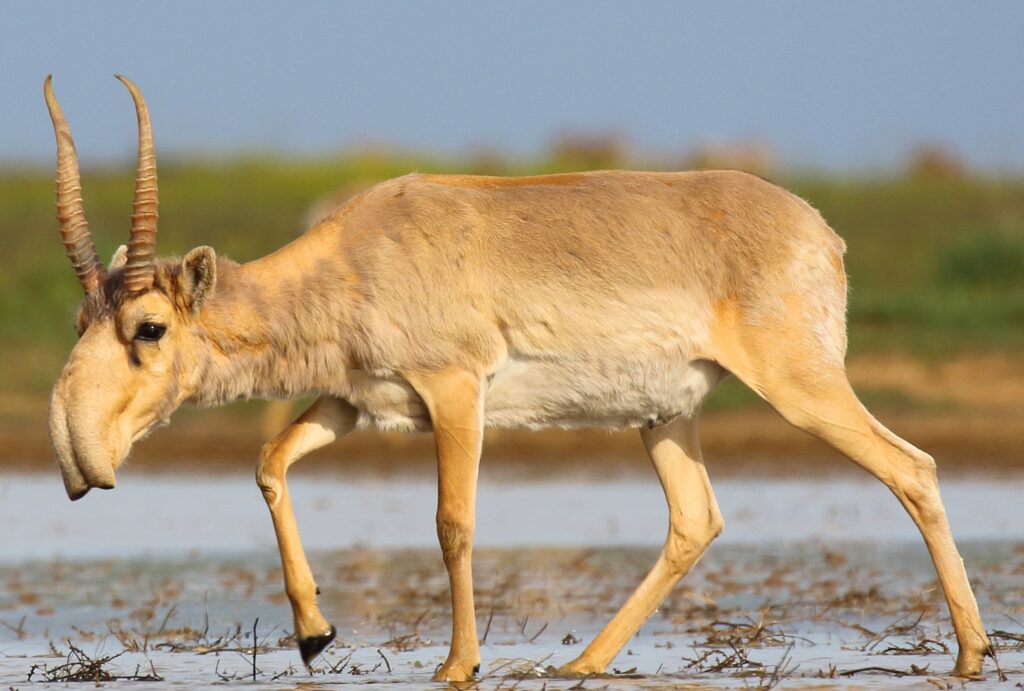
Kazakhstan’s Ecology Ministry Says Saiga Population May Surpass Five Million in 2026

Kazakhstan’s saiga antelope population, a key indicator of steppe ecosystem health and a globally vulnerable species, has reached unprecedented levels. According to the Ministry of Ecology and Natural Resources, the population now numbers approximately four million. Following the 2026 calving season, that figure could rise to nearly five million, cementing Kazakhstan’s role as the primary global habitat for the species.

At a recent meeting on sustainable saiga population management, Minister of Ecology Yerlan Nyssanbayev highlighted the dramatic recovery of the species. In 2005, the population had dwindled to fewer than 40,000. Thanks to a nationwide hunting ban, increased protection measures, and targeted monitoring programs, Kazakhstan has achieved one of the most notable wildlife conservation success stories in recent history.

However, the rapid rebound has brought new challenges. Ecologists warn that rising saiga densities are increasing competition with agricultural activities and contributing to pasture degradation. In response, the government has begun implementing controlled population management strategies. Between July 1 and November 30, 2025, around 196,000 saigas were culled, with carcasses processed by domestic enterprises.

“The work was carried out in strict accordance with scientific recommendations,” Nyssanbayev stated.

A separate concern is the trade in saiga derivatives, particularly male horns, which are in high demand in traditional Eastern medicine. According to the ministry, all horns are marked and securely stored by the Okhotzooprom State Enterprise. A digital traceability system, developed in partnership with Kazakhtelecom JSC, is currently being piloted to ensure full transparency in horn origin tracking. This technology, supported at the CITES International Conference, is under consideration as a mechanism for potentially easing current restrictions on derivative exports.

First Deputy Prime Minister Roman Sklyar has instructed the Ministry of Ecology and other relevant agencies to finalize regulatory frameworks for labeling and circulation of saiga products, and to develop comprehensive measures for managing the growing population in 2026.

The dramatic saiga recovery has also drawn international attention. As previously reported by The Times of Central Asia, Kazakhstan has agreed to transfer 1,500 saiga antelopes to China in 2026 to support efforts to reintroduce the species beyond its historical range in Central Asia.

How the Russian Relocation Wave Reshaped Kazakhstan’s Economy

In September 2022, northern Kazakhstan’s border crossings experienced huge surges as tens of thousands of Russians fled mobilization for the war in Ukraine. In Almaty and Astana, rental prices soared to historic highs, and social infrastructure came under intense pressure. At the time, the influx seemed poised to destabilize the country’s established equilibrium.

Two years on, the situation has transformed. The initial surge subsided, and spontaneous migration underwent a natural filtering process. Many who saw Kazakhstan as a temporary stop have moved on or returned to Russia. Those who made a conscious decision to stay have legalized their status and integrated into the local economy.

Despite initial fears, the mass relocation did not damage Kazakhstan’s economy. On the contrary, the so-called “Russian exodus” accelerated Almaty and Astana’s evolution into cosmopolitan urban centers, while introducing lasting economic shifts.

A New Diaspora

Understanding the impact of the mass migration requires distinguishing transient travelers from those who settled. During the peak in autumn 2022, more than 400,000 Russian citizens crossed the border, though most quickly departed Kazakhstan.

According to Kazakhstan’s Interior Ministry, from January 2023 to September 2024, more than 80,000 Russian citizens received residence permits for work. Including family members and remote workers, the core of the relocated population can be estimated at 100,000–120,000 people.

Those who remained form a skilled urban middle class, IT specialists, engineers, doctors, and entrepreneurs, largely aged 25 to 40. When the “visa run” legal loophole allowing stay extensions by briefly exiting the country was abolished in January 2023, many were forced to legalize their presence. The rule change pushed many relocants to formalize their stay through work contracts or business registration, which in turn made their economic activity more visible to the state.

By the end of 2023, the number of registered legal entities with Russian participation exceeded 18,000, a 70% increase. In 2024, that number rose to more than 23,000.

The “Cappuccino Effect”

The arrival of tens of thousands of solvent consumers brought not only capital, but also the consumption habits of Russia’s megacities. International institutions, including the IMF, have acknowledged that Kazakhstan’s 2023 GDP growth was supported in part by robust domestic demand. Spending surged in restaurants, delivery services, taxis, and gyms, especially in Almaty and Astana. This boost helped small and medium-sized businesses recover from the pandemic.

Russian entrepreneurs, opening everything from coffee shops to architecture firms, raised service standards and intensified competition. Local businesses responded by improving their quality and digitalizing operations. However, this also pushed up consumer prices, contributing to inflation and affecting local purchasing power.

Housing remains the most visible pressure point. While the panic of late 2022 has passed, rents remain well above pre-crisis levels. Analysts estimate that average house prices are still 40% higher than in 2021. This has fueled gentrification, with central Almaty’s “Golden Square” and elite areas of Astana becoming expat enclaves. Students, public sector workers, and young families have increasingly been pushed to the outskirts, increasing commuting times and straining public transport.

Many relocants are transitioning from tenants to homeowners, bolstering demand in the mid to high-end housing segments.

Labor Market and Social Integration

Fears that migrants would displace local workers have largely failed to materialize. While competition has intensified in some white-collar sectors, particularly IT, Kazakhstan has benefited overall.

The national tech park, Astana Hub, has seen dramatic growth. Relocated startups and global players, such as inDrive, Playrix, and MyTona, have boosted Kazakhstan’s IT service exports. By 2023, Kazakhstan’s IT exports had surpassed $500 million, with Astana Hub residents alone exporting over $280 million worth of services. President Kassym-Jomart Tokayev has since set a $1 billion IT export target by 2026.

In other corporate sectors, such as marketing and consulting, there is tension, with local professionals facing wage pressure from relocated workers willing to accept lower salaries. Still, this dynamic has prompted many Kazakh professionals to upskill and compete more effectively.

Socially, the integration process is mixed. Many relocants are enrolling in Kazakh language courses, viewing this not just as a practical necessity but also as a gesture of respect. Unlike earlier migration waves marked by colonial overtones, today’s arrivals tend to reject imperial narratives and express respect for local culture.

Still, complete assimilation is rare. In Almaty and Astana, many relocants operate in semi-insular “bubbles,” frequenting familiar venues and working in coworking spaces. However, these communities are not closed: business partnerships and mixed work teams are gradually blurring the lines between old and new residents.

Looking Ahead

The key question now is whether these relocants will remain if the war ends. Indicators such as school enrolments, business formation, and mortgages suggest that a significant share of relocants have put down roots.

Kazakhstan has gained an unexpected demographic and intellectual dividend. The initial shock of migration has been transformed into economic opportunity. The next challenge lies in administration, ensuring the successful integration of this new class of taxpayers without triggering social imbalance or resentment among the native population.

Why Tajikistan Chose the Desert Partridge as Its Symbol for 2026

Tajikistan has designated the desert partridge as its “Bird of the Year 2026”, a move environmentalists say could mark a turning point in the country’s approach to protecting fragile desert ecosystems.

The National Academy of Sciences of Tajikistan concluded its annual public vote by officially selecting the desert partridge, locally known as chil or kabki zirak, as the national avian symbol for the coming year. This rare and elusive species inhabits the southern and western desert zones of the country, areas that remain among the least studied in Tajikistan’s environmental landscape.

Although no systematic population surveys exist, ornithologists agree that the desert partridge is in decline. Primary threats include habitat degradation, overgrazing, agricultural expansion, and the absence of long-term ecological monitoring. Environmental advocates hope the bird’s new status will encourage state-led conservation efforts in arid regions that have historically received little attention.

Measuring 30-35 centimeters in length and weighing up to 450 grams, the desert partridge is ideally adapted to its environment. Its sandy plumage offers effective camouflage in rocky deserts, while distinctive dark stripes on its head help distinguish it from other species. The bird rarely flies, instead relying on swift footwork to navigate between shrubs.

Its preferred habitat includes plains, foothills, and dry plateaus. One of the most resilient species in Central Asia’s deserts, the partridge can survive without access to open water, making it a model of adaptation to extreme conditions.

Scientists say the selection of the desert partridge is a conscious signal that Tajikistan must begin prioritizing the study and protection of desert ecosystems. The Bird of the Year status will facilitate comprehensive population monitoring and draw public and institutional attention to the environmental impact of climate change.

In 2025, Tajikistan named the great bustard, one of its rarest bird species, as its bird of the year. Approximately 23 nesting pairs and up to 60 individuals during migration have been documented.

Launched in 2007, the Bird of the Year program has previously featured notable species such as the eagle owl, blue magpie, white stork, Tibetan snowcock, hoopoe, peregrine falcon, swallow, golden eagle, oriole, goldfinch, turtle dove, and the beautiful bustard.