• KGS/USD = 0.01144 0%
  • KZT/USD = 0.00212 0%
  • TJS/USD = 0.10432 -0.29%
  • UZS/USD = 0.00008 0%
  • TMT/USD = 0.28490 0%
  • KGS/USD = 0.01144 0%
  • KZT/USD = 0.00212 0%
  • TJS/USD = 0.10432 -0.29%
  • UZS/USD = 0.00008 0%
  • TMT/USD = 0.28490 0%
  • KGS/USD = 0.01144 0%
  • KZT/USD = 0.00212 0%
  • TJS/USD = 0.10432 -0.29%
  • UZS/USD = 0.00008 0%
  • TMT/USD = 0.28490 0%
  • KGS/USD = 0.01144 0%
  • KZT/USD = 0.00212 0%
  • TJS/USD = 0.10432 -0.29%
  • UZS/USD = 0.00008 0%
  • TMT/USD = 0.28490 0%
  • KGS/USD = 0.01144 0%
  • KZT/USD = 0.00212 0%
  • TJS/USD = 0.10432 -0.29%
  • UZS/USD = 0.00008 0%
  • TMT/USD = 0.28490 0%
  • KGS/USD = 0.01144 0%
  • KZT/USD = 0.00212 0%
  • TJS/USD = 0.10432 -0.29%
  • UZS/USD = 0.00008 0%
  • TMT/USD = 0.28490 0%
  • KGS/USD = 0.01144 0%
  • KZT/USD = 0.00212 0%
  • TJS/USD = 0.10432 -0.29%
  • UZS/USD = 0.00008 0%
  • TMT/USD = 0.28490 0%
  • KGS/USD = 0.01144 0%
  • KZT/USD = 0.00212 0%
  • TJS/USD = 0.10432 -0.29%
  • UZS/USD = 0.00008 0%
  • TMT/USD = 0.28490 0%

The Silk Visa Deadlock: The Long Road to a Borderless Central Asia

The year 2025 will likely be remembered as a milestone in Central Asian diplomacy. Regional leaders signed landmark agreements on water and energy cooperation and launched major investment projects. At high-level meetings, Central Asian presidents emphasized a new phase of deeper cooperation and greater unity, highlighting strategic partnership and shared development goals.

But at ground level, at border crossings such as Korday between Kazakhstan and Kyrgyzstan, or the congested diversion routes replacing the closed Zhibek Zholy checkpoint, the picture is far less seamless. Long queues, heightened scrutiny, and bureaucratic delays remain the norm.

While political rhetoric celebrates unity, the reality on the ground tells a different story. The region’s physical borders remain tightly controlled. A key symbol of unrealized integration is the stalled “Silk Visa” project, a proposed Central Asian version of the Schengen visa that would allow tourists to travel freely across the region. The project has made little headway, with experts suggesting that, beyond technical issues, deeper concerns, including economic disparities and security sensitivities, have played a role.

Silk Visa: A Stalled Vision

Launched in 2018 by Uzbekistan and Kazakhstan, the Silk Visa was envisioned as a game-changer for regional tourism and mobility. Under the scheme, tourists with a visa to one participating country could move freely across Central Asia, from Almaty to Samarkand and Bishkek.

Seven years on, the project has yet to materialize. Official explanations point to the difficulty of integrating databases on “undesirable persons.” But as Uzbekistan’s Deputy Prime Minister acknowledged earlier this year, the delay stems from the need to harmonize security services and create a unified system. Experts also cite diverging visa policies and resistance from national security agencies unwilling to share sensitive data. As long as each country insists on determining independently whom to admit or blacklist, the Silk Visa will remain more aspiration than policy.

Economic Imbalance: The Silent Barrier

The most significant, albeit rarely acknowledged, hurdle to regional openness is economic inequality. Kazakhstan’s GDP per capita, at over $14,000, is significantly higher than that of Uzbekistan or Kyrgyzstan, which hover around $2,500-3,000. This disparity feeds fears in Astana that full border liberalization would trigger a wave of low-skilled labor migration, putting strain on Kazakhstan’s urban infrastructure and labor market.

While Kazakhstan is eager to export goods, services, and capital across Central Asia, it remains reluctant to import unemployment or social tension. Migration pressure is already high: according to Uzbekistan’s Migration Agency, the number of Uzbek workers in Kazakhstan reached 322,700 in early 2025. Removing border controls entirely could exacerbate this trend, overwhelming already stretched public services.

Security Concerns and Regional Tensions

The geopolitical landscape further complicates the dream of borderless travel. A truly open regional system would require a strong, unified external border, something unattainable given Afghanistan’s proximity.

The persistent threats of drug trafficking and extremist infiltration compel Uzbekistan and Tajikistan to maintain tight border controls. Kazakhstan, while geographically removed, remains cautious about loosening controls along its southern frontier. Moreover, despite recent agreements on delimiting the Kyrgyz–Tajik border, tensions in the area remain unresolved, underscoring the fragility of regional trust, making the creation of a unified security space across all five countries a distant prospect.

The war in Ukraine has further complicated the region’s geopolitical calculus. Russia remains Central Asia’s primary destination for its migrant labor, but the conflict has strained Moscow’s economic capacity and pushed regional governments to diversify partnerships. This uncertainty reinforces risk-averse security policies, making leaders even less willing to consider fully open borders.

Reality Check: Trade Over Tourism

Perhaps the most tangible measure of regional integration is logistics. Yet even this is underwhelming. The Korday (Ak Zhol) crossing remains a choke point for trade between Kazakhstan and Kyrgyzstan. Despite digital queueing systems, businesses continue to report delays, and truck drivers face multi-day traffic jams. These recurring trade bottlenecks indicate that borders are still used as tools of economic leverage, undermining promises of seamless transit.

Considering all factors, the emergence of a full-fledged ‘Central Asian Schengen’ in the foreseeable future appears unlikely. The combination of security risks and economic imbalance makes open borders politically unpalatable. Instead, the region may follow a model akin to “Two-speed Europe,” with elite-driven economic integration, such as simplified cargo transit and digital customs systems, advancing faster than broader public mobility. For most citizens, however, the dream of borderless Central Asia will remain just that: a dream.

Face Pay, Palm Scans, and AI Cameras: Inside Kazakhstan’s Digital Transformation

Daily life in Almaty, Kazakhstan’s largest city, increasingly resembles scenes from a futuristic film. Subway fares can be paid with a glance, schoolchildren enter campuses by scanning their palms, and traffic flows are monitored by an expansive video surveillance system. With just a smartphone, citizens can apply for a marriage license, open a business, or access official documents within seconds.

Kazakhstan has embraced rapid digitalization, positioning itself as a regional leader in GovTech and fintech. Authorities promote this trajectory as a means to create a secure and efficient environment, and the public has largely welcomed it. The country now boasts one of the world’s highest penetration rates for cashless payments and digital services.

Yet the swift adoption of emerging technologies has brought new challenges. The digital infrastructure is evolving faster than the country’s legal frameworks can adapt, raising concerns among experts about how to balance technological convenience, public safety, and the right to privacy.

Biometric Security or Overreach?

Kazakhstan’s biometric systems are being integrated into a growing ecosystem of everyday services. A prominent example is the Alaqan system in schools, which replaces traditional entry cards with palm-scanning technology. Currently in a pilot phase at nearly 300 schools, the government plans to expand the system nationwide within the next two to three years, should it prove to be successful.

Supporters argue this enhances child safety by preventing unauthorized access. Critics, however, warn that it also involves building a vast biometric database of minors, requiring unprecedented security protocols.

Simultaneously, the Ministry of Digital Development is rolling out a national video surveillance network powered by artificial intelligence. The system, which integrates citywide cameras into a unified platform, will enable real-time facial and license plate recognition and detect incidents such as fights, large gatherings, or abandoned items. Minister of Artificial Intelligence and Digital Development Zhaslan Madiyev described the system as a tool to monitor public safety 24/7.

Equipment Dependence and Strategic Risk

Much of Kazakhstan’s surveillance infrastructure relies on equipment from major Chinese companies such as Hikvision and Dahua. Their products are favored for their cost-effectiveness, but concerns have been raised internationally over cybersecurity vulnerabilities and potential data access “backdoors.” Several U.S. and EU countries have imposed restrictions on these firms for national security reasons.

In Kazakhstan, which pursues a multi-vector foreign policy, the issue is viewed more as technical than political. Experts recommend diversifying suppliers and enforcing strict data encryption protocols, regardless of the origin of the equipment.

Kazakhstan’s exposure to cybersecurity risks became clear in February 2024, when a leak involving the Chinese firm iSoon compromised databases belonging to local telecom operators and targeted government institutions, including the Unified Pension Fund. The incident prompted an urgent reassessment of data security practices. Centralized data hubs, experts noted, can only function securely if accompanied by significant investment in cybersecurity infrastructure.

Legislation Lagging Behind

While Kazakhstan has a law on personal data, experts argue it is outdated, particularly given the rapid integration of artificial intelligence into public systems. Recent legislative amendments now allow biometric identification to be used for public safety and crime prevention. However, civil society groups are calling for clearer protocols outlining who can access biometric data, under what conditions, and with what level of oversight.

A promising development is the drafting of a new Digital Code intended to unify existing regulations and bring Kazakhstan closer to international standards on data protection.

The Road Ahead

Kazakhstan is now widely recognized as Central Asia’s digital hub, showcasing how technology can streamline government services and enhance everyday life. But digital leadership also comes with heightened responsibility. Public trust hinges on the state’s ability to safeguard the personal data it collects and establish transparent legal mechanisms for its use.

The challenge for Kazakhstan is clear: to demonstrate that digital security and personal privacy can and must coexist.

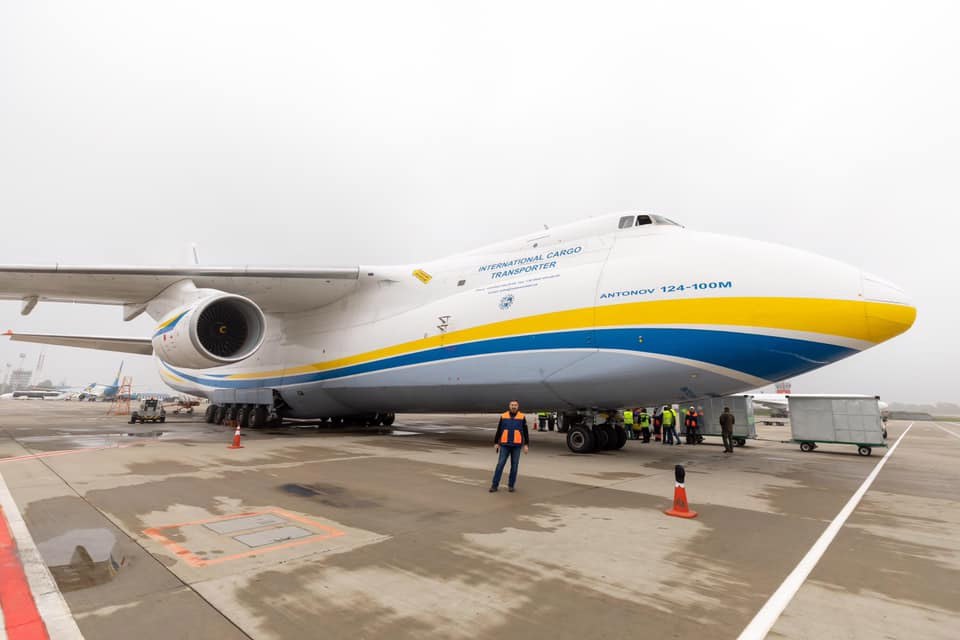
Rare Antonov An-124 Cargo Plane Makes Brief Stop in Tashkent

A rare sight drew the attention of aviation enthusiasts in Tashkent this week as an Antonov An-124-100M Ruslan, one of the world’s largest serially produced cargo aircraft, landed at Islam Karimov International Airport. According to Tashkent Sky News, the aircraft arrived from Urumqi and was registered as UR-82027. Notably, it bore the inscription “Be brave like Kharkiv”, a tribute to the resilience of the Ukrainian city under Russia’s invasion.

The An-124 remains a global leader in transporting oversized and heavy cargo. Capable of carrying between 120 and 150 tons, it features a cargo hold with a volume of approximately 1,050 cubic meters. The aircraft is equipped with both nose and tail cargo doors, each with built-in ramps, allowing simultaneous loading and unloading from either end, an advantage for complex logistics operations involving large or irregularly shaped equipment.

Its robust design includes heavy-duty, multi-wheel landing gear, enabling it to land on less-developed airstrips. This operational flexibility makes the An-124 especially valuable in situations where access to major international airports is limited.

Members of the Uzbekistan Spotters Team gathered at the airport to capture images of the aircraft during its brief stay. For local aviation enthusiasts, the visit offered a rare opportunity to photograph an iconic aircraft and share the experience with the global spotting community.

Wallet in Telegram Launches in Uzbekistan, Expanding Crypto Access to Millions

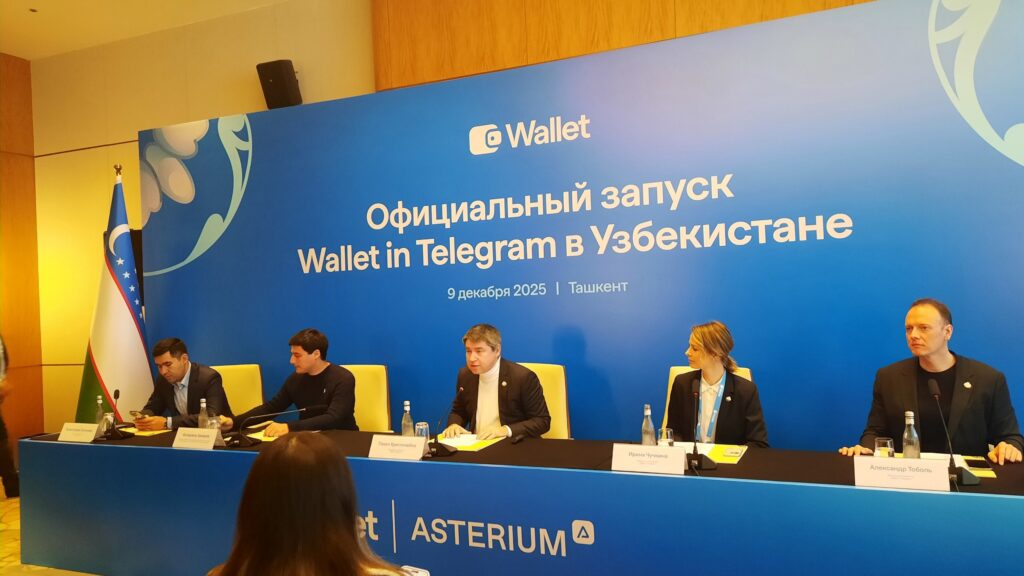
Wallet in Telegram, a global digital asset service integrated directly into the Telegram messaging app, officially launched in Uzbekistan on December 9, opening up crypto access to more than 27 million local users. The move marks a major expansion of Telegram’s financial ecosystem and reinforces Uzbekistan’s role as a regional leader in regulated digital finance.

The service allows users to buy, store, and transfer cryptocurrencies without needing to install additional applications. Registration takes only seconds, and transactions can be completed using local payment systems such as Humo, Visa, and Mastercard. Wallet currently supports Bitcoin, Toncoin, USDT, and over 200 other digital assets.

According to the company, the goal is to make crypto transactions as seamless as sending a message, an especially relevant approach in Uzbekistan, where Telegram usage exceeds 88% of the internet-connected population. By embedding financial tools into an everyday platform, Wallet aims to normalize digital asset use and broaden access to global financial technologies.

The technical infrastructure for Wallet’s Uzbekistan launch is provided by Asterium, the country’s largest crypto ecosystem and a key fintech player. Asterium is responsible for ensuring secure transactions, identity verification, and data protection. “Our mission at Asterium is to make working with crypto assets simple and accessible for everyone. Wallet in Telegram reflects our product philosophy: it is convenient, transparent, and secure, meaning it is genuinely useful for people,” said Komilhodja Sultonov, CEO of Asterium.

The service was licensed by Uzbekistan’s National Agency for Perspective Projects (NAPP), the regulatory body overseeing the digital asset sector. Uzbekistan has developed one of Central Asia’s most comprehensive legal frameworks for crypto, with a strong focus on user protection and structured innovation.

In response to questions from The Times of Central Asia, NAPP clarified how Wallet aligns with current regulations. Askarjon Zakirov, Head of the Crypto-Assets Turnover Sphere Development Department, emphasized that Uzbekistan legally distinguishes crypto assets from fiat currency. “Firstly, we say that a crypto asset is not a means of payment or a monetary equivalent,” he said.

@TCA/Sadokat Jalolova

Zakirov explained that crypto is treated as a form of property under Uzbek law. As such, transferring cryptocurrency is regarded as a transfer of property rights rather than a financial transaction with monetary obligations.

Pavel Khristolubov, COO of Fintech and Web3 at Wallet in Telegram, also underscored the platform’s commitment to regulatory compliance. “It’s very important for us to operate within the framework of our license. This means we don’t compete with local payment systems,” he said. Khristolubov added that Wallet users can choose between custodial services and non-custodial, on-chain options, offering varying degrees of freedom and security.

Andrew Rogozov, CEO of The Open Platform (TOP), the technology company behind Wallet, described Uzbekistan as one of the world’s most dynamic digital markets. “By combining Telegram’s scale with regulatory clarity and high mobile adoption, we see Uzbekistan as a model for how emerging markets can leapfrog into convenient, technology-driven finance,” he said.

Globally, Wallet in Telegram has over 150 million registered users. Its launch in Uzbekistan follows its U.S. debut in July 2025, with expansion planned in at least 15 more countries over the next two years.

One of the most promising opportunities for Uzbekistan may be the integration of Wallet into Telegram’s broader digital economy. Irina Chuchkina, Chief Growth Officer at Wallet in Telegram, noted that the platform enables monetization tools for creators, media channels, and online communities. “Some blockchain supports the Telegram economy in general. It’s not localized to a particular country or market,” she said, describing crypto wallets as “a fundamental pillar of our super app strategy.”

Chuchkina also highlighted future features such as Ton Connect, a blockchain-based tool for digital service authorization. While not all services will be available in Uzbekistan from the outset, she said these examples illustrate the platform’s long-term potential.

Uzbekistan has positioned itself as a transparent, well-regulated digital asset hub. The arrival of Wallet in Telegram reinforces this status and introduces a major global player into the country’s fast-growing fintech landscape.

Almaty Scientists Develop Innovative Method to Extract Valuable Materials from Agricultural Waste

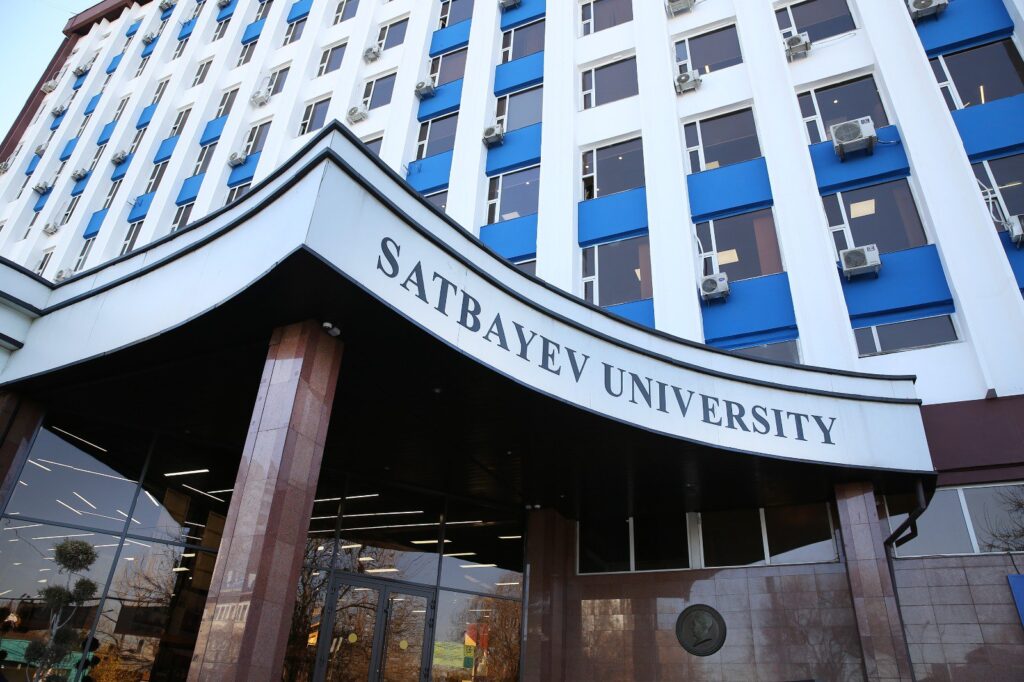
Researchers at Satbayev University in Almaty have unveiled an innovative technology that extracts high-value materials from sugar beet pulp, the primary byproduct of sugar production, accounting for up to 80% of all biomass.

Under the guidance of Associate Professor Sana Kabdrakhmanova, postdoctoral researcher Faisal Kholiya and PhD student Meruert Imanbek employed advanced hydrothermal synthesis techniques to derive high-quality pectin suitable for use in the food and pharmaceutical industries, cellulose with a yield of approximately 35%, and photoluminescent carbon quantum dots ranging from 8 to 14 nanometres, all from sugar beet waste.

The extracted materials have diverse applications, including product shelf-life extension technologies, drug delivery systems, modern diagnostic medicine, and various nanotechnology solutions.

“Our project is a striking example of the transformation of agricultural waste into high-quality, premium materials,” said Kabdrakhmanova, who leads the project.

The research was conducted at the International R&D Center for Advanced Functional Materials and Composites, part of the Department of Chemical Processes and Industrial Ecology at the Omirkhan Baikonurov Institute of Mining and Metallurgy at Satbayev University.

The findings underscore the potential of agricultural waste processing as both a sustainable and economically viable approach.

Particular attention has been given to the photoluminescent carbon quantum dots produced through the project. These nanoscale particles are used in medical diagnostics, biological sensors for cellular research, LED components in electronics, and nanodevices in photonics.

As previously reported by The Times of Central Asia, Kazakh scientists are actively pursuing other innovative recycling technologies. One such project, led by the Kazakh Road Research Institute, involves developing methods to restore worn asphalt for reuse in road repair and construction.

Kyrgyzstan Secures Exclusive Rights to World Nomad Games Brand

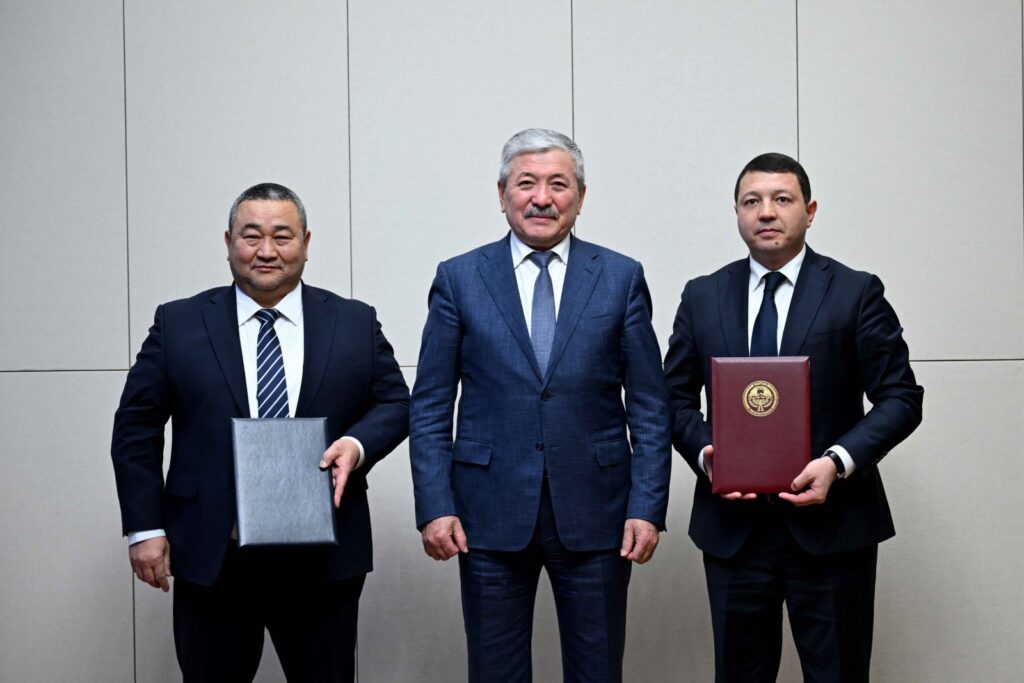
On December 9, Kyrgyzstan officially received the exclusive rights to the World Nomad Games trademark in a formal handover ceremony attended by Chairman of the Cabinet of Ministers Adylbek Kasymaliev.

Over the years, the Games have evolved into a major international festival showcasing Central Asia’s rich cultural traditions through events featuring birds of prey, equestrian sports, traditional wrestling, archery, and displays of physical skill and endurance.

The rights were transferred by Askhat Akibayev, the founder of the World Nomad Games and former Plenipotentiary Representative of the Kyrgyz Government in the Issyk-Kul region.

Kasymaliev praised Akibayev’s foundational role in developing the Games into a globally recognized cultural and sporting event. “Over the past decade, the World Nomad Games have become one of the largest global platforms for promoting ethnic culture, the values of nomadic civilization, and traditional sports,” he said. “Today, this project is a true national brand for Kyrgyzstan, the flagship of our state’s cultural diplomacy, and an important symbol of our international authority.”

Launched by Kyrgyzstan in 2012, the World Nomad Games aim to revive and preserve the cultural heritage of nomadic civilizations. The inaugural Games were held in September 2014 in the resort town of Cholpon-Ata on the shores of Lake Issyk-Kul. Kyrgyzstan also hosted the second and third editions in 2016 and 2018. The 2022 Games were held in Turkey, and the 2024 edition took place in Kazakhstan.

Kyrgyzstan will host the sixth World Nomad Games from August 31 to September 6, 2026.