• KGS/USD = 0.01144 0%
  • KZT/USD = 0.00197 -0%
  • TJS/USD = 0.10904 0%
  • UZS/USD = 0.00008 0%
  • TMT/USD = 0.28490 0%
  • KGS/USD = 0.01144 0%
  • KZT/USD = 0.00197 -0%
  • TJS/USD = 0.10904 0%
  • UZS/USD = 0.00008 0%
  • TMT/USD = 0.28490 0%
  • KGS/USD = 0.01144 0%
  • KZT/USD = 0.00197 -0%
  • TJS/USD = 0.10904 0%
  • UZS/USD = 0.00008 0%
  • TMT/USD = 0.28490 0%
  • KGS/USD = 0.01144 0%
  • KZT/USD = 0.00197 -0%
  • TJS/USD = 0.10904 0%
  • UZS/USD = 0.00008 0%
  • TMT/USD = 0.28490 0%
  • KGS/USD = 0.01144 0%
  • KZT/USD = 0.00197 -0%
  • TJS/USD = 0.10904 0%
  • UZS/USD = 0.00008 0%
  • TMT/USD = 0.28490 0%
  • KGS/USD = 0.01144 0%
  • KZT/USD = 0.00197 -0%
  • TJS/USD = 0.10904 0%
  • UZS/USD = 0.00008 0%
  • TMT/USD = 0.28490 0%
  • KGS/USD = 0.01144 0%
  • KZT/USD = 0.00197 -0%
  • TJS/USD = 0.10904 0%
  • UZS/USD = 0.00008 0%
  • TMT/USD = 0.28490 0%
  • KGS/USD = 0.01144 0%
  • KZT/USD = 0.00197 -0%
  • TJS/USD = 0.10904 0%
  • UZS/USD = 0.00008 0%
  • TMT/USD = 0.28490 0%
08 December 2025

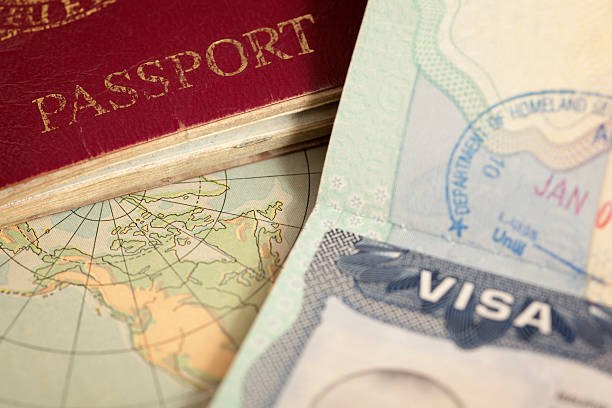
Moldova To End Visa-Free Travel for Kyrgyzstan and Tajikistan

Moldova has formally withdrawn from the Commonwealth of Independent States (CIS) visa-free travel agreement, a move that will introduce visa requirements for citizens of Kyrgyzstan and Tajikistan. The Moldovan parliament approved the government’s proposal to terminate the 1992 Bishkek Agreement, according to inbusiness.kz.

The CIS, which originally included 11 post-Soviet states upon its creation in 1991, now counts only seven full members. Although Moldova ended its membership in the CIS earlier, it had continued to uphold visa-free travel arrangements with several former Soviet republics, including countries in Central Asia.

The new legislation does not affect Kazakhstan or Uzbekistan. Moldovan officials told local media that Chişinău intends to preserve visa-free travel with these two countries through separate bilateral agreements. “For citizens of Kazakhstan and Uzbekistan, the procedure for travel remains unchanged,” Azattyq.org reported, citing Moldovan government sources. In 2024, Moldova also announced plans to open its first embassy in Kazakhstan’s capital, Astana.

The new visa requirements apply solely to citizens of Kyrgyzstan and Tajikistan, who will now need to obtain visas for work, study, or personal travel to Moldova. Authorities in Chişinău explained that the decision is part of Moldova’s broader effort to align its legal framework with European Union standards. EU regulations require visas for all CIS nationals, and Moldova is gradually adjusting its migration and visa policies in preparation for EU accession.

The move comes in the wake of Moldova’s October 2024 referendum, in which voters supported the country’s path toward EU membership. Since then, the government has withdrawn from numerous CIS treaties, exited the CIS Interparliamentary Assembly, ceased payments to the Mir television network, and closed its local bureau.

Relations between Moldova and Kyrgyzstan have been further strained by unresolved issues, including Kyrgyzstan’s calls for the repayment of a Soviet-era debt and Moldova’s ban on Kyrgyz airlines due to their inclusion on the EU’s aviation safety blacklist. Kyrgyz civil activist Almaz Tazhybay told Vesti.kg that Kyrgyz carriers will only regain access to Moldovan airspace after meeting EU safety requirements.

Moldovan authorities have emphasized that the policy is not targeted at any specific country. Officials in Chişinău describe the changes as part of a broader legal realignment as Moldova pursues its goal of joining the European Union by 2030.


Kazakhstan Faces Deepening Medical Personnel Shortage Amid Rising Emigration

Kazakhstan continues to grapple with a severe shortage of medical personnel, a crisis intensified by the steady emigration of specialists. According to First Deputy Minister of Health Timur Sultangaziev, there are currently around 9,000 unfilled positions across the country, approximately 4,000 for doctors and over 5,000 for mid-level healthcare workers.

Speaking during a session of the Mazhilis, Kazakhstan’s lower house of parliament, Sultangaziev reported that roughly 2,500 medical professionals have left the country over the past five years. “There is an outflow of medical personnel from the healthcare system to foreign countries,” he said.

Sultangaziev cited inadequate compensation as the primary factor driving this exodus. In response, the government has allocated an additional $9.6 million this year to raise salaries for public emergency medical service employees. The Health Ministry is currently evaluating a further salary increase estimated at $19.2 million, though a final decision has yet to be made.

The parliamentary session also focused on proposed legislation to increase penalties for violence against medical workers. MP Askhat Aimagambetov noted that 280 such incidents have been officially recorded in the past five years, but suggested the real number is much higher. Many medical professionals reportedly choose not to report assaults, fearing retaliation or loss of work hours.

The draft bill includes a new article in the Criminal Code, introducing special legal status for “medical workers” and “ambulance drivers”, and stipulating harsher penalties for violent offenses. Aimagambetov compared the proposed sanctions to those for attacks on gamekeepers, which carry a maximum sentence of 12 years’ imprisonment.

“If a hooligan breaks the finger of an ordinary citizen, it’s moderate harm. If he breaks a surgeon’s finger, it’s a disaster. Thousands of operations may be cancelled because of one broken finger,” Aimagambetov said, emphasizing the vulnerability of ambulance staff, who must respond to emergency calls without regard to risk.

The final version of the bill outlines penalties including fines, correctional or community service, or up to three years’ restriction or deprivation of liberty for non-life-threatening violence. In cases involving aggravating circumstances, the punishment increases to 3-7 years. Life-threatening or severe injuries could result in 5-10 years’ imprisonment, or 7-12 years under aggravating conditions.

As previously reported by The Times of Central Asia, Kazakhstan has already begun implementing additional protective measures for medical personnel. In the summer, authorities announced plans to equip ambulance staff with body cameras in response to the rising number of assaults on healthcare workers.

KMG Pushes Back on Reports of European Asset Sale Amid Romania Refinery Losses

KazMunaiGaz (KMG) says it has no concrete plans to sell any of its European assets, though pressure is building to at least sell off some of the Kazakh company’s shares in oil refineries in Romania. Reports on November 21 said KMG was looking to privatize up to 50% of its shares in its subsidiary KMG International’s (KMGI) European operations in Europe.

The reports were based on a list of recommendations from Kazakhstan’s Agency for the Protection and Development of Competition (APDC), which proposed, as part of the 2026-2027 strategy, that KMGI should have a two-stage tender to sell up to 50% of its stakes. On November 26, KMG denied making any decisions about KMGI businesses in Europe, adding that the APDC’s list of recommendations “includes assets from different sectors, but this in itself does not automatically trigger a sale.”

Rompetrol

KMGI has 28 companies operating in seven countries, four of them European, but the focus of reports was on the two oil refineries KMGI owns in Romania. KMGI purchased 75% of the shares in the Romanian oil company Rompetrol in 2007, and in 2009 bought the remaining 25% of shares in the company. That sale included the Petromidia oil refinery, with a capacity of some five million tons annually, and the smaller Vega refinery, with a capacity of some 350,000 tons that Rompetrol owns.

KMGI also took ownership of the oil terminal near Constanta on the Black Sea coast, some 20 kilometers from the Petromidia refinery. The terminal imports mainly Kazakh oil.

KMGI invested billions of dollars in upgrades and modernization of the refineries and the terminal, and finally, in 2017, operations of subsidiary Rompetrol Rafinare (54.63% KMGI and 44.7% Romanian state through the energy Ministry) showed a profit – $80 million.

By 2022, profits had slightly increased to $90.3 million, but in December that year, the Romanian authorities changed tax regulations, and in 2023, Rompetrol Rafinare registered a net loss of some $270.5 million, and in 2024, a loss of $78 million. In the first six months of 2025, the company lost $53 million and paid some $771 million in taxes to the Romanian government.

Rompetrol Rafinare has complained to the Romanian government that the tax burden is preventing the company from investing in new projects and has brought a legal challenge to the solidarity tax in court. In such a situation, it seems unlikely KMG would easily find a party interested in buying up to 50% of KMGI’s Romanian operation, unless the price was very low.

Opponents of the proposed arrangement point to the $7 billion in investment KMG has made over nearly 20 years into upgrading the Romanian refineries as a reason to be patient for a while longer.

KMGI

KMG has subsidiaries operating in Switzerland, Bulgaria, Turkey, Moldova, and Georgia, as well as in Romania and Kazakhstan. At the start of 2025, there were reports that KMG was considering the acquisition of an oil refinery in Bulgaria from Russia’s LUKoil, so it appeared the Kazakh company was looking to expand its operations in Europe.

The EU has been decreasing the amount of oil it buys from Russia since Moscow launched its full-scale invasion of Ukraine in February 2022. As imports of Russian oil have decreased, the EU’s imports of Kazakh oil have been increasing, and according to some sources, Kazakhstan is now the third largest supplier of oil to the EU (behind the United States and Norway).

It would seem KMG’s European assets should remain valuable for at least the near-term future.

Reports about the possible sale of KMGI shares in the Romanian companies did not mention possible sales of shares in any other specific KMG assets in Europe. It could be that there are some in the Kazakh government who feel there have already been enough problems in Romania, and it is time to cut KMG’s losses there.

However, Petromidia and Vega are the only two oil refineries KMG owns in Europe. They are links in a KMG ground-to-the-gas-pump chain that extracts oil in Kazakhstan, transports it via pipelines, railways, and oil tankers that the company partially or fully owns, and, in the case of Romania, refines that oil and then sells it as gasoline at the more than 1,400 petrol filling stations Rompetrol operates in Romania, Georgia, Bulgaria, and Moldova.

The APDC mentioned the privatization of KMGI shares was meant to attract strategic partners and investors who could “ensure the continued operations of KMG’s international businesses.” So, it could be that the APDC or someone else in the Kazakh government has already identified certain companies as potential strategic partners, possibly someone who could convince the Romanian government to drop its onerous solidarity tax.

KMG’s response seems to indicate that nothing will happen quickly, but that something could happen later.

Turkmenistan Identified as World’s Largest Source of Methane Super-Emitters

Turkmenistan has emerged as the top global source of major methane emissions in the oil and gas sector, according to new data published by the U.S.-based Stop Methane project. The findings, widely reported by Central Asian media, are based on satellite observations collected between January 1 and November 12 of this year.

Researchers at the University of California, Los Angeles, which leads the project, compiled the ranking using satellite data to identify sites with the highest methane emissions over specific time intervals. The list includes locations where emissions ranged from 3.7 to 10 tons per hour, levels deemed significant contributors to atmospheric pollution.

Industrial facilities in Turkmenistan, particularly near Esenguly and Turkmenabat in the Balkan province, accounted for the majority of high-emission events. Out of the 25 entries in the ranking, 17 are located in Turkmenistan, far more than any other country. The remaining positions are held by a handful of other states, including Venezuela, Iran, Pakistan, and the United States.

Decades-old Soviet-era infrastructure is widely cited by independent energy analysts as one of the main reasons Turkmenistan dominates global methane-leak rankings. Much of the country’s gas production network relies on older pipelines, compressors, and separation units that were never modernized to international leak-prevention standards. Because methane is colorless and odorless at industrial concentrations, these failures can persist unnoticed for long periods without satellite monitoring. Experts note that relatively inexpensive upgrades – such as replacing valves, improving maintenance, and installing continuous monitoring – could sharply reduce emissions if implemented.

Stop Methane analysts based their assessment on over 3,000 methane plumes detected at approximately 2,000 oil and gas sites worldwide. The data was collected using the U.S.-operated Tanager-1 satellite, which monitors key oil and gas extraction zones. The satellite’s capabilities allow for the detection of large leaks that are often invisible from the ground.

The surge in methane detection over the past two years reflects not a sudden rise in leaks but a leap in the resolution of satellite instruments now able to spot plumes previously undetectable. Earlier monitoring systems could identify only massive blowouts, whereas newer platforms – including Tanager-1 and NASA’s EMIT – can map medium-sized leaks in near-real time. This technological shift has revealed a methane footprint far larger than governments and companies had reported, making emissions visible to the international community and accelerating calls for transparency and mitigation.

The organization highlighted the serious environmental impact of methane, emphasizing its role in both air pollution and climate change. Beyond the climate implications, methane leaks represent a direct economic loss for Turkmenistan. The International Energy Agency estimates that most methane emissions in the oil and gas sector can be avoided at little or no net cost because the captured gas can be sold. For a country whose budget relies heavily on gas exports, the volume of methane escaping from super-emitter sites translates into millions of dollars of lost revenue annually. Addressing these leaks, therefore, offers both environmental and fiscal benefits.

For context, a site emitting five tons of methane per hour, roughly mid-range on the list, releases as much pollution annually as one million SUVs or a large coal-fired power plant.

Methane emissions have long been a concern in Turkmenistan. In 2019, international environmental groups reported that leaks at the Korpeje gas field in western Turkmenistan generated climate impacts equivalent to those from one million cars.

Despite this, Turkmen authorities have pointed to recent progress. Speaking at a regional climate forum in April, President Serdar Berdimuhamedov stated that the country had reduced methane emissions by 11% by the end of 2024, surpassing national targets.

Turkmenistan’s official messaging increasingly emphasizes environmental progress, yet satellite observations still reveal frequent large-scale leaks across its gas fields. This disconnect has led analysts to question the scope and transparency of the country’s mitigation programs. Without independent verification of emissions reductions, experts warn that the credibility gap between government statements and satellite-detected leaks may widen, complicating the country’s engagement with international climate initiatives.

Turkmenistan ranks fifth globally in natural gas reserves, estimated at 400 trillion cubic feet as of 2025. In 2023, the country produced a record 3.0 trillion cubic feet of dry natural gas. While China remains its primary export market, Ashgabat continues to seek new buyers. Turkmenistan’s methane profile is becoming a geopolitical liability as major consumers introduce stricter rules on the carbon and methane intensity of imported fuels. The European Union, in particular, is preparing standards that would penalize or restrict gas with high upstream emissions. This poses a potential obstacle to Turkmenistan’s long-sought ambitions to access European markets via the Trans-Caspian route, especially if competing suppliers in the region can demonstrate cleaner production. However, the U.S. Department of Energy has warned that elevated methane emissions could hinder potential access to European markets via the Trans-Caspian route.

Turkmenistan also holds an estimated 600 million barrels of oil and produced an average of 275,000 barrels per day in 2024. Across Central Asia, several oil- and gas-producing states are grappling with methane management, but Turkmenistan stands out due to the sheer scale of its super-emitter sites. Kazakhstan and Uzbekistan have also been flagged for significant leaks, though typically at lower levels and with fewer major emission points. Analysts argue that the region’s shared dependence on aging infrastructure makes coordinated methane-reduction strategies increasingly important, particularly as global scrutiny intensifies.

Tashkent Launches Emergency Measures as Air Pollution Worsens

Tashkent is experiencing a significant decline in air quality, prompting President Shavkat Mirziyoyev to sign a decree on November 25 implementing urgent environmental measures. According to the presidential press service, the decree establishes a special commission to take immediate steps to stabilize the situation.

The decision follows a high-level meeting on November 24 chaired by Saida Mirziyoyeva, head of the Presidential Administration, to discuss “urgent measures to improve the ecological situation in Tashkent.” Experts at the meeting presented a series of short, medium, and long-term proposals, ranging from immediate restrictions to structural reforms aimed at preventing future pollution spikes.

The new plan includes enhanced environmental monitoring, stricter controls on major polluters, tighter regulations for construction sites, and citywide greening initiatives. Authorities also intend to develop a modern air quality assessment system supported by new scientific infrastructure.

A key component of the initiative is the establishment of a specialized laboratory under the State Committee for Ecology to analyze sources of PM2.5 pollution, one of the primary contributors to the current smog. To expedite the process, the decree exempts a broad range of imported equipment from customs duties. These exemptions apply to automated monitoring stations, dust-gas filtration systems, localized water-treatment devices, and thousands of quartz filters required for sampling. The measure also extends to household air purifiers brought into the country by individuals and businesses, as demand for such devices has surged.

In response to the prolonged dry conditions, the Muslim Board of Uzbekistan announced the performance of istisqo, a traditional Islamic prayer for rain, to be held on November 28 following Friday prayers in mosques nationwide. “In Islamic history, istisqo has been performed during periods of drought, and its benefits have been noted in hadith literature,” the Board stated. Teachers and students from Islamic institutions will also recite the entire Sahih of Imam al-Bukhari before the prayer.

This call for collective prayer comes as climate change continues to intensify environmental stress in Uzbekistan. According to a newly released Atlas of Environmental Change by the UN Environment Programme (UNEP), Uzbekistan’s average annual temperature has risen by 1.6°C over the past 60 years, nearly three times the global average of 0.6°C. In the Aral Sea region, warming has reached 1.8 to 2.5°C, contributing to more frequent droughts, particularly in summer and autumn, and placing further strain on already limited water resources.

UNEP describes Uzbekistan’s water resources as “among the country’s most valuable and vulnerable,” noting that they depend almost entirely on sources located outside its borders. The atlas highlights the increasing importance of integrated water-resource management and cross-border cooperation, which officials say have already helped address local water-security issues. The agency also points to the adoption of water-saving technologies such as drip irrigation, which are critical to sustaining the country’s irrigated agricultural sector, the backbone of many rural economies.

Despite demographic and environmental pressures, the report finds that Uzbekistan has achieved near self-sufficiency in food production. Reforestation is also a national priority. UNEP praises the Yashil Makon (Green Space) initiative, launched in 2021 with the goal of planting one billion trees and shrubs over five years, which is already expanding green urban areas from 7.6% toward a target of 30%.

Drawing on 60 years of satellite data and multiple national and regional sources, UNEP states that the atlas provides policymakers with a “clear, visual, and evidence-based” understanding of the country’s evolving environmental landscape. “The atlas not only records changes,” the report concludes, “it highlights opportunities for restoration, conservation, and sustainable development.”

South Korea to Support Landfill Project in Northern Kyrgyzstan

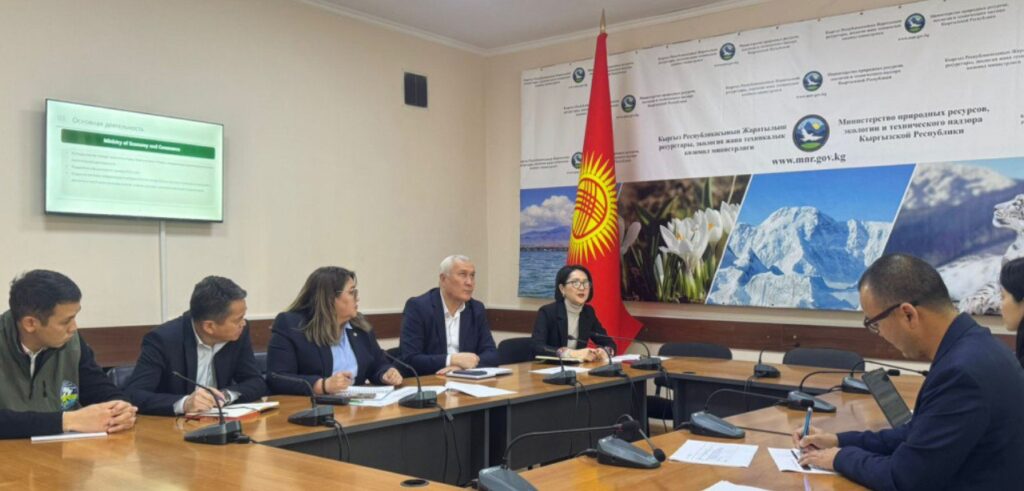
Kyrgyzstan is partnering with South Korean organizations to construct a sanitary landfill in Kemin, a town in the northern Chui region, approximately 95 km east of Bishkek. Earlier this month, the Kyrgyz Ministry of Natural Resources, Ecology, and Technical Supervision held a meeting with representatives from South Korea’s MYC Inc. (Make Your Climate) to secure grant funding for the initiative.

The two sides also conducted a joint study to identify a suitable location for the future landfill. The project is designed to implement an integrated waste management system that includes the sorting and incineration of solid waste, thereby reducing landfill volume and minimizing environmental harm.

Scheduled to run from 2027 to 2031, the project has an estimated budget of up to $10 million. The Korea Environmental Industry and Technology Institute (KEITI) will oversee project management.

The landfill is part of broader development plans for Kemin and the wider Chui region, which include the creation of an eco-friendly urban center, Kemin City. In January 2025, President Sadyr Japarov signed a decree to build the new city on 353 hectares. The project aims to provide modern housing, reduce outward migration, and retain skilled local labor.

Kemin and the nearby town of Orlovka were historically industrial hubs during the Soviet era. However, following the collapse of the USSR, many local enterprises shut down, prompting widespread out-migration. The development of Kemin City and its associated infrastructure is intended to reverse this trend and stimulate the local economy.