• KGS/USD = 0.01144 0%
  • KZT/USD = 0.00192 -0%
  • TJS/USD = 0.10849 0.37%
  • UZS/USD = 0.00008 0%
  • TMT/USD = 0.28571 0.28%
  • KGS/USD = 0.01144 0%
  • KZT/USD = 0.00192 -0%
  • TJS/USD = 0.10849 0.37%
  • UZS/USD = 0.00008 0%
  • TMT/USD = 0.28571 0.28%
  • KGS/USD = 0.01144 0%
  • KZT/USD = 0.00192 -0%
  • TJS/USD = 0.10849 0.37%
  • UZS/USD = 0.00008 0%
  • TMT/USD = 0.28571 0.28%
  • KGS/USD = 0.01144 0%
  • KZT/USD = 0.00192 -0%
  • TJS/USD = 0.10849 0.37%
  • UZS/USD = 0.00008 0%
  • TMT/USD = 0.28571 0.28%
  • KGS/USD = 0.01144 0%
  • KZT/USD = 0.00192 -0%
  • TJS/USD = 0.10849 0.37%
  • UZS/USD = 0.00008 0%
  • TMT/USD = 0.28571 0.28%
  • KGS/USD = 0.01144 0%
  • KZT/USD = 0.00192 -0%
  • TJS/USD = 0.10849 0.37%
  • UZS/USD = 0.00008 0%
  • TMT/USD = 0.28571 0.28%
  • KGS/USD = 0.01144 0%
  • KZT/USD = 0.00192 -0%
  • TJS/USD = 0.10849 0.37%
  • UZS/USD = 0.00008 0%
  • TMT/USD = 0.28571 0.28%
  • KGS/USD = 0.01144 0%
  • KZT/USD = 0.00192 -0%
  • TJS/USD = 0.10849 0.37%
  • UZS/USD = 0.00008 0%
  • TMT/USD = 0.28571 0.28%
11 December 2025

Icy Relations Between Pakistan and Afghanistan Threaten Central Asian Trade Plans

On November 25, the Afghan authorities accused Pakistan of a new round of airstrikes in eastern Afghanistan. The bombing killed nine children and a woman, injuring several others.

The attacks are the latest escalation in rapidly worsening tensions between Islamabad and the Taliban-led government in Kabul, with key border crossings currently closed, and Afghan refugees being expelled from Pakistan.

At the heart of the crisis is Pakistan’s claim that Kabul is providing support to the Tehrik-e-Taliban Pakistan (Pakistani Taliban, or TPP), a militant group seeking to topple Pakistan’s government and impose its strict interpretation of Islamic law. The fallout may ripple beyond bilateral relations, with significant consequences for Central Asian trade, particularly the Pakistan-Afghanistan-Uzbekistan plan for a Trans-Afghan railway.

The planned 647-kilometer line is set to connect the northern Afghan city of Mazar-e-Sharif with Peshawar in Pakistan. When combined with existing infrastructure, this will mean that trains can travel from southern Uzbekistan all the way to the Pakistani ports of Gwadar and Karachi, granting landlocked Uzbekistan and Afghanistan a long-sought gateway to the Indian Ocean. But mounting instability, along with Islamabad’s willingness to shut borders as leverage, may now place the project in serious jeopardy.

“The moment a state weaponizes geography, every financier in Tashkent, Moscow, or Beijing prices in risk, delays commitments, and quietly explores alternative alignments,” Anant Mishra, Marie Skłodowska-Curie Research Fellow at the International Centre for Policing and Security at the University of South Wales, told The Times of Central Asia.

So, what are the prospects for salvaging the Trans-Afghan railway? How can Pakistan and Afghanistan de-escalate? And what does this turmoil mean for Central Asia’s wider economic ambitions?

A sudden frost

On July 17, Uzbekistan’s Transport Minister Ilkhom Makhkamov, Pakistan’s Railway Minister Muhammad Hanif Abbasi, and Afghanistan’s acting Public Works Minister Mohammad Esa Thani signed an agreement to conduct a feasibility study for the proposed railway.

Many hoped the railway would presage a new era of fraternal relations between Central and South Asia.

“Civil society, the intelligentsia, media, and business community of Pakistan have been loudly calling for intimate trade relations with the Central Asian Republics,” Khadim Hussain, Research Director at the Centre for Regional Policy and Dialogue (CRPD), Islamabad, told TCA.

For Uzbekistan, which has aggressively pursued diversification of trade routes to reduce reliance on transit through Iran and Kazakhstan, the project promised a cheaper, faster corridor to global markets.

According to Nargiza Umarova, Head of the Center for Strategic Connectivity at the Institute for Advanced International Studies, University of World Economy and Diplomacy in Tashkent, the trans-Afghan is one of two high-priority transport projects, along with the China-Kyrgyzstan-Uzbekistan railway – work on which began in April 2025.

But the ink had barely dried on the July accord when tensions between Afghanistan’s Taliban government and Islamabad began escalating, throwing the ambitious railway into doubt.

Uzbek passenger and freight trains parked in Andijan; image: TCA, Joe Luc Barnes

In early October, Pakistan launched an airstrike in Kabul targeting the leader of the Pakistani Taliban. Kabul denounced what it described as violations of sovereignty, while Pakistan insisted it was acting against TTP militants operating from Afghan territory.

In response, on October 11, Taliban forces attacked military posts along large stretches of the 2,600-kilometre border between the two countries. In early November, a suicide bomber killed 12 people in Islamabad, the first such attack in the Pakistani capital in a decade.

It wasn’t long before the diplomatic fallout began to affect trade. Transit routes have been suspended as Pakistan attempts to squeeze the Afghan economy.

“Most of Afghanistan’s imports and exports have historically moved through Karachi and, to a lesser extent, Gwadar; when Torkham and Chaman border crossings are choked, trucks full of food, fruit, pharmaceuticals, and fuel sit idle, and Afghan traders suddenly have to pay more for longer, more complex routes,” said Mishra.

In November, Afghanistan’s deputy minister for economic affairs, Abdul Ghani Baradar, publicly urged Afghan businesses to secure alternative trade corridors within three months – a sign that officials expect a prolonged freeze.

Why this conflict erupted

At its core, the crisis resembles a classic Frankenstein’s monster dynamic: the force once cultivated as a proxy has turned against its creator. For decades, Pakistan supported the Taliban, providing sanctuary, funding, and political backing. The expectation was that a friendly Taliban government in Kabul would align with Islamabad’s interests.

Instead, Pakistan now faces a movement that rejects its control and is recalcitrant in reining in the TTP.

“Since 2021, the TTP has enjoyed unprecedented operational space inside Afghanistan, using Afghan territory as strategic depth to strike inside Pakistan and then exfiltrate back across the border,” said Mishra. “For Islamabad, this is now the primary national-security threat.”

For its part, Kabul denies supporting the Pakistani Taliban. However, according to Mishra, it has “consistently tolerated TTP mobility along the frontier, partly for ideological reasons, and partly because confronting them would fracture the Taliban’s own internal cohesion.”

Implications for Uzbekistan and Central Asia

Hussain is in no doubt as to the stakes. “Pakistan’s prioritization of relations with Central Asia will largely depend on normalization of relations between Afghanistan and Pakistan,” he said.

Mishra sees little prospect of that in the short term. “The most likely trajectory is a prolonged, low-intensity conflict… managed hostility rather than a genuine resolution.”

For Central Asia, the deterioration in Pakistan-Afghanistan relations threatens to derail years of regional planning. But while some fear Uzbekistan’s dream of a southern corridor may be forced back to the drawing board, Umarova takes a more long-term view.

“As soon as things get heated, some theories are immediately put forward that everything is lost, all projects need to be stopped, borders closed, and so on. But that’s not how it works,” she told TCA.

“This conflict has existed for many years. It didn’t arise yesterday. Naturally, when assessing the risks associated with the Afghan railway, Uzbekistan took into account the relationship between Islamabad and Kabul.” Umarova adds that despite the simmering tensions, “work on this project isn’t stopping; on the contrary, it’s intensifying”. This, she says, is a mark of the project’s strategic importance both for Uzbekistan and Central Asia as a whole.

Meanwhile, trade between Uzbekistan and Afghanistan continues to expand independently of Pakistan. Coal shipments from Afghanistan to Uzbekistan have increased significantly this year, with Uzbekistan exporting cement and pharmaceuticals in return.

“The Hairatan-Mazar-e-Sharif rail link from Uzbekistan… already gives Afghanistan a northern outlet,” said Mishra. “As ties with Pakistan sour, more cargo will bleed into those routes.”

From a diplomatic perspective, Tashkent has maintained pragmatic ties with the Taliban, positioning itself as a mediator that can engage all sides.

“It would naturally be naive to indulge in the illusion that Uzbekistan firmly trusts the current government in Afghanistan,” said Umarova, but Tashkent has nevertheless never ceased to maintain diplomatic contact with whoever is in power in Kabul, and has coordinated its approach with other Central Asian states.

She notes that a “unified approach to Afghanistan is gradually crystallizing,” with even hawkish states such as Tajikistan taking a softer line towards Kabul.

Kabul has also invested in diplomatic outreach to all five Central Asian states since 2021, entering into a bilateral agreement over the Qosh-Tepa canal at the provincial level, and even hosting the Uzbek prime minister in Kabul. “This is something Republic-era Afghanistan rarely achieved,” Mishra notes.

He believes that, in the long term, Islamabad’s recent actions will have “predictable strategic consequences” – Afghan trade will realign away from dependence on Pakistan.

“You can already see the shift accelerating. Kabul has openly said it is diverting ‘major trade routes’ from Pakistan towards Iran and Central Asia,” said Mishra. He notes that Kabul is now leaning heavily on Iranian ports, taking advantage of the tariff cuts that Tehran is offering.

Should these routes continue to expand, they could unlock a far larger prize: access to the Indian market. India is a key user of Iran’s Chabahar free port for the same reason that Afghanistan has been using it: its border with Pakistan is closed.

Chabahar has been largely free of U.S. sanctions since 2018, meaning it has the potential to turn into a major regional hub, with both India and Central Asia seeking to benefit. Kazakhstan, Turkmenistan, and Uzbekistan are all backing a project that will see another railway built through western Afghanistan to Herat before linking with Iran.

Nevertheless, both Umarova and Mishra agree that the trans-Afghan railway still represents an important alternative. Umarova notes the vulnerability of Iranian ports during the conflict with Israel earlier in 2025.

Mishra stresses the importance of having options: “They must build the Trans-Afghan railway, but in a way that can send cargo to Karachi when the region experiences strategic calm, or swing west to Iran and Chabahar when it is not,” he told TCA.
Tajikistan-China Border Fence Photo TCA

China Demands That Tajikistan Protect Chinese Citizens After Attack

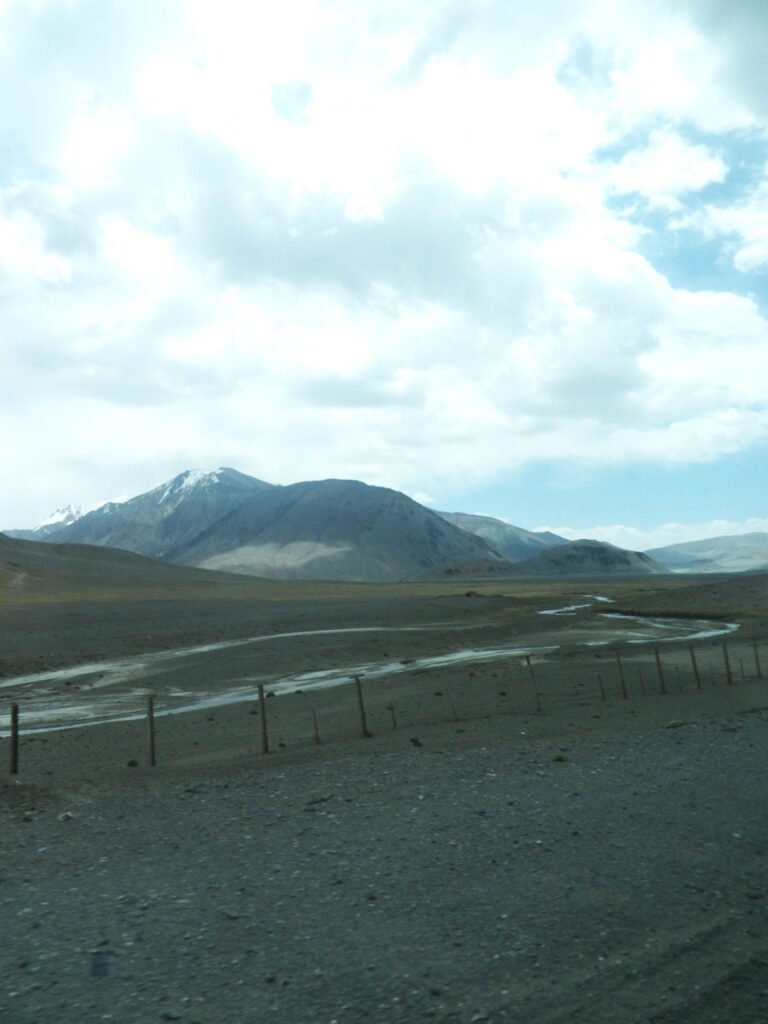
China is urging Tajikistan to “take all necessary measures” to protect Chinese citizens and businesses in Tajikistan’s border area, where several Chinese workers were killed in a drone attack that was carried out from neighboring Afghanistan last week.

Tajik President Emomali Rahmon, meanwhile, met senior security officials in his government on Monday to discuss ways to strengthen security on the southern border with Afghanistan, whose ruling Taliban movement has expressed sorrow and promised to help find the attackers.

“According to reports from officials, during the past week two incidents of gunfire occurred across the border into Tajikistan, resulting in five deaths and five injuries,” Tajikistan’s presidential office said. It said Rahmon “strongly condemned the illegal and provocative actions of Afghan citizens” and ordered security officials “to resolve the issue and prevent the recurrence of such unfortunate incidents.”

The statement did not provide details on the five people who were killed. The government previously said a drone attack from Afghanistan targeted a camp housing company employees in Tajikistan’s southwestern Khatlon region last week, killing three Chinese workers.

The government meeting on Monday came a day after Chinese ambassador Guo Zhijun called Tajik Foreign Minister Sirojiddin Muhriddin as well as a senior Tajik security official to discuss the border situation.

“Guo demanded that Tajikistan take all necessary measures to ensure the safety of Chinese enterprises and citizens in Tajikistan,” the Chinese embassy in Dushanbe said on Monday. It noted that Tajikistan said it “will immediately upgrade its security measures to protect the safety of Chinese enterprises and citizens to the fullest extent of the law.”

Chinese workers are involved in mining and construction projects in Tajikistan, which along with other countries in Central Asia is seeking to improve relations and develop trade with Afghanistan despite persistent security concerns. Tajikistan said that it used a drone to kill two suspected drug smugglers from Afghanistan in the border area last month. In August, Tajik guards and fighters from the Afghan Taliban exchanged fire.

Afghanistan’s Ministry of Foreign Affairs has condemned the killings of the three Chinese workers last week and blamed that attack on “those seeking to create disorder, instability, & mistrust among the countries of the region.”

It said it “stands ready for information-sharing, technical collaboration, & joint assessments in order to identify those responsible for the incident.”

Separately, Afghanistan’s border to the east and south with Pakistan has been the focus of recent clashes between the two countries that killed dozens of people and disrupted trade. Pakistan accuses Afghanistan of providing sanctuary to militants who carry out attacks against Pakistani security forces, an allegation that the Taliban in Afghanistan denies.


Why Attacks on the Caspian Pipeline Consortium Could Alter Kazakhstan’s Strategic Plans

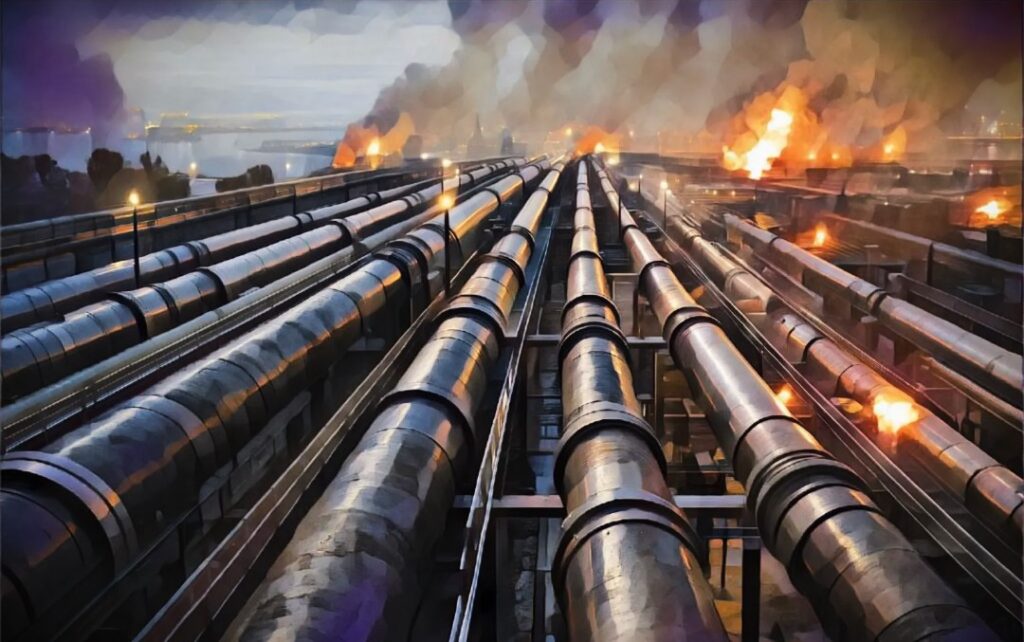
Attacks on the infrastructure of the Caspian Pipeline Consortium (CPC), reduced export flows, and volatility in commodity markets are generating serious pressures for Kazakhstan. In the coming years, both the country’s financial system and its domestic political balance may face significant tests.

A number of experts warn that disruptions in oil logistics via the CPC, which remains the main artery for Kazakh crude exports, could depress budget revenues, strain national companies, and worsen the sovereign outlook. Kazakhstan pumps roughly 80% of its oil exports through the CPC system, and oil revenues account for more than half of the country’s total export earnings. Because CPC Blend is Kazakhstan’s primary export-grade crude, even short interruptions can reverberate through the state budget, the National Fund, and the balance sheets of national companies. This could trigger a domino effect, destabilizing broad swathes of the economy and undermining public finances. Already, the recent rounds of disruption around Black Sea oil shipping are eroding a substantial source of tax revenue for the state.

Continued Risk of Strikes

Political scientist Dosym Satpaev argues that Kazakhstan may be underestimating the intensity and persistence of the conflict surrounding Ukraine. He contends that both sides in that conflict have used strikes on energy infrastructure as key tools, a tactic that will likely continue.

The recent strike targeted the CPC’s single-point moorings (SPMs) at Novorossiysk, a coastal terminal on the Russian Black Sea. These offshore loading points sit in relatively shallow waters and are physically exposed, making them susceptible to the naval drones Ukraine has increasingly deployed against Russian maritime infrastructure. Although the attack officially targeted Russian facilities, the collateral implications for Kazakh oil exports were immediate.

According to Satpaev, that means further risks for the CPC. The fact that Kazakhstan remains heavily dependent on this single pipeline reflects a broader failure to diversify exports and reduce reliance on raw material transit. 

The vulnerability is magnified by the CPC’s ownership structure: although Kazakhstan relies on it for most of its exports, the pipeline network and the Novorossiysk terminal lie on Russian territory and operate under Russian regulatory oversight. Russia holds a majority stake in the consortium, while U.S. firms such as Chevron and Exxon also have significant shares, creating a complex web of interests that limits Astana’s room for manoeuvre.

Kazakhstan has already experienced how this dependence can be leveraged. In 2022, Russian regulators repeatedly halted CPC operations over alleged “environmental violations,” moves widely interpreted as political pressure at a moment of diplomatic friction. That precedent underscores how strategic vulnerability to CPC disruptions predates the current wave of attacks.

Satpaev is skeptical that alternative export routes, such as via pipelines through the Caspian Sea to Baku-Tbilisi-Ceyhan or transit to China, can substitute for the CPC in the near term. Given the global trend toward reduced oil demand, he believes this leaves Kazakhstan exposed to long-term structural risks. 

At the same time, Satpaev views as unlikely the possibility that Ukraine would attempt to directly stop the CPC’s operations, given the broader consequences such action would have for European energy consumers and international oil firms that rely on the pipeline. 

Strategic Divergence and Diplomatic Vulnerabilities

Another political analyst, Daniyar Ashimbayev, warns that the attacks raise questions not only about economic security, but also about the broader coherence of Kazakhstan’s foreign policy posture. According to him, Kazakhstan’s long-standing model built on stability, moderation, and multi-vectorism now faces stress. While some voices inside and outside the country have called for diversification of export routes, others argue that the geography and technical challenges make alternatives impractical. 

Ashimbayev further contends that the mounting risk to CPC operations and thus to exports exposes Kazakhstan to external pressure. He suggests some actors may deliberately target Kazakhstan’s neutrality or use infrastructure risks to influence its geopolitical behaviour. Ashimbayev adds that Astana does indeed have contingency scenarios to safeguard its interests, but the crisis could force a deeper strategic review than originally planned. 

Economic Pain and Financial Fallout

The stakes extend beyond Kazakhstan. CPC Blend is a key feedstock for European refiners, and interruptions to Novorossiysk loadings have already widened differentials in Mediterranean crude markets. As one of the few large non-OPEC suppliers still accessible to Europe, Kazakhstan’s stability has become increasingly important for global price dynamics — magnifying the international consequences of any prolonged disruption.

Oil-and-gas analyst Olzhas Baidildinov warns that the damage to CPC could soon hit Kazakhstan’s national energy company (KazMunayGas), and through it, the broader economy. He estimates that, within 36 months, redirecting oil via alternative routes could prove technically difficult and more expensive. That, he says, could significantly reduce revenue as well as cash flow for the company.

If disruptions persist into spring 2026, Baidildinov suggests, KazMunayGas might face the difficult choice of cutting or even suspending dividend payments, with knock-on consequences for investor confidence and the broader financial sector. In an interview with RTVI, Baidildinov projected that Kazakhstan’s losses from the attack on CPC infrastructure could reach approximately 20% of its oil exports, and that the financial damage could amount to at least $1.5 billion – an amount comparable to the annual budgets of Astana or Almaty.

Baidildinov warns that a weakening fiscal position could trigger a downgrade of Kazakhstan’s sovereign rating by major international agencies, making foreign borrowing more expensive and weighing on the domestic economy. In parallel, logistic bottlenecks and rising demand for rail freight could push up prices for rail transport and consumer goods, compounding inflationary pressures. 

What This Means for Kazakhstan’s Strategic Priorities

The recent attacks on CPC underline a painful reality: for now, Kazakhstan remains deeply dependent on a single export corridor. As the geopolitical conflict escalates, this dependency has become a strategic vulnerability.

China, too, is watching closely. Although Kazakhstan already ships some crude eastward via the Atasu–Alashankou pipeline, current capacity is far too limited to replace CPC volumes. Beijing has long pushed for expanded eastbound flows to enhance its own energy security, but infrastructure constraints mean Kazakhstan cannot pivot quickly. This leaves Astana caught between its two largest neighbours at a moment of mounting geopolitical strain.

Moving forward, the government in Astana may be forced to accelerate plans to diversify export routes, including pipelines across the Caspian Sea, expansion of rail corridors, and other logistical solutions. At the same time, maintaining neutrality in foreign policy and avoiding entanglement may become more expensive, as economic stability increasingly hinges on global energy market dynamics and international security developments.

The internal political dimension is equally significant. Tokayev’s reform agenda, from public-sector wage policies to regional development spending, depends heavily on reliable oil income. A prolonged disruption could slow social programs, reduce fiscal buffers, and heighten public sensitivity to inflation — challenging the government’s long-standing narrative of stability and competent economic stewardship.

In this context, the CPC attacks may mark not just a disruption in oil supply but a turning point in how Kazakhstan defines its long-term economic and geopolitical strategy.

AIIB Provides $500 Million to Support Uzbekistan’s Green Economy Reforms

The Asian Infrastructure Investment Bank (AIIB) and the Government of Uzbekistan have signed a $500 million financing agreement to support the country’s Green and Resilient Market Economy Program, the Bank announced on November 28. The initiative is designed to accelerate Uzbekistan’s transition toward a greener, more resilient, and market-oriented economy through a comprehensive package of policy and institutional reforms.

According to AIIB, the funding will assist the Uzbek government in strengthening the policy and governance frameworks necessary for low-carbon development, improved public-sector efficiency, and greater resilience to climate-related risks. The initiative falls under AIIB’s Climate-Focused Policy-Based Financing approach, which supports systemic reforms that have economy-wide climate impacts.

The reforms backed by the new financing include measures to enhance efficiency and governance in the energy sector and state-owned enterprises, expand climate-responsive public procurement, and establish transparent systems for carbon-credit development and trading. The program also highlights the development of a robust Measurement, Reporting, and Verification (MRV) system to attract greater private capital for climate investments.

“This operation reflects AIIB’s commitment to supporting Uzbekistan’s reform agenda through measures that can deliver lasting climate and economic gains,” said Konstantin Limitovskiy, AIIB’s Chief Investment Officer for Region 2 and Project and Corporate Finance Clients. He noted that the program is expected to foster conditions conducive to increased climate finance and stronger private-sector engagement in Uzbekistan’s green transition.

The program is co-financed by the World Bank Group and is aligned with several national strategies, including Uzbekistan’s Strategy for Transition to a Green Economy for 2019-2030, its second Nationally Determined Contribution under the Paris Agreement, and the broader Uzbekistan-2030 development strategy. These frameworks stress clean energy, resource efficiency, and long-term economic resilience.

AIIB projects that the reforms will generate substantial environmental and social benefits over time. More efficient resource use, the scaling up of clean energy solutions, and improved climate regulation are expected to reduce greenhouse gas emissions, enhance air quality, and strengthen the country’s capacity to withstand climate shocks. The adoption of cleaner technologies could also lower energy costs and improve living conditions, particularly for vulnerable communities.

In a separate agreement earlier this year, AIIB provided a $71.1 million loan to Uzbekistan to modernize rural roads in Khorezm and Karakalpakstan. That project aims to enhance climate resilience and improve access to markets and public services for rural populations.

Human Rights Groups Urge Turkmenistan to Release Activists Ahead of Neutrality Anniversary

As Turkmenistan prepares to mark the 30th anniversary of its policy of permanent neutrality, international human rights organizations are urging the government to commemorate the occasion by releasing civil society activists imprisoned for peacefully expressing their views.

In a joint appeal, the International Partnership for Human Rights (IPHR), the Turkmen Initiative for Human Rights (TIHR), Turkmen.News, and the Norwegian Helsinki Committee (NHC) called on Turkmen authorities to use the milestone as an opportunity to take a humanitarian step by pardoning activists jailed on politically motivated charges.

The organizations emphasized that presidential pardons remain the only available legal mechanism for early release in Turkmenistan. Including these cases in the official pardon process, they argue, would demonstrate the country’s willingness to align with international human rights standards.

Among the prisoners named in the appeal is Mansur Mingelov, a human rights activist who has been incarcerated since 2012. He is serving a 22 year sentence after publicly denouncing the abuse of ethnic Baloch people. Another activist, Murat Dushemov, was sentenced to four years for publicly criticizing the government and its handling of the COVID-19 pandemic. He was expected to be released in the summer of 2025.

The rights groups also expressed growing concern about activists and citizen journalists who were detained abroad and reportedly subjected to forced return to Turkmenistan, where they face prosecution under opaque legal processes.

Citizen journalists Alisher Sakhatov and Abdulla Orusov were detained in Turkey in April 2025 on charges of “threatening public safety.” Farhat Meymankuliev was deported from Turkey in 2023 and, according to human rights monitors, subsequently imprisoned following a closed trial. In another case, Malikberdy Allamyrradov was secretly transferred from Russia to Turkmenistan in December 2023 and later charged with assaulting a cellmate. Saddam Gulamov was also forcibly returned from Russia and sentenced to a prison colony in the Lebap region.

The human rights groups argue that freeing these individuals would send a strong message of goodwill during a major national celebration and offer a concrete signal of Turkmenistan’s readiness to uphold its international obligations.

Kyrgyzstan Seeks to Deepen Economic Ties with Germany

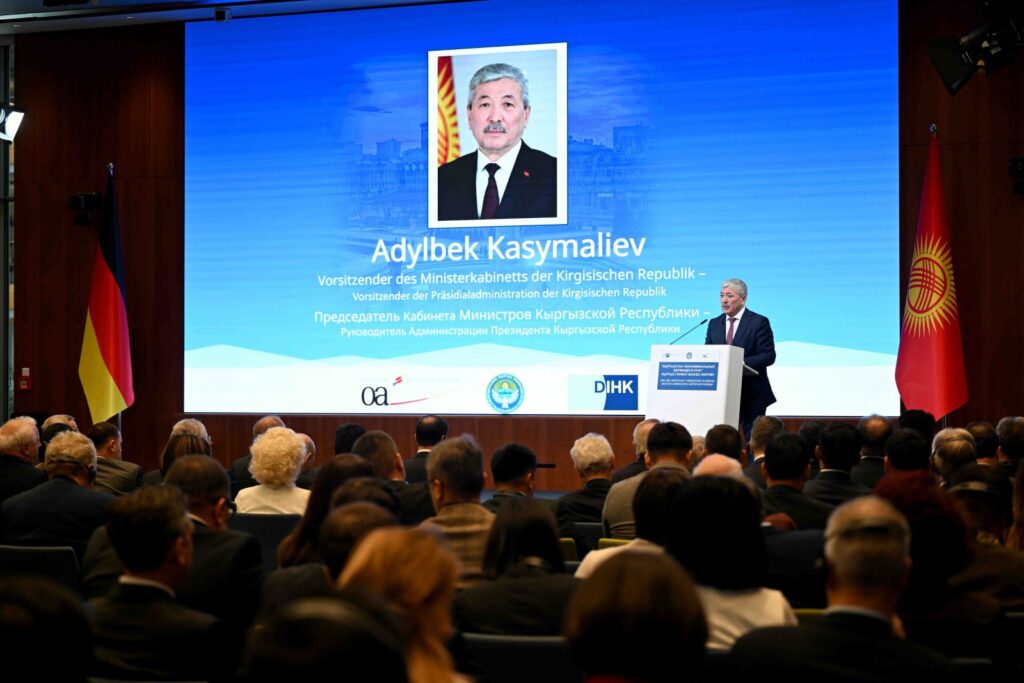
On November 28, Berlin hosted the Kyrgyz-German Business Forum and the fifth meeting of the Kyrgyz-German Business Council, with the participation of Adylbek Kasymaliev, Chairman of the Cabinet of Ministers of Kyrgyzstan.

The event was organized by Kyrgyzstan’s National Investment Agency, the Eastern Committee of the German Economy, and the German Chamber of Commerce and Industry. It brought together over 300 participants from government agencies, financial institutions, and business sectors of both countries. Key areas of cooperation included the implementation of a dual vocational education system based on the German model, legal and organized labor migration from Kyrgyzstan to Germany, and joint projects in energy, green technologies, information technology, and agriculture.

During the forum, Kasymaliev called on German companies to deepen engagement with Kyrgyzstan, from supplying equipment to investing in sustainable and green development initiatives.

The primary purpose of Kasymaliev’s visit was to launch the second cycle of the “Days of the Economy of Kyrgyzstan and Germany,” a bilateral initiative aimed at strengthening economic cooperation and attracting foreign investment.

At the Business Council meeting, Kasymaliev outlined three priority areas for collaboration.

The first is financial and banking integration. He proposed establishing direct correspondent banking relationships between Kyrgyz and German financial institutions to enhance trade transparency, expedite transactions, and ensure greater security in bilateral trade.

The second priority is cooperation in education and vocational training. Kyrgyzstan seeks to expand partnerships between universities, vocational schools, and industry centers, as well as to develop academic exchange and joint educational programs modeled on Germany’s experience.

The third area of focus is labor migration. “Kyrgyzstan proposes to jointly develop targeted training programs, including professional and language training, as well as mechanisms for recognizing professional qualifications,” Kasymaliev stated. He emphasized that such cooperation would ensure fair working conditions and safeguard the rights of Kyrgyz citizens while addressing labor shortages in Germany.

On November 29, Kasymaliev also visited the international postal exchange center of Kyrgyz Pochtasy (Kyrgyz Post) OJSC in Berlin. He noted that the establishment of such a center in the heart of Europe represents an important step toward boosting Kyrgyzstan’s export potential and expanding access for Kyrgyz businesses to European markets.