• KGS/USD = 0.01144 0%
  • KZT/USD = 0.00212 0%
  • TJS/USD = 0.10456 0.19%
  • UZS/USD = 0.00008 0%
  • TMT/USD = 0.28490 0%
  • KGS/USD = 0.01144 0%
  • KZT/USD = 0.00212 0%
  • TJS/USD = 0.10456 0.19%
  • UZS/USD = 0.00008 0%
  • TMT/USD = 0.28490 0%
  • KGS/USD = 0.01144 0%
  • KZT/USD = 0.00212 0%
  • TJS/USD = 0.10456 0.19%
  • UZS/USD = 0.00008 0%
  • TMT/USD = 0.28490 0%
  • KGS/USD = 0.01144 0%
  • KZT/USD = 0.00212 0%
  • TJS/USD = 0.10456 0.19%
  • UZS/USD = 0.00008 0%
  • TMT/USD = 0.28490 0%
  • KGS/USD = 0.01144 0%
  • KZT/USD = 0.00212 0%
  • TJS/USD = 0.10456 0.19%
  • UZS/USD = 0.00008 0%
  • TMT/USD = 0.28490 0%
  • KGS/USD = 0.01144 0%
  • KZT/USD = 0.00212 0%
  • TJS/USD = 0.10456 0.19%
  • UZS/USD = 0.00008 0%
  • TMT/USD = 0.28490 0%
  • KGS/USD = 0.01144 0%
  • KZT/USD = 0.00212 0%
  • TJS/USD = 0.10456 0.19%
  • UZS/USD = 0.00008 0%
  • TMT/USD = 0.28490 0%
  • KGS/USD = 0.01144 0%
  • KZT/USD = 0.00212 0%
  • TJS/USD = 0.10456 0.19%
  • UZS/USD = 0.00008 0%
  • TMT/USD = 0.28490 0%

Planting Trees to Heal Old Wounds: Can a Desert Forest Save the Aral’s Last Residents?

In the Aralkum Desert, afforestation campaigns have multiplied since the early 2000s. They are meant to slow the sandstorms, temper a rapidly warming climate, and protect the health of those still living in the shadow of the Aral Sea. But the promised results have not appeared yet.

The road from Aralsk to Aiteke Bi cuts through a palette of ochre and dust. Trucks drift forward in pale clouds, dragging the desert behind them like a long train. In these villages scattered along the former shoreline of the Aral Sea, the wind never leaves. It is abrasive, restless, and a witness to a vanished water body that once cooled the hottest corner of Kazakhstan. Respiratory diseases now run through family histories, and doctors say they can recognize lungs shaped by ecological collapse.

At the polyclinic in Aiteke Bi, patients describe the same symptoms with weary precision: breath shortening too quickly, coughs that never fully recede, a fatigue that never seems to lift. Nuralay, 52, says the storms “get into the house, into the throat, into everything.” She admits she cannot remember a season without irritation in her chest. For Dr. Kuanyshqar Assilov, who has watched the pattern deepen for years, the cause is unmistakable: decades of airborne salts, pesticide residues, and industrial chemicals lifted from the dried seabed of the Aral Sea.
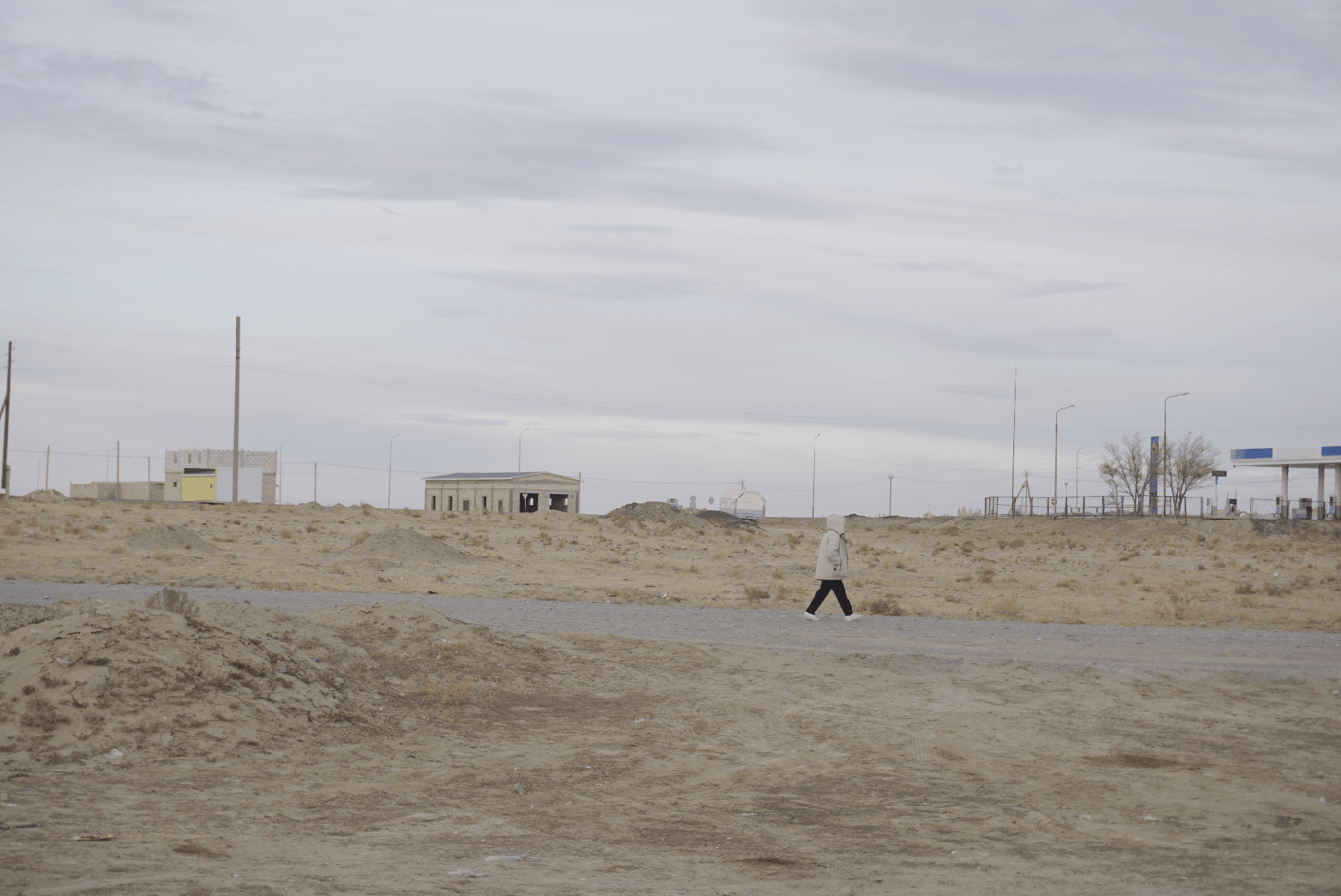
In Aralsk, sand covers everything

Marat Narbaev, executive director of the International Fund to Save the Aral Sea (IFAS), recounts the disaster’s origins with a mixture of resignation and habit. He traces it back to the 1960s, when Soviet planners diverted the Amu Darya and Syr Darya to feed cotton monocultures. “The cotton was used to make clothing for soldiers and ammunition,” he says. Today, he argues, the basin faces two pressures: “climate change and demographic growth. Fifty million inhabitants… soon seventy.”

In this landscape, the promise of restoring the region through afforestation has acquired symbolic weight. Saxaul trees – hardy, grey-green, capable of surviving in brackish soils – are planted by the millions on the exposed seabed. Officially, they are meant to stabilize sand, calm storms, and cool the surface. Unofficially, they carry the hope that life here might once be breathable again.

Survivalist tree?

On paper, the saxaul is a biological survivalist: roots plunging more than 30 feet deep, the ability to stabilize dunes, lower surface salinity, and grow dense enough within a few years to slow the wind. In Aralkum, a village east of Aralsk, residents praise the planting that lines a dozen houses. “It really worked, the storms became more bearable,” a man says. Then he shrugs: more trees should have been planted. “We asked for the other side of the village, but there’s no funding left.” Nowadays, half of the trees have died, and the rest lie buried beneath the dunes.
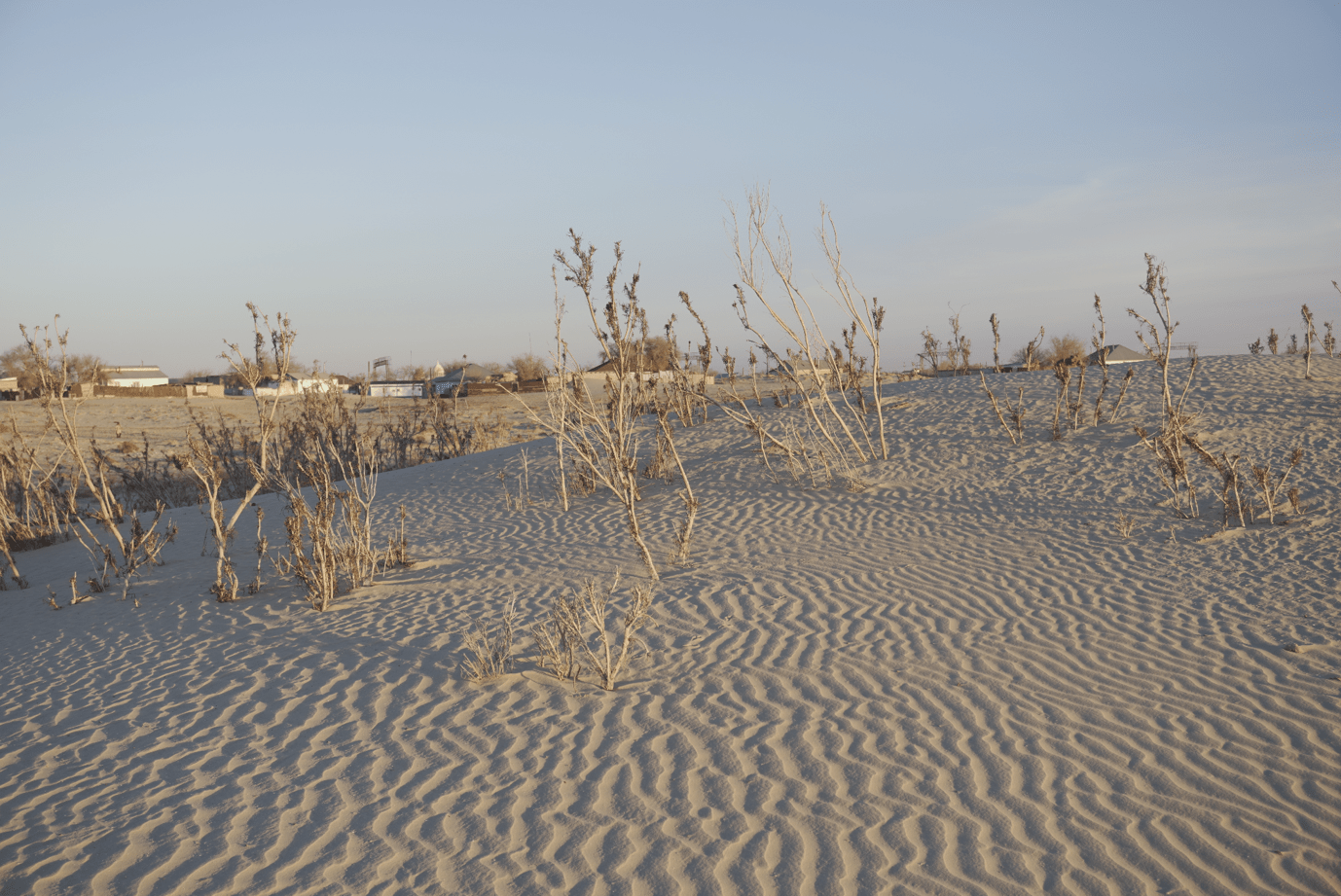
In Aralkum village, half of the surviving trees barely emerge from the sand

Sometimes, past plantations have almost zero trees left. According to a 2021 study, Aralkum is one of the few sites where more than half the trees survived. In Karateren, a former fishing village, it is almost impossible to imagine that sixty hectares were planted ten years ago: livestock trampled the seedlings, and saline soils choked the rest.

Across twenty-four plots studied by researchers, only four have survival rates above 40%. The causes repeat themselves: unsuitable soils, lack of irrigation during the first years, extreme aridity, and, in several cases, mismanagement.
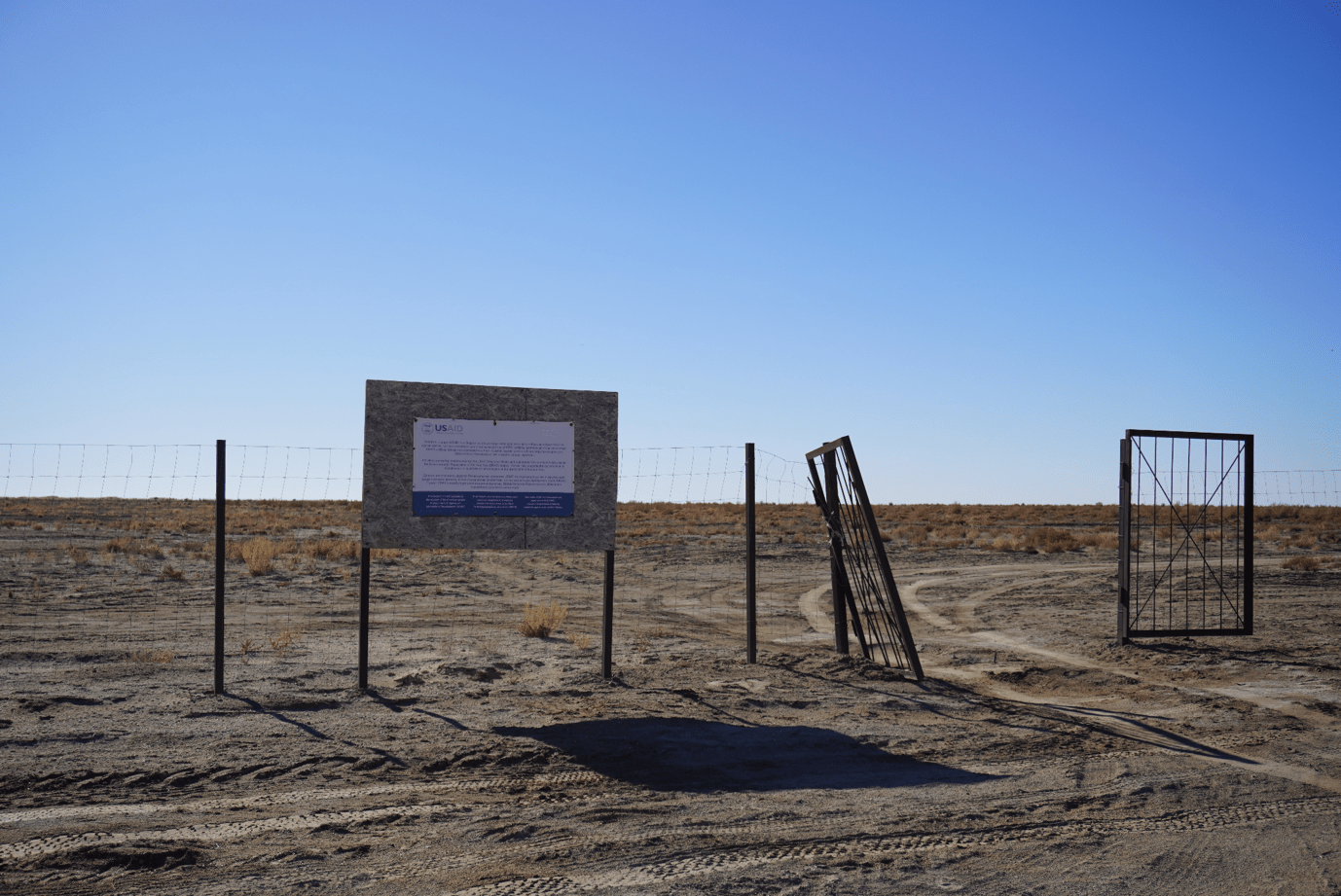
The USAID “oasis” turned into a saxaul cemetery

Near the Barsakelmes reserve, a 500-hectare oasis once funded by USAID has been abandoned since U.S. cuts in 2021. The dead saxauls stand like weathered gravestones in the sand.

Mismanagement goes on…

From her small office in Aralsk, Aynur Rysbava, director of the NGO Aral Tenizi, tries to correct these failures. “The programs are far from optimal,” she says. She explains best practices that have been ignored for years: hand-planting, early-season watering, fertilizers, and avoiding monocultures. In one neighborhood nursery, she grows apple, cherry, and pear trees directly from the sand. Her recommendations, she laments, are routinely dismissed.
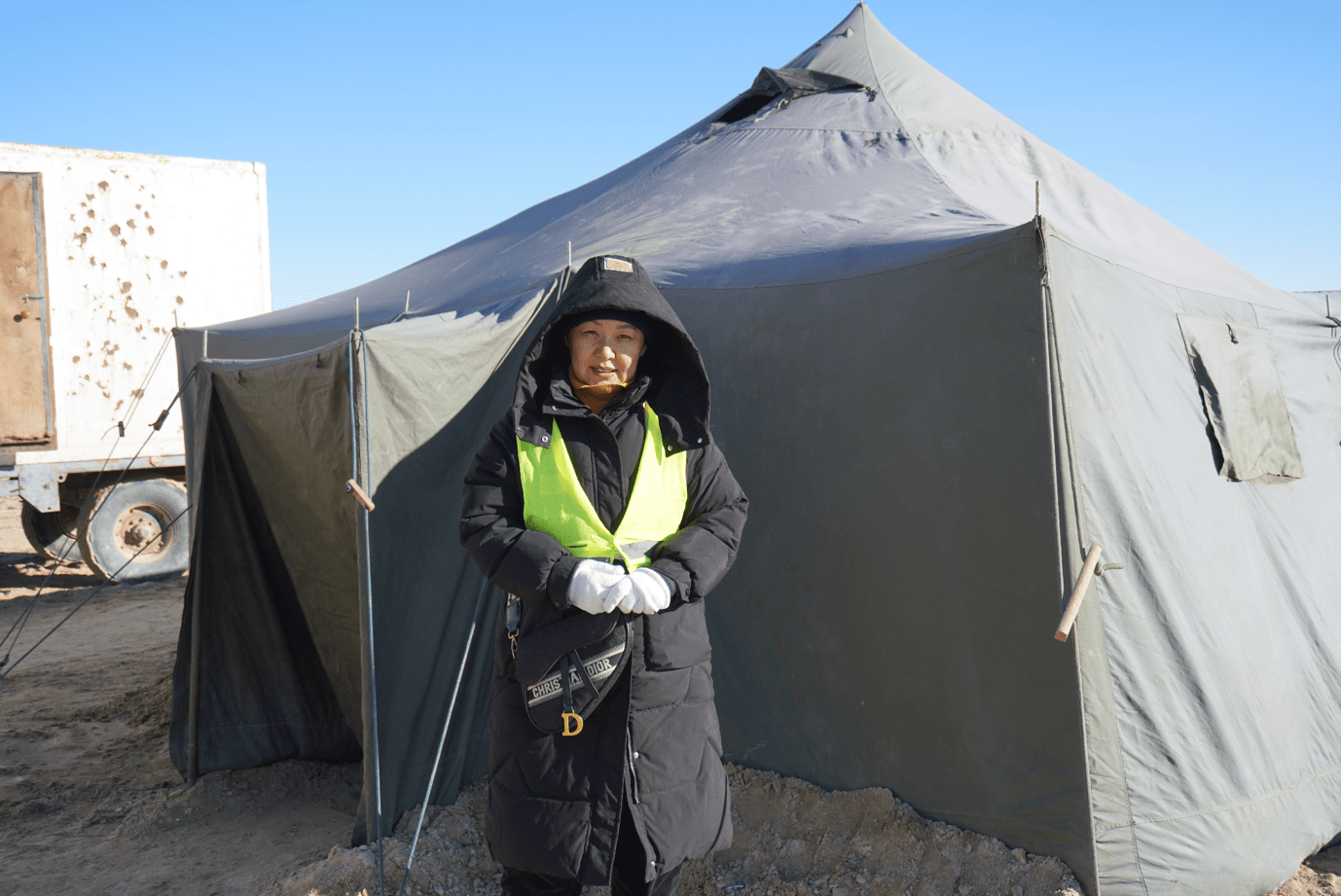
Aynur Rysbaeva, from the association Aral Tenizi, participating in the IFAS plantation on November 5

Thus, new projects keep repeating the same mistakes: seeds dropped by drones onto empty desert, plantations set up dozens of kilometers from the nearest house, and no one left to tend to them once the trucks pull away. Reaching the latest IFAS site means driving fifty kilometers south of the last village – and getting lost twice on the way. IFAS says 18,000 saxauls were planted that day, a few by students, activists, and bureaucrats performing for the journalists’ cameras. The project invites skepticism. Survival rates, already thin, collapse when no one remains after the lenses turn elsewhere.

… and health worsens

Meanwhile, the storms do not wait for the trees to grow. Some days, Lazzat, 49, can barely speak; the air of Aiteke Bi scrapes her lungs. “When I went to a sanatorium in Almaty, the problems disappeared; but they came back as soon as I returned,” she whispers. “More and more people are getting sick”, she adds.

The air is indeed becoming unbreathable. Atmospheric dust concentrations are reported to be about 32 times higher than sanitary norms in parts of the Aral region, according to a study published by IFAS. Cadmium – a toxic metal found in fertilizers and industrial waste – reaches levels significantly above the national average. Lead, mercury, and arsenic remain embedded in the desert’s brittle salt crusts. With the wind that nothing stops, these substances were detected in human blood and tissues, contributing to cancers and neurological delays in children.

In Aiteke Bi, Kuanyshkul Dauletiyarkyzy runs a center for children with autism spectrum disorders. “There are more every year,” she says. Her hypothesis is bleak: “Mothers eat food and drink water contaminated with plastics.” She had no idea that some hard metals and pesticides were encrusted in the desert.

Wind is not the only vector. Water is changing, too. Demographic pressure has expanded cultivated land and increased water use. In the Kyzylorda region, 90% of all available water goes mainly to rice. Because the irrigation canals are the same cracked, leaking conduits built in Soviet times, almost half the water pumped never reaches the fields, President Tokayev said in his State of the Nation speech in September 2022. The rest evaporates or seeps into the ground. As the Syr Darya’s flow diminishes, the quality of irrigation water deteriorates. Salinity has doubled since 2017, according to the same study published by IFAS.

Blind spots 

Yet the full health impacts remain obscure. There is little monitoring, no long-term epidemiological data, and no systematic water testing. “We didn’t really have a good database to check all this information,” admits Toheeb Olalekan Oladejo, an assistant researcher at Nazarbayev University and co-author of a study on environmental health.

Because the environmental crises overlap, it is difficult to isolate any single pollutant from the cocktail that saturates the air and water. Doctors tend to stay vague. When Nuralay sought treatment in Astana, hospital staff suggested that her mysterious allergy might be linked to the poor air quality blowing in from the Aral.

Another blind spot is mental health. The few studies available paint an alarming picture: diminished memory and attention, anxiety, depression, and high somatic distress scores. “A lot of people are suffering from this type of mental health issue, disproportionately compared to other cities,” says Toheeb Olalekan Oladejo. According to Dr. Kuanyshqar Assilov, schools in Kyzylorda are already raising red flags over increasing psychological distress among young people. Whether they are caused by hard metals, climate change, or socio-economic conditions, “we cannot say”, Toheeb Olalekan Oladejo admits.

Saxaul can improve human health indirectly by stabilizing toxic sediments, lowering dust emissions near plantations, and slightly improving air quality. However, in this context, the saxaul plantations also play a symbolic role: a psychological buffer, an illusion of repair. A small forest can’t stop a crisis of this scale, but it can offer a narrative of progress, a form of collective resilience, perhaps even a placebo. When asked whether Kazakhstan will truly manage to plant more than a million trees, Marat Narbaev pauses before replying: “What else can we do?” The answer captures the dilemma: the plantations persist not because they will fix the problem, but because doing nothing feels impossible.


Car and Real Estate Sellers in Kazakhstan to Receive Payment Only After Buyer Rights Registered

Kazakhstan is preparing to introduce a new payment system for vehicle and real estate transactions, in which funds deposited via banks will be temporarily blocked until ownership rights are officially registered in the buyer’s name.

The initiative, known as the “Safe Transaction” system, is being developed jointly by the Ministry of Internal Affairs and the Ministry of Artificial Intelligence and Digital Development. A pilot launch is expected soon, with a full-scale rollout planned for April next year.

The system was discussed during the first meeting of the working group on the integration of the digital tenge into public finance operations. The digital tenge (national currency) refers to marked digital budget funds designated for specific contractual purposes. These funds cannot be converted into cash or conventional non-cash forms and are unblocked only after work or services are completed and verified or once contract terms are fully met. The mechanism aims to automate oversight of targeted budget spending and mitigate embezzlement risks.

Pilot projects involving digital tenge have already revealed several technical challenges. For example, in the road construction sector, the absence of a unified methodology for standardizing goods, services, and materials complicates implementation. Additional requirements include digitizing design and estimate documentation, integrating the platform with verified supplier databases, and introducing transaction verification protocols and cost reconciliation tools.

Binur Zhalenov, advisor to the chairman of the National Bank, noted that the pilot phase exposed significant discrepancies in pricing for some materials and services, which require industry-specific evaluation to assess properly.

The digital tenge is technically prepared for certain types of public procurement and is expected to improve transparency in financial transactions. Authorities anticipate that it will enhance budget revenue collection, reduce tax-related risks, and curb the use of fictitious financial schemes.

Over the medium term, the digital tenge is projected to be used in the implementation of at least 100 government projects. The National Bank officially announced its launch just over a year ago.

What Prevents Kazakh Women from Using Contraception

Kazakhstani researchers are once again drawing attention to a sensitive yet vital issue: women’s access to contraception and the broader state of reproductive health. Experts at Ranking.kz describe this matter as socially significant, directly affecting public health, quality of life, and the country’s demographic trends.

According to the National Statistics Bureau (NSB), the unmet need for contraception among women with partners in Kazakhstan continues to rise. In 2024, the rate reached 18%, up from just 9.8% in 2015.

The NSB attributes this unmet need to two main reasons cited by women:

  • 12.5% said they do not want children “at this particular moment”; and
  • 5.5% said they do not plan to become pregnant at all, “as they already have children”.

However, analysts argue that the actual reasons are far more complex, encompassing unstable relationships, financial hardship, childfree lifestyle choices, and medical risks. The NSB’s approach, which treats contraception solely as a tool for regulating fertility, largely overlooks its crucial role in preventing sexually transmitted infections.

Access to contraception is becoming more limited. In 2024, only 45.2% of women who wished to use contraceptives were able to do so, a decline from 55.7% in 2014. The reasons for use remain narrowly defined: delaying pregnancy or avoiding it entirely.

The study also highlights stark regional disparities. Western Kazakhstan presents the most concerning figures. In the Aktobe region, 26.7% of women in partnerships report wanting but being unable to use contraception. The Atyrau region follows closely with 25.6%, then West Kazakhstan at 24%, and Astana at 23%. For comparison, dissatisfaction with access was just 11.7% nationally in 2015.

The unmet need is most acute among the youngest women:

  • 20-24 years old – 27.8%; and
  • 15-19 years old – 25.8%.

Substantial figures are also seen in older age brackets:

  • 25-29 years old – 25%;
  • 30-34 years old – 21.5%; and
  • 35-39 years old – 16.9%.

Globally, the United Nations reports an unmet need for contraception at 15% in 2024. Contributing factors include religious and cultural attitudes, economic barriers, lack of awareness, and restrictions imposed by partners or family members.

Despite increasing demand, only 39.7% of Kazakhstani women of reproductive age, around 1.9 million individuals, currently use contraceptives. While this represents the highest number in recent years, the gap between need and access remains significant.

Tajikistan Seeks Stronger Protections for Striped Hyena at UN Wildlife Meeting

The striped hyena, listed as “near threatened” by international conservationists, has a vast range that includes Africa, the Middle East, and Central Asia, but is difficult to monitor because of its nocturnal, solitary habits in often rugged terrain.

Now Tajikistan is proposing tighter international protections for the species at the highest-level meeting of the Convention on International Trade in Endangered Species of Wild Fauna and Flora, or CITES. The United Nations gathering in Samarkand, Uzbekistan – the first in Central Asia – regulates trade in tens of thousands of species of animals and plants. It began on Monday and runs until the end of next week.

The sharp decline in global shark and ray populations is an urgent concern, and delegates will consider new restrictions on the fin and shark meat trade that conservationists hope will fend off the threat of extinction for some species.

Tajikistan’s proposal on behalf of the striped hyena aims for a similar outcome, noting a “marked decline in the population size in the wild” despite the difficulty in obtaining data. Some estimates put the number at significantly below 10,000, and the global IUCN Red List of Threatened Species labels the species as “near threatened,” with “vulnerable” being the next category on a scale leading to extinction.

The striped hyena’s range includes Tajikistan, Turkmenistan, and Uzbekistan, according to the list. Israel has a relatively robust population and supports Tajikistan’s proposal.

Habitat degradation, human-wildlife conflict, and the illegal trade in the striped hyena, which is allegedly trafficked into the exotic pet industry or whose body parts are used in traditional medicine, are some of the reasons for the decline of the species.

The striped hyena is currently listed in Appendix III of CITES regulations, under a 2014 request by Pakistan, where there were reports of illegal trade for circuses, captures for dog-fighting training, and myths and perceptions that the hyena was digging up graves and attacking people. Appendix III provides for some protections in the international trade in listed species.

Tajikistan wants CITES to move the striped hyena into the far more restrictive Appendix I.

Appendix I includes all species threatened with extinction which are or may be affected by trade,” CITES says. “Trade in specimens of these species must be subject to particularly strict regulation in order not to endanger further their survival and must only be authorized in exceptional circumstances.”

To upgrade protections for the species, Tajikistan will need to secure a two-thirds majority vote at the CITES conference. The striped hyena was thought to be extinct in Tajikistan for many years, though a sighting in 2017 restored hope. Tajikistan, which endured a civil war in the 1990s, warned in its proposal that conflict elsewhere was a threat to the species it hopes to save.

“With the recent political instability in Afghanistan and generally across the larger region where several conflicts are ongoing, it is anticipated a significant increase in illegal wildlife trade, further endangering the striped hyena population across its entire global home range,” the proposal said.

China’s Zhongyun to Partner on $300M Seaport Project in Aktau

A new $300 million seaport is set to be built in Aktau, with China’s Zhongyun International confirmed as the strategic partner. The announcement was made by Nurdaulet Kilybay, Akim (Governor) of the Mangistau region, during a government meeting on November 25.

Located on the Caspian Sea in western Kazakhstan, the port of Aktau connects to Azerbaijani ports Baku and Alyat to the west, and to the Iranian port of Bandar-e Anzali to the south. The Aktau-Alyat ferry crossing plays a key role in the Trans-Caspian International Transport Route, part of the larger Belt and Road Initiative linking China to Europe via Kazakhstan, Azerbaijan, Georgia, and Turkey. The route significantly shortens delivery times to the European Union.

Aktau’s current cargo port has a capacity of 3.2 million tons of dry goods and 12.5 million tons of crude oil annually.

In June 2025, the first phase of a $38 million container hub was launched in Aktau, expanding the port’s capacity from 140,000 to 240,000 twenty-foot equivalent units (TEU).

Over the summer, Mangistau authorities held talks with several Chinese firms about building a modern seaport and logistics center in Aktau. Zhongyun International has since registered a local subsidiary and is preparing documentation for an investment agreement.

“This project will contribute to the formation of a new international transport corridor: China-Kazakhstan-Aktau-Baku-Poti-Europe. Its implementation will cut delivery times by 7-15 days, reduce transport costs by 18-25%, and create new jobs,” Kilybay said.

Additional Infrastructure at Kuryk Port

At the same meeting, Minister of Trade and Integration Arman Shakkaliev reported on progress at the Sarzha multifunctional marine terminal in the port of Kuryk, located on the eastern Caspian coast near Aktau. The $189 million project is being developed with private investment.

“The general cargo terminal and temporary storage facility are now operational, and cargo transshipment has already begun,” Shakkaliev said.

Terminals for grain, bulk, chemical, and universal cargo, as well as a transport and logistics center, are currently under construction.

The port of Kuryk now handles up to 6 million tons of cargo per year, 4.1 million tons via the railway terminal and 1.9 million tons via the road terminal. In 2024, dredging works in the port’s waters were completed ahead of schedule, enabling deeper drafts and the full loading of vessels.

CSTO Summit in Bishkek: Armenia’s Boycott, Russia’s Agenda, and a New Secretary General

On November 27, Kyrgyzstan will host the annual summit of the Collective Security Treaty Organization (CSTO) in Bishkek, bringing together foreign ministers, defense ministers, and security council secretaries from member states. While often portrayed in Russian media as an Eurasian analogue to NATO, the CSTO remains an organization heavily dependent on Russian military power. Should Moscow withdraw or reduce its support, the Organization’s relevance would likely collapse.

A stark illustration of this fragility is Armenia, whose Prime Minister Nikol Pashinyan will boycott the summit entirely. Russian Presidential Aide Yuri Ushakov confirmed that Armenia will not attend the session of the Collective Security Council, the CSTO’s highest governing body, though it does not object to the adoption of bloc-wide documents.

According to the CSTO press service, the Council is expected to adopt a declaration outlining member states’ joint positions on current security challenges. Also on the agenda is the formal appointment of the next Secretary General for the 2026-2029 term, and the unveiling of Russia’s priorities for its upcoming presidency in 2026.

President Vladimir Putin’s speech on these priorities is expected to dominate the summit. Armenia’s withdrawal highlights the CSTO’s waning cohesion, maintained largely by members’ reliance on Russian security assistance, a dynamic in place since the Treaty’s inception in Tashkent on May 15, 1992. The original signatories included Armenia, Kazakhstan, Kyrgyzstan, Russia, Tajikistan, and Uzbekistan, with Azerbaijan, Belarus, and Georgia joining in 1993. The treaty entered into force in 1994.

Its central provision, Article 4, mandates collective defense: an attack on one member is considered an attack on all, obligating military and other forms of assistance in line with Article 51 of the UN Charter.

In 1999, Armenia, Belarus, Kazakhstan, Kyrgyzstan, Russia, and Tajikistan signed a protocol extending the treaty, establishing an automatic renewal every five years. The formal CSTO was created in 2002; its charter was registered with the UN the following year, and it has held observer status at the UN General Assembly since 2004.

For Armenia, the CSTO’s relevance has waned dramatically since the bloc declined to intervene during the final phase of the Nagorno-Karabakh crisis. Yerevan’s disenchantment, however, predates 2023 and stretches back to the 2021–2022 border clashes, when it also felt the organization had failed to provide meaningful support. Kazakhstan, by contrast, remains a key beneficiary: the rapid CSTO deployment in January 2022 played a central role in stabilizing the country during a period of acute domestic unrest.

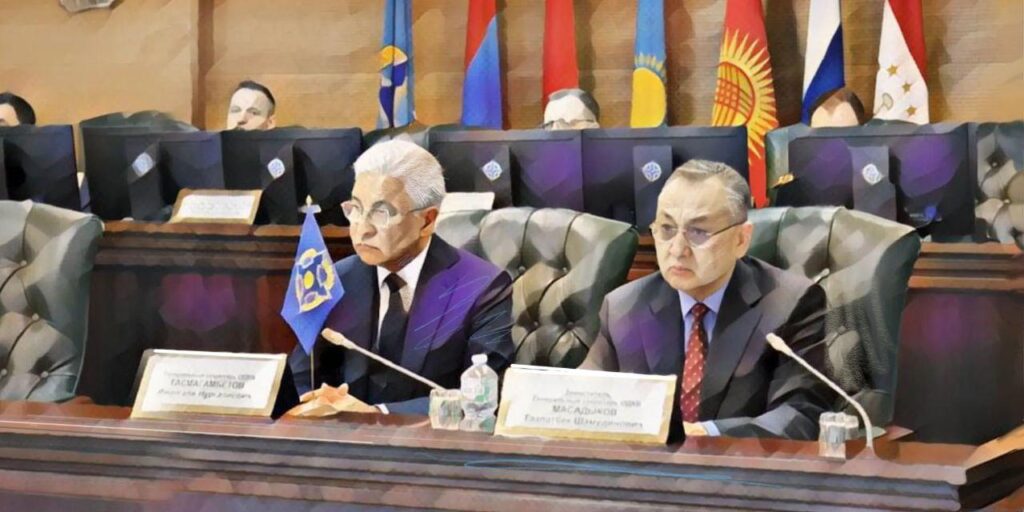
As the current Secretary General, Imangali Tasmagambetov – an influential figure from the “Old Kazakhstan” elite – completes his term, the position is scheduled to rotate to Taalatbek Masadykov of Kyrgyzstan. Ushakov confirmed that Tasmagambetov will deliver a final report on the Organization’s activities and security concerns before officially stepping down on January 1. Masadykov, currently Deputy Secretary General, is expected to assume the role seamlessly.

While Masadykov brings diplomatic gravitas, the question remains whether he can restrain Moscow and Minsk from pushing CSTO allies toward confrontation with NATO. Tasmagambetov leaves behind a significant legacy and an open question for Astana: where to place this seasoned, politically influential figure who has previously served as Kazakhstan’s Prime Minister, Minister of Defense, Ambassador to Russia, and more, after his CSTO tenure ends.

Masadykov, best known for his 2017 Kyrgyz presidential bid, is a veteran diplomat and international affairs expert. His résumé includes service in the UN Assistance Mission in Afghanistan, academic leadership at the American University of Central Asia, and deputy chairmanship of Kyrgyzstan’s Security Council. Since January 2024, he has served as Deputy Secretary General of the CSTO and holds the diplomatic rank of ambassador extraordinary and plenipotentiary.