• KGS/USD = 0.01144 0%
  • KZT/USD = 0.00211 0%
  • TJS/USD = 0.10460 0.19%
  • UZS/USD = 0.00008 0%
  • TMT/USD = 0.28490 0%
  • KGS/USD = 0.01144 0%
  • KZT/USD = 0.00211 0%
  • TJS/USD = 0.10460 0.19%
  • UZS/USD = 0.00008 0%
  • TMT/USD = 0.28490 0%
  • KGS/USD = 0.01144 0%
  • KZT/USD = 0.00211 0%
  • TJS/USD = 0.10460 0.19%
  • UZS/USD = 0.00008 0%
  • TMT/USD = 0.28490 0%
  • KGS/USD = 0.01144 0%
  • KZT/USD = 0.00211 0%
  • TJS/USD = 0.10460 0.19%
  • UZS/USD = 0.00008 0%
  • TMT/USD = 0.28490 0%
  • KGS/USD = 0.01144 0%
  • KZT/USD = 0.00211 0%
  • TJS/USD = 0.10460 0.19%
  • UZS/USD = 0.00008 0%
  • TMT/USD = 0.28490 0%
  • KGS/USD = 0.01144 0%
  • KZT/USD = 0.00211 0%
  • TJS/USD = 0.10460 0.19%
  • UZS/USD = 0.00008 0%
  • TMT/USD = 0.28490 0%
  • KGS/USD = 0.01144 0%
  • KZT/USD = 0.00211 0%
  • TJS/USD = 0.10460 0.19%
  • UZS/USD = 0.00008 0%
  • TMT/USD = 0.28490 0%
  • KGS/USD = 0.01144 0%
  • KZT/USD = 0.00211 0%
  • TJS/USD = 0.10460 0.19%
  • UZS/USD = 0.00008 0%
  • TMT/USD = 0.28490 0%

Report Reveals Persistently High Air Pollution Levels in Bishkek and Osh

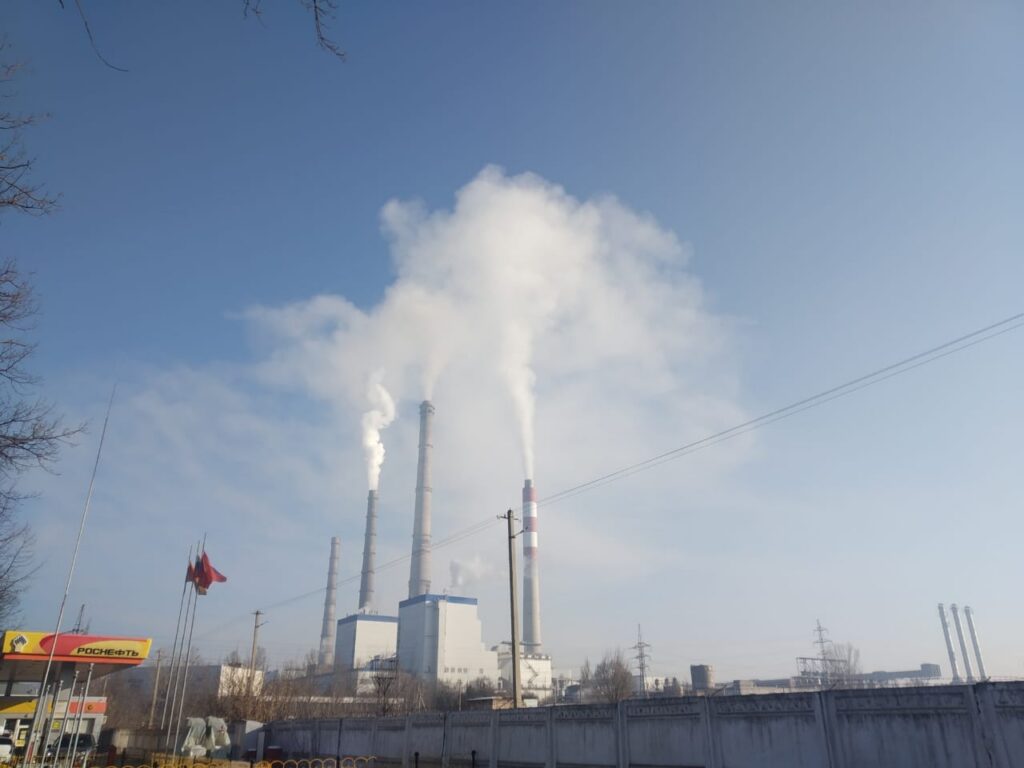
Air pollution remains one of Kyrgyzstan’s most serious environmental challenges, particularly in the cities of Bishkek and Osh, where coal-based heating and motor vehicle emissions are identified as the main sources of pollution, according to a report by the environmental organisation MoveGreen.

The study, covering the period from December 2024 to November 2025, found that Bishkek experienced between 118 and 120 days during which concentrations of fine particulate matter (PM2.5) exceeded permissible limits. Average annual levels were estimated at between 44 and 47 micrograms per cubic meter, significantly above the World Health Organization’s recommended guideline of 5 micrograms per cubic meter.

Air quality in the capital shows strong seasonal variation. Pollution levels rise sharply during winter due to increased coal consumption for heating and the accumulation of emissions linked to the city’s geographical setting. As a result, Bishkek has frequently ranked among the world’s most polluted urban areas in international air quality monitoring indices.

In Osh, pollution patterns were described as more stable but still concerning. Elevated PM2.5 levels were recorded for 159 days during the study period, nearly half the year. The city’s average annual concentration reached 74 micrograms per cubic meter, far exceeding international health recommendations.

The report’s authors also noted that concentrations of other pollutants, including nitrogen oxides and formaldehyde, tend to increase during warmer months.

Among the key recommendations outlined in the study are a gradual transition to cleaner heating sources, expansion and modernisation of public transport systems, measures to reduce dust pollution in urban areas, and improvements in air quality monitoring infrastructure.

Kazatomprom Negotiates Long-Term Uranium Supply Deal with India

Kazakhstan’s national nuclear company Kazatomprom is negotiating a long-term uranium supply agreement with India as part of efforts to expand its presence in key global markets. The announcement was made by the company’s CEO, Meirzhan Yussupov, during a meeting with President Kassym-Jomart Tokayev, according to a statement published on the presidential administration’s website.

The potential contract forms part of Kazatomprom’s development strategy for 2025-2034, which focuses on diversifying export destinations and strengthening the company’s competitive position. In 2025, the company has already concluded supply agreements with several international energy firms, including Switzerland’s Axpo Power AG, the Czech Republic’s ČEZ Group and Japan’s Kansai Electric Power Co.

Kazakhstan remains the world’s largest producer of uranium, accounting for roughly 21% of global output. Total production in the country reached 25,800 tons last year, with 13,500 tons generated by Kazatomprom’s own projects. The company’s sales volumes rose by 11% to 18,500 tons.

Kazatomprom is also expanding its resource base. Its exploration portfolio includes six new prospective sites covering more than 1,000 square kilometers. Investment in geological exploration through 2030 is projected at between $155 million and $176 million.

The company has placed increased emphasis on research and technological development, adopting a strategy through 2034 aimed at improving mining efficiency, reducing environmental impact, and introducing new production solutions.

Since its initial public offering in 2018, Kazatomprom’s market capitalization has increased more than seven times, reflecting stronger investor interest in the uranium sector amid rising global demand for nuclear energy.

The company also continues to invest in social initiatives in the regions where it operates. In 2025, more than $22 million was allocated to regional development projects, including about $12.5 million provided under contractual obligations.

The Times of Central Asia previously reported that Kazakhstan had amended its Subsurface Use Code, increasing the state’s regulatory role in the uranium industry and reinforcing Kazatomprom’s position in the sector.

Turkmenistan Steps Up Preparations for WTO Membership Amid Economic Growth

Turkmenistan is intensifying efforts to integrate into the global trading system, with officials reaffirming the country’s intention to move towards membership in the World Trade Organization (WTO). The announcement was made by Deputy Minister of Finance and Economy Perhat Yagshiyev during the forum “Investing in Turkmenistan’s Future,” according to local media reports.

Yagshiyev said the accession process is progressing in a structured manner. A draft memorandum on the country’s foreign trade regime has been prepared, while WTO standards are being introduced gradually in cooperation with the organisation’s Secretariat and international partners.

Authorities also point to positive macroeconomic trends. Official data indicate that Turkmenistan’s gross domestic product exceeded $77.4 billion in 2025, reflecting growth of 6.3%. Investment volumes reached more than $12.8 billion, up 6% year-on-year, while inflation reportedly declined to 3.2%. External debt remains below 3% of GDP, and officials say the country has not recorded domestic public debt since January 2022.

Foreign trade turnover rose by 10.3% to $21.8 billion. The oil and gas sector, petrochemicals, energy, construction and agriculture continue to be highlighted by the government as priority areas for foreign investment.

Transport infrastructure development remains a central component of economic policy. Turkmenistan is participating in several international logistics initiatives, including the Trans-Caspian corridor, the North-South transport route and the Lazurite corridor. The third phase of the Ashgabat-Turkmenabat highway is expected to be completed in 2026, which authorities say will strengthen the country’s role as a regional transit hub.

Preparations for WTO accession are also linked to the modernisation of trade procedures. Galina Romanova, a representative of the Ministry of Finance and Economy, previously stated that improving trade facilitation is a key priority.

“We are taking consistent steps to modernise customs procedures and introduce digital solutions that make trade faster and more transparent,” she said.

Turkmenistan was granted observer status in the WTO on July 22, 2020, following a decision by the organisation’s General Council in Geneva.

Trump Invites Tokayev to Miami G20 Summit

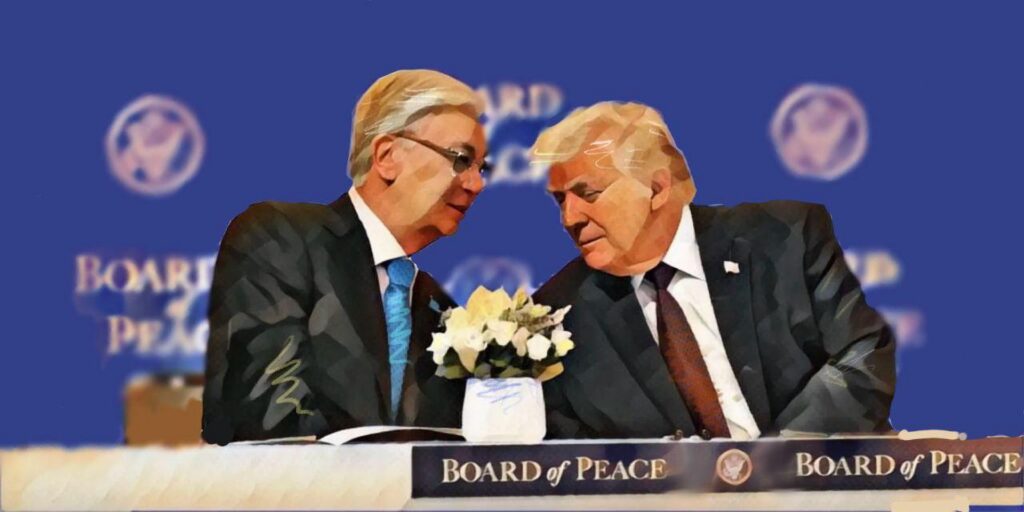
U.S. President Donald Trump has invited Kazakhstan’s President Kassym-Jomart Tokayev to visit Miami for the G20 Summit later this year, according to an official statement released by Tokayev’s press secretary, Aibek Smadiyarov.

The invitation was reportedly conveyed in a personal letter following the two leaders’ recent meeting in Washington in February, which took place during the inaugural session of the Board of Peace – a platform described by participants as combining diplomatic dialogue with business initiatives aimed at addressing global security and development challenges.

According to Smadiyarov, Trump expressed appreciation for Tokayev’s participation in the Washington meeting, and said he would be pleased to welcome him again at the next session of the Board of Peace. Trump also indicated that he hopes Tokayev will attend the G20 Summit scheduled to be held in Miami later this year.

The proposed visit reflects continued communication between the United States and Kazakhstan on multilateral initiatives. Tokayev has previously voiced support for the Board of Peace initiative, commenting that it could mobilize investment and diplomatic cooperation to address instability in parts of the Middle East.

Kazakh officials have framed participation in such formats as consistent with the country’s long-standing multi-vector foreign policy, which seeks to balance the country’s relations with major global powers while promoting regional stability and economic development.

Kazakhstan has been seeking to expand economic ties with Western partners while maintaining its role as a key regional transit hub linking Europe and Asia.

No official confirmation has yet been issued by the White House regarding the timing or format of the G20 Summit in Miami.

Tokayev’s relationship with Trump has so far appeared practical rather than ideological. In 2020, Trump sent Tokayev a letter praising his reform agenda and expressing support for a stronger U.S.-Kazakhstan strategic partnership. Contacts intensified after Trump’s return to office: Tokayev visited Washington in November 2025, later held an extended phone call with Trump in December, and in January 2026 signed the charter of the Board of Peace.

Kazakhstan has presented these relations as part of a broader push to turn political access into economic results. During the Washington visit, Tokayev’s press service said companies from the two countries signed deals worth more than $17 billion, while Tokayev also highlighted sectors such as energy, critical minerals, transport, finance, education, and AI as areas for potential deeper cooperation.

This approach fits Kazakhstan’s long-standing multi-vector foreign policy, a principle Tokayev has described as constructive, balanced, and designed to defend national interests while bringing practical benefits to the country.

Kazakhstan tries to keep productive relations with all major centers of power, rather than tying itself too closely to any one of them. For Kazakhstan, that means preserving room for maneuver with neighbors such as Russia and China while also deepening ties with the United States, Europe, Turkey, the Gulf states, and other partners that can provide investment, technology, and market access.

Kazakhstan places emphasis on transit routes, diplomacy, and middle-power initiatives. The policy is meant to protect sovereignty, reduce overdependence, and keep the country open to several economic and political directions at once.

Neighboring Uzbekistan is not a G20 member, but it has also sought to engage with the group’s agenda through invited formats and related diplomacy. Under India’s G20 presidency in 2023, President Shavkat Mirziyoyev took part in the ‘Voice of Global South’ summit, where he backed India’s chairmanship and called for more attention to trade access, food and energy security, logistics, and investment for developing countries.

He also used that platform to promote a railway through Afghanistan, with access to the Indian Ocean, presenting it as a way to improve connectivity between Central and South Asia. Uzbek officials have likewise tied the country’s climate and development priorities to wider G20 debates. At COP28 in Dubai, Mirziyoyev said issues such as a fair low-carbon transition should remain on the agenda of major forums including the G7 and G20.

Tajikistan, Turkmenistan and Uzbekistan Send Humanitarian Aid to Iran

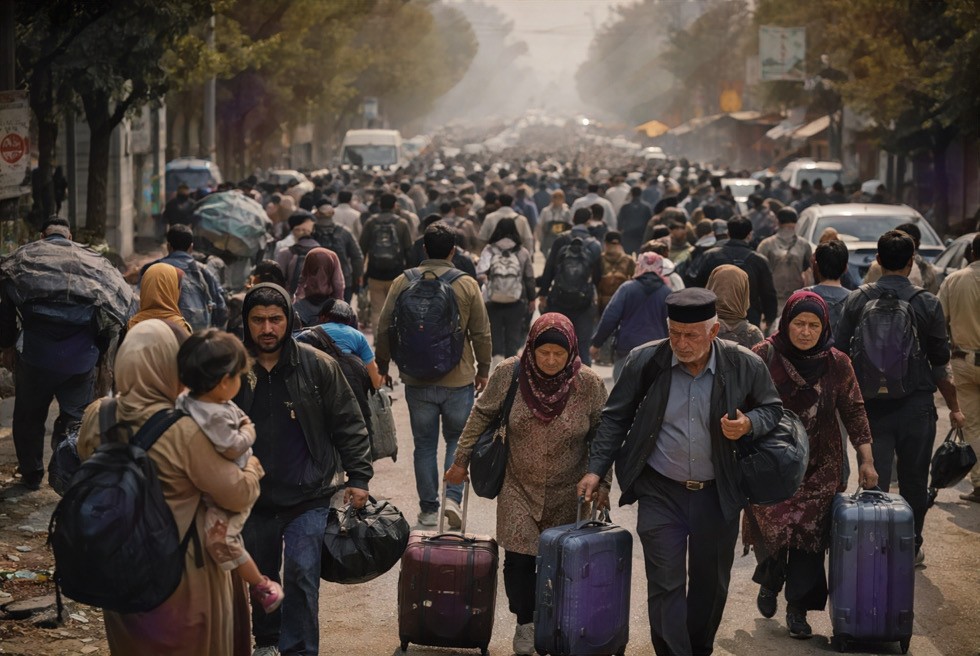
Tajikistan is sending a convoy of 110 trucks carrying humanitarian aid to Iran, which has been targeted by heavy U.S. and Israeli air strikes in a war that started on February 28. The dispatch of aid follows similar deliveries by Turkmenistan, Uzbekistan and Azerbaijan. 

Central Asian countries are aiming for neutrality in the Mideast war, maintaining ties with the Iranian government even as they profess support for Gulf Arab states that have been targeted by Iranian drones and missiles. Iran’s relationships with countries to the east range from the close cultural affinity that it enjoys with Tajikistan to sometimes tense interactions with Azerbaijan, which has a military partnership with Israel.  

The trucks from Tajikistan left for Iran on Wednesday and “will soon arrive in the friendly and brotherly country,” Tajikistan’s government said, without providing details about how the aid will be distributed. The convoy would likely travel through Uzbekistan and Turkmenistan to reach the northeastern Iranian border.

The aid “comprises 3,610 tons of cargo, including 45 tons of medicines, a large volume of sanitary and hygienic products, children’s clothing, various food products, household items, bedding, tents, building materials, and other necessary supplies,” Tajikistan’s Ministry of Foreign Affairs said.  

Tajik President Emomali Rahmon posted a photo on social media that showed a long line of aid trucks on a highway. 

Turkmenistan, which shares a border with Iran, has said it sent humanitarian aid, mainly for distribution to children. It appeared to allude to the war, saying that “supporting and assisting close neighbors in difficult times is a noble tradition of the Turkmen people, rooted in ancient times.”

Uzbekistan has sent trucks carrying flour, rice, sugar, pasta, sunflower oil, canned goods and medical supplies to Iran.  

Azerbaijan, which borders northwest Iran, has also dispatched truckloads of humanitarian aid to Iran, according to Ali Alizada, Azerbaijan’s ambassador to Iran. Azerbaijan previously said it was evacuating staff from its embassy in Tehran as well as its consulate in the Iranian city of Tabriz, after accusing Iran of drone attacks on its territory.

Kazakhstan Celebrates as Paralympic Champion Yerbol Khamitov Returns Home

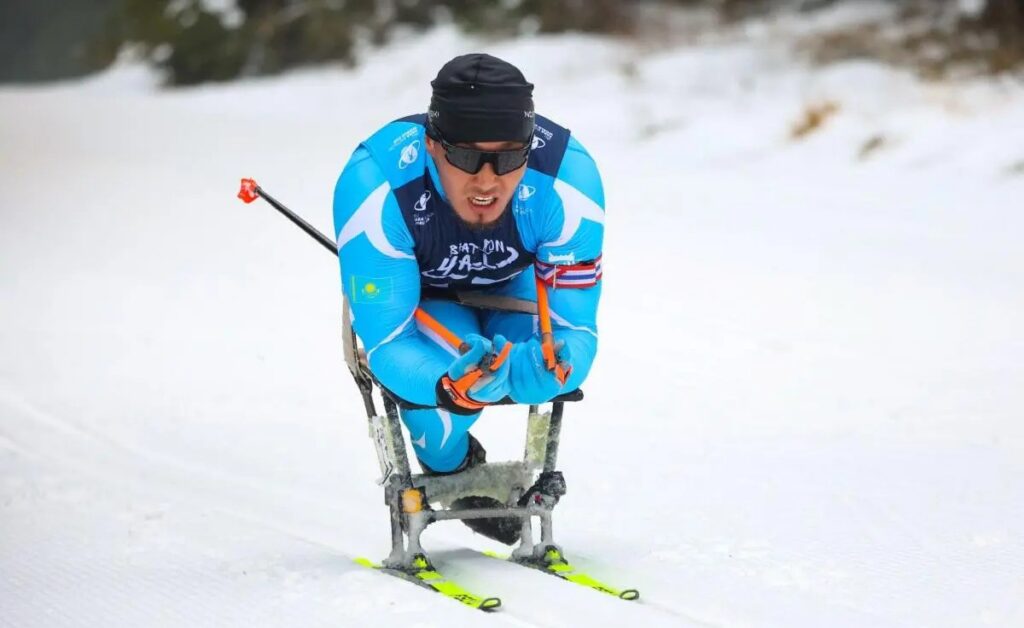
Dozens of fans, some carrying balloons and bouquets, gathered at Astana’s international airport on Tuesday to welcome Paralympic champion Yerbol Khamitov after he won two medals for Kazakhstan at the Winter Games in Italy.

The 28-year-old athlete, who lost part of his leg after being shot in the knee a decade ago, greeted supporters and thanked his coaches and state authorities for their support, which he said contributed to his international success.

Khamitov won the biathlon pursuit race on March 13 and finished third in the cross-country skiing sprint on March 10, becoming the first Kazakhstani athlete to win two medals at a Winter Paralympics. 

“I am glad that I was able to fulfill my promise to raise our national flag on the podium,” he said on social media. 

“I am not stopping here. I have many plans and new goals ahead. I will make every effort to reach new heights.”

Khamitov said he was told in the past that ‘“cross-country skiing is not a Kazakh sport”’ but he wanted to prove to himself and others that “anything is possible.” 

Khamitov, who competed in martial arts before and after his injury, made his Paralympic debut in Beijing in 2022. Last year, he won his first para biathlon world title at the championships in Pokljuka, Slovakia. The International Paralympic Committee had said he was “among the athletes to watch out for” at the Milano Cortina 2026 Winter Games. The events ended on March 15. 

In Kazakhstan, the paralympian will receive the equivalent of hundreds of thousands of dollars and other benefits for his achievements. Khamitov, who said he comes from a modest background and has experienced hardship, encouraged anyone with physical difficulties to get involved in sports.  

“I would like to encourage everyone who is currently in this situation, whether they’ve lost an arm or a leg, are visually impaired, or were born that way, to come and play sports with us,” Khamitov told journalists after returning to Astana.

His success at the Winter Games has been widely seen as an inspiration for athletes with disabilities in Kazakhstan.