• KGS/USD = 0.01144 0%
  • KZT/USD = 0.00212 0%
  • TJS/USD = 0.10432 -0.29%
  • UZS/USD = 0.00008 0%
  • TMT/USD = 0.28490 0%
  • KGS/USD = 0.01144 0%
  • KZT/USD = 0.00212 0%
  • TJS/USD = 0.10432 -0.29%
  • UZS/USD = 0.00008 0%
  • TMT/USD = 0.28490 0%
  • KGS/USD = 0.01144 0%
  • KZT/USD = 0.00212 0%
  • TJS/USD = 0.10432 -0.29%
  • UZS/USD = 0.00008 0%
  • TMT/USD = 0.28490 0%
  • KGS/USD = 0.01144 0%
  • KZT/USD = 0.00212 0%
  • TJS/USD = 0.10432 -0.29%
  • UZS/USD = 0.00008 0%
  • TMT/USD = 0.28490 0%
  • KGS/USD = 0.01144 0%
  • KZT/USD = 0.00212 0%
  • TJS/USD = 0.10432 -0.29%
  • UZS/USD = 0.00008 0%
  • TMT/USD = 0.28490 0%
  • KGS/USD = 0.01144 0%
  • KZT/USD = 0.00212 0%
  • TJS/USD = 0.10432 -0.29%
  • UZS/USD = 0.00008 0%
  • TMT/USD = 0.28490 0%
  • KGS/USD = 0.01144 0%
  • KZT/USD = 0.00212 0%
  • TJS/USD = 0.10432 -0.29%
  • UZS/USD = 0.00008 0%
  • TMT/USD = 0.28490 0%
  • KGS/USD = 0.01144 0%
  • KZT/USD = 0.00212 0%
  • TJS/USD = 0.10432 -0.29%
  • UZS/USD = 0.00008 0%
  • TMT/USD = 0.28490 0%

The History of Nauryz: An Ancient Festival That Continues to Unite Central Asia

Ahead of the Nauryz holiday, The Times of Central Asia looks at the origins and enduring significance of one of the region’s oldest celebrations. More than a seasonal festival, Nauryz reflects a deep connection between people, nature, and cultural identity, a tradition that has evolved over thousands of years and remains central to life across Central Asia.

Origins and Meaning

Nauryz, also known as Nowruz, is one of the world’s oldest holidays, marking the arrival of spring and the beginning of a new year. It is celebrated on the day of the spring equinox, when day and night are approximately equal and nature appears to begin a new cycle.

For many communities, the holiday symbolizes renewal, hope for prosperity, and the start of a new stage in life.

The name “Nowruz” derives from ancient Iranian words meaning “new day.” This concept lies at the heart of the celebration: the renewal of life and the symbolic rebirth of nature after winter.

With a history spanning more than 3,000 years, the holiday spread across Eurasia along the Silk Roads and became embedded in the cultural traditions of Central Asia, the Middle East, and the Caucasus.

@depositphotos

Today, Nowruz is recognized not only as a calendar event but also as a cultural tradition that promotes values such as peace, mutual respect, and harmony with nature.

Connection to the Spring Equinox

Nauryz is traditionally celebrated during the spring equinox, which usually falls on March 20 or 21, when the Sun crosses the celestial equator and daylight and nighttime hours are nearly equal.

Since ancient times, this moment has symbolized the awakening of nature and the beginning of a new agricultural year.

Historical sources indicate that different communities once observed various dates in March, often guided by natural signs. Over time, however, the astronomical equinox, commonly observed on March 21, became the most widely accepted date.

Medieval scholars paid close attention to this phenomenon. In the 11th and 12th centuries, astronomers such as Omar Khayyam refined calendar calculations to align the start of the year more precisely with the equinox.

Alongside scientific knowledge, traditional methods were also used to forecast harvests and weather conditions, including observing seed germination or measuring the length of shadows before the holiday.

Today, Nauryz is officially celebrated on March 21 in countries such as Kazakhstan and Uzbekistan, while UNESCO also recognizes Nowruz as marking the first day of spring.

Rituals and Traditions

For centuries, Nauryz has been marked by rituals symbolizing renewal, fertility, and prosperity. Among both nomadic and settled communities, it has traditionally been celebrated with public festivities, games, and family gatherings.

Common customs include ritual cleansing with water, exchanging gifts, and offering food to neighbors and guests. The altybakan swing is widely regarded as a symbol of spring and joy. In some regions, the ancient practice of jumping over fire has been preserved as a purification ritual.

Food plays a central role in the celebration. Although culinary traditions vary by country, they share a common symbolism of abundance and new life.

In Kazakhstan, the main festive dish is Nauryz kozhe, a soup prepared from seven ingredients representing prosperity and well-being. In Uzbekistan and Tajikistan, sumalak, a sweet dish made from sprouted wheat, is a key symbol of the holiday.

Sumalak is traditionally prepared collectively, often overnight, with participants taking turns stirring the pot and making wishes. It is believed to bring prosperity and fertility.

Festive tables also feature dishes such as plov, herb-filled samsa, and manty dumplings.

Celebrations are typically accompanied by traditional games and competitions, including horse racing, wrestling, equestrian contests, and street performances. People gather around a shared dastarkhan, sing songs, visit relatives, and exchange wishes for health, peace, and prosperity.

@depositphotos

From Suppression to Revival

During the Soviet period, large-scale public celebrations of Nauryz were restricted, and many traditions were preserved mainly within families and local communities. From the late 1980s onward, however, the holiday began to experience a revival.

Following the independence of Central Asian states, Nauryz was officially recognized as a public holiday across the region.

Today, it is widely celebrated in Kazakhstan, Uzbekistan, Kyrgyzstan, Turkmenistan, and Tajikistan, with festivals, fairs, and public events held in major cities.

Its international recognition underscores its cultural significance. In 2009, Nowruz was inscribed on UNESCO’s Representative List of the Intangible Cultural Heritage of Humanity, and since 2010 March 21 has been observed as the International Day of Nowruz.

Nauryz remains one of the most enduring cultural traditions in Central Asia, with its meaning preserved across generations.

Its emphasis on renewal and hospitality continues to bring communities together across borders and remains a familiar part of life across the region.


Kazakhstan Senator Proposes Restoring State Oversight of Driving Schools

Gennady Shipovskikh, a member of Kazakhstan’s Senate, has proposed restoring state oversight of driving schools, linking the initiative to a sharp increase in traffic accidents across the country.

According to figures cited by the senator, the number of road accidents has nearly doubled over the past three years. In 2023, approximately 15,800 accidents were recorded in Kazakhstan. This figure rose to about 31,500 in 2024 and exceeded 36,000 in 2025. In total, more than 100,000 people were reported injured during this period.

Shipovskikh attributes the worsening situation partly to reduced state supervision of driver training standards. At present, most driving schools in Kazakhstan are privately operated: of 727 institutions nationwide, 567 are privately owned, while 160 are state-run.

He noted that regulatory changes in recent years have significantly altered the sector. In 2016, the licensing system for driving schools was replaced with a notification-based procedure, and in 2018, direct state oversight was abolished.

He said these reforms have contributed to declining training standards and growing public distrust in the quality of instruction.

As a possible solution, Shipovskikh has proposed reinstating an accreditation mechanism for driving schools. Under such a system, institutions whose graduates are repeatedly involved in traffic accidents could face the suspension or revocation of their operating permits. He also called for tighter monitoring of compliance with training requirements, particularly in the private sector, as well as the creation of a unified national driver training framework.

He also highlighted the need to establish a centralized analytical platform to enable more detailed study of accident causes and to support the development of preventive policies.

“We must not forget that behind every traffic accident lies a tragedy for families and society,” he said in remarks addressed to Prime Minister Olzhas Bektenov.

Alongside reforms in driver education, Shipovskikh proposed introducing modern traffic-management tools.

Among these measures is the use of so-called “waffle markings” at congested intersections. These road markings prohibit vehicles from entering an intersection if traffic conditions prevent them from clearing it, thereby helping to reduce congestion and the risk of collisions. Such practices are already widely used in major cities worldwide and have proven effective in improving road safety.

The Times of Central Asia previously reported that Senator Zhanna Asanova had proposed allowing private laboratories to conduct medical examinations of drivers for intoxication as part of wider discussions on road safety policy.

Uzbekistan Explores Gas-Chemical Cooperation with South Africa’s Sasol

Uzbekistan is considering involving South Africa’s Sasol Limited in the development of its gas-chemical sector following talks held in Tashkent on March 15, according to the Ministry of Investment, Industry and Trade.

The meeting brought together Uzbekistan’s Minister of Investment, Industry and Trade, Laziz Kudratov, and Sasol Executive Vice President Dr. Sarushen Pillay. Discussions focused on expanding cooperation in gas-chemical and coal-chemical industries, with both sides expressing interest in joint projects based on the deep processing of natural gas and coal.

According to the ministry, particular attention was given to Sasol’s potential participation in a coal-to-olefins (CTO) project aimed at converting coal into higher-value chemical products. The parties also explored opportunities for technological cooperation in further developing Uzbekistan’s existing gas-to-liquids (GTL) complex, including the possible expansion of production capacity and the introduction of advanced processing technologies.

Officials noted that the dialogue builds on earlier discussions held in Cape Town in February, indicating continued engagement between the two sides.

Founded in 1950, Sasol is an international energy and chemical company operating in more than 20 countries. The company reported revenues of approximately $16.6 billion in 2024 and employs more than 28,000 people worldwide.

As previously reported by The Times of Central Asia, Kazakhstan has also been expanding economic ties with African countries. Trade turnover increased by 15% in 2024 to reach $783 million. Regional officials have highlighted the importance of building partnerships based on mutual economic interests, particularly in sectors such as energy, industry, and technology.

Kyrgyz Retailers Prepare for Gradual Phase-Out of Plastic

Pressure is increasing on businesses in Kyrgyzstan to reduce their use of plastic. However, judging by the government’s latest initiatives, the transition to new environmental standards is expected to be gradual and shaped by compromise.

The Ministry of Natural Resources, Ecology, and Technical Supervision has announced the launch of the “Green Entrepreneur” platform, through which companies willing to phase out plastic can obtain official recognition. The initiative comes alongside preparations for large-scale restrictions on the use of plastic bags, scheduled to take effect on January 1, 2027.

Although a full ban has not yet been introduced, several major retailers have already begun reducing their use of plastic bags and bottles. Both domestic companies and international brands are participating in the process.

According to the ministry, the government and the business community have agreed on a series of joint measures that are expected to reshape the packaging market in the coming years.

First Deputy Minister of Natural Resources Zhenish Seydaliev described plastic pollution as a global challenge, stressing that Kyrgyzstan has the potential to take a leading role in addressing the issue at the regional level.

“Only joint cooperation will lead to sustainable business development that incorporates environmental responsibility and high standards of corporate governance,” he said.

One of the key instruments under discussion is the introduction of separate waste collection systems. Authorities are encouraging businesses to incentivize consumers to return plastic bottles and aluminum cans by installing reverse vending machines, automated devices that offer bonuses or refunds. Such machines are expected to appear in retail chains, markets, fuel stations, food courts, and educational institutions. At the same time, companies are being urged to switch to biodegradable packaging, a move that would require significant adjustments to logistics and operational processes.

The ministry emphasizes that the reforms are not limited to banning specific products but are aimed at a broader transformation of consumption patterns.

At the same time, the final regulatory framework remains under discussion. Earlier proposals from the Cabinet of Ministers suggested abandoning a complete ban on plastic products from 2027.

Under a draft law currently undergoing public consultation, certain plastic products may continue to be permitted provided they comply with the Eurasian Economic Union’s technical regulation on packaging safety. This approach reflects an effort to balance environmental objectives with economic considerations.

Some restrictions are already being implemented at the regional level. The Issyk-Kul region has introduced a ban on plastic bags, which is being treated as a pilot project for potential nationwide reforms.

Nevertheless, significant structural challenges remain. Plastic is estimated to account for up to one quarter of all waste in Kyrgyzstan’s landfills. Domestic production meets only around 15% of demand, with the remainder imported primarily from China, Iran, and Kazakhstan.

How Kazakhstan Is Seeking to Attract Global Capital to Critical Mineral Extraction

In March 2026, Kazakhstan moved into the spotlight of the global mining industry. Against the backdrop of an accelerating energy transition and a growing shortage of critical minerals, the government has launched a large-scale geological exploration program. Its strategic objective is to position the country as a key supplier of copper and rare earth elements (REEs) to global markets.

For Western investors, this represents an important signal. A significant, relatively underexplored resource base is emerging, supported by regulatory reforms designed to facilitate access.

The state assumes early-stage risks

The new investment cycle was officially presented at PDAC 2026, one of the world’s largest mining conventions held in Toronto. Unlike previous initiatives that were largely declarative, Kazakhstan has backed its strategy with direct funding: approximately $81 million has been allocated from the state budget for geological exploration.

The funds are intended to support a comprehensive assessment of mineral resources in 11 regions of the country.

The central rationale is to lower entry barriers for private capital. The government is financing early-stage geological work, including mapping, airborne geophysical surveys, and preliminary resource evaluations. Investors are expected to receive access to “pre-qualified” sites with confirmed potential, an approach commonly used in established mining jurisdictions.

This is particularly important because early exploration has historically been the riskiest and most capital-intensive phase of mining projects.

The energy transition reshapes demand

Growing interest from Western investors is driven by both domestic reforms and global market dynamics.

Forecasts by the International Energy Agency indicate that demand for key minerals such as copper, lithium, and cobalt is likely to rise substantially by 2040. Existing mining and processing capacities may prove insufficient to meet projected needs.

At the same time, geopolitical tensions are increasing. Processing of rare earth elements remains concentrated in a limited number of countries, making global supply chains vulnerable to disruption.

In response, the United States and the European Union have introduced policies aimed at diversifying sources of critical raw materials. The EU’s Critical Raw Materials Act seeks to encourage investment in alternative supply chains.

Against this backdrop, Kazakhstan, whose mineral exploration has historically focused on oil and uranium, is emerging as a potential contributor to global diversification efforts.

Focus on junior mining companies and regulatory transparency

One of the government’s key tools for attracting investment is the development of an ecosystem of junior mining companies specializing in early-stage exploration.

Unlike large corporations, junior firms are often willing to assume the risks associated with drilling and initial geological assessments. If commercially viable deposits are identified, these companies typically sell their assets to strategic investors, helping to create a venture-capital-style market within the extractive sector.

To support this model, Kazakhstan has reformed its Subsoil Code, introducing a “first come, first served” licensing principle. Digital platforms are now used to allocate exploration rights, reducing processing times and limiting opportunities for corruption. In effect, the country is adopting regulatory practices similar to those used in Australia, widely regarded as one of the world’s most investor-friendly mining jurisdictions.

$1.1 billion project signals growing investor interest

Investor engagement is already moving beyond preliminary discussions. In mid-March 2026, Minister of Industry and Construction Yersain Nagaspayev held talks with the U.S.-based company Cove Kaz Capital Group regarding a potential $1.1 billion project.

The discussions focus on developing the North Katpar and Upper Kairakty deposits, believed to contain significant tungsten reserves.

A notable feature of the proposed agreement is the emphasis on downstream processing. The investor is expected to construct two processing plants, establish metallurgical production, and limit exports of unprocessed raw materials.

This reflects a broader policy shift. Kazakhstan is seeking to move from a predominantly resource-export model toward industrial development. Linking access to mineral deposits with commitments to domestic processing could help generate added value within the country, create around 1,000 jobs, and stimulate the development of local supply chains.

Infrastructure constraints remain a key challenge

Despite improving investment conditions, systemic risks persist.

The most significant constraint is the energy sector. Mining operations require large volumes of reliable and affordable electricity, while Kazakhstan is already experiencing power-generation shortages. In addition, environmental, social, and governance (ESG) requirements are placing growing pressure on project developers, as international investors increasingly demand access to low-carbon energy sources.

Logistics present another major constraint. Exporting minerals from the center of Eurasia requires further modernization of transport infrastructure, particularly along the Trans-Caspian International Transport Route, also known as the Middle Corridor.

Without substantial infrastructure investment, the pace of project implementation could slow.

Allocating tens of billions of tenge to geological exploration is therefore not a short-term measure but part of a broader strategy to diversify Kazakhstan’s economy and reduce its dependence on oil revenues. Critical minerals offer the country an opportunity to integrate into emerging global value chains linked to renewable energy, electric vehicles, and advanced technologies.

Kyrgyzstan Sees No Grounds for Restricting Potato Imports from China

Kyrgyzstan’s Ministry of Water Resources, Agriculture, and Processing Industry has stated that there are no grounds for restricting potato imports from China.

The announcement follows reports that the domestic market has been flooded with Chinese potatoes allegedly being sold as locally produced goods.

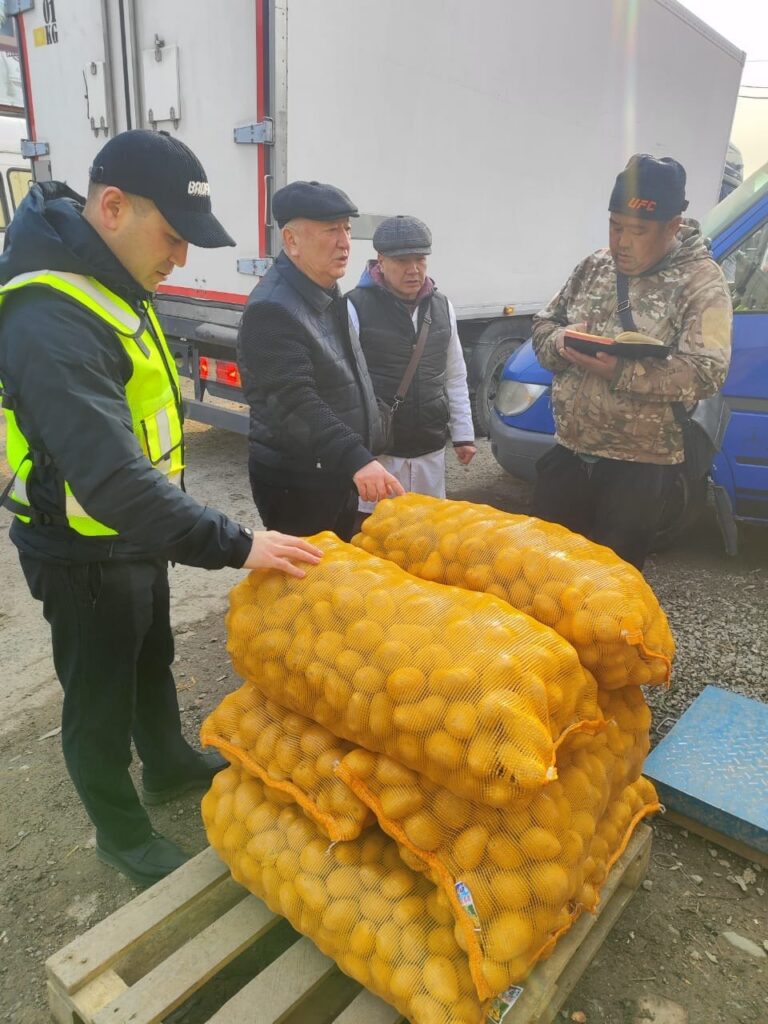
In response, the ministry’s Veterinary and Phytosanitary Control Service conducted monitoring of potato sales in Bishkek and Osh. According to officials, imported Chinese potatoes are present on the market, but no confirmed cases were identified in which such products were falsely labeled as local produce.

Currently, the average retail price of imported Chinese potatoes ranges from 38 to 40 soms per kilogram, while locally grown potatoes are sold at prices of around 42 to 44 soms per kilogram.

The ministry also noted that Kyrgyzstan’s obligations under the World Trade Organization framework limit the scope for imposing unilateral import restrictions. Officials emphasized that agricultural trade between Kyrgyzstan and China is mutual, with Kyrgyz products also being exported to the Chinese market.

In addition, the Veterinary and Phytosanitary Control Service has advised domestic potato farmers to accelerate sales of stored produce. Some producers are reportedly holding stocks in warehouses in anticipation of higher prices. However, the service believes that price increases are unlikely as the arrival of the new harvest is expected to boost supply. Officials warned that prolonged storage may lead to spoilage and financial losses.

In related developments, the Ministry of Agriculture has announced the start of corn exports to China. The first shipment, totaling 25 tons, departed on March 16.

The export became possible following the signing of a protocol on phytosanitary requirements for corn exports from Kyrgyzstan to China between the Kyrgyz Ministry of Agriculture and China’s General Administration of Customs. To date, two Kyrgyz enterprises have been authorized to export corn under this framework.

Trade between Kyrgyzstan and China continues to expand. According to Chinese Ambassador to Kyrgyzstan Liu Jiangping, bilateral trade turnover reached $27.2 billion, representing a 20% increase and a record high. He also noted that China’s imports from Kyrgyzstan grew by 86%.