• KGS/USD = 0.01143 -0%
  • KZT/USD = 0.00192 -0%
  • TJS/USD = 0.10820 0.19%
  • UZS/USD = 0.00008 0%
  • TMT/USD = 0.28575 0%
  • KGS/USD = 0.01143 -0%
  • KZT/USD = 0.00192 -0%
  • TJS/USD = 0.10820 0.19%
  • UZS/USD = 0.00008 0%
  • TMT/USD = 0.28575 0%
  • KGS/USD = 0.01143 -0%
  • KZT/USD = 0.00192 -0%
  • TJS/USD = 0.10820 0.19%
  • UZS/USD = 0.00008 0%
  • TMT/USD = 0.28575 0%
  • KGS/USD = 0.01143 -0%
  • KZT/USD = 0.00192 -0%
  • TJS/USD = 0.10820 0.19%
  • UZS/USD = 0.00008 0%
  • TMT/USD = 0.28575 0%
  • KGS/USD = 0.01143 -0%
  • KZT/USD = 0.00192 -0%
  • TJS/USD = 0.10820 0.19%
  • UZS/USD = 0.00008 0%
  • TMT/USD = 0.28575 0%
  • KGS/USD = 0.01143 -0%
  • KZT/USD = 0.00192 -0%
  • TJS/USD = 0.10820 0.19%
  • UZS/USD = 0.00008 0%
  • TMT/USD = 0.28575 0%
  • KGS/USD = 0.01143 -0%
  • KZT/USD = 0.00192 -0%
  • TJS/USD = 0.10820 0.19%
  • UZS/USD = 0.00008 0%
  • TMT/USD = 0.28575 0%
  • KGS/USD = 0.01143 -0%
  • KZT/USD = 0.00192 -0%
  • TJS/USD = 0.10820 0.19%
  • UZS/USD = 0.00008 0%
  • TMT/USD = 0.28575 0%
13 December 2025

Potential Mass Expulsion of Migrants Looms in Russia

Russia introduced new regulations for foreign citizens in the country on February 5, and started keeping a list at the Interior Ministry of foreigners who are living or staying in Russia without proper documentation, the “controlled persons registry.” The rules are aimed at migrant laborers working in Russia, many of whom come from Central Asian countries.

Russia has set a September 10 deadline for foreigners in the country to clear up all their paperwork with the authorities or face expulsion with a ban on re-entry. Judging by recent comments from Kyrgyzstan’s ambassador to Russia, Kubanychbek Bokontayev, many might not make that September 10 deadline.

Needed but Not Desired

Over the course of the last two decades, millions of citizens from Central Asian countries have worked in Russia. Most are from Kyrgyzstan, Tajikistan, and Uzbekistan.

The remittances they send home have grown to the point where this money now accounts for nearly 40% of the GDP in Tajikistan, 24% in Kyrgyzstan, and 14% in Uzbekistan. Most of these remittances come from Russia.

Russia badly needs the extra workers, and, until recently, the arrangement seemed to suit all parties. But the March 2024 terrorist attack on Moscow’s Crocus City Hall changed the situation.

The Russian authorities detained and charged a group of Tajik nationals for the attack, and the always simmering xenophobia in Russia, particularly toward Central Asians, boiled over.

New rules and restrictions have been imposed on migrant workers.

Those that came into force in February this year were only the latest in a series of changes that already included mandatory fingerprinting and photographs upon entry to Russia, a reduction in the term of stay from 180 to 90 days, and an increasing list of infractions that provide grounds for deportation.

In 2024, Russia expelled some 157,000 migrants who were in the country illegally, which, according to Russian Interior Minister Vladimir Kolokoltsev, was an increase of some 50% over 2023.

The Clock Is Ticking

At the start of February, just before the latest regulations came into effect, Russia’s Deputy Interior Minister Aleksandr Gorovoi said there were some 670,000 foreigners living illegally in Russia. Gorovoi added that more than half were women and children, “those who entered, but we do not see that they received a patent registered with the migration service… [or] that an employment agreement was concluded with them.”

On July 24, Kyrgyz media outlet AKIpress published an interview with the Kyrgyz Ambassador to Russia, Bokontayev, in which he said that at the start of July, there were some 113,000 Kyrgyz citizens on the controlled persons registry, which he referred to as the “gray list.” He also said there were some 80,000 Kyrgyz citizens on the “black list” of people barred from entering Russia.

In a separate interview with Radio Free Europe/Radio Liberty’s Kyrgyz Service published on July 25, Kyrgyzstan’s General Consul in Russia, Bakyt Asanaliyev, said that about 30% of the Kyrgyz citizens on the gray list are children. Ambassador Bokontayev said Kyrgyzstan’s embassy is working to make sure those currently on the gray list do not end up on the black list.

Citizens on the gray list have additional restrictions placed upon them until they clear up their status. Among these are prohibitions on driving, marrying, traveling within Russia, changing their place of residency, opening a bank account, or spending more than 30,000 rubles (about $351) per month from existing Russian bank accounts.

Bokontayev noted that from February to the end of April, only some 4,000 Kyrgyz citizens on the gray list had legalized their status, and by the start of July, the figure was more than 7,000.

The pace could be quickening.

Asanaliyev said the number dropped from 113,000 at the start of July to 103,000 a little more than three weeks into July, though Bokontayev pointed out that it is difficult to give exact numbers as Russia’s Interior Ministry updates the controlled persons registry every six hours. Those who have successfully completed their registration are removed, while those recently caught without all the necessary documents are added.

With only some 17,000 Kyrgyz citizens having made themselves legal in Russia since February, it seems unlikely that all the remaining Kyrgyz citizens on the gray list will clear up their living or working status by September 10. Bokontayev noted there are long lines at Russia’s facilities for registering migrants, and the process of filling out paperwork and other requirements is time-consuming.

Easier for the Kyrgyz Than Others

The number of Central Asian migrant laborers has been declining in recent years due to tightening restrictions, increased xenophobia, and the fear, among males, of being pressured or forced into joining the Russian military and sent to fight in Ukraine.

In May 2023, Kyrgyzstan’s Labor Ministry reported that the number of Kyrgyz citizens working as migrant laborers in 2022 was more than 1.5 million, of which 1.063 million were in Russia.

In January 2025, Kyrgyzstan’s Foreign Ministry said the number of Kyrgyz citizens living and working in Russia dropped to some 650,000 in 2023 and to some 350,000 in 2024. Ambassador Bokontayev cited figures from Russia’s Interior Ministry that showed the number of Kyrgyz citizens in Russia in the first quarter of 2025 was some 352,000.

Kyrgyzstan is a member of the Russian-led Eurasian Economic Union (EAEU), a group that also includes Armenia, Belarus, and Kazakhstan. As an EAEU member, Kyrgyzstan’s citizens, including migrant laborers, are given easier access to other member countries and enjoy social benefits, such as healthcare, not given to people from non-member countries.

Citizens from Tajikistan and Uzbekistan staying or working in Russia face greater challenges than Kyrgyz in entering Russia and obtaining all the needed official approvals. There are far more Tajik and Uzbek migrant laborers in Russia than Kyrgyz. It is unclear how many Tajik and Uzbek citizens are on the gray list, but almost certainly it is more than Kyrgyz. If citizens from Kyrgyzstan, an EAEU member, are having such a hard time legally registering themselves in Russia, it is likely more difficult for Tajik and Uzbek citizens.

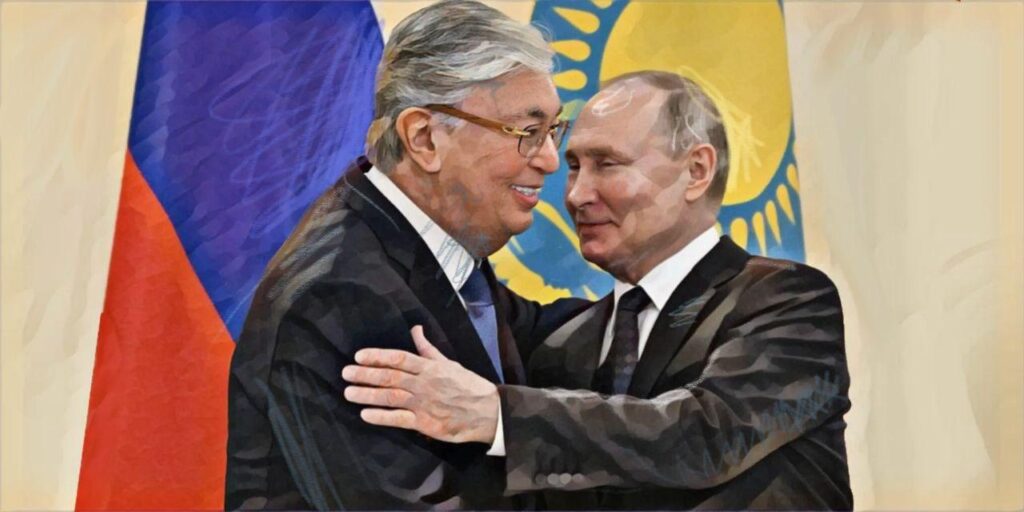
Kyrgyz President Sadyr Japarov visited Russia at the start of July and met with his Russian counterpart, Vladimir Putin. Japarov asked for Russian assistance in getting Kyrgyz citizens legally registered in Russia before September 10. The Tajik and Uzbek governments are likely also working with the Russian authorities to ensure as many of their citizens as possible meet the looming deadline.

The sudden return from Russia of even tens of thousands of Central Asian citizens to their home countries, where most would join the ranks of the unemployed, is not something the Central Asian leaders want to see. Such a scenario could spark social tensions.

Russia, too, would prefer to keep at least most of the migrant workforce, though Russian officials have already made it clear that they do not want wives and children accompanying Central Asian migrant laborers to Russia.

Some sort of compromise seems likely, but the Russian authorities might start mass expulsions after the deadline just to demonstrate that they are serious about having migrants in the country working and legally registered.

KTZ Secures $540 Million Loan to Upgrade Trans-Kazakhstan Railway Corridor

Kazakhstan Temir Zholy (KTZ), the national railway operator, has secured a syndicated loan of up to 480 million Swiss francs (approximately $540 million) for a three-year term. Arranged through Abu Dhabi Commercial Bank and Deutsche Bank, the financing will support key infrastructure projects along the Trans-Kazakhstan Railway Corridor.

According to KTZ, the loan will fund construction of the Moiynty-Kyzylzhar section, upgrades to congested segments of the national rail network, and the refinancing of existing debt.

The Trans-Kazakhstan Railway Corridor is central to Kazakhstan’s strategy to solidify its role as a major overland transit hub connecting China and Europe. Infrastructure improvements are expected to reduce delivery times, lower logistics costs, create jobs, and diversify international trade routes, enhancing both the resilience of Kazakhstan’s economy and the competitiveness of its transport sector.

Currently, more than 80% of overland freight from China to Europe passes through Kazakhstan via the Trans-Caspian International Transport Route (TITR), also known as the Middle Corridor. This route circumvents Russia and connects China to Europe through Central Asia and the Caspian Sea.

In 2024, freight volumes along the TITR surged by 60%, reaching 4.5 million tons. Kazakhstan aims to more than double that volume to 10 million tons by 2030, as part of its broader ambition to expand its footprint in global supply chains.

Kyrgyzstan Launches “Mekenim 1+1” Program to Support Returning Migrants

Kyrgyzstan’s Ministry of Labor, Social Security and Migration has launched a new pilot initiative, Mekenim 1+1 (“My Homeland 1+1”), aimed at helping returning labor migrants reintegrate into the national economy by co-investing in local business ventures.

The program introduces a matching investment model: for every som invested by a returning migrant, the state will provide a concessional loan of equal value. The combined funds must be used to start businesses in priority sectors including light industry, tourism, education, IT and innovation, manufacturing and processing, transport, warehousing, and logistics.

The pilot phase will run from 2025 to 2026 in the Batken region, a remote area with high levels of labor migration. If successful, the program will be scaled up nationwide.

Russia remains the primary destination for Kyrgyz labor migrants. As previously reported by The Times of Central Asia, approximately 600,000 Kyrgyz citizens currently live abroad, with nearly 380,000 registered with Russian migration authorities as of the end of 2024.

However, Russia’s ongoing economic challenges, restrictive immigration policies, and rising anti-immigrant sentiment are prompting many Kyrgyz migrants to explore alternatives in countries such as Turkey, South Korea, and various parts of Europe. At the same time, a growing number are returning to Kyrgyzstan, making reintegration efforts like Mekenim 1+1 increasingly timely and significant.

Four Sentenced to Life Over Killings That Terrorized Tajikistan’s Konibodom

Four men have been sentenced to life imprisonment in connection with a series of murders that terrorized the northern Tajik city of Konibodom and surrounding areas throughout 2024. The announcement was made by Konibodom Chairman Davron Zokhidzoda at a press conference, as reported by Asia-Plus. However, he did not disclose the date of sentencing or provide further details, citing a lack of familiarity with the full investigation.

On December 21, 2024, Tajikistan’s General Prosecutor’s Office announced the arrest of four suspects: 26-year-old Solehjon Khudoyberdiev, 27-year-old Akhadjon Tukhtaev, 36-year-old Bakhtiyor Ravshanov, and 28-year-old Manuchehr Odilov, all residents of Konibodom and nearby villages.

As previously reported by The Times of Central Asia, between March and December 2024, a total of 23 people from seven families were killed in a wave of violent incidents that shook the region. The killings began on the night of March 28–29, when five members of the Sharifov family were found dead in their home. Authorities initially suspected the family patriarch, 65-year-old Mukhiddin Sharifov, but this theory was later dismissed. His son, Kabir Sharifov, told Asia-Plus that his father was ultimately recognized as one of the victims.

The violence escalated in April with the murder of elderly couple Muzaffar and Inoyat Urmonov. Their relative, Sharifjon Ashurov, was arrested and sentenced to 20 years in prison in December, despite his family insisting he was at home on the night of the murders.

In May, six people from two families, one Tajik and one Kyrgyz, were found murdered in the village of Sanchidzor. Authorities held Marat Sattarov, a 42-year-old school security guard, responsible. He was sentenced to life in prison by the Supreme Court in November.

Tragedy struck again in December when six members of the Nematov family, including four children, were discovered dead in their home in Shurobqala. The father, Naimdjon Nematov, was found hanged in a nearby tree, while his wife and children showed signs of strangulation.

Just days later, four more people from two families were killed in the village of Khisorak.

The string of murders plunged Konibodom into panic. Reports of masked individuals seen at night stoked public fear, prompting residents to form watch groups and light fires for protection.

Four Convicted for Hotel Gas Leak That Killed Journalist Inessa Papernaya

A court in Tashkent has sentenced four men in connection with the deaths of Russian journalist Inessa Papernaya and her companion, Maxim Radchenko, who died of carbon monoxide poisoning at a city hotel in October 2024. The verdict was reported by a RIA Novosti correspondent present at the hearing.

The incident occurred at the Karaman Palace Hotel on October 22, 2024. Papernaya, 47, and Radchenko died alongside an unidentified Uzbek man found in a separate room. Investigators concluded that gas entered the hotel’s ventilation system following a pool cleaning, leading to fatal carbon monoxide exposure. However, none of the hotel’s promotional materials mention a swimming pool, and some sources explicitly state that the facility does not have one. A worker involved in construction at the site confirmed the absence of a pool.

Forensic analysis revealed the presence of carbon monoxide bound to hemoglobin in Papernaya’s blood.

The Yakkasaray District Criminal Court opened proceedings on May 26, after the investigation concluded in late April. The four defendants were charged with providing services that failed to meet safety standards and operating without proper authorization, crimes punishable by up to 12 years in prison.

Judge Bahodir Kayumov found hotel owner Azamat Khuzhakulov guilty under Part 4, Article 186 of Uzbekistan’s Criminal Code. He was sentenced to eight years and one month in prison.

The three co-defendants, plumber Nodirbek Kurbanov and heating equipment vendors Zayniddin Jamoliddinov and Abdurashul Yusupov, were each sentenced to three years in prison. Prosecutors had sought sentences of seven to eight years.

The court also ordered compensation payments: 67.58 million UZS (approximately $5,358) to Papernaya’s family and 60.68 million UZS (approximately $4,811) to Radchenko’s relatives. The payments will cover expert examination fees and the repatriation of the victims’ remains.

All four men have ten days to appeal the verdict.

During the trial, Khuzhakulov admitted partial guilt. The other three defendants denied any wrongdoing. According to the indictment, the deaths resulted from a faulty, outdated boiler that had not undergone technical inspection, lacked certification, and should have been decommissioned in 2021.

Inessa Papernaya was a veteran journalist who worked for several major Russian media outlets. She was an editor at Lenta.ru and deputy editor-in-chief at Profil magazine. She also collaborated with the Center for Strategic Research, a Moscow-based think tank specializing in economic policy and long-term strategy development. Her death has fueled speculation and conspiracy theories in segments of the Russian media.

UN Adopts AI Resolution for Central Asia at Tajikistan’s Initiative

On July 25, 2025, the United Nations General Assembly unanimously adopted a resolution titled “The Role of Artificial Intelligence in Creating New Opportunities for Sustainable Development in Central Asia.” The resolution was spearheaded by Tajikistan.

A Historic Decision by the General Assembly

According to Tajikistan’s Ministry of Foreign Affairs, the resolution sets a “historic precedent” in shaping a global framework for the ethical and secure use of artificial intelligence. It also emphasizes the importance of responsible governance, including mechanisms for national and regional self-regulation and oversight of AI technologies.

Regional AI Center to Be Established in Dushanbe

A central component of the resolution is the proposal to establish a Regional Artificial Intelligence Center in Dushanbe. The center will coordinate AI-related efforts across Central Asian countries, facilitating joint research, startup development, specialist training, and regulatory alignment.

The center’s key objectives include:

  • Launching joint educational initiatives and supporting AI start-ups via regional technology parks;
  • Promoting scientific and applied research at universities, laboratories, and research institutes throughout Central Asia;
  • Creating a unified data center network to improve access to computational resources;
  • Harmonizing national monitoring and self-regulation systems in AI;
  • Advancing international cooperation with global partners and specialized organizations.

Tajikistan Steps onto the Global AI Stage

The resolution stresses the need to develop “safe, trustworthy, and transparent AI systems,” promoting a balance between innovation and regulatory oversight. This, it states, will support sustainable development and digital transformation across the region.

Tajikistan’s initiative, culminating in this UN resolution, marks a significant step in the country’s aspirations to position itself as a regional hub for artificial intelligence.