• KGS/USD = 0.01143 -0%
  • KZT/USD = 0.00192 -0%
  • TJS/USD = 0.10820 0.19%
  • UZS/USD = 0.00008 0%
  • TMT/USD = 0.28575 0%
  • KGS/USD = 0.01143 -0%
  • KZT/USD = 0.00192 -0%
  • TJS/USD = 0.10820 0.19%
  • UZS/USD = 0.00008 0%
  • TMT/USD = 0.28575 0%
  • KGS/USD = 0.01143 -0%
  • KZT/USD = 0.00192 -0%
  • TJS/USD = 0.10820 0.19%
  • UZS/USD = 0.00008 0%
  • TMT/USD = 0.28575 0%
  • KGS/USD = 0.01143 -0%
  • KZT/USD = 0.00192 -0%
  • TJS/USD = 0.10820 0.19%
  • UZS/USD = 0.00008 0%
  • TMT/USD = 0.28575 0%
  • KGS/USD = 0.01143 -0%
  • KZT/USD = 0.00192 -0%
  • TJS/USD = 0.10820 0.19%
  • UZS/USD = 0.00008 0%
  • TMT/USD = 0.28575 0%
  • KGS/USD = 0.01143 -0%
  • KZT/USD = 0.00192 -0%
  • TJS/USD = 0.10820 0.19%
  • UZS/USD = 0.00008 0%
  • TMT/USD = 0.28575 0%
  • KGS/USD = 0.01143 -0%
  • KZT/USD = 0.00192 -0%
  • TJS/USD = 0.10820 0.19%
  • UZS/USD = 0.00008 0%
  • TMT/USD = 0.28575 0%
  • KGS/USD = 0.01143 -0%
  • KZT/USD = 0.00192 -0%
  • TJS/USD = 0.10820 0.19%
  • UZS/USD = 0.00008 0%
  • TMT/USD = 0.28575 0%
13 December 2025

Interview: President of COP29 Calls for Caspian Summit to Tackle Environmental Crisis

Mukhtar Babayev, Azerbaijan’s presidential representative on climate issues and president of the UN Climate Change Conference (COP29), spoke to The Times of Central Asia about the urgent need for a summit of Caspian states to address the region’s worsening ecological crisis.

TCA: Central Asia and the South Caucasus are among the regions most vulnerable to the climate crisis. In your view, what are the most serious threats facing the region today, and why?

Babayev: You’re right to group Central Asia and the South Caucasus together, as both regions border the Caspian Sea, a shared ecosystem facing severe climate pressures. The most pressing issue is water scarcity, which has worsened in recent years. This stems from climate change and has contributed to widespread desertification across Central Asia, the Caucasus, and surrounding areas like the Caspian Sea, the Aral Sea, and Iran’s Lake Urmia.

These processes are interconnected, but the drying of the Caspian Sea is one of the central challenges. At the recent Nevsky International Environmental Congress, Azerbaijan proposed a summit to address this crisis. The Aral Sea offers a stark precedent; its desiccation triggered not only environmental degradation but also social upheaval, including mass migration. Our focus now must be on mitigation and adaptation.

Experts widely agree that the Caspian’s water level will continue to drop over the next 15–20 years. The impact is especially acute in Kazakhstan’s Atyrau and Aktau regions, affecting agriculture, infrastructure, offshore energy operations, and ports.

The Caspian has now fallen below the lowest level recorded since the 19th century. While the situation cannot be reversed quickly, coordinated action is essential, especially measures to protect biodiversity and boost the water flow from key rivers such as the Kura, Ural, Terek, Samur, and Volga, which have seen significant declines.

TCA: How is climate change affecting transboundary water resources? Is there a risk of regional competition over water shortages, and what strategies could Central Asian countries adopt?

Babayev: It’s natural for states to prioritize national interests, but this underscores the need for regional coordination. A summit of the five Caspian littoral states could align strategies — particularly around restoring river inflows to the Caspian. A unified political approach could avert emerging tensions over water use.

Image: TCA


TCA:
Are there adequate mechanisms for coordinating climate strategies between Central Asia and the South Caucasus? Can a supranational climate agenda, akin to the EU or ASEAN, be developed?

Babayev: The global landscape is evolving rapidly, with new technologies and scientific advances offering better tools for decision-making. Artificial intelligence, for instance, can improve forecasting and scenario modeling. Azerbaijan has integrated AI into state programs and is fostering regional cooperation in climate science. Building shared scientific capacity is the first step toward a common agenda.

TCA: Given the region’s hydrocarbon wealth, how realistic is a long-term decarbonization of the energy sector?

Babayev: Decarbonization must go hand in hand with biodiversity protection. While oil and gas operations will persist, Azerbaijan is actively investing in renewables. We’ve signed agreements with Kazakhstan and Uzbekistan on exporting green electricity to Europe and created green energy zones domestically. This diversification reflects our commitment to reducing harmful emissions.

TCA: What practical value can the region offer in meeting global climate goals?

Babayev: Regional actions have global consequences. The Caspian experience can inform international climate policy, just as we learn from others. The UN Environment Programme (UNEP) is helping us draft a special Caspian action plan, which could serve as a model for global climate action.

TCA: How effective have COP29 goals been so far, and has global geopolitics affected progress?

Babayev: A preparatory climate meeting in Bonn this June will assess regional progress ahead of COP30 in Brazil. Our goal is to reinforce climate protection efforts, set new targets, and adopt innovative tools.

TCA: What impact has the U.S. withdrawal from the Paris Agreement had?

Babayev: With over 190 signatories, the agreement endures, but the U.S., a major emitter, plays a pivotal role. Its withdrawal in 2016 and again now presents setbacks, but global efforts must continue. Recent progress on carbon markets and the loss and damage fund demonstrates the agreement’s resilience.

TCA: Can middle powers like Kazakhstan and Azerbaijan act as stabilizing forces or alternative centers in the global system?

Babayev: Absolutely. Kazakhstan and Azerbaijan are well-positioned as regional leaders. Leadership is not only about size or GDP – ambition and vision matter. Our countries are ready to help shape global solutions.


Kazakhstan Joins Regional Efforts to Control Locust Infestations

Recognizing that locust migration transcends national borders, Kazakhstan is strengthening cooperation with neighboring countries, Kyrgyzstan, Uzbekistan, Russia, and China, to monitor and mitigate the threat of locust outbreaks.

Kazakhstan’s Ministry of Agriculture has launched joint monitoring operations with Kyrgyzstan to survey border regions for signs of grasshopper swarms, which pose a serious risk to agricultural production. Deputy Minister of Agriculture Ermek Kenzhekhanuly confirmed that early assessments have not identified any immediate threat of locust migration into Kazakhstan from the south.

“We have begun joint monitoring with the Kyrgyz side along sections of our southern border. While major infestations are concentrated in southern Kyrgyzstan, no threat of locust movement toward Kazakhstan has been detected so far,” said Kenzhekhanuly.

Earlier, similar inspections were carried out along the Kazakh-Uzbek border, with no outbreaks reported to date. Kazakhstan is also actively monitoring its northern border with Russia. Surveys have already been completed in the Abay and North Kazakhstan regions, with no evidence of locust spread. Additional monitoring is scheduled for June in the Aktobe, Atyrau, West Kazakhstan, Kostanay, East Kazakhstan, and Pavlodar regions.

To date, there have been no confirmed cases of locust activity near Kazakhstan’s border with China.

As of June 2, Kazakhstan has surveyed 6.1 million hectares of farmland, 35.6% of its target area for 2025 and has treated 971,500 hectares with pesticides, representing 46.3% of the planned 2.1 million hectares designated for potential infestation.

To combat locust outbreaks, Kazakhstan has deployed 443 units of spraying equipment, including 55 ultralight aircraft and 49 agricultural drones.

In Kyrgyzstan, the Ministry of Water Resources, Agriculture, and Processing Industry has similarly declared no current threat of locust incursion. Joint monitoring efforts with Uzbekistan have not identified risks in border regions. However, Kyrgyz authorities reported localized infestations covering 60,000 hectares across multiple regions in late May. Aerial and ground-based pesticide treatments have been deployed in response.

According to the UN Food and Agriculture Organization (FAO), locust outbreaks threaten over 25 million hectares of farmland across Central Asia and the South Caucasus, impacting the livelihoods of approximately 20 million people.

Qosh Tepa Canal Sparks Concerns in Central Asia

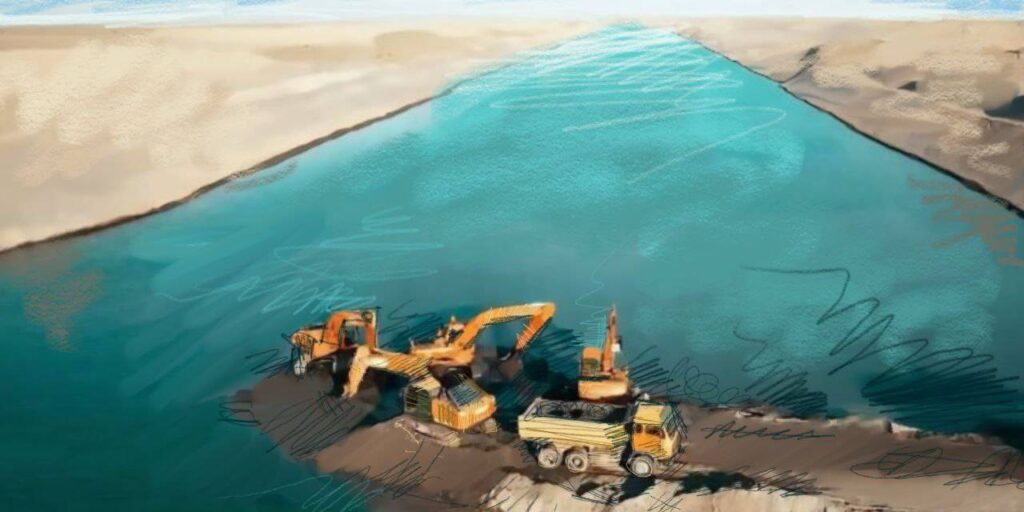
Afghanistan is rapidly advancing construction of the Qosh Tepa Canal, a large-scale water infrastructure project in the north of the country that could have far-reaching consequences for its Central Asian neighbors, according to Euronews. The 285-kilometer canal aims to divert an estimated 25-30% of the Amu Darya River’s flow to irrigate more than 500,000 hectares of farmland.

The Amu Darya is one of Central Asia’s principal water sources, flowing through Tajikistan, Uzbekistan, and Turkmenistan. Uzbekistan and Turkmenistan, both downstream countries, depend heavily on the river for agriculture and hydroelectric power. Experts warn the canal could reduce Uzbekistan’s water intake by 15% and Turkmenistan’s by as much as 80%, with potential consequences including reduced crop yields, job losses, deepened poverty, and even cross-border tensions or migration.

Although Kazakhstan and Kyrgyzstan are not directly linked to the Amu Darya, the ripple effects could still reach them. Azamatkhan Amirtayev, leader of Kazakhstan’s Baytaq party, cautioned that Uzbekistan may compensate by drawing more water from the Syr Darya River, thereby reducing Kazakhstan’s water supply by up to 40%.

Environmental concerns are also mounting. The Aral Sea, already severely degraded by decades of mismanagement, may face further deterioration. “This project could be the last nail in the coffin for the Aral Sea,” said regional water expert Bulat Yessekin. He urged Central Asian countries to engage Afghanistan through offers of shared energy and food in exchange for coordinated water management.

The canal’s implications were a key topic at the recent Water Security and Transboundary Water Use conference, where participants warned that it threatens to reverse years of regional cooperation aimed at restoring the Aral Sea.

While Central Asian countries participate in international water-sharing frameworks, Afghanistan does not. Its Taliban-led government remains unrecognized internationally and is not bound by existing treaties. However, diplomatic ties are evolving. Uzbekistan has opened channels of cooperation with Kabul, and both Kazakhstan and Kyrgyzstan have removed the Taliban from their lists of banned organizations.

Afghanistan’s Deputy Foreign Minister Mohammad Naeem Wardak expressed openness to dialogue. “The Qosh Tepa canal will not be to the detriment of anyone,” he stated.

Kazakhstan, which chairs the International Fund for Saving the Aral Sea in 2025, has proposed using the platform to initiate talks. The country’s Ministry of Water Resources emphasized that any solution must involve regional cooperation and the adoption of water-saving technologies to reduce wastage.

Shifting Populations: The Struggle to Sustain Northern and Eastern Kazakhstan

While Kazakhstan’s total population continues to increase, certain regions are facing declines driven by migration and demographic shifts. The birth rate within the nation has also reached its lowest ebb in eleven years, further exacerbating these changes.

By 2050, Kazakhstan’s population is projected to hit 26.3 million, with much of this growth concentrated in major cities. Currently, the population exceeds 20.2 million, with a net increase of 189,376 people in the first nine months of 2024. However, certain regions – North Kazakhstan, Kostanay, Pavlodar, East Kazakhstan, Karaganda, Abay, and Zhetysu – are seeing decreases due to high migration rates and lower-than-average birth rates. In North Kazakhstan, where mortality rates surpass birth rates, numbers fell by 0.89% in the first six months of 2024 alone, with an overall drop of 23% in the past few years.

The regions of North and East Kazakhstan have seen a steady decline in population over the past few decades, a trend influenced by a combination of economic, demographic, and policy-related factors. Historically reliant on industries such as mining, metallurgy, and agriculture, these areas faced severe economic disruption following independence, as state-run enterprises were privatized or shuttered.

Many residents found themselves unemployed, with a lack of investment in modernizing industries and an uneven distribution of infrastructure development exacerbating the problem. Without a thriving job market, young professionals and skilled workers migrated in search of better opportunities, creating a brain drain and leaving behind an aging population.

Today, insufficient economic diversification continues to make these regions less attractive to younger generations, who are drawn to cities like Almaty, Astana, and Shymkent, which offer employment opportunities, vibrant cultural scenes, and better education and healthcare.

Internationally, the proximity of North Kazakhstan to Russia also resulted in substantial cross-border migration, with ethnic Russians and other Slavic minorities leaving Kazakhstan in large numbers, particularly in the years following independence. This trend was partly influenced by policies prioritizing the Kazakh language and identity, which made some minorities feel culturally marginalized or less confident in their long-term prospects in the country.

During the Soviet era, regions like North Kazakhstan were agricultural powerhouses, thanks to programs like the Virgin Lands Campaign. However, the ecological degradation and economic mismanagement associated with these projects left lasting scars. Fertile land has become less productive, forcing many farmers to abandon their livelihoods. The decline of ecosystems due to overuse and climate change particularly affects East Kazakhstan, where poorly maintained infrastructure in rural areas has impacted resilience against environmental issues, further encouraging residents to leave.

Initiatives it was hoped would encourage relocation from the densely populated south saw limited success. Addressing parliament in February 2024, Senate speaker Maulen Ashimbayev noted that despite programs like Serpin-2050, which provides free education, and Enbek, which offers job placements and rent support, results have been disappointing. Between 2017 and 2021, only 32,000 people relocated, with half unable to work.

Population decline in North and East Kazakhstan reflects these regions’ reliance on resource-heavy industries, lack of modernization, and uneven infrastructure development, bringing broader challenges in balancing economic opportunity, regional development, and demographic sustainability into focus.

Kazakhstan Among Top 30 Countries for Pension System Quality

Kazakhstan has made significant strides in the latest Global Pension Report by international insurance group Allianz, climbing eight positions to rank 26th out of 71 countries. The country now places ahead of China, Turkey, Singapore, Spain, and Indonesia.

According to analysts at Ranking.kz, Kazakhstan’s rise reflects improvements across several dimensions of its pension system, which is the only one in Central Asia and among the Eurasian Economic Union (EAEU) states to be included in the Allianz ranking.

Strong Performance on Global Pension Index

The Allianz Pension Index (API), which underpins the ranking, assesses 40 indicators across three sub-indices: sustainability, adequacy, and integrity of pension systems. These include factors such as demographic trends, public debt, living standards, and the financial soundness of pension institutions. Scores range from 1 (best) to 7 (worst).

Kazakhstan achieved an overall average score of 3.5, outperforming the global average of 3.7. It received particularly strong marks for sustainability (3.6) and adequacy of payments (3.2), signaling resilience and fairness in pension distribution.

By comparison, top-ranked countries include Denmark (2.3), the Netherlands and Sweden (2.6 each), and Japan (2.7). Other leading performers are New Zealand, Israel, Australia, the United Kingdom, Norway, and the United States. At the bottom were Laos, Malaysia, and Sri Lanka, all with scores above 4.6.

The Evolution of Kazakhstan’s Pension Model

Kazakhstan transitioned from the Soviet-era pay-as-you-go system to a multi-tiered pension model in 1998. The current system combines distributive and accumulative components, with payments derived from three main sources:

  • State budget: Covers solidarity and basic pensions.
  • Mandatory savings: Contributions to the Unified Accumulative Pension Fund (UAPF), including 10% of employees’ salaries and 5% employer contributions for hazardous jobs.
  • Voluntary contributions: Optional payments by individuals or employers.

As of January 1, 2024, a new tier, mandatory employer pension contributions (MEP), was introduced. These contributions will gradually increase to 5% of wages by 2028 and apply to citizens born in 1975 or later.

Long-Term Trends and Global Context

Globally, pension systems are shifting toward accumulation-based models. In 2000, distributive pensions made up more than 65% of total payouts. By 2024, this figure is projected to fall below 50%. Kazakhstan was the first among CIS countries to adopt an accumulative system and is now seen as a regional leader in pension reform.

Allianz experts highlight the growing importance of such systems in the face of demographic change. The United Nations projects that by 2050, the global population aged 65 and over will nearly double, from 857 million to 1.58 billion. The dependency ratio is expected to rise to 26 pensioners for every 100 working-age individuals, up from 16 today.

To ensure long-term viability, experts argue for a balanced approach that combines state-funded and private accumulative elements. In Kazakhstan, approximately 2.5 million people currently receive pensions.

Kyrgyzstan Offers Support to Tajikistan with Innovative Water-Saving Technology

Kyrgyzstan is offering a novel solution to Tajikistan’s mounting water scarcity and pasture degradation: the construction of artificial glaciers, or so-called “ice towers.” These structures store water during the winter and release it during the arid summer months, providing a lifeline for communities affected by climate change.

Innovation Amid a Warming Climate

The initiative was highlighted during the session “Activating Global Action to Enhance Glacier Resilience: Civil Society Experiences in Central Asia,” held as part of the recent International Conference on Glacier Conservation in Dushanbe.

According to Anar Alymkulova, executive director of Kyrgyzstan’s Institute for Sustainable Development, artificial glaciers have proven effective in mitigating the effects of climate change and addressing water shortages. Since the first ice tower was constructed in 2022 in Jalal-Abad, the initiative has expanded significantly. Two more towers were added in 2023, and in 2024, seven were built in Batken region, collectively storing over 1.5 million cubic meters of ice during the winter.

By the end of this year, four additional towers are planned in the Batken and Leylek districts. In total, approximately 30 such structures now operate across Kyrgyzstan.

How Ice Towers Work

The technology is simple yet effective. Water from springs is channeled via an underground pipeline, spanning several kilometers, to a vertical pipe up to 20 meters tall. During winter, water is sprayed from the pipe and freezes, forming an ice tower 30 to 50 meters high. In the spring and summer, the ice melts gradually, supplying water for people and livestock.

Oleg Guchgeldiev, Kyrgyzstan’s representative in the UN’s Food and Agriculture Organization (FAO), noted that each ice tower costs between $3,000 and $4,000 and can store up to 50,000 cubic meters of water. This method offers a practical solution in remote, arid regions where traditional water sources have become unreliable.

A Critical Issue for Tajikistan

Sustainable water management is a growing concern in Tajikistan, where more than 1,000 glaciers have disappeared in the last 23 years. The country has lost about 20% of its glacier volume and 30% of its glacier area over the past five to six decades. According to UNEP projections, Central Asia could lose over half its glaciers by 2050, jeopardizing water security for more than 64 million people, particularly in rural and mountainous areas.

In response, the Tajikistan’s President Emomali Rahmon spearheaded a successful campaign at the UN General Assembly to declare 2025 the International Year of Glacier Conservation. The initiative culminated in a major conference from May 29 to 31 in Dushanbe, attracting over 2,500 delegates from 80 countries and numerous international organizations.

A Scalable Regional Solution

The Kyrgyz model of artificial glaciers presents a scalable solution for Tajikistan and potentially the broader Central Asian region. As glacier retreat accelerates and drought risks rise, such technologies could play a key role in national climate adaptation strategies.

“Artificial glaciers are not only a way to store water, but also a tool for adapting to a changing climate,” experts at the Dushanbe conference emphasized. “They demonstrate how local communities can protect their future using simple technologies and international cooperation.”