• KGS/USD = 0.01144 0%
  • KZT/USD = 0.00193 -0%
  • TJS/USD = 0.10811 -0.28%
  • UZS/USD = 0.00008 0%
  • TMT/USD = 0.28490 0%
  • KGS/USD = 0.01144 0%
  • KZT/USD = 0.00193 -0%
  • TJS/USD = 0.10811 -0.28%
  • UZS/USD = 0.00008 0%
  • TMT/USD = 0.28490 0%
  • KGS/USD = 0.01144 0%
  • KZT/USD = 0.00193 -0%
  • TJS/USD = 0.10811 -0.28%
  • UZS/USD = 0.00008 0%
  • TMT/USD = 0.28490 0%
  • KGS/USD = 0.01144 0%
  • KZT/USD = 0.00193 -0%
  • TJS/USD = 0.10811 -0.28%
  • UZS/USD = 0.00008 0%
  • TMT/USD = 0.28490 0%
  • KGS/USD = 0.01144 0%
  • KZT/USD = 0.00193 -0%
  • TJS/USD = 0.10811 -0.28%
  • UZS/USD = 0.00008 0%
  • TMT/USD = 0.28490 0%
  • KGS/USD = 0.01144 0%
  • KZT/USD = 0.00193 -0%
  • TJS/USD = 0.10811 -0.28%
  • UZS/USD = 0.00008 0%
  • TMT/USD = 0.28490 0%
  • KGS/USD = 0.01144 0%
  • KZT/USD = 0.00193 -0%
  • TJS/USD = 0.10811 -0.28%
  • UZS/USD = 0.00008 0%
  • TMT/USD = 0.28490 0%
  • KGS/USD = 0.01144 0%
  • KZT/USD = 0.00193 -0%
  • TJS/USD = 0.10811 -0.28%
  • UZS/USD = 0.00008 0%
  • TMT/USD = 0.28490 0%
10 December 2025

Slippery Slope: How Volatile Oil Prices Threaten Kazakhstan’s Energy Giant

With global oil markets in flux and prices dipping below $70 per barrel, Kazakhstan’s state oil company faces mounting financial strain. If KazMunayGas (KMG) fails to adapt, it risks edging toward a fiscal cliff. Yet, political constraints, exacerbated by the ongoing specter of potential social unrest, have hindered the company’s ability to implement reforms.

OPEC+ Fuels Market Uncertainty

The global oil market is entering a new period of turbulence reminiscent of the pandemic era. Despite prolonged efforts by OPEC+ to manage output and stabilize prices, the alliance’s fragile consensus unraveled this April, when Saudi Arabia and Russia led an unexpected increase in production, undermining earlier commitments and tipping the market into oversupply.

Meanwhile, U.S. shale producers have continued to expand their output and export aggressively, squeezing traditional suppliers out of lucrative Asian markets. A decelerating Chinese economy, the world’s largest oil importer, adds further downward pressure. As a result, Brent crude fell below $70 per barrel in early May and briefly traded under $65.

For Kazakhstan, where oil exports are a key source of budgetary and foreign exchange income, this trend spells trouble, and KMG is particularly exposed.

The “Black Hole” in KMG’s Finances

Public data shows that KMG’s production costs vary from $40 to $70 per barrel, depending on the field. However, factoring in transportation, taxes, and social obligations, the real breakeven point nears $90 per barrel. Aging infrastructure in the Mangistau region, reliant on constant technical upkeep and subsidies, only adds to the burden.

KMG’s debt load compounds the challenge. At the end of 2024, its total debt exceeded 4 trillion tenge ($7.87 billion). With export revenues dwindling, debt servicing is becoming untenable. Even short-term dips to $60-65 per barrel could have systemic consequences, stalling new investments, triggering layoffs, and slashing social spending.

A key drain is OzenMunayGas (OMG), KMG’s subsidiary in Zhanaozen, where production costs reportedly hit $90 per barrel. “OzenMunayGas exemplifies how populism, inflated promises, and stagnant reforms can turn a major asset into a financial sinkhole,” Arman Bataev, a former internal auditor at KMG has stated.

On his Telegram channel, Finmentor.kz, Bataev warned that a $90 production cost versus Brent at $59 is “not a temporary hardship but a dead end.” OMG required 30 billion KZT in financial aid last year, and Bataev predicts it may require 60-70 billion KZT in 2025.

KMG Downplays Risks

KazMunayGas officials maintain that the company is “prepared for all scenarios” and holds “sufficient reserves.” At a May press briefing, Deputy Chairman Aset Magauov emphasized that 70% of KMG’s output is sold domestically, insulating it somewhat from global price volatility.

“Analysts expect prices to average $65 per barrel this year, but forecasts are inherently uncertain,” Magauov said. “We have contingency plans and cost-optimization measures ready. We are equipped to handle price fluctuations.”

Magauov also noted that domestic oil prices are lower than export prices, and products like gasoline and diesel, refined at KMG’s three facilities, are now sold at market rates following the end of state price controls. He added that KMG is exploring cooperation with Russia’s Tatneft to develop the Atyrau refinery, potentially selling a stake to improve management, as was done with the Shymkent refinery.

Zhanaozen: A Flashpoint for Reform

OzenMunayGas remains one of KMG’s most problematic assets. Once a prolific source of national output, the Zhanaozen-based company now struggles with asset degradation, outdated equipment, and falling well productivity.

Beyond technical issues, OMG is weighed down by high labor costs and low productivity. The company employs tens of thousands, many under “social employment” schemes rather than any economic rationale. An opaque stock option system (ESOT), initially aimed at boosting engagement, has instead distorted compensation.

Bataev has proposed radical solutions: abolishing ESOT, gradually reducing staff through attrition, selling non-core assets, and either privatizing OMG or shutting it down. “Let employees decide the company’s fate or let the state stop subsidizing it,” he wrote.

However, any restructuring attempt in Zhanaozen is politically sensitive. The memory of the deadly 2011 crackdown on striking oil workers still haunts the city. KMG has since functioned more as a social stabilizer than a commercial enterprise, making layoffs or wage adjustments politically toxic.

As oil prices drop, the dilemma grows sharper: economic necessity demands reform, but the specter of unrest limits action. For both the government and KMG, the choice between fiscal prudence and political stability is becoming unavoidable yet again.

Uzbekistan Ranks First Globally for Number of U.S. Green Card Lottery Winners

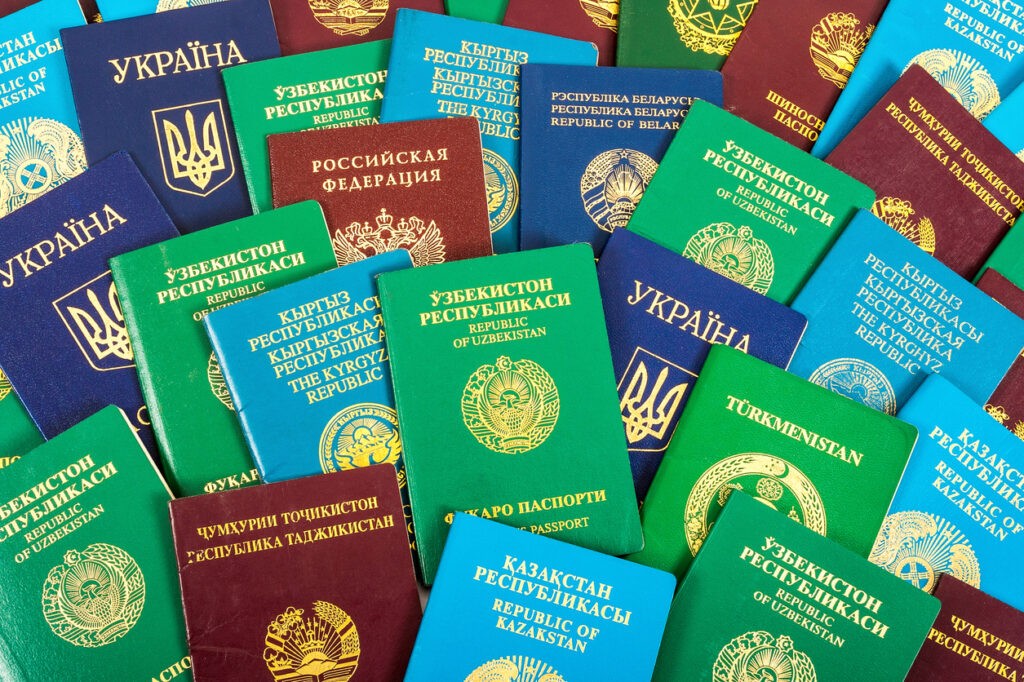
More than 5,500 Uzbek citizens have been selected in the U.S. Diversity Visa (DV) Lottery for 2025, according to results announced on May 3. With 5,564 winners, Uzbekistan is the leading nation globally, just ahead of Algeria (5,526) and Russia (5,519).

The DV program, commonly known as the Green Card lottery, is administered annually by the U.S. State Department under the 1990 Immigration Act. It offers up to 55,000 permanent residency visas each year to individuals from countries with historically low levels of immigration to the United States.

For the DV-2025 cycle, approximately 131,000 applicants worldwide were selected, more than double the number of available visas. This over-selection accounts for expected attrition, as not all applicants will proceed with the process. The program corresponds to the U.S. fiscal year, which runs from October 1, 2024, to September 30, 2025.

Winners must still pass eligibility screenings and attend visa interviews before receiving a Green Card, which grants them the right to live and work permanently in the United States.

In Central Asia, Kyrgyzstan had 3,095 winners, followed by Tajikistan (2,982), Turkmenistan (2,010), and Kazakhstan (2,004). The program remains one of the most accessible and sought-after legal pathways for Central Asians seeking to immigrate to the U.S.

Asel Baibagysheva Becomes First Kyrgyz Woman to Climb Everest

Asel Baibagysheva has made history as the first Kyrgyz woman to reach the top of Mount Everest, the world’s highest peak. She reached the 8,849-meter summit on May 11, and safely descended to base camp the following day, planting the Kyrgyz national flag at the top of the world.

Baibagysheva’s achievement was swiftly recognized by Kyrgyzstan’s leadership. On May 12, Chairman of the Cabinet of Ministers Adylbek Kasymaliyev personally congratulated her via video link. “On behalf of the President, the Cabinet of Ministers, and myself, please accept my heartfelt congratulations on this historic ascent,” he said. “Your success is an inspiring example for everyone, demonstrating the ability of Kyrgyzstanis to reach any height. It fills us with pride in our country.”

Kasymaliyev praised Baibagysheva for her courage, resilience, and high level of professionalism, noting that completing the climb in 54 hours was not only a personal milestone but also a moment of national significance.

Baibagysheva responded by expressing her sense of responsibility in representing Kyrgyzstan on Everest. “I felt a special duty to my country with every step I took toward the summit,” she said.

With eight years of mountaineering experience, Baibagysheva has previously summited some of the most challenging peaks in Kyrgyzstan and beyond. Her accomplishments include Lenin Peak (7,134 m), Khan Tengri (7,010 m), and Pobeda Peak (7,439 m) in Kyrgyzstan, as well as Mount Elbrus (5,642 m) in Russia’s Caucasus region.

She was also the first Kyrgyz woman to climb Manaslu in Nepal, the world’s eighth highest mountain, reaching its 8,163-meter summit.

Baibagysheva now joins an elite group of Kyrgyz climbers who have reached Everest. Eduard Kubatov became the second Kyrgyz man to summit Everest in May 2021, following in the footsteps of Dmitry Grekov, who achieved the feat in 1997.

Two Key Environmental Initiatives Completed in Turkmenistan

Turkmenistan has marked the successful completion of two major agro-environmental initiatives aimed at enhancing natural resource management and climate change adaptation. These efforts represent significant progress in addressing environmental challenges both nationally and across the broader Central Asian region.

Regional Project on Natural Resource Management

The first project concluded was the second phase of the regional program titled “Integrated Natural Resource Management in Drought-Prone and Salinized Agricultural Production Landscapes of Central Asia and Turkey,” which commenced in 2018. This initiative focused on pilot sites in the Karakum Desert, the mountain village of Nokhur, and the Turkmen sector of the Aral Sea region.

Key achievements include the establishment of mini GIS laboratories at the Scientific and Information Center under the Interstate Commission on Sustainable Development, the National Institute of Deserts, Flora and Fauna, and within the environmental control departments of the Ministry of Agriculture. These facilities are now equipped with modern tools to support research and monitoring efforts.

The project also delivered resource-efficient agricultural equipment, drought-resistant seeds and seedlings, water pumps for various intakes, and rapid soil analysis equipment to agricultural universities. Twenty wells and sardobs (traditional water reservoirs) were constructed for livestock centers and nurseries utilizing drip irrigation systems. Additionally, the project cleaned parts of the collector drainage system and developed reclamation plans to rehabilitate degraded land.

Another notable contribution was the continued publication of the international scientific journal “Problems of Desert Development,” which has been issued in Ashgabat since 1967.

National Climate Change Adaptation Plan

The second completed initiative, “Development of the National Adaptation Planning Process in Turkmenistan”, was carried out by the Ministry of Environmental Protection in partnership with the United Nations Development Programme (UNDP) and the Green Climate Fund. Launched in 2021, the project sought to implement the National Climate Change Strategy by defining specific adaptation measures and implementation mechanisms.

The initiative resulted in the development of a comprehensive Roadmap for implementing the National Adaptation Plan, the creation of a national climate finance concept, and new guidelines for integrating climate adaptation into water resource management. These tools aim to bolster Turkmenistan’s resilience to the adverse effects of climate change.

Central Asian Climate Conference in Ashgabat

From May 13 to 15, Ashgabat will host the Seventh Central Asian Conference on Climate Change (CACCC-2025), organized by the Regional Environmental Centre for Central Asia (CAREC) with support from the World Bank, CAWEP, RESILAND Tajikistan, and GIZ.

CACCC-2025 will serve as a key regional platform to transform climate ambitions into actionable strategies. The agenda includes mobilizing financial resources for adaptation and mitigation, enhancing regional cooperation, and sharing best practices. Participants will engage in plenary sessions, thematic panels, and field visits to sites that exemplify successful adaptation measures.

One of the conference’s strategic goals is to develop a plan for increasing regional climate finance by 25% over the next five years. Delegates are also expected to present updated national contributions (NDCs 3.0) under the Paris Agreement and promote cross-border cooperation for sustainable development.

With the region facing accelerating climate threats, such as glacier melt, rising temperatures, and land degradation, CACCC-2025 will be a pivotal event for advancing climate resilience and environmental sustainability across Central Asia.

Rising Cement Prices in Kyrgyzstan Slow Economic Growth

In a bid to stabilize the construction market, the Cabinet of Ministers of Kyrgyzstan has lifted a temporary ban on cement imports. The decision is aimed at addressing soaring prices and growing demand for construction materials amid an ongoing nationwide building boom.

According to government officials, the move is intended to support market competition, prevent material shortages, and reduce pressure on prices. “The lifting of the temporary ban on cement imports will support healthy competition in the market, prevent shortages, and stabilize prices for construction materials,” the cabinet stated.

The ban had been introduced approximately one month earlier, following a surge in cement imports from neighboring countries. Officials argued that this influx had created unfair competitive conditions for domestic producers.

Construction Boom Meets Market Tensions

Kyrgyzstan’s construction sector has emerged as a key engine of economic growth in recent years. The government has made the development of this sector a priority, citing its importance for job creation, infrastructure expansion, and broader economic momentum.

The country is currently in the midst of a construction boom, with large-scale projects such as stadiums, airports, and affordable housing developments underway. These initiatives are being supported by new mortgage lending programs and infrastructure investments.

However, rapid growth has strained the supply of building materials, especially cement. Local media report that the construction of a new stadium in Bishkek, touted as the future largest in Central Asia, alone requires 135,000 cubic meters of cement.

Concerns have also been raised over alleged artificial price hikes. While officials deny any supply issues, reports suggest that some market players may be inflating prices to maximize profit amid the surge in demand.

Balancing Growth and Stability

The lifting of the import ban signals a shift in government policy toward greater market flexibility in the face of inflationary pressures. It reflects broader challenges facing Kyrgyzstan’s economy as it seeks to balance robust growth in the construction sector with price stability and fair market practices.

As the country continues its infrastructure push, the success of such measures will be critical not only to the construction industry but also to the broader trajectory of economic development in 2025.

Former Head of Astana Metro Project Detained in Turkey

Kazakhstan’s National Security Committee (KNB) has confirmed the detention of Talgat Ardan, the former head of the Astana Light Rail Transit (LRT) project, in Turkey. Ardan, who had been placed on an international wanted list, is accused of embezzling significant budgetary funds allocated for the capital’s metro system.

Legal proceedings against Ardan stem from a major corruption case that surfaced in 2020. A criminal trial launched in Astana that autumn revealed the alleged embezzlement of billions of tenge earmarked for the LRT’s construction. In May 2021, seven individuals were sentenced to prison terms ranging from seven to ten years. Two key figures, Ardan and former Astana deputy mayor Kanat Sultanbekov, were named as the scheme’s organizers and subsequently added to Interpol’s red notice list.

“In September 2019, the General Prosecutor’s Office of the Republic of Kazakhstan submitted an extradition request to Turkey’s Ministry of Justice. Following this, Turkish authorities initiated a search. This year, the KNB confirmed Ardan’s whereabouts, and he was detained by law enforcement in Antalya,” the committee’s press service reported. On May 9, a court in Antalya approved his deportation to Kazakhstan, where he remains in custody pending extradition proceedings.

An Astana court had previously found Ardan guilty in absentia under Articles 189, Part 4, and 361, Part 4 of the Criminal Code, covering the embezzlement of budget funds and abuse of office. He was sentenced to nine years in prison. Investigators reported that KZT 5.8 billion (approximately $11 million) was misappropriated during the construction of the LRT line. Ardan led the project from 2014 to 2017.

The Astana LRT was originally slated for completion before the Expo 2017 exhibition but suffered repeated delays due to financial shortfalls. In 2022, President Kassym-Jomart Tokayev questioned the viability of the project, pointing to its 22-kilometer route and limited utility. He suggested repurposing the already-installed infrastructure. Nevertheless, city authorities opted to continue construction. Then-Mayor Altai Kulginov argued that dismantling the partially built system would cost more than completing it.

As previously reported by The Times of Central Asia, the city’s current mayor, Zhenis Kasymbek, has pledged to open the first phase of the LRT by the end of this year.