• KGS/USD = 0.01144 0%
  • KZT/USD = 0.00192 -0%
  • TJS/USD = 0.10849 0%
  • UZS/USD = 0.00008 0%
  • TMT/USD = 0.28571 0%
  • KGS/USD = 0.01144 0%
  • KZT/USD = 0.00192 -0%
  • TJS/USD = 0.10849 0%
  • UZS/USD = 0.00008 0%
  • TMT/USD = 0.28571 0%
  • KGS/USD = 0.01144 0%
  • KZT/USD = 0.00192 -0%
  • TJS/USD = 0.10849 0%
  • UZS/USD = 0.00008 0%
  • TMT/USD = 0.28571 0%
  • KGS/USD = 0.01144 0%
  • KZT/USD = 0.00192 -0%
  • TJS/USD = 0.10849 0%
  • UZS/USD = 0.00008 0%
  • TMT/USD = 0.28571 0%
  • KGS/USD = 0.01144 0%
  • KZT/USD = 0.00192 -0%
  • TJS/USD = 0.10849 0%
  • UZS/USD = 0.00008 0%
  • TMT/USD = 0.28571 0%
  • KGS/USD = 0.01144 0%
  • KZT/USD = 0.00192 -0%
  • TJS/USD = 0.10849 0%
  • UZS/USD = 0.00008 0%
  • TMT/USD = 0.28571 0%
  • KGS/USD = 0.01144 0%
  • KZT/USD = 0.00192 -0%
  • TJS/USD = 0.10849 0%
  • UZS/USD = 0.00008 0%
  • TMT/USD = 0.28571 0%
  • KGS/USD = 0.01144 0%
  • KZT/USD = 0.00192 -0%
  • TJS/USD = 0.10849 0%
  • UZS/USD = 0.00008 0%
  • TMT/USD = 0.28571 0%
11 December 2025

Cabotage Transportation in Eurasia: Expanding Connectivity, or Creating Unequal Conditions?

Freight transportation by road is the most popular and versatile type of shipping due to its mobility, flexibility, and accessibility. This sector is expected to undergo significant changes in Kazakhstan and other member states of the Eurasian Economic Union (EAEU) starting in 2025. However, industry experts warn that these changes could lead to domestic market losses for Kazakhstani participants.

Starting January 1, 2025, transportation companies from EAEU member states will be allowed to carry out cabotage transportation — shipment of goods between two places in the same country — within Kazakhstan. This means that foreign carriers will be permitted to perform up to three domestic deliveries in the country following their international shipment. For example, a Russian truck delivering goods to Almaty may complete up to three cabotage shipments within Kazakhstan between cities over seven days on its return route.

However, experts suggest this measure could lead to domestic international road carriers losing their market share to foreign operators from Russia and Belarus, who are currently limited by sanctions.

According to Ivan Yanson, director of the representative office of the Union of International Road Carriers of the Republic of Kazakhstan in Astana, currently, Belarus has about 40,000 vehicles engaged in international freight transportation, and Russia has a similar number. Meanwhile, Kazakhstan’s fleet consists of approximately 15,000 trucks. This discrepancy in fleet size is a key factor influencing competitiveness.

Another critical issue is the average age of Kazakhstan’s fleet, which exceeds 20 years. However, high wear and tear and the need for modernization are hindered by the high cost of tractor-trailers, recycling fees, and registration charges, which are often unaffordable for Kazakhstani entrepreneurs. In light of this, local carriers have repeatedly proposed postponing the decision to open Kazakhstan’s market to cabotage.

Meanwhile, the development of cabotage in EAEU countries is part of the Union’s Transport Policy for 2024–2026. Lawmakers believe these measures aim to expand trade connections and attract new companies. They argue that cabotage liberalization will help reduce empty mileage for EAEU road carriers, thereby lowering freight transportation costs.

Kazakhstan’s Ministry of Transport also emphasizes that opening the cabotage market will not cause financial or other negative consequences for domestic businesses. According to Deputy Minister Maksat Kaliakparov, carriers will only be allowed to perform up to three consecutive domestic shipments within another EAEU member state using the same vehicle, ensuring equal access for all.

Currently, Kazakhstan is conducting internal procedures to amend its road transport legislation to align with the phased liberalization program for cabotage freight transportation, which began on January 1.

“These amendments to national legislation are expected to be adopted in the first half of this year,” stated a government representative. The anticipated outcomes include fostering competition in the road transport services market, modernizing the truck fleet, establishing uniform conditions and rules for freight transport services within the EAEU, improving vehicle efficiency for international freight transport, and reducing environmental impact by using modern vehicles.

Nevertheless, the effects of these legislative changes cannot be fully assessed until they are implemented. One thing is clear: the differences in working conditions and potential among international freight carriers from EAEU countries are significant. Kazakhstani market participants will need to continue reducing production costs and competing to retain their customers.

Explosion Near Kyrgyz-Tajik Border Leaves Two Injured

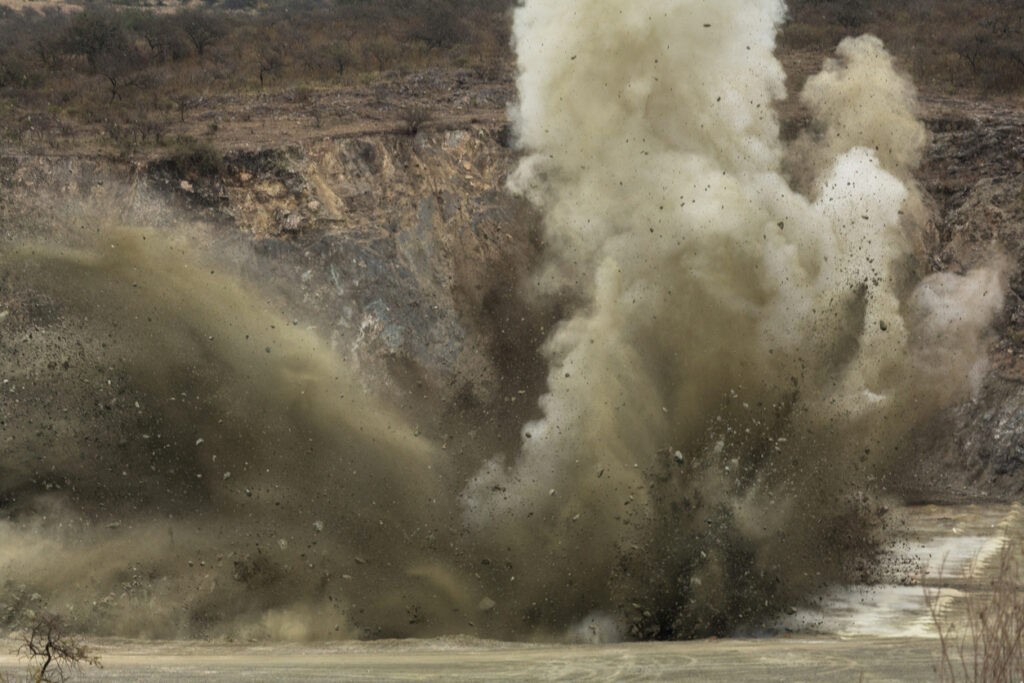
On January 5, an explosion occurred in the Kyrgyz village of Arka-2, near Kyrgyzstan’s border with Tajikistan. The incident was reported by the Information and Communications Department of the Border Service under the State Committee for National Security (SCNS).

According to preliminary investigations, the explosion happened while the homeowner, identified as N.A., was cleaning under his porch, where old construction materials and metal objects had been stored. During the cleaning, N.A. discovered an unknown explosive device, believed to be a shell, which then detonated.

The Border Guard Service noted that N.A.’s house had previously been damaged in 2022 as a result of shelling during cross-border clashes. The explosion left N.A. and his 12-year-old daughter, who was with him at the time, with shrapnel injuries. Both victims were taken to the hospital, where they received medical treatment and are now reported to be in stable condition.

Following the explosion, Border Patrol engineers quickly secured the area. Law enforcement officials have launched an extensive investigation to determine the origin and circumstances surrounding the device.

On the same day, a meeting was held between representatives of the law enforcement agencies of Kyrgyzstan and Tajikistan. The Tajik side was informed about the incident, and the border service issued a call for heightened vigilance among residents of border areas. Citizens were urged not to handle or investigate suspicious objects but to immediately report them to border units or law enforcement agencies.

The explosion highlights lingering risks in border regions between Kyrgyzstan and Tajikistan, which have been prone to tensions and periodic violence in recent years. Efforts to strengthen security and cooperation between the two countries remain critical in preventing further incidents and ensuring the safety of border communities.

Kyrgyzstan Aims to Integrate Cryptocurrencies with Licensed Crypto Banks

Kyrgyzstan’s Ministry of Economy and Commerce has submitted a draft law titled “On Amendments to Certain Legislative Acts of the Kyrgyz Republic in the Sphere of Virtual Assets” to the country’s parliament. The proposed legislation aims to establish licensed crypto banks to provide regulated banking services related to digital assets and cryptocurrencies.

The Ministry emphasized the urgency of integrating crypto assets into Kyrgyzstan’s financial system, citing the rapid growth of digital technologies and cryptocurrencies. In its commentary on the bill, the Ministry stated:

“Given the rapid development of digital technologies and cryptocurrencies, the creation of a crypto bank is an urgent necessity for the integration of crypto assets into the traditional financial system of the country. A crypto bank will ensure safe, regulated, and convenient interaction of citizens and businesses with cryptocurrencies.”

The Ministry identified several key goals for the proposed crypto bank:

  • To legalize and regulate the cryptocurrency market by establishing clear rules and standards.
  • To increase trust in crypto assets while ensuring the protection of users’ rights.
  • To mitigate risks of fraud and unauthorized access to funds.

The Ministry also highlighted the potential economic benefits of introducing a crypto bank. Legalizing cryptocurrency transactions would increase transaction volumes and boost tax revenues. Additionally, the initiative is expected to create new jobs in the fintech sector, positioning Kyrgyzstan as a regional hub for financial innovation.

Kyrgyzstan already taxes cryptocurrency mining, with a rate of 10% applied to electricity costs for mining activities. This rate includes VAT and sales tax. From January to November 2024, Kyrgyzstan collected 46.6 million KGS (approximately $537,000) in cryptocurrency mining taxes, nearly half the total collected in 2023, according to the Ministry of Finance.

While public interest in cryptocurrencies is growing among individuals and businesses in Kyrgyzstan, the market remains poorly regulated. The Ministry believes that a licensed crypto bank will address these challenges, increasing transparency, trust, and financial security. By adopting this legislation, Kyrgyzstan seeks to modernize its financial system and embrace emerging opportunities in the digital economy.

Shakespearean Passions Unfold in Turkmen Village Over Marriage Dispute

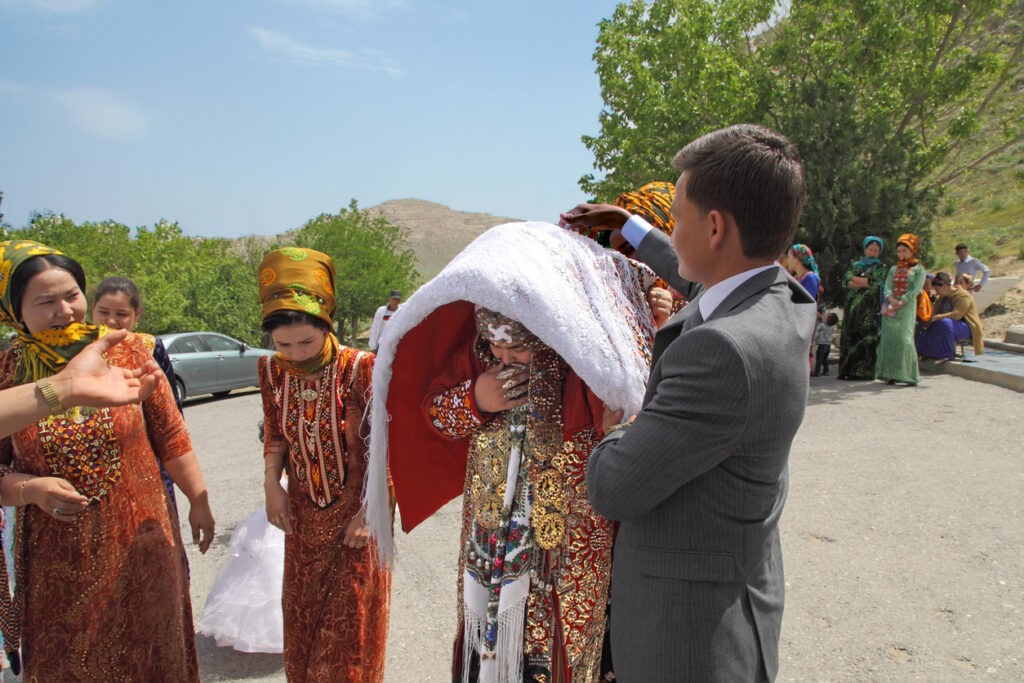
A heated conflict erupted in the village of Yangala in Turkmenistan’s Ahal province over an 11th-grade girl’s decision to marry her boyfriend from a neighboring village. The girl’s parents firmly opposed her plans to marry a young man from Kopetdag, sparking tensions that escalated dramatically on December 31 when the girl ran away with her fiancé.

In an attempt to resolve the situation peacefully, elders and relatives from the fiancé’s side formed a delegation to negotiate with the girl’s family. The six-member group, which included a 75-year-old elder, visited the girl’s home but was met with hostility. The negotiations devolved into a violent altercation, with verbal insults escalating to physical confrontation.

The girl’s relatives pelted the visitors’ cars with stones, smashing windows and headlights. One of the delegates suffered injuries from a hunting rifle loaded with salt.

Police intervened, detaining several individuals involved in the fight, while the injured were taken to the hospital. The elder, who sustained bruises during the skirmish, refused to press charges, stating, “I came to settle the conflict, not to bring any of the girl’s family to jail.”

To de-escalate the situation, the district khakim (head of the local administration) convened a meeting with representatives from both families. The khakim tasked his deputy with finding a resolution acceptable to all parties within 15 days. He warned that if reconciliation proved impossible, the case would be referred to the prosecutor’s office.

The incident highlights the ongoing challenges faced by women in Turkmenistan, particularly in matters of marriage. Despite legal guarantees of gender equality under the country’s Family Code, which states that marriage requires the free and full consent of both parties, societal norms and family pressures often undermine these rights.

Women in Turkmenistan frequently face coercion and violence when their choice of spouse conflicts with family expectations. International human rights organizations have repeatedly reported violations of women’s rights in the country. A UN Foundation report reveals that 12% of Turkmen women have experienced physical or sexual violence within the family, though the real figures are likely higher due to underreporting in the country’s restrictive environment.

The lack of effective legal mechanisms to protect women from domestic violence further exacerbates their vulnerability. Women who defy family opposition to marriage often face social stigmatization and even violence.

The turmoil in Yangala illustrates the enduring influence of patriarchal traditions in Turkmen society and the broader struggle for women’s rights. As authorities work to mediate the conflict, the case underscores the urgent need for stronger protections for women in Turkmenistan to ensure that their legal rights are upheld in practice.

How Orthodox Christmas Is Celebrated in Central Asia

Orthodox Christmas, observed on January 7, holds a significant place in Central Asia, even in predominantly Muslim countries such as Tajikistan and Turkmenistan. This article explores how the holiday is celebrated in Kazakhstan, Uzbekistan, Kyrgyzstan, Tajikistan, and Turkmenistan.

Kazakhstan

Orthodox Christmas in Kazakhstan is a public holiday, alongside the Muslim celebration of Kurban-Ayt (Eid al-Adha). This recognition stems from the efforts of Kazakhstan’s first president, Nursultan Nazarbayev, who proposed in 2005 during the XI session of the Assembly of People of Kazakhstan to declare both holidays as non-working days.

Despite opposition from the Constitutional Court, which cited the country’s secular constitution, members of the parliamentary faction Asar, led by Nazarbayev’s daughter Dariga Nazarbayeva, and the presidential party Otan amended the Labor Code to accommodate these holidays. Since then, Orthodox Christmas and Kurban-Ayt have been official holidays.

Celebrations in major cities include festive liturgies. In Almaty, the Ascension Cathedral holds a service beginning at 11pm on January 6, followed by a midnight procession. In Astana, the Assumption Cathedral similarly hosts a midnight service. For those unable to attend, events from the Assumption Cathedral are live-streamed on the YouTube channel “Live Broadcasts of the Orthodox Church of Kazakhstan.”

Uzbekistan

Orthodox Christians comprise 4-5% of Uzbekistan’s population of over 37.5 million. Uzbekistan is part of the Tashkent and Uzbekistan Diocese under the Russian Orthodox Church.

The Cathedral of the Dormition of the Blessed Virgin Mary in Tashkent is the focal point of Christmas celebrations. Services begin at 11.30pm on January 6 and end at 3.30am. To ensure maximum participation, the cathedral holds five separate liturgies. Metropolitan Vikenty of the Tashkent and Uzbekistan Diocese explains, “Traditionally, the liturgy was held at night because the Nativity of Christ took place at night. But not everyone can attend a night service, so we perform several liturgies.”

Kyrgyzstan

Approximately 350,000 Orthodox Christians live in Kyrgyzstan, according to Bishop Daniel of Bishkek and Kyrgyzstan. The country is part of the Bishkek and Kyrgyzstan Diocese of the Russian Orthodox Church.

January 7 is a public holiday in Kyrgyzstan, aligning with the extended New Year vacations, which last from January 1 to 7. Festive services are held at the Resurrection Cathedral and the Church of the Holy Prince Vladimir in Bishkek.

Tajikistan

In Tajikistan, the Orthodox Christian community numbers around 80,000, or 1.2% of the population, though regular church attendance is much smaller. The country is under the jurisdiction of the Dushanbe Diocese of the Russian Orthodox Church.

Christmas services are held at St. Nicholas Cathedral in Dushanbe, beginning at 11pm on January 6 and lasting about three hours. The diocese oversees six churches in Tajikistan, served by five priests.

Turkmenistan

As of 2019, Turkmenistan’s Orthodox Christian population is about 485,000, or 9% of the total population. All Orthodox parishes are under the Patriarchal Parishes of the Russian Orthodox Church, established in 2007.

Services on Christmas Eve and January 6 are conducted in all 12 Orthodox churches in Turkmenistan, adhering strictly to church traditions. According to Archpriest John, dean of Orthodox parishes in Turkmenistan, Christianity has ancient roots in the region, with traditions tracing back to the Apostle Thomas.

Orthodox Christmas is celebrated with vibrant traditions across Central Asia, reflecting the diversity of the region. Though minority communities in most countries, Orthodox Christians continue to uphold their customs and integrate them into the cultural fabric of their societies.

Uzbekistan Introduces New Rules for E-Commerce Platforms

The Cabinet of Ministers of Uzbekistan has issued a new decision titled “On Measures to Further Develop the E-Commerce Sector in Uzbekistan”, introducing updated regulations for e-commerce operators, including electronic trading platforms, order aggregators, and digital streaming service providers.

Under the new regulations, only legal entities registered as residents of Uzbekistan can operate as e-commerce providers. This includes platforms that facilitate electronic transactions, such as marketplaces, aggregators, and streaming services.

Entities or individual entrepreneurs that merely provide information about goods, services, or digital products without engaging in electronic contracts or transactions are not classified as e-commerce operators under these rules.

From July 1, 2025, e-commerce operators in Uzbekistan must adhere to the following conditions:

  • Legal Registration: Operators must be registered as legal entities in Uzbekistan.
  • Compliance with Laws: Operators are required to follow legislation related to e-commerce, personal data protection, copyright, consumer rights, and advertising.
  • Transparency: Upon request, they must provide information about their activities to authorized bodies free of charge.
  • Retail Trade Rules: Operators must comply with retail trade regulations.
  • Operational Standards: They must maintain an information system capable of ensuring the effective provision of services to e-commerce participants.

These new measures are part of Uzbekistan’s broader efforts to regulate and encourage growth in its rapidly expanding e-commerce sector.

Meanwhile, The Times of Central Asia previously reported that Russian e-commerce giant Wildberries is planning to enter the Tajikistan and Turkmenistan markets. Wildberries currently operates in Uzbekistan, Kyrgyzstan, Belarus, Kazakhstan, and Russia, offering a wide range of products, including clothing, footwear, electronics, and home furnishings.

By setting clear rules for e-commerce operators, Uzbekistan aims to create a more structured and reliable digital marketplace, ensuring transparency, consumer protection, and compliance with international standards.