• KGS/USD = 0.01144 0%
  • KZT/USD = 0.00192 -0%
  • TJS/USD = 0.10879 0.28%
  • UZS/USD = 0.00008 0%
  • TMT/USD = 0.28490 -0.28%
  • KGS/USD = 0.01144 0%
  • KZT/USD = 0.00192 -0%
  • TJS/USD = 0.10879 0.28%
  • UZS/USD = 0.00008 0%
  • TMT/USD = 0.28490 -0.28%
  • KGS/USD = 0.01144 0%
  • KZT/USD = 0.00192 -0%
  • TJS/USD = 0.10879 0.28%
  • UZS/USD = 0.00008 0%
  • TMT/USD = 0.28490 -0.28%
  • KGS/USD = 0.01144 0%
  • KZT/USD = 0.00192 -0%
  • TJS/USD = 0.10879 0.28%
  • UZS/USD = 0.00008 0%
  • TMT/USD = 0.28490 -0.28%
  • KGS/USD = 0.01144 0%
  • KZT/USD = 0.00192 -0%
  • TJS/USD = 0.10879 0.28%
  • UZS/USD = 0.00008 0%
  • TMT/USD = 0.28490 -0.28%
  • KGS/USD = 0.01144 0%
  • KZT/USD = 0.00192 -0%
  • TJS/USD = 0.10879 0.28%
  • UZS/USD = 0.00008 0%
  • TMT/USD = 0.28490 -0.28%
  • KGS/USD = 0.01144 0%
  • KZT/USD = 0.00192 -0%
  • TJS/USD = 0.10879 0.28%
  • UZS/USD = 0.00008 0%
  • TMT/USD = 0.28490 -0.28%
  • KGS/USD = 0.01144 0%
  • KZT/USD = 0.00192 -0%
  • TJS/USD = 0.10879 0.28%
  • UZS/USD = 0.00008 0%
  • TMT/USD = 0.28490 -0.28%
12 December 2025

Exploring Uzbekistan’s Cultural Tapestry – Trio Fadolín’s From Near and Far in NYC

Earlier this month, the Library for the Performing Arts at Manhattan’s Lincoln Center resonated with the vibrant sounds of From Near and Far, a new musical project by the New York-based ensemble Trio Fadolín. The performance, part of the New York Public Library’s cultural programming, captivated audiences with its rich exploration of Uzbek musical traditions and beyond. Suspense, melancholy, and drama were interwoven with personal stories shared by Ljova (Lev Zhurbin), a member of the ensemble and virtuoso of the fadolín — a one-of-a-kind string instrument custom-made for him — blending the tonal depth of the violin, viola, and cello.

The program featured compositions by Ljova, Uzbek composer Dmitry Yanov-Yanovsky, and Ljova’s father, the renowned Soviet-era composer Alexander Zhurbin. Adding a poignant layer to the evening, Alexander Zhurbin attended the concert in person, providing a tangible connection to the ensemble’s exploration of cultural and familial roots.

Alexander Zhurbin, 1985

Much of Ljova’s career has been dedicated to uncovering and performing music from underrepresented regions, introducing audiences to sounds often unfamiliar in the West. Born in Moscow, he immigrated to New York in 1990 with his parents, quickly immersing himself in the city’s multicultural and musical landscape. As a composer, arranger, and bandleader for his ensemble, Ljova and the Kontraband, he has collaborated with globally acclaimed groups including the Yo-Yo Ma-founded Silkroad Ensemble (now called Silkroad). Ljova’s work defies boundaries, blending Eastern and Western influences to honor and innovate musical traditions.

The trio’s members — Ljova, violinist Sabina Torosjan (born in Estonia), and cellist Valeriya Sholokhova (born in Ukraine) — found a shared connection to Uzbekistan through their personal histories, which became the foundation for From Near and Far.

TCA spoke with the trio about their musical and familial ties to Uzbekistan.


TCA: Can you share how your personal histories connect you to Uzbekistan?

Ljova: My father, Alexander Zhurbin, wrote the Soviet Union’s first rock opera, Orpheus and Eurydice, in 1975. It played in stadiums and was in the Guinness Book of Records as the longest-running musical in Russia. He was born in Tashkent and lived there until his mid-20s when he moved to Leningrad — now St. Petersburg — to study, and then to Moscow to work as a composer in film, TV, musicals, and the concert stage.

Sabina: Just like many people from the former Soviet Union, I have a mixed background. I grew up in Estonia. My mother’s side of the family was Ukrainian Jews and my father’s side was Armenian. The interesting connection to Uzbekistan is that it is where my father was born. His father was sent to work there as a veterinarian at the time, in Biruni, Uzbekistan. But shortly after my father was born, his family returned to Yerevan.

Valeriya: My grandfather’s family sought refuge there during World War II and survived those difficult years in Uzbekistan. However, they returned to Ukraine as soon as they were able. There are pictures of my grandfather as a child wearing an Uzbek tyubeteyka, and I am deeply grateful for the safe haven that Uzbekistan provided for my family during that time. I find this photograph particularly moving because it symbolizes how Central Asia offered my grandfather a place where he could wear a head covering — albeit with a Central Asian twist — in safety. Remarkably and unironically, I haven’t seen another picture of him wearing a head covering until he moved to the United States, over 70 years later.


TCA: What was the inspiration behind From Near and Far and how do you connect with Uzbekistan’s rich musical and cultural traditions?

Ljova: We had commissioned my dad to write a piece for our trio, his Three Muses, and performed it several times on our programs, including at The Kennedy Center and Lincoln Center, but this time out, we thought to contextualize it within a program of other music from Uzbekistan. We discovered a trio by Uzbekistan-born composer Dmitry Yanov-Yanovsky — who lives in Tashkent to this day — that was previously commissioned by the Metropolitan Museum of Art. Both the work of Dmitry Yanov-Yanovsky and my father came from a classical music tradition. I wanted to bring a strain of folk music into the concert as well, to complement the program, hence, my suite of Central Asian Dances was born. At this moment, my connection is musical and culinary, the two best ways to travel without leaving home. I know a few Uzbek-born musicians here in New York, and of course, I’ve been to the restaurants. I hope to visit and travel to Uzbekistan one day, to visit and experience the land where my dad and grandparents spent their younger years, and where so many of the Jewish community found refuge in difficult times. I want to see Tashkent, Samarkand, Bukhara, and Ferghana, to get a sense of the sweep… to see the Silk Road.

Sabina: In the past few years, I’ve met more and more incredible people and artists from Uzbekistan and, as a result, have been more exposed to the incredibly rich culture. From what I’ve been exposed to, it’s very beautiful, soulful, and easy to connect to.

Valeriya: I believe we share an appreciation for Uzbekistan and a fascination with its rich cultural tapestry. What initially began as a lighthearted joke during our first recording project together — a set of waltzes by a New Jersey-based composer of Uzbek origin — about how all the artists in the studio had roots in Uzbekistan, eventually grew into the program we’ve built for the NYPL. In the wake of the full-scale Russian invasion, we’ve also been focusing on music from former Soviet republics, intentionally moving away from a “Russian”-centered repertoire. This has allowed us to delve into and celebrate the musical heritage of Uzbekistan, for which we are deeply grateful.


TCA: During the From Near and Far concert, you mentioned discovering Uzbek music through some unique and unexpected sources. Can you share how your search shaped your repertoire?

Ljova: I drew inspiration from the Hungarian composer Bela Bartók, who was among the first ethnomusicologists to preserve in recorded and notated form the folk music of the Magyar people, as well as Romani, Slovaks, Rusyns, Serbs, and others. His electrifying suite of Romanian Folk Dances, from 1915, is a staple at concerts worldwide. I wanted to write something similar, but using themes from Uzbekistan, particularly from the Bukharian Jewish Community. I was aware of the group Shashmaqom, whom I was lucky to hear perform in New York several times as part of presentations by the Center for Traditional Music and Dance, but I also wanted to hear other sources.

Alexander Khafizov is a highly in-demand clarinetist on the concert and social circuit in New York, a YouTube star with millions of views, but, in his spare time from performing, he is also an excellent barber. I thought he might be a good starting point for research on where to find Bukharian Jewish music, but he just said, “Go to YouTube.” When pressed further, he suggested Yulduz Turdiyeva. Thus began my journey, and the seeding of my YouTube algorithm.

In parallel, I started googling and came across a trove of Bukharian melodies collected by ethnomusicologist Elena Reikher from the Bukharian diaspora community in Israel. As I started trying to find recordings of the pieces she collected, I found other music that was recommended by the algorithm. I kept all the pieces I liked in a hidden YouTube playlist.


TCA: What are the unique challenges or distinct aspects of playing your instruments when interpreting traditional and contemporary music from Uzbekistan and the broader Central Asian region?

Ljova: One of the great things about the fadolín is that it’s new. We are building the repertoire afresh.

Sabina: In the program that we presented, some of it still fell into the category of “classical music” and as a result was more familiar to my ear, and didn’t require a different approach, but the suite written by Ljova based on different Central Asian songs required me to get more familiar with the songs themselves and the style of performance. The different meters, very beautiful flowing melodies, and driving rhythms made the piece really fun to play.

Valeriya: Playing Central Asian melodies on a string instrument like the cello is a truly enjoyable experience. While the cello evolved in Western Europe, it shares a connection with its distant bowed cousins in Central Asia. One unique challenge is performing microtonal music, quarter-tones that are unfamiliar to the Western ear. Exploring these pitches on the cello was both rewarding and great fun, allowing me to portray the music and culture I deeply admire.


TCA: How have Western audiences responded to your interpretations of Central Asian-influenced music and do you plan to present music from this region in upcoming projects?

Ljova: This was our very first concert focusing on music from Central Asia in such an expanded way. I’m hopeful that we will get to perform these pieces many more times, and I’m hoping to find time to work on more Central Asian folkloric sources for a future project. It’s such a trove of beautiful music, sentiment, and flavor.

Sabina: I thought our program was very well received by the audience, and I’m really looking forward to repeating it and adding to it.

Valeriya: We have performed Lev’s Central Asian Suite to great public acclaim. Audiences from all walks of life have shared how fun and relatable they found the music. After all, folk music has a unique way of resonating and speaking directly to its listeners. We are thrilled to have these pieces as a vibrant addition to our repertoire.
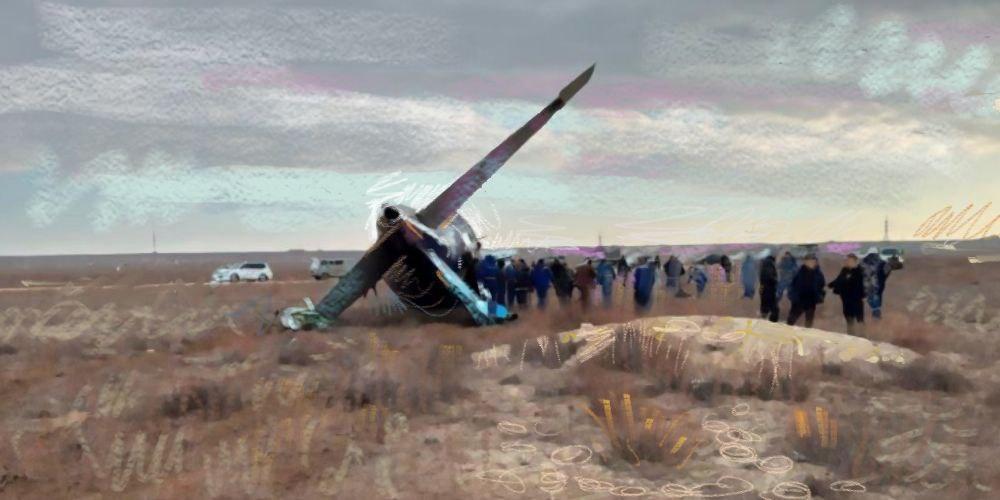

Questions Mount After Azeri Plane Crash with Focus on Russian Air Defenses

On December 25, an Azerbaijani Embraer 190 aircraft operating a Baku-Grozny flight made a hard emergency landing near the city of Aktau, Kazakhstan. The aircraft, carrying five crew members and 62 passengers, suffered devastating consequences. Both pilots were killed, along with 36 passengers. Additionally, 29 people, including three children, were hospitalized.

The aircraft disintegrated on impact, and a fire engulfed its midsection. Initial reports suggested a bird strike, but alternative theories have since emerged.

Kazakhstan’s Ministry of Emergency Situations detailed the timeline: at 11:02 Astana time, the crew issued a distress signal while flying over the Caspian Sea. By 11:37, the plane made a hard landing in the steppe near Aktau.

Before official rescue teams arrived, employees of a local energy company working nearby provided critical first aid and captured the first videos of the crash. They managed to pull 15 passengers from the wreckage of the tail section. Specialized rescue teams and medics, stationed at Aktau airport in anticipation of the emergency landing, arrived promptly thereafter.

According to Nurdaulet Kilybay, Akim of Mangystau Region, “22 ambulance teams and six units from the Center for Disaster Medicine worked at the crash site.” The regional multidisciplinary hospital had prepared “30 surgical and trauma beds, along with 10 intensive care beds” for victims.

Speculations and Investigations

Journalists questioned Bozumbayev during the briefing about theories which are currently circulating, including those suggesting air defense involvement. The official avoided drawing conclusions, stating: “It is impossible to establish even a preliminary cause because there are specialists for this. They will carry out work. Then it will be clear. I can’t speak now. I watched what people are posting… While [the plane] fell to the ground, and turned over, a lot of things could have happened. So, I am far from reaching conclusions.”

Speculation on Russian Telegram channels has posited that perforations in the aircraft’s tail section resemble shelling damage. One theory links the crash to Ukrainian drone (UAV) raids over Grozny, suggesting that air defense systems mistakenly targeted the plane.

The Telegram channel VChK-OGPU claimed that “Initially, the aircraft appears to have fallen victim to UAV jammers that were operating at the time because of a drone attack. As soon as the airliner started to descend for landing, its GPS stopped working and the dispatcher lost ‘radar contact.’ The pilot could not land the plane in such conditions and decided to fly to Baku. When he began to turn around to do so, there was an explosion nearby — all indications are that the plane was hit by air defense equipment.”

The report further alleges that the strike occurred over Chechnya’s Naursky District, home to military units equipped with air defense systems.

Kazakh officials stressed the need for patience, as forensic and aviation experts work to analyze the wreckage and flight data, with Bozumbayev emphasizing that “An interdepartmental investigative and operational group has been set up. Both forensic experts and experts from our Aviation Administration, who investigate such air incidents, came with me. As part of the criminal case, they will collect all the evidence, utilize the necessary expertise… Decipher the black box and so on.”

Bozumbayev also clarified who holds jurisdiction over the investigation:

“Everything is under the jurisdiction of the Republic of Kazakhstan,” he stated. “The airplane accident occurred in the Republic of Kazakhstan, the entire investigation is under the strict control of the Prosecutor General. The head of state has given appropriate instructions.”

According to Euronews, on the 26th Azerbaijani government sources confirmed to the outlet that a Russian surface-to-air missile was responsible for the plane crash. The missile, reportedly fired during drone activity over Grozny, exploded near Flight 8432, with shrapnel injuring passengers and crew mid-flight. Sources revealed pilots were denied emergency landing clearance at Russian airports and directed to Aktau instead. Data indicates GPS systems were jammed over the Caspian Sea. The missile was launched from a Pantsir-S air defense system, according to Baku-based outlet AnewZ.

Citing video footage from inside the plane which shows “punctured life vests,” earlier on Wednesday, the head of Ukraine’s National Security and Defense Council’s Center for Countering Disinformation, Andriy Kovalenko, posted on X that the Azerbaijani airline plane “flying from Baku to Grozny, was shot down by a Russian air defence system.”

President Aliyev of Azerbaijan has announced the launch of a criminal investigation.

Official Statements

Kazakhstan’s Minister of Transport Marat Karabayev announced at a briefing in Aktau that before entering Kazakh airspace, the airplane’s control systems, rudder and ailerons failed. The airplane was unable to maintain a steady course and altitude.

The air dispatcher in the Russian city of Rostov said that in light of weather conditions in Makhachkala (Russia) and Baku (Azerbaijan), the crew decided to fly to Aktau.

At 10.53, Rostov’s flight manager reported that an oxygen cylinder had exploded on the aircraft in the passenger cabin, and that passengers were losing consciousness.

Mangistau Region Transport Prosecutor Avilaibek Oldabayev has said that the crash site, which covers an area of more than 4,000 square meters, has been fully surveyed. The wreckage of the plane has been collected and recordings of conversations between the crew and the dispatcher have been seized.

Kazakhstan’s Deputy Transportation Minister Talgat Rastayev has mentioned that further investigative work will involve foreign expertise. “Decoding will begin after the arrival of experts from Brazil, the country that produces the Embraer 190 airplane. A commission will be set up to determine the sequence of decryption based on all the data collected. The expert from Brazil will arrive tomorrow, after which the analysis will begin,” Rastayev said.

Deputy Minister of Health of Kazakhstan Timur Muratov has commented: “This morning nine citizens of the Russian Federation were evacuated to Moscow for further treatment. Also this evening 14 citizens of Azerbaijan were evacuated to their country. Currently, six people, three citizens of Azerbaijan and three citizens of Kyrgyzstan are being treated. Four of them are in intensive care units, and the condition of one patient remains extremely serious and unstable. Treatment continues.”

Kazakhstani Deputy Prime Minister Kanat Bozumbayev did not confirm the missile strike. “A number of checks are currently underway, including an investigation. Until we get the results, we can’t say anything or make any conclusions”.

Broader Implications

Analyst and widely-read Russian blogger, Anatoly Nesmiyan has speculated that the full truth of the matter might be suppressed. “Apparently, it has been decided to deal with the downed passenger plane in a quite standard way: not to say or report anything at all. All questions will be answered as briefly and dryly as possible: we will not draw hasty conclusions; let the experts work.”

Newmiyan has further predicted that a narrative attributing the tragedy to pilot error may well emerge. “Someone must be to blame, and the pilot has already been killed,” he stated.

Given the diplomatic priorities of Kazakhstan and Azerbaijan, both nations are unlikely to risk confrontation with Moscow, even if Grozny is implicated. However, if the air defense error theory holds, Azerbaijan might leverage the incident as a political tool in its dealings with Russia.

While official investigations continue, the crash near Aktau raises pressing questions about aviation safety, geopolitical sensitivities, and transparency. Whether the truth will emerge will depend on the outcome of the investigation and its handling.


*This story was updated at 15:57GMT on December 28th 2024*

Kazakhstan Expects Record Car Sales

Kazakhstan’s automobile market continues to grow, with sales of new cars on track to match or exceed last year’s record. In 2023, Kazakh motorists purchased over 198,000 new vehicles, and experts predict similar or higher figures for 2024.

According to the Kazakhstan Automobile Union (KAO), 20,984 passenger cars and commercial vehicles were sold in November 2024, a 10.7% increase compared to November 2023. Over the first 11 months of 2024, Kazakh dealers sold 179,628 new cars, surpassing the 175,100 sold during the same period last year.

Despite earlier concerns of a potential market slump, industry experts remain optimistic. KAO head Anar Makasheva had cautioned that the 2023 record represented “inorganic growth” driven by pent-up demand. However, Artur Miskaryan, general director of the Agency for Monitoring and Analysis of the Automobile Market (AMAAR), believes the market’s positive trend will continue.

“Kazakhstan may well repeat or even surpass last year’s record for fleet renewal, potentially reaching 200,000 new car sales,” Miskaryan stated. He acknowledged some fluctuations, noting that in certain months, sales fell below 2023 levels but were offset by stronger performance in other periods.

Kazakhstan’s domestic car manufacturers, based in Kostanai and Almaty, are also close to replicating last year’s success. In 2023, locally produced vehicles accounted for over 70% of the 198,000 new cars sold – approximately 148,000 units. Miskaryan estimates that domestic production will maintain a similar share in 2024.

As previously reported by the The Times of Central Asia, stricter regulations for importing foreign cars into Kazakhstan were introduced on December 1, 2024​. However, experts anticipate that these changes will not significantly affect the market until spring 2025.

Kazakhstan’s automobile sector continues to demonstrate resilience and robust growth, positioning itself for another record-breaking year in 2024.

What Happened Over Russia? Probe Into Fatal AZAL Crash in Kazakhstan Begins

Investigators into the crash of an Azerbaijan Airlines plane in Kazakhstan that killed 38 people are trying to determine what caused the aircraft to divert from its planned landing in Grozny, the capital of Russia-controlled Chechnya.

The Embraer 190 passenger plane, which was carrying 62 passengers and five crewmembers, crashed on Wednesday three kilometers from the airport at Aktau, a city on the Caspian Sea in southwestern Kazakhstan. The plane had been heading from the Azerbaijani capital of Baku to Grozny, but eventually declared an emergency and headed to Aktau, about 440 kilometers to the east and across the Caspian, for reasons that have yet to be clarified.

“Even a preliminary cause cannot be established because there are specialists for that. They will carry out their work. Only after that it will be clear. I can’t say anything at this point,” said Kazakh Deputy Prime Minister Kanat Bozumbayev, according to the state Kazinform news agency. “I saw what people posted… While it was falling to the ground, it was flipping over, many things could have happened. Therefore, I am far from making any conclusions.”

Russia’s state-run news agency Tass initially reported that fog in Grozny caused Flight J28243 to divert to Makhachkala, the capital of the Russian territory of Dagestan, and then to Aktau. RIA Novosti, another Russian state-owned media outlet, cited Russian aviation authorities as saying the plane diverted because of a collision with birds.

However, some aviation and military analysts have paid particular attention to a video showing numerous small holes on part of the fuselage wreckage, and there is speculation that air defense systems may have fired on the plane; Chechen officials have reported shooting down drones from Ukraine, which is at war with Russia. Bozumbayev, the Kazakh minister, was asked about the possibility that the aircraft was fired on, and said that final results of the investigation will be announced after all evidence is examined, reported the Azeri Press Agency, or APA.

The prosecutor general’s office in Kazakhstan has opened a criminal case and the country’s chief transport prosecutor visited the scene as a member of a government commission. Kazakh media reported that the flight recorder had been found.

Video and images released by Kazakhstan’s Ministry of Emergency Situations showed rescue teams converging in vehicles and on foot on the flaming plane wreckage in a flat expanse of land near Aktau. One vehicle trained a water hose on the flames. Debris from the plane was scattered in the area.

Emergency responders were able to pull survivors from the crumpled, partly intact fuselage. Some video appearing on social media showed a survivor limping out of the wreckage while another passenger who had been rescued was unable to walk because of apparent leg injuries. Another unverified video also shows a passenger purportedly praying on the plane in the minutes before the crash.

News of the crash came as Russian President Vladimir Putin hosted a meeting in St. Petersburg for leaders of the Commonwealth of Independent States, a regional group that includes the post-Soviet states of Belarus, Kazakhstan, Kyrgyzstan, Uzbekistan, Tajikistan and Turkmenistan.

A Russian government aircraft will deliver medical personal and equipment to Aktau, in coordination with Kazakh authorities, Putin said at the beginning of the meeting. He said he had spoken to Aliyev, who was flying to the St. Petersburg meeting at the time but returned to Baku after learning about the Aktau crash, and that Russia will assist with the investigation.

In a message to Aliyev, Kazakh President Kassym-Jomart Tokayev expressed condolences and said his government had established a panel to provide “the necessary assistance” to Azerbaijan.

Azerbaijan Airlines and the country’s emergency ministry said in a joint statement that the bodies of Azerbaijani citizens who died in the crash will soon be transported back to Azerbaijan, and that a flight will also be arranged for injured passengers if doctors allow them to travel.

The airline also said that, while the investigation of the crash is underway, it had suspended flights to and from Grozny as well as Makhachkala, the nearby capital of Russia-controlled Dagestan.

There were 62 passengers on the flight, including 37 people from Azerbaijan, 16 from Russia, six from Kazakhstan and three from Kyrgyzstan, according to the airline. There were five crewmembers. Of the 67 in total on the plane, 38 died, according to Kazakh officials.

Kazakhstan’s Ministry of Emergency Situations said the other 29 people, including two children, were hospitalized, including 15 from Azerbaijan, nine from Russia and three from Kyrgyzstan. It said the nationalities of two injured people were being determined. The six Kazakh passengers on board the plane died, the ministry said.

Deportations of Central Asians from the U.S. Increased in 2024

U.S. Immigration and Customs Enforcement (ICE) has released its Fiscal Year 2024 Annual Report, detailing the agency’s accomplishments over the past year. The report highlights how ICE’s directorates and program offices met their mission objectives. Established in the aftermath of the 9/11 attacks, ICE is tasked with protecting the American public, ensuring public safety, and promoting national security.

According to the report, ICE’s Enforcement and Removal Operations (ERO) deported 271,484 non-citizens with final orders of removal to 192 countries. This total includes 88,763 individuals charged with or convicted of criminal offenses, 3,706 known or suspected gang members, 237 known or suspected terrorists, and eight human rights violators. More than 30% of those deported had criminal histories, with an average of 5.63 convictions or charges per individual. ERO also assisted in identifying and arresting individuals wanted in their home countries for serious crimes, including terrorism and torture.

The Times of Central Asia examined the report with a focus on Central Asian countries.

In 2024, the US deported 572 Uzbek nationals – a dramatic increase compared to 88 in 2013, 21 in 2021, and 55 in 2022.

Deportations of Tajik citizens also surged, reaching 77 in 2024 compared to only four annually in 2019, 2020, 2022, and 2023.

Kazakhstan saw the deportation of 23 of its citizens this year, up from 14 in 2023.

Deportations to Kyrgyzstan also spiked, with 69 individuals removed in 2024. By comparison, only three Kyrgyz citizens were deported in 2020, eight in 2021, one in 2022, and 14 in 2023.

Meanwhile, deportations of Turkmen nationals remained low, but still showed an upward trend. In 2024, five Turkmen citizens were deported, compared to four in 2019, one in 2022, and three in 2023.

Dozens Survive Azerbaijan Airlines Plane Crash in Kazakhstan

A passenger plane from Azerbaijan Airlines has crashed near Aktau, Kazakhstan, while en route from Baku to Grozny in Chechnya. Authorities and locals were left shaken but relieved as more than 30 people survived the incident. The aircraft was carrying 62 passengers and five crew members.

The accident occurred during an emergency landing attempt after the plane experienced difficulties mid-flight. Initial investigations point to potential mechanical failure as the cause. Emergency response teams were quickly dispatched to the scene, providing medical aid to the injured. Survivors suffered injuries ranging from minor cuts to more serious trauma, with ongoing efforts to transfer them to nearby hospitals for further treatment.

Eyewitnesses described the crash site as alarming, with significant damage to the plane’s fuselage and debris strewn across the area. “It’s incredible that so many made it out alive,” shared a local who assisted in the rescue efforts.

Kazakhstan’s Ministry of Emergency Situations praised the actions of first responders for minimizing casualties. Rescue and recovery operations continue, with the crash site cordoned off to aid the investigation. Azerbaijan Airlines, meanwhile, has activated its crisis management plan, collaborating with Kazakh authorities to assist passengers and their families. “We are deeply relieved that lives were spared, and we fully support ongoing inquiries into this tragedy,” said a spokesperson for the airline.

The Civil Aviation Committee in Kazakhstan announced plans for a detailed investigation, beginning with the retrieval and analysis of the plane’s black box. Azerbaijan Airlines has also temporarily grounded similar aircraft as a precautionary measure.

The accident has led to renewed attention on air safety protocols in the region, underscoring the critical need for stringent maintenance and monitoring. At the same time, the survival of so many passengers has been regarded as extraordinary, with their accounts serving as a reminder of resilience and the importance of emergency readiness.

Image: VK Tula News Feed

Online footage from the Azerbaijani airline AZAL crash site reveals damage to the fuselage which certain reports have stated appears consistent with the impact patterns of air defense missile shrapnel. The veracity of these reports have yet to be verified.

The authorities are expected to provide further updates on the investigation and the conditions of the injured in the coming days.