• KGS/USD = 0.01144 0%
  • KZT/USD = 0.00196 -0%
  • TJS/USD = 0.10899 -0%
  • UZS/USD = 0.00008 -0%
  • TMT/USD = 0.28490 0%
  • KGS/USD = 0.01144 0%
  • KZT/USD = 0.00196 -0%
  • TJS/USD = 0.10899 -0%
  • UZS/USD = 0.00008 -0%
  • TMT/USD = 0.28490 0%
  • KGS/USD = 0.01144 0%
  • KZT/USD = 0.00196 -0%
  • TJS/USD = 0.10899 -0%
  • UZS/USD = 0.00008 -0%
  • TMT/USD = 0.28490 0%
  • KGS/USD = 0.01144 0%
  • KZT/USD = 0.00196 -0%
  • TJS/USD = 0.10899 -0%
  • UZS/USD = 0.00008 -0%
  • TMT/USD = 0.28490 0%
  • KGS/USD = 0.01144 0%
  • KZT/USD = 0.00196 -0%
  • TJS/USD = 0.10899 -0%
  • UZS/USD = 0.00008 -0%
  • TMT/USD = 0.28490 0%
  • KGS/USD = 0.01144 0%
  • KZT/USD = 0.00196 -0%
  • TJS/USD = 0.10899 -0%
  • UZS/USD = 0.00008 -0%
  • TMT/USD = 0.28490 0%
  • KGS/USD = 0.01144 0%
  • KZT/USD = 0.00196 -0%
  • TJS/USD = 0.10899 -0%
  • UZS/USD = 0.00008 -0%
  • TMT/USD = 0.28490 0%
  • KGS/USD = 0.01144 0%
  • KZT/USD = 0.00196 -0%
  • TJS/USD = 0.10899 -0%
  • UZS/USD = 0.00008 -0%
  • TMT/USD = 0.28490 0%
08 December 2025

Coal Mine Explosion in Tajikistan Kills Six Afghan Workers

Six Afghan workers have been killed in a coal mine explosion in Tajikistan’s Sughd region, according to local sources cited by Tasnim News Agency. The blast occurred in the Ayni district, where all six victims were reportedly working underground at the time. Rescue operations are still underway, and the bodies have yet to be recovered.

Sources say five of the deceased were from Afghanistan’s Daikundi province and one from Lal wa Sarjangal district in Ghor province. Tajik authorities have not yet released the official identities of the victims.

Earlier this year, a similar incident occurred in another Sughd coal mine, where eight Afghan miners, also from Daikundi, lost their lives, according to Etilaatroz. Local residents and mine workers report that such tragedies are becoming increasingly frequent due to unsafe working conditions, lack of protective equipment, and minimal regulatory oversight.

Hundreds of Afghan nationals work in Tajikistan’s coal mines, often in hazardous and unregulated conditions. “We are not allowed to complain or talk to the media. If we do, we risk being fined or deported,” one Afghan worker told a local news outlet. Many report being employed without formal contracts, with employers failing to provide adequate workplace safety measures.

Experts note that widespread unemployment and economic hardship in Afghanistan have driven many young men to seek employment abroad, particularly in Central Asia. Jobs in mining, construction, and seasonal agriculture remain common, but often come without legal protections or health insurance.

Local observers estimate that more than 14 Afghan workers died in coal mine accidents in Tajikistan in 2024 alone.

This latest incident comes just days after northern Afghanistan was struck by a 6.3-magnitude earthquake that killed at least 27 people and injured nearly 1,000 others.

Elena Rybakina Makes History as First Kazakh to Reach WTA Finals Semifinals

Elena Rybakina, Kazakhstan’s top-ranked tennis player and world number six, has made history by reaching the semifinals of the WTA Finals. She is the first player from Kazakhstan and the wider Central Asian region to advance to the playoffs of the prestigious year-end tournament.

The WTA Finals, held annually since 1971, feature the top eight players based on points accumulated throughout the season rather than the current WTA rankings. In 2025, Rybakina secured her place in Riyadh ahead of world number ten, Russia’s Ekaterina Alexandrova.

This is Rybakina’s third consecutive appearance at the Finals. After failing to progress beyond the group stage in 2023 and 2024, she achieved a breakthrough this year by finishing first in her group. Her round-robin opponents included world number two Iga Swiatek (Poland), world number four Amanda Anisimova (United States), and world number seven Madison Keys (U.S.).

Rybakina began with a commanding 6–3, 6–1 victory over Anisimova, then mounted a comeback against Swiatek, overturning a 3–6 first-set loss to take the next two sets 6–1, 6–0. The consecutive wins secured her a place in the semifinals and the top position in the group with one match remaining.

In the final group match, Keys withdrew due to injury and was replaced by Alexandrova, who had traveled to Riyadh as an alternate. Rybakina maintained her dominance, defeating the Russian 6–4, 6–4.

At 25, the Moscow-born Rybakina, who represents Kazakhstan, has earned her place in the nation’s tennis history as the first player to reach the WTA Finals playoffs. Anisimova, who stunned Swiatek 6–7 (3), 6–4, 6–2, finished second in the group and will also advance.

In the parallel group, semifinal qualification will be decided on November 6. World number one Aryna Sabalenka (Belarus) leads and is set to face world number three Coco Gauff (U.S.), while Jessica Pegula (U.S.), currently in second place, will play Jasmine Paolini (Italy).

Rybakina will face the runner-up from that group in the semifinal on November 7. The final is scheduled for November 8.

As previously reported by The Times of Central Asia, Rybakina’s strong 2025 season included titles at two WTA tournaments and a semifinal appearance at the Tokyo event in October, which secured her place at the Finals.

Kazakhstan Weighs Converting Part of National Fund into Cryptocurrency

Kazakhstan’s monetary authorities are considering the possibility of converting a portion of the country’s National Fund assets and gold and foreign exchange reserves into cryptocurrency. The proposal was announced by Berik Sholpankulov, Deputy Chairman of the National Bank, during a session of the Mazhilis (lower house of parliament).

“We are considering the possibility of using part of the National Fund’s assets and gold and foreign exchange reserves for investment in crypto assets,” Sholpankulov stated.

He emphasized that any such operations would be conducted solely through a state-managed crypto asset fund, the creation of which is currently under government discussion.

“First of all, confiscated crypto assets will be transferred to the state digital asset fund, where they will be stored as a strategic reserve of the government,” Sholpankulov explained. He added that the Ministry of Digital Development has proposed allowing state-owned mining enterprises to supply energy to private mining companies in exchange for payment in cryptocurrency.

According to the National Bank, the assets of the National Fund rose by $990 million in September compared to August, reaching $62.7 billion. Gold and foreign exchange reserves increased by $3.1 billion to $57.4 billion. However, foreign exchange assets declined by $1.9 billion to $17.7 billion, while gold reserves grew by more than $5 billion, reaching $39.7 billion.

Previously The Times of Central Asia reported that the National Bank had approved a concept for forming a national reserve of crypto assets. The reserve is expected to be managed through a new subsidiary focused on alternative investments.

The government is also exploring the establishment of crypto banks and a licensed national cryptocurrency exchange to operate across Kazakhstan.

As also previously reported by The Times of Central Asia, authorities have shut down 130 illegal cryptocurrency exchanges suspected of laundering criminal proceeds since the beginning of the year. Virtual assets worth $16.7 million were seized in connection with the crackdown.

Sholpankulov previously noted that approximately $15 billion in cryptocurrency has left the country due to gaps in legislation governing digital assets.

New Projects, Evolving Trade: Recent News from Tajikistan That You Might Have Missed

Recent weeks in Tajikistan have seen new investment deals, changing trade dynamics, and interesting social developments. Here are some stories that you may have missed.

Energy investments pledged at Dushanbe Invest-2025

The Dushanbe Invest-2025 Forum resulted in 26 agreements worth roughly US $3.1 billion across the energy, manufacturing, and telecommunications sectors. Energy projects accounted for nearly US $2.4 billion of that total, reflecting Dushanbe’s aims to position itself as a hydropower hub for Central Asia.

Officials also promoted “green investment” and developments in AI, while President Emomali Rahmon met with Qatar’s minister for foreign trade to discuss economic cooperation. These moves signal a drive to attract sustainable finance, and diversify an economy that is still reliant on remittances from Tajik guest workers in Russia.

Growing trade with Iran and Uzbekistan

Regional trade expanded significantly in October. Tajikistan and Iran reaffirmed their intention to expand industrial and trade cooperation, with mutual turnover nearing $380 million in 2024 and a target to surpass $500 million in the near future. Agreements include joint ventures in mining, agriculture, and pharmaceuticals.

At the same time, trade between Tajikistan and Uzbekistan reached over $70o million in 2024 — an almost three-fold increase from recent years. The governments of the neighboring countries are now exploring logistics corridors and simplified customs rules to further integrate their economies.

Tourism boom: International visitors up by a quarter

With increased government support, tourism has become one of Tajikistan’s most promising growth sectors. During the first nine months of 2025, the country received nearly 1.4 million foreign visitors — a 24 percent increase compared with previous years. The influx of tourists is driven by new simplified visa rules, social media campaigns, and improved domestic air routes. Adventure travel in the Pamir Mountains and cultural tourism in ancient cities such as Khujand and Istaravshan are leading this wave.

Sharp decline in UK trade

New figures show that trade between Tajikistan and the United Kingdom fell by almost 39 percent in the four quarters ending Q2 2025, totaling just £22 million. Imports from the UK dropped 32 percent, while exports from Tajikistan plunged 62.5 percent, according to the UK trade factsheet.

Landmark border agreement ratified

In late October, Uzbekistan’s parliament approved a trilateral border-junction agreement with Tajikistan and Kyrgyzstan, resolving a long-standing territorial issue. The agreement should ease cross-border trade and transportation, reduce tensions in remote areas, and open the door to regional infrastructure projects linking the three countries.

For Tajikistan, which has some of Central Asia’s most complex borders, the agreement represents a diplomatic milestone that could translate into tangible economic gains.

Looking ahead

The last month’s events highlight that Tajikistan is cautiously re-entering international dialogue in Central Asia and beyond. Tajikistan’s leadership is using investment forums, tourism, and pragmatic diplomacy to stabilize and diversify the economy. Yet challenges remain, chiefly the country’s heavy economic dependence on remittances, vulnerability to climate-related shocks, and limited industrial capacity.

U.S. Secretary of State Marco Rubio Plans Visit to Central Asia in 2026

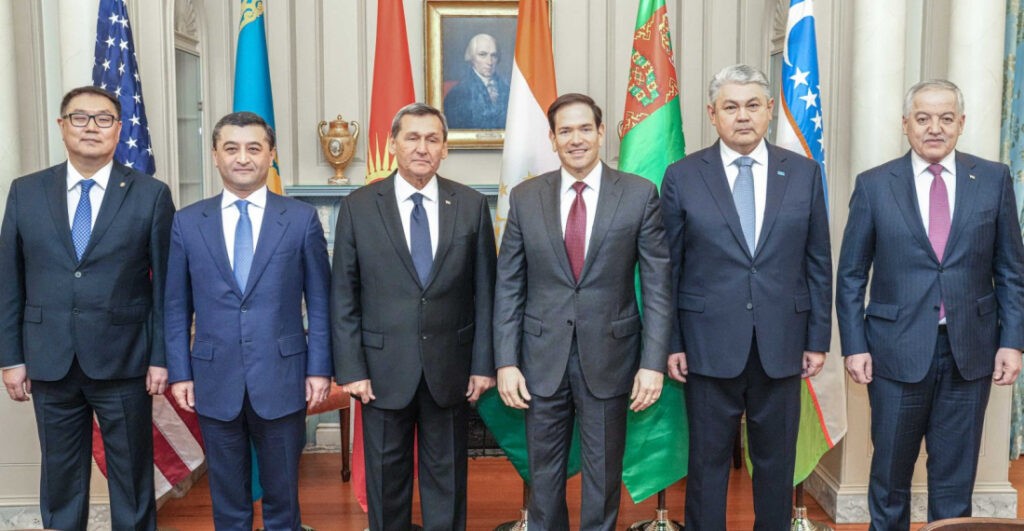
U.S. Secretary of State Marco Rubio announced on Wednesday his intention to visit all five Central Asian countries in 2026. Rubio made the statement during a meeting with the foreign ministers of Kazakhstan, Kyrgyzstan, Tajikistan, Turkmenistan, and Uzbekistan. The visit is part of a broader diplomatic initiative by U.S. President Donald Trump’s administration to strengthen ties with the resource-rich region.

Today, the presidents of the five Central Asian republics, Kassym-Jomart Tokayev (Kazakhstan), Sadyr Japarov (Kyrgyzstan), Emomali Rahmon (Tajikistan), Serdar Berdimuhamedov (Turkmenistan), and Shavkat Mirziyoyev (Uzbekistan), are scheduled to meet with President Trump in Washington. The summit is expected to focus on cooperation in the extraction of rare earth elements and other natural resources in Central Asia.

Rubio emphasized the alignment of U.S. and Central Asian interests in promoting responsible and sustainable development of the extractive sector.

“You are seeking to use the resources that God has blessed your countries with to create responsible development and diversify your economies,” he said at a reception hosted by the State Department. “I personally intend to visit in the coming year. All five [countries], so I know it would probably be a week-long trip. So we’ve got to work on that and make that happen together.”

U.S. Deputy Secretary of State Christopher Landau stated that the invitation extended to Central Asian leaders is part of President Trump’s personal initiative to deepen engagement with the region. He highlighted broad opportunities for cooperation in business, investment, and strategic partnerships.

Also speaking at the reception, Republican Senator James Risch said he intends to introduce legislation to repeal the Jackson-Vanik amendment, a Cold War-era law that restricts U.S. trade with non-market economies.

Deals, Not Declarations: U.S.–Central Asia Cooperation at Summit Crossroads

A landmark summit between the United States and the five Central Asian republics is scheduled for November 6 in Washington, D.C., bringing together the presidents of Kazakhstan, Kyrgyzstan, Tajikistan, Turkmenistan, and Uzbekistan. It will be the second leaders-level C5+1 meeting with a U.S. president—the first took place on the sidelines of the UN General Assembly in 2023—and the first time the format is hosted in the U.S. capital. The gathering also marks the 10th anniversary of the C5+1 diplomatic platform that connects Central Asia with Washington.

The summit comes at a pivotal moment geopolitically; Russia remains consumed by its war in Ukraine, whilst China continues to expand its Belt and Road footprint across Eurasia. As the region’s strategic importance grows, both the United States and the Central Asian states see an opportunity to recalibrate their relationships, each approaching the meeting with distinct priorities and expectations.

Washington’s Agenda: Critical Minerals and Connectivity

For the United States, this summit is about converting diplomatic engagement into tangible deliverables. Officials want to see results in three main areas: critical minerals, regional connectivity, and security coordination. Congress and the administration view the region’s reserves of antimony, tungsten, uranium, and rare earth elements as essential to securing U.S. supply chains. During his October 2025 visit to Kazakhstan and Uzbekistan, Deputy Secretary of State Christopher Landau emphasized expanding cooperation on critical minerals and trade diversification. The Trump administration has prioritized these resources as part of a broader effort to reduce dependence on China.

Trade routes are also in focus. The U.S. supports the Middle Corridor, a trans-Caspian route that links Central Asia with the South Caucasus and Europe. Infrastructure investments that bypass Russia are strategically important, and Washington wants to help harmonize customs and logistics to make that corridor more viable. These priorities form part of a wider push to anchor the region in transparent, market-based supply chains that connect Central Asia more directly with Western markets.

Kazakhstan: Trade Normalization and Resource Investment

Central Asia’s largest economy, Kazakhstan is expected to push for permanent normal trade relations with the U.S. The country still faces Cold War-era restrictions under the Jackson-Vanik amendment – as do Tajikistan, Turkmenistan, and Uzbekistan – with Astana long having viewed its repeal as a key milestone. That push has taken on new importance after Washington imposed a 25% tariff on Kazakh imports in mid-2025 – though Kazakh exports were exempted shortly thereafter – a move viewed by officials in Astana as inconsistent with efforts to expand economic cooperation.

Kazakhstan is also looking to the U.S. for support in developing its mineral wealth. President Kassym-Jomart Tokayev’s government is actively mapping new rare earth deposits, and Washington has recently backed a private American bid to reopen Kazakhstan’s long-idle tungsten mine at Upper Kairakty, underscoring growing U.S. interest in Central Asia’s critical minerals sector. The two sides are also expanding industrial ties: in September 2025, Astana signed a $4.2 billion deal with U.S. rail manufacturer Wabtec to modernize Kazakhstan’s locomotive fleet and develop regional transport corridors connecting Central Asia to Europe via the Caucasus.

Kazakhstan hopes these agreements will attract further American investment and help it position itself as a reliable partner in critical minerals supply chains. At the same time, officials are likely to raise concerns about export license delays that have affected imports of American technology. Streamlining those procedures is a priority as Kazakhstan looks to modernize its industries.

Uzbekistan: Economic Reform and Tech Access

Uzbekistan enters the summit with strong momentum. Since 2016, President Shavkat Mirziyoyev has embarked on a sweeping reform agenda, liberalizing trade, opening markets, and courting foreign investment after decades of economic isolation. Tashkent is now seeking deeper U.S. engagement in strategic sectors such as energy, advanced manufacturing, and information technology.

American firms have already committed billions of dollars to Uzbek projects, and Tashkent expects this trend to intensify. One concrete goal is improved access to U.S. technology – Uzbek officials have lobbied Washington to streamline export-control procedures that have delayed high-tech imports. The summit may provide the platform to advance those regulatory changes. As previously reported by The Times of Central Asia, deals signed during Mirziyoyev’s recent visit to New York included major contracts with firms such as Boeing and a proposed infrastructure partnership with BlackRock, signaling Tashkent’s intent to follow a multi-vector foreign policy.

Connectivity is also high on the agenda. Uzbekistan is pushing for expanded trade corridors to Europe and South Asia. With its youthful population and growing tech sector, Uzbekistan is also seeking extended educational and professional exchanges with the U.S. These aims dovetail with Washington’s stated broader agenda of promoting regional integration and economic resilience within the C5+1 framework.

Kyrgyzstan: Infrastructure and Stability

Kyrgyzstan’s economy continues to expand, but high inflation, debt pressure, and dependence on unstable remittances leave it exposed to external shocks. Against this backdrop, Bishkek could seek U.S. support for infrastructure and development financing. President Sadyr Japarov’s government wants to improve trade flows and cross-border logistics, especially along the corridor linking Bishkek to Almaty. A smoother Ak-Jol/Korday border crossing would directly benefit Kyrgyz exporters.

Hydropower remains one of Kyrgyzstan’s strongest prospects for cooperation with the United States. The country generates more than 90% of its electricity from water, but continues to face chronic shortages due to aging infrastructure and seasonal imbalances. Bishkek may therefore look for U.S. investment and technical expertise to help modernize key facilities, including the Toktogul and Kambarata hydropower plants, and expand regional power exports. According to the U.S. State Department, “The Kyrgyz Republic’s abundant hydropower resources offer opportunities for investment in energy production and regional electricity exports.”

Although Kyrgyzstan remains deeply integrated with Russia through labor migration and trade, it is quietly pursuing a more balanced foreign policy. Even limited U.S. financing or technical partnerships announced at the summit would help Bishkek demonstrate its commitment to multi-vector diplomacy while addressing pressing development needs at home.

Tajikistan: Security and Energy

Tajikistan enters the summit with clear security and development priorities. Sharing a 1,300-kilometer border with Afghanistan, it faces persistent threats from cross-border trafficking and the Islamic State Khorasan group. Dushanbe could seek renewed U.S. assistance for border surveillance and counter-terrorism training, programs that previously formed the core of bilateral security cooperation but have received less emphasis in recent years. The Tajik government has repeatedly warned that instability in northern Afghanistan could spill into its territory.

Economic interests are just as pressing. Tajikistan is one of the world’s leading producers of antimony, a critical mineral used in batteries and semiconductors, and is also promoting lithium and uranium to signal broader mining-sector appeal. Officials could seek to attract U.S. investment to modernize extraction and processing facilities that still rely on Soviet-era technology. They also want financing to complete the massive Rogun hydropower dam on the Vakhsh River, a flagship project that could turn Tajikistan into a net electricity exporter once fully operational.

Though Tajikistan remains closely tied to Russia through remittances and security pacts, President Emomali Rahmon is cautiously diversifying partnerships. The C5+1 summit offers Rahmon a rare opportunity to expand economic cooperation and reaffirm Tajikistan’s relevance in regional diplomacy beyond Moscow’s orbit.

Turkmenistan: Gas Exports and Quiet Diplomacy

Turkmenistan remains the most opaque participant at the summit. The country’s official policy of neutrality has long kept it at arm’s length from most multilateral initiatives, yet President Serdar Berdimuhamedov’s decision to attend signals an interest in new energy opportunities.

Natural gas dominates Turkmenistan’s economy, with more than 80% of exports going to China through existing pipeline routes. Ashgabat has periodically revived discussions of a Trans-Caspian Gas Pipeline linking its fields to Azerbaijan and onward to European markets, a project Washington previously supported for decades as part of efforts to diversify Europe’s supply. As reported by The Times of Central Asia, renewed European demand for non-Russian gas and improved Caspian infrastructure could make the idea politically feasible again.

The summit may also offer Ashgabat an opportunity to expand engagement beyond energy. Turkmenistan and the United States have recently begun exploring cooperation in digital connectivity and infrastructure, including plans for a Trans-Caspian fiber-optic link that would reroute regional internet traffic away from Russian networks. Even a modest U.S. statement endorsing feasibility studies or financing options would be seen in Ashgabat as a diplomatic success.

Beyond Symbolism

Each Central Asian country is looking for something different, but they share one goal: expanding their options. With Russia under sanctions and China increasing its dominance, the region is eager to avoid overdependence. The U.S. also has something to prove, having lost strategic leverage in Central Asia after withdrawing from Afghanistan in 2021. Now, Washington may want to show that it can offer value beyond security cooperation.

If the summit delivers concrete outcomes – such as investment deals, new energy or transport initiatives, or even just a permanent forum for technical talks – it could mark a new phase in U.S. relations with countries that are no longer passive players in geopolitics but are actively asserting their agency, balancing partners, and seeking the best deals.

Whether Washington can deliver will shape how Central Asia defines its future partnerships and whether the C5+1 becomes a serious diplomatic platform.